How to Build a Habit That Sticks (Atomic Habits 4 Laws)

HabitsEasy18:336 steps

Based on a video by Thomas Frank.

Most people approach habit-building with willpower and motivation - which run out by week two. James Clear's Atomic Habits framework instead engineers your environment so the habit happens with minimal effort. The book sold 20+ million copies because the system actually works.

This walkthrough from Thomas Frank covers the 4 Laws of Behavior Change. Apply each law to a single habit you want to build. To break a bad habit, invert each law (make it invisible, unattractive, hard, unsatisfying). Combined with the 'never miss twice' rule, this is one of the highest-leverage frameworks for changing behavior.

Step-by-Step Guide

1

Step 1: Pick One Specific Habit (Not a Goal)

1:30
Step 1: Step 1: Pick One Specific Habit (Not a Goal)

Goals are outcomes you want ('lose 20 pounds,' 'read more,' 'be healthier'). Habits are the daily actions that produce them ('walk 10 minutes after dinner,' 'read one page before bed,' 'eat a vegetable at lunch').

Pick a single habit, not a goal, and make it absurdly specific - what action, what time, what location. Vague habits ('exercise more') don't stick because there's no clear trigger. 'After I finish lunch, I will go for a 10-minute walk' has a built-in cue.

2

Step 2: Law 1 - Make It OBVIOUS

4:00
Step 2: Step 2: Law 1 - Make It OBVIOUS

The first law: design your environment so the habit is impossible to miss. Want to read more? Put the book on your pillow. Want to drink water? Fill a bottle and put it on your desk before you start work. Want to floss? Move the floss to the front of the bathroom counter, in front of your toothbrush.

Use 'habit stacking' too: 'After [existing habit], I will [new habit].' E.g. 'After I pour my morning coffee, I will write in my journal for 5 minutes.' The existing habit becomes the cue for the new one.

3

Step 3: Law 2 - Make It ATTRACTIVE

7:40
Step 3: Step 3: Law 2 - Make It ATTRACTIVE

Pair the habit with something you already want to do. James Clear calls this 'temptation bundling': only watch your favorite show while on the treadmill, only listen to a podcast you love during your commute.

The brain releases dopamine on anticipation, not just reward - so building anticipation is the lever. Joining a culture where the habit is normal (a running club, a writing group, a weekly study session) does this even more powerfully because humans imitate the people around them.

4

Step 4: Law 3 - Make It EASY

11:40
Step 4: Step 4: Law 3 - Make It EASY

Reduce friction until the habit takes 2 minutes or less to start. 'Read before bed' becomes 'read one page.' 'Run 3 miles' becomes 'put on running shoes and walk to the door.' 'Meditate for 20 minutes' becomes 'sit on the cushion and take 3 breaths.'

The 2-minute rule lowers the activation energy below willpower. Once started, you usually keep going - and even if you don't, you've reinforced the identity of being someone who shows up. Identity sticks even when individual sessions don't.

Tip

Set out everything you need the night before. Running clothes by the bed, journal open on the desk, gym bag packed by the door. Removing 30 seconds of friction matters more than you'd think.

5

Step 5: Law 4 - Make It SATISFYING

15:00
Step 5: Step 5: Law 4 - Make It SATISFYING

What's rewarded gets repeated. The catch is that the long-term reward of most good habits arrives months or years later - too late to reinforce the daily action.

So build in an immediate reward: cross the day off on a habit tracker (the satisfaction of breaking a chain), transfer $5 to a savings account every time you skip the takeout order, or earn screen time after the workout. Pair the immediate satisfaction with the action so the brain learns to expect it.

6

Step 6: Track the Habit and Never Miss Twice

17:30
Step 6: Step 6: Track the Habit and Never Miss Twice

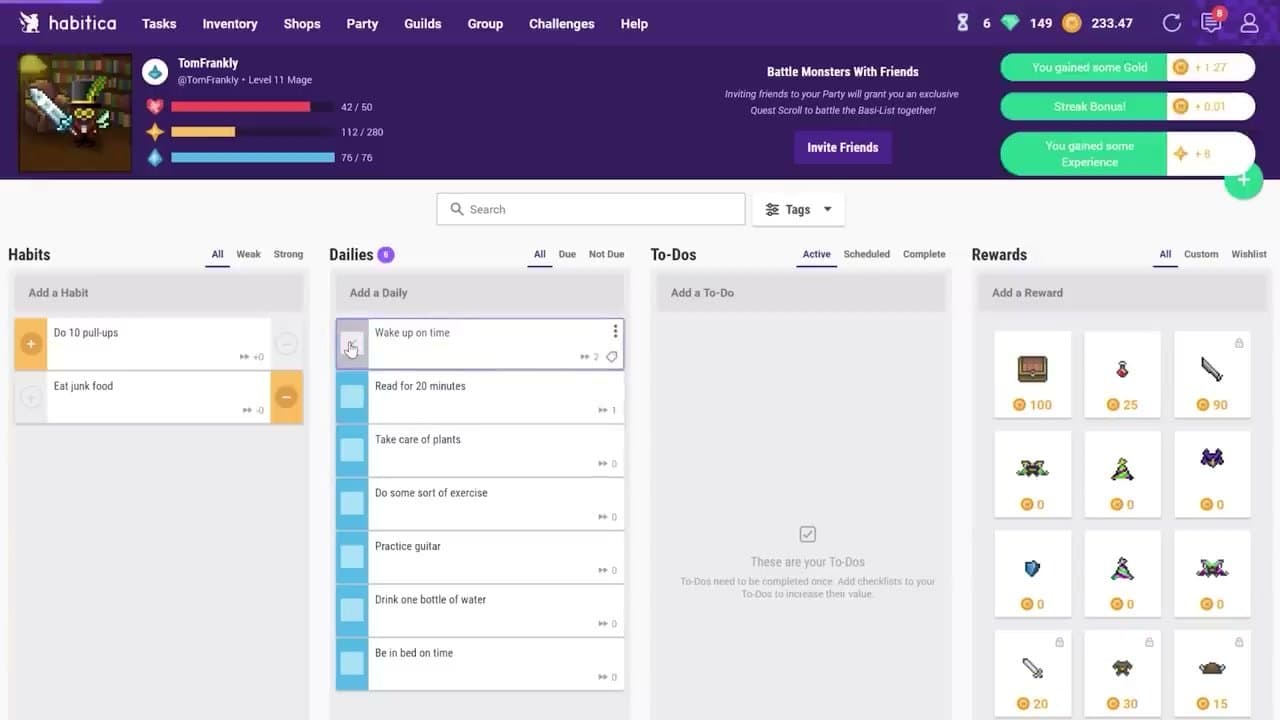
A simple habit tracker (X on a calendar, an app like Habitica or Streaks, or a spreadsheet) gives you the immediate satisfaction signal AND tells you when you're slipping.

The bigger rule: never miss twice. One missed day is normal life - kids get sick, work runs late, you forget. Two missed days starts a new pattern. The moment you skip, plan how you'll restart tomorrow before the day ends. Missing once is an accident; missing twice is the start of giving up.

Your Guide

Thomas Frank

As an Amazon Associate we earn from qualifying purchases. Links on this page may be affiliate links - clicking them and buying doesn't change your price, but helps support ShowMeStepByStep.

Tags

Related Tutorials