What Is a 401(k)? A Simple Guide

By ShowMeStepByStepPublished

Based on a video by ClearValue Tax.

If your employer offers a 401(k), it's worth taking the time to actually understand it. The basics aren't complicated, but getting them wrong can cost you thousands over your career. ClearValue Tax breaks down everything you need to know in plain language.

A 401(k) is a retirement savings account your employer sets up on your behalf. You decide what percentage of each paycheck goes in. That money comes out before taxes — so you're reducing your taxable income just by contributing. It grows tax-deferred inside the account, invested in whatever stocks, bonds, or mutual funds your plan offers.

The three big benefits: your contributions lower your tax bill today, your money grows without being taxed each year, and many employers will add free money through a matching contribution. That third one is often the biggest reason to start contributing right away, even if you can only put in a small amount.

There are trade-offs. Your money is locked up until age 59½ — pull it out early and you'll owe a 10% penalty on top of regular income tax. Plan fees vary a lot, and your investment options are limited to whatever funds your employer chose. Understanding these limits helps you plan around them.

Step-by-Step Guide

1

What a 401(k) Actually Is

0:42
Step 1: What a 401(k) Actually Is

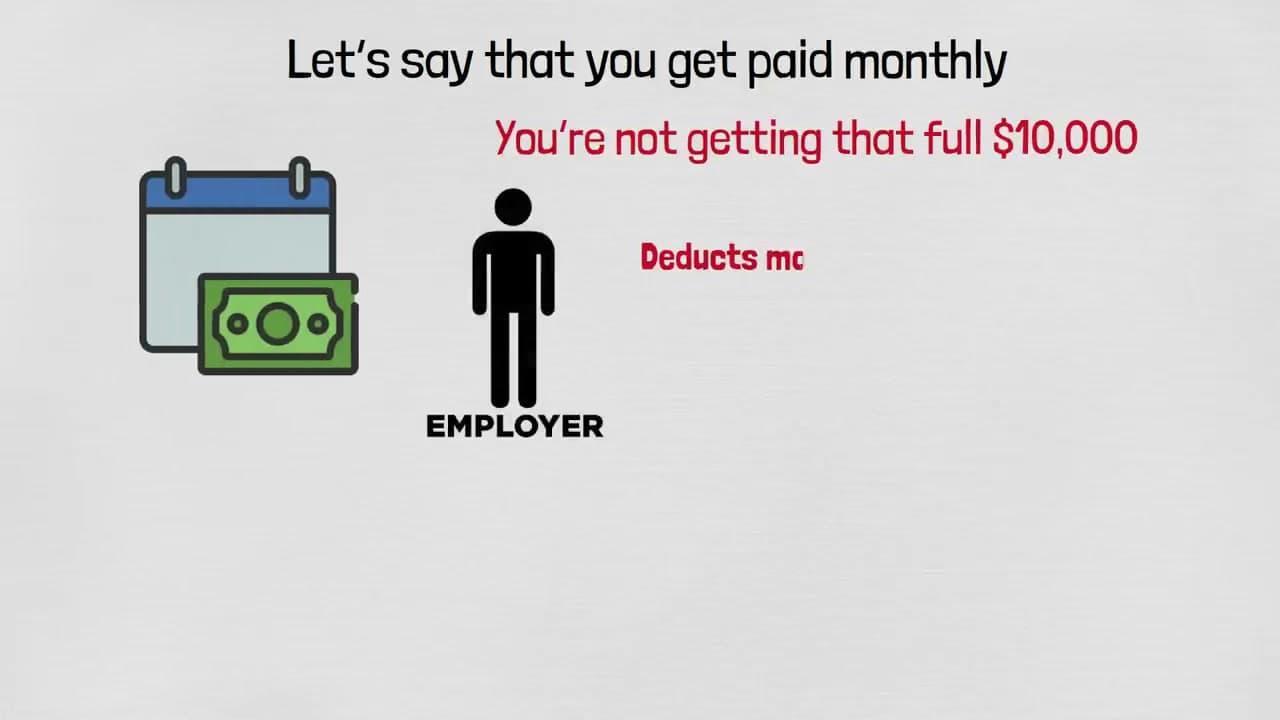
A 401(k) is a retirement savings account your employer offers. You pick a percentage of each paycheck to put in, and that money goes directly into the account before taxes are calculated. You never see it in your take-home pay.

Inside the account, your money gets invested — stocks, bonds, mutual funds — depending on what options your employer's plan includes. The account is in your name, and the balance is yours to keep.

Tip

If your employer offers a 401(k) and you're not sure whether you're enrolled, check your most recent pay stub — 401(k) contributions usually show up as a line item deduction.
2

How the Tax Deferral Works

1:02
Step 2: How the Tax Deferral Works

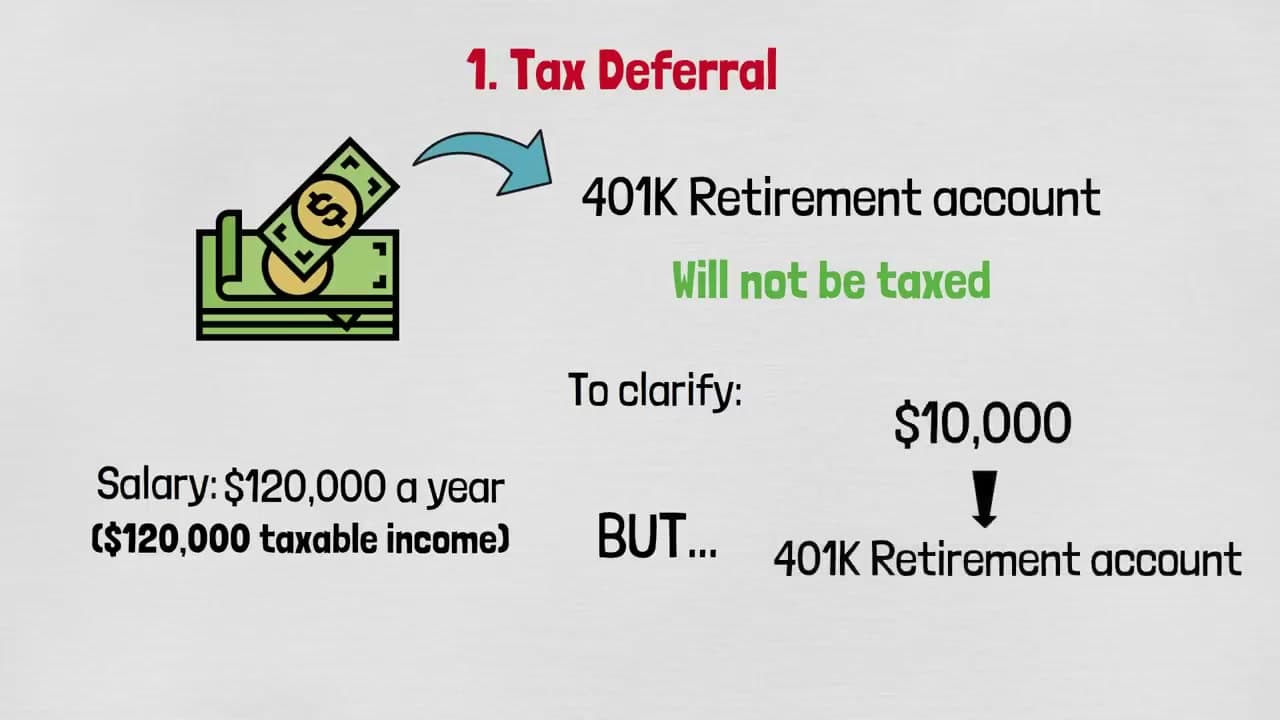
When your employer runs payroll, your 401(k) contribution comes out first — before federal income taxes are applied. So if you earn $120,000 a year and put $10,000 into your 401(k), the IRS taxes you on $110,000, not the full $120,000.

That difference adds up. You're not avoiding taxes entirely — you'll pay them when you withdraw the money in retirement. But deferring them now means keeping more money working for you in the meantime.

Tip

State income taxes work similarly in most states — your 401(k) contribution reduces your state taxable income too, though rules vary by state.

3

The Employer Match - Don't Leave It Behind

3:15
Step 3: The Employer Match - Don't Leave It Behind

Many employers will match a portion of what you put in. A 50% match means for every dollar you contribute, your employer adds $0.50. A 100% match doubles your contribution up to a certain limit.

This is the closest thing to free money in personal finance. If your employer offers a 3% match and you only contribute 2%, you're leaving 1% of your salary on the table every single paycheck. Always contribute at least enough to get the full match.

Tip

The employer match may be subject to a vesting schedule — meaning you only keep the full match if you stay at the company for a certain number of years. Check your plan documents to see how yours works.

4

Tax-Free Growth Inside the Account

2:45
Step 4: Tax-Free Growth Inside the Account

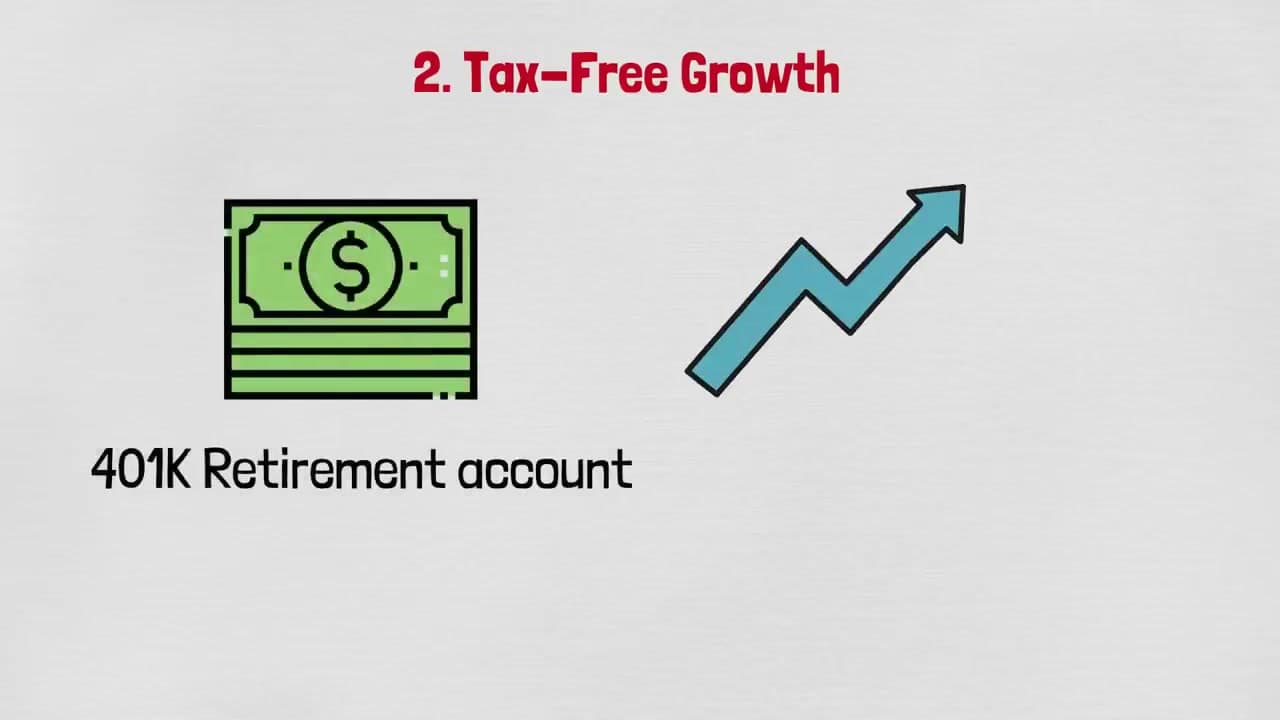
Once money is inside your 401(k), it grows without being taxed every year. No capital gains tax when investments gain value. No tax on dividends. No tax on interest. It all compounds tax-deferred until you start withdrawing.

This matters a lot over 20 or 30 years. A dollar taxed annually grows slower than a dollar that compounds without interruption. The 401(k) structure lets your balance build at full speed.

Tip

Tax-deferred growth is the main reason financial advisors usually suggest maxing out a 401(k) before opening a taxable brokerage account for retirement savings.

5

The Drawbacks You Should Know

4:20
Step 5: The Drawbacks You Should Know

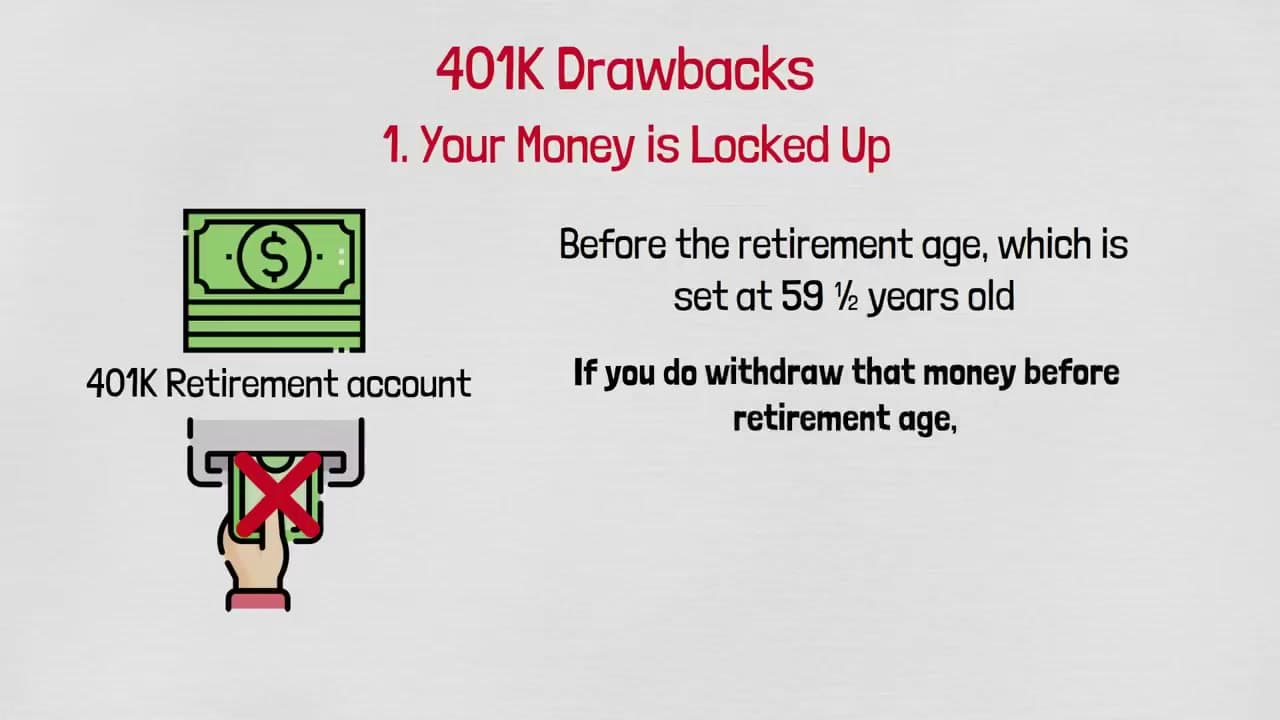
Your money is locked until age 59½. Pull it out early and you owe a 10% penalty on top of regular income taxes. A $20,000 early withdrawal could cost you $2,000 in penalty alone, plus whatever your tax rate takes.

Plan fees vary widely — from 0.5% to as high as 5% per year. That might not sound like much, but high fees compound just like returns do, eating into your balance over time. And your investment options are limited to whatever funds your employer's plan includes.

Tip

There are a handful of exceptions to the early withdrawal penalty — disability, certain medical expenses, and first-time home purchases in some cases. But these are narrow exceptions, not a regular escape hatch.

6

Contribution Limits and Flexibility

6:00
Step 6: Contribution Limits and Flexibility

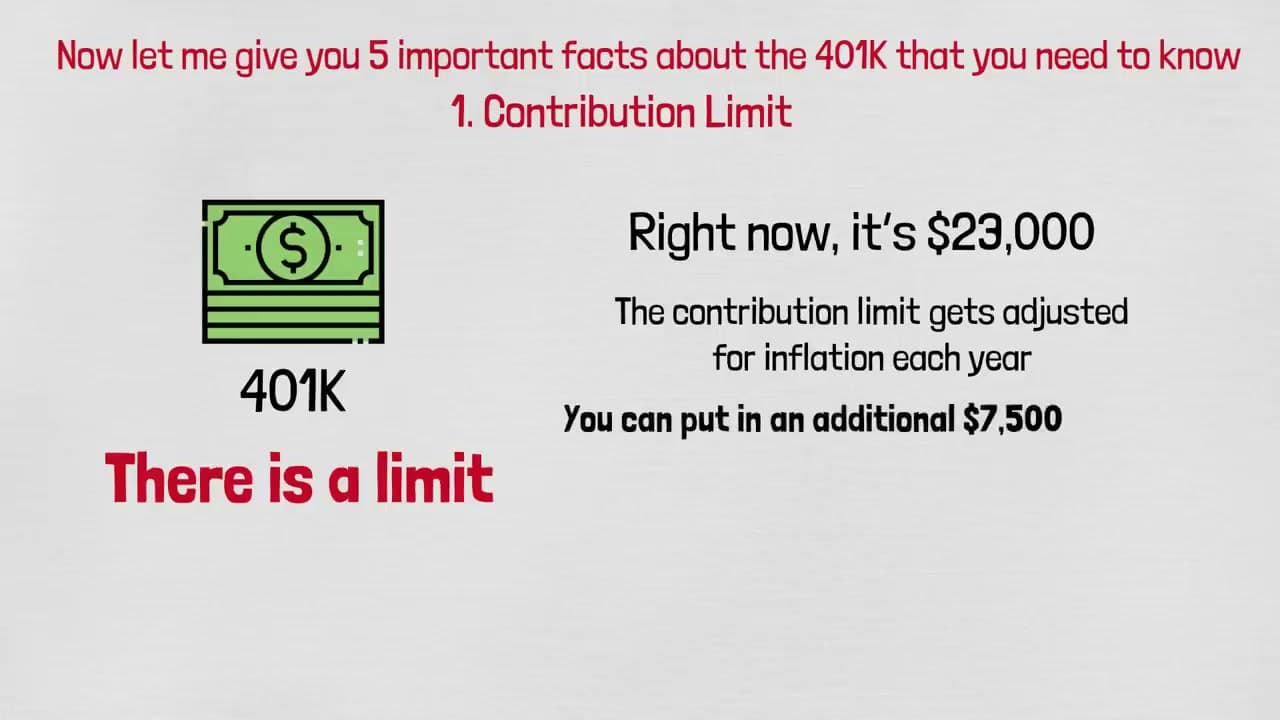
For 2025, you can contribute up to $23,000 per year to a 401(k). If you're 50 or older, you get an extra $7,500 catch-up contribution, bringing the total to $30,500.

There's no minimum. You can put in $300, $3,000, or whatever fits your budget. You can also change your contribution percentage any time — most plans let you adjust through your HR portal or payroll system. The $23,000 limit applies to your contributions only; employer match doesn't count against it.

7

Traditional vs. Roth 401(k)

7:25
Step 7: Traditional vs. Roth 401(k)

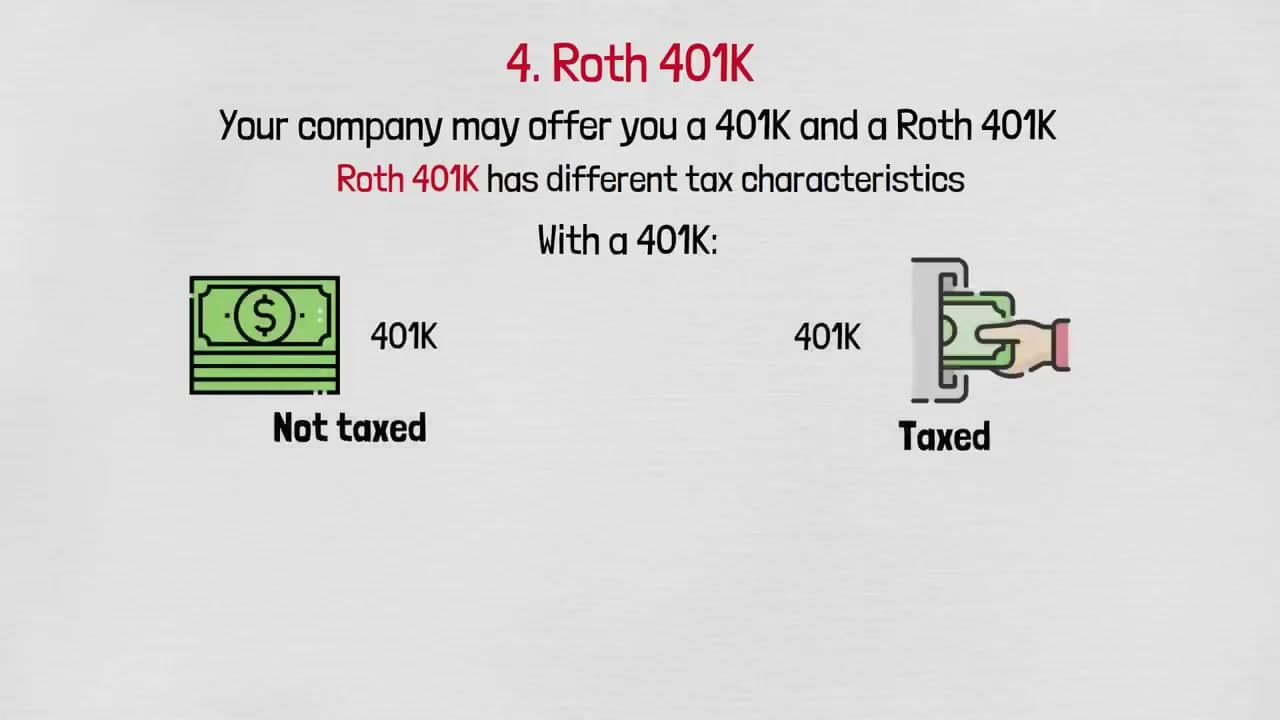
Many employers now offer both options. The traditional 401(k) is pre-tax in, taxed on the way out. The Roth 401(k) flips it — you contribute after-tax dollars, and qualified withdrawals in retirement are completely tax-free.

Which makes more sense depends on one question: do you expect to be in a higher or lower tax bracket in retirement than you are today? If you think taxes will be higher later, pay them now with a Roth. If you're in a high bracket now, the traditional's upfront deduction is probably worth more. You can split contributions between both as long as the combined total stays under the annual limit.

Tip

Younger workers who expect their income to grow significantly often lean toward the Roth option — paying taxes at a lower rate now, then withdrawing tax-free at a higher rate later.

8

What to Do With Your 401(k) When You Leave a Job

8:35
Step 8: What to Do With Your 401(k) When You Leave a Job

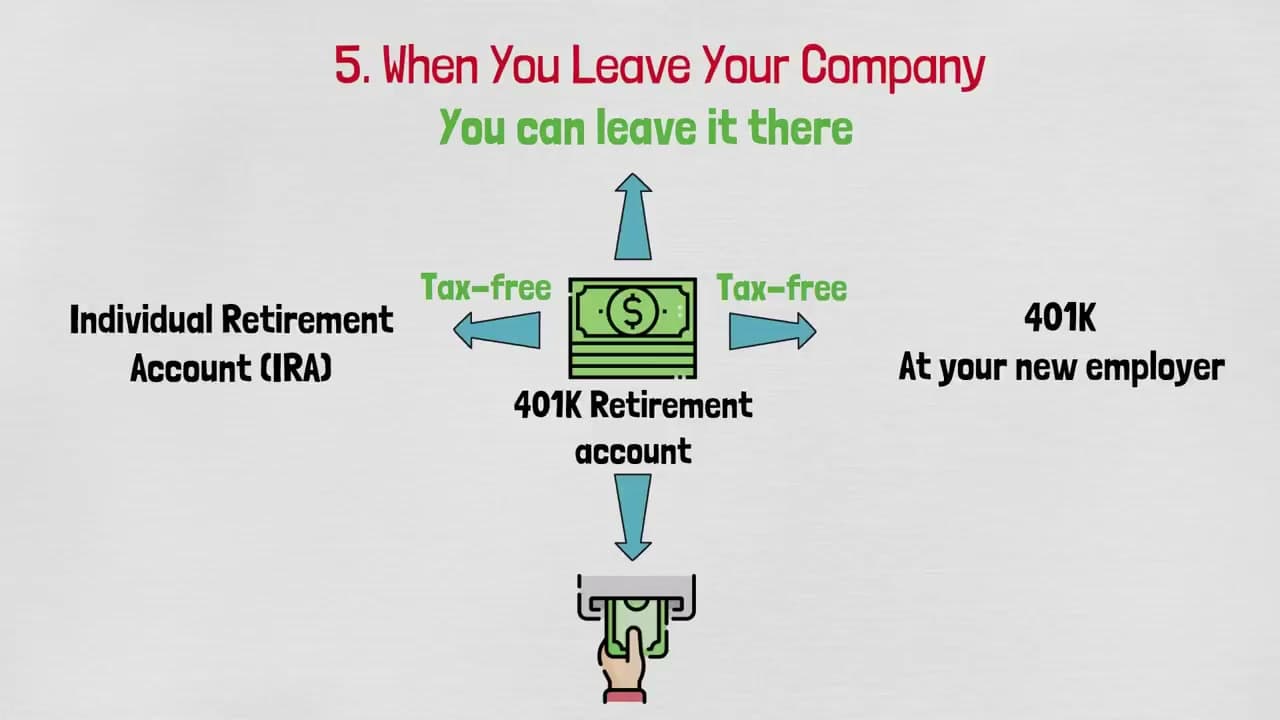
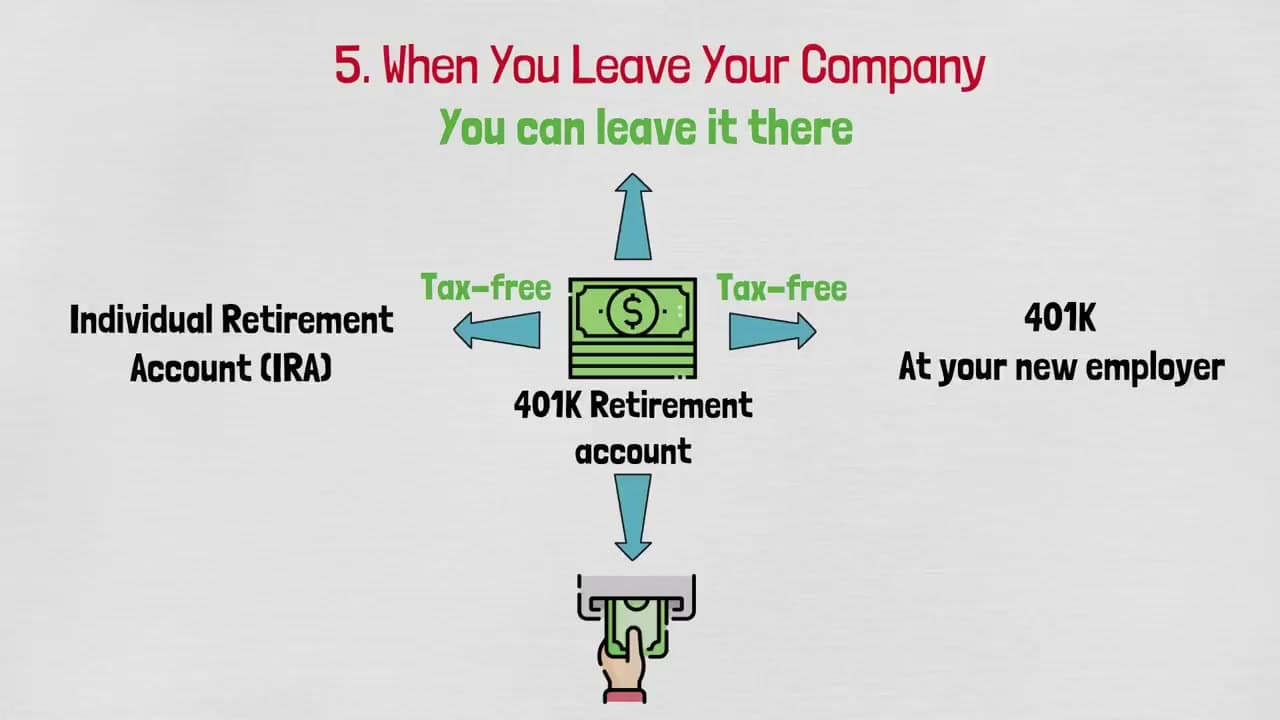
The money you contributed is always yours — your employer can't take it back. When you leave, you have four options: leave the account with the old employer's plan, roll it over tax-free into your new employer's 401(k), roll it into an IRA, or cash it out.

Cashing out is almost always the worst option. You'll owe income tax plus the 10% early withdrawal penalty if you're under 59½. Rolling into an IRA usually gives you the most investment flexibility. Rolling into your new employer's plan keeps everything in one place. Most people roll to an IRA.

Tip

You have 60 days to complete a rollover after receiving a distribution. Miss the deadline and the IRS treats it as taxable income. To avoid the clock entirely, use a direct rollover — funds transfer institution-to-institution without ever passing through your hands.

Products Used

Your Guide

ClearValue Tax

As an Amazon Associate we earn from qualifying purchases. Links on this page may be affiliate links - clicking them and buying doesn't change your price, but helps support ShowMeStepByStep.

Tags

What's next

Weekly Digest

Liked this financial basics tutorial?

Pick the categories you want to hear about. Weekly digest of new step-by-step tutorials. No spam, easy unsubscribe.

Send me tutorials about

We only email about new tutorials. Easy unsubscribe anytime.