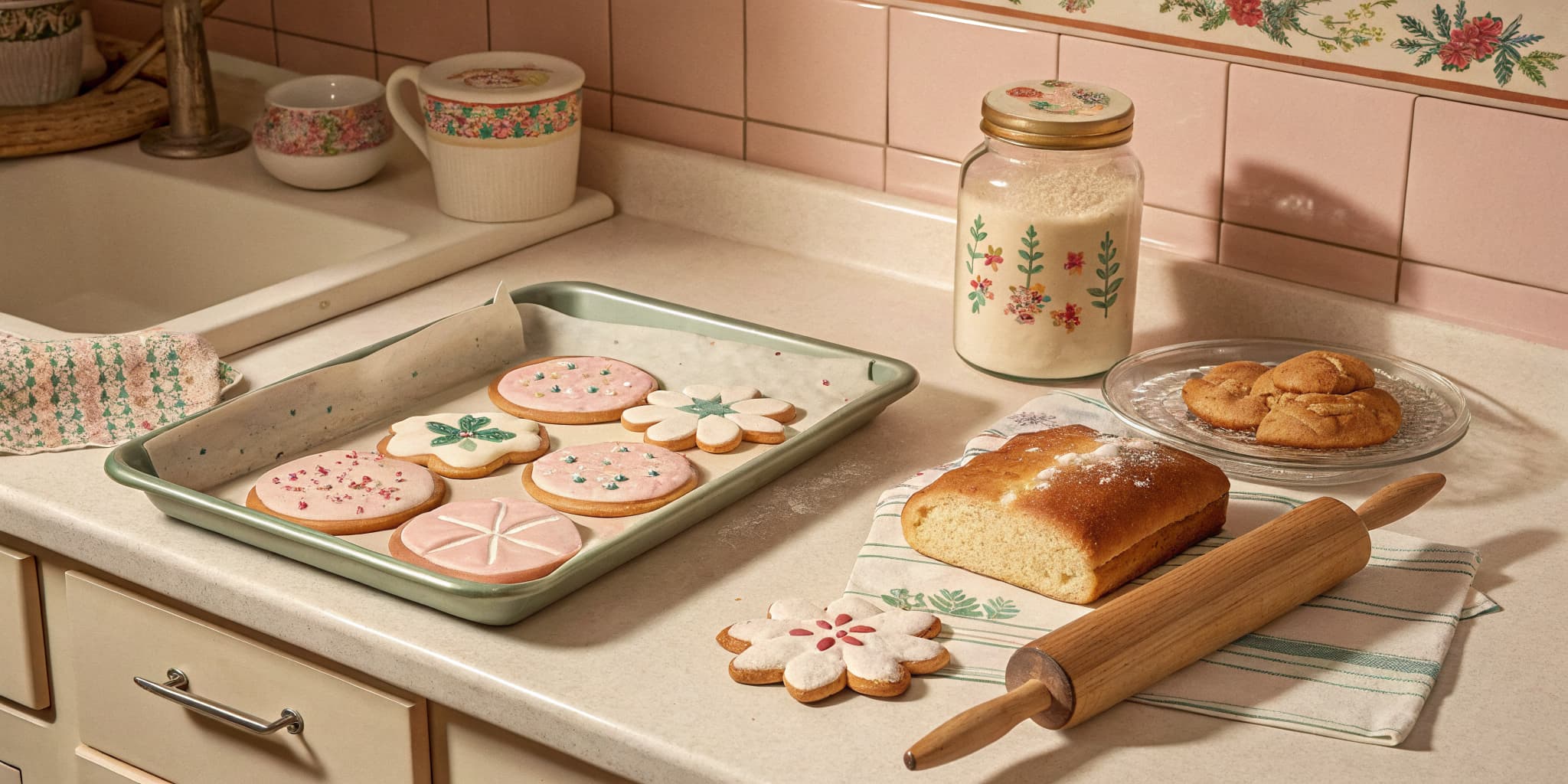
Cut-out sugar cookies have one job: come out of the oven the same shape they went in. A snowflake that bakes into a blob is the reason most people give up on them. This recipe from Little Cookie Co is built for the no-spread result. The dough is firm on purpose, brown sugar carries the flavor, and a short chill on the tray gives the butter further to go before it melts. The steps cover the how. This is the why.
Why sugar cookies spread
Three usual causes. This dough fixes all three.
Butter that is too soft. Room temperature means cool to the touch and yielding, not shiny or greasy. Microwaved butter is halfway to liquid, and the cookies run before the flour can set. Cube it and give it 30 minutes on the counter.
Over-creaming. Five minutes on high whips in air. Good for cake. In a cut-out cookie it puffs, collapses and spreads. A couple of minutes on medium-low, until the color lightens, is enough.
No chill. Cold dough hitting a hot oven holds its edge while the outside sets. Ten to fifteen minutes on the tray in the fridge is the cheapest insurance there is.
Too little flour sits under all three. The dough should feel firm and pull away from the bowl. If it squishes easily, add more. And hard brown sugar never creams in evenly, so soften it before you start.
Rolling thickness and flour on the board
A quarter inch is the number. Thinner and the cookie browns before the middle is done, then snaps when you ice it. Thicker and the center stays soft and bends under a heavy coat of royal icing. Rolling pin rings or two paint stirrers give you the same thickness every time.
This dough is rolled between two sheets of parchment, which sidesteps the flour problem. On a bare board every dusting works more flour into the dough, and by the third re-roll the scraps are dry and tough. Between parchment you use none, the scraps re-roll cleanly, and the sheet slides straight onto the tray. On a board, use as little flour as you can and brush off the excess.
Cut-out vs drop sugar cookies
They share a name and not much else. A drop sugar cookie is a softer dough, scooped and rolled into balls, meant to spread into a chewy round with crackly edges. Chocolate chip cookies live in that family.
A cut-out dough is drier and firmer by design: more flour, and a leavening that lifts rather than spreads. It bakes crisper and sturdier because it has to survive a rolling pin, a cutter, a chill and a coat of icing. If you want soft and chewy, you want a different recipe. If you want a star that is still a star, you want this one.
Royal icing or buttercream
Royal icing sets hard. It holds fine lines, floods to a smooth glassy surface, and iced cookies stack in a tin without smearing. It is the choice for anything you box up or ship. The royal icing page covers consistency and color.
Buttercream stays soft and tastes richer. It is faster, more forgiving, and kids can pile it on with a butter knife. It does not stack and it does not travel. For a plate eaten the same afternoon it is the easier win. Start with a basic icing and tint it. Either way, cool the cookies completely first, or the icing slides off the edge.
Freezing the dough and getting ahead for Christmas
The dough freezes for up to three months. Roll it between parchment, stack the sheets on a tray, freeze flat, then bag them. A frozen sheet thaws on the counter in twenty minutes and cuts cleaner than fresh dough. Baked, un-iced cookies keep a month in layers separated by parchment. Thaw them in the closed container so condensation lands on the lid, not the cookie.
For December, bake in the first week and freeze, then decorate in one afternoon. Stars, trees and snowflakes are the classic shapes, and a plain round with a snowflake piped on top is the fastest route to a big batch. Add a tray of gingerbread cookies for a mixed tin.