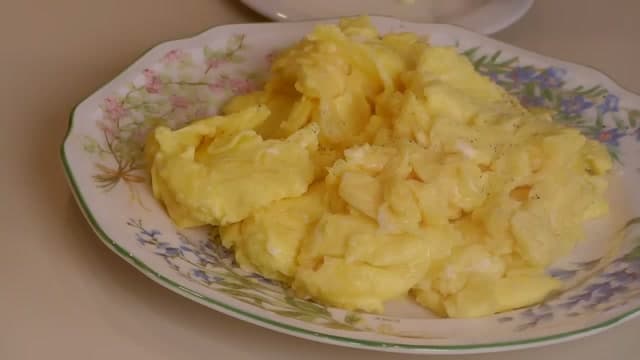
How to Make Perfect Fluffy Scrambled Eggs

By ShowMeStepByStepPublished Updated

Based on a video by AmyLearnsToCook.

Most scrambled eggs end up flat, gray, and overcooked because of two mistakes: the pan is too hot and the eggs get stirred too much. Fix those two things and you get soft, fluffy, bright yellow eggs every time.

Amy from AmyLearnsToCook shows the pull technique where you draw the cooked curds toward the center and let liquid egg flow to the edges. No constant stirring. The result is large, pillowy curds instead of the broken-up dry bits most people end up with.

Common questions

What heat should I use for fluffy scrambled eggs?

Low, about a 3 out of 10. Low and slow keeps the curds soft and yellow. High heat is exactly what turns eggs flat, gray, and rubbery.

Should I add milk to scrambled eggs?

You don't need to. Beating the eggs until the whites and yolks fully combine, then cooking low and folding gently, is what makes them fluffy. Milk can actually water them down.

When do I take scrambled eggs off the heat?

A little early, while they still look slightly underdone and glossy. Residual heat finishes them on the way to the plate, so pulling them early stops them overcooking into dry curds.

Step-by-Step Guide

1

Crack and Beat the Eggs

0:29
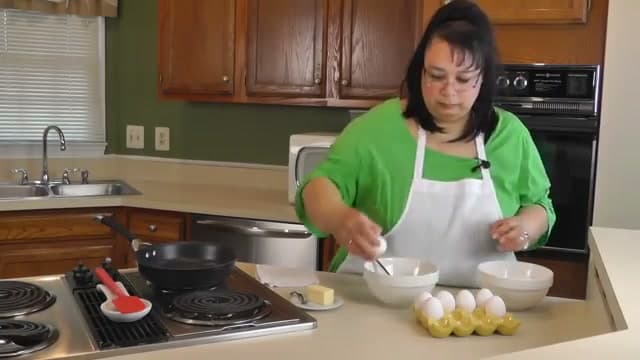
Step 1: Crack and Beat the Eggs

Crack your eggs into a bowl. Six eggs feeds about three people. Beat them with a fork or whisk until the whites and yolks are completely combined. No streaks of white should be visible.

Under-beaten eggs cook unevenly and you end up with separate white and yellow patches instead of a uniform golden color.
2

Heat the Pan Low and Add Butter

2:21
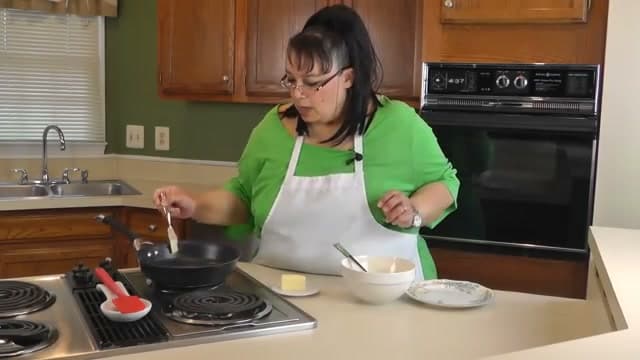
Step 2: Heat the Pan Low and Add Butter

Set your non-stick pan to low heat. About a 3 out of 10 on the dial. Drop in a pat of butter and let it melt slowly without browning.

Low heat is the single biggest factor in fluffy eggs. High heat cooks the outside too fast, which is what makes eggs rubbery and flat. You want gentle, even heat the entire time.

3

Pour the Eggs In

3:01
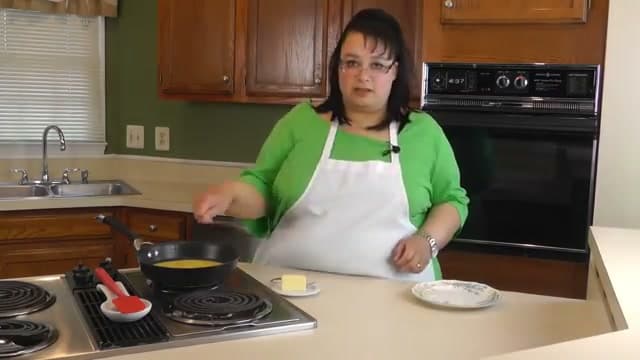
Step 3: Pour the Eggs In

Pour the beaten eggs into the warm buttered pan. Your first instinct will be to start stirring immediately. Do not do that. Let them sit and start setting on the bottom first.

Do not add salsa, cheese, vegetables, or any wet ingredients to the pan. Cook the eggs plain and add toppings after. Wet additions steam the eggs and turn them gray.

4

Pull the Curds to the Center

3:53
Step 4: Pull the Curds to the Center

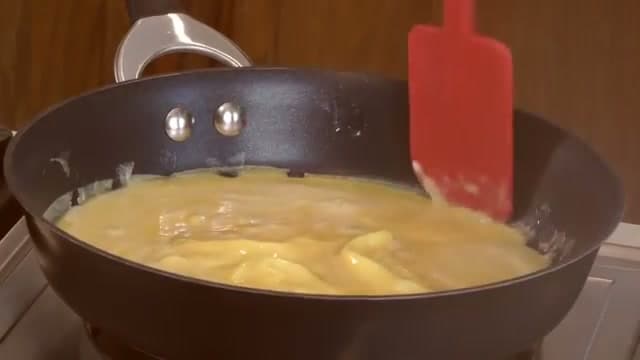
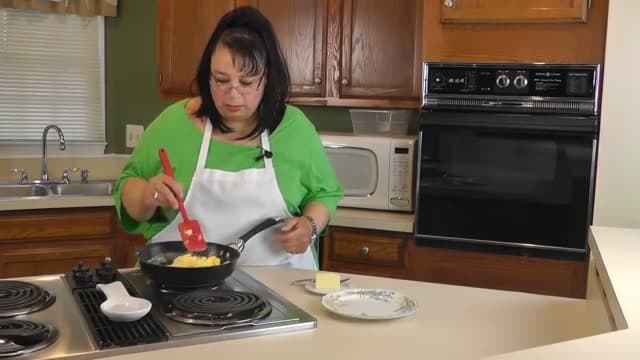
Once the bottom layer starts to set, use a spatula to gently draw the cooked egg toward the center. Tilt the pan so the liquid egg flows out to the edges where it contacts the hot surface.

This is the technique that makes the difference. You are not stirring. You are pulling cooked egg inward and letting raw egg take its place. The curds form large, fluffy pillows instead of small broken bits.

Products used in this step

5

Fold Gently and Remove Early

4:52
Step 5: Fold Gently and Remove Early

As the curds get larger, fold them over on themselves to cook the interior. Do not stir aggressively or you will break the curds apart and lose the fluffy texture.

Pull the eggs off the heat just before they look fully done. They will continue cooking from residual heat on the plate. If they look perfect in the pan, they will be overcooked by the time you eat them.

6

Season and Serve

6:15
Step 6: Season and Serve

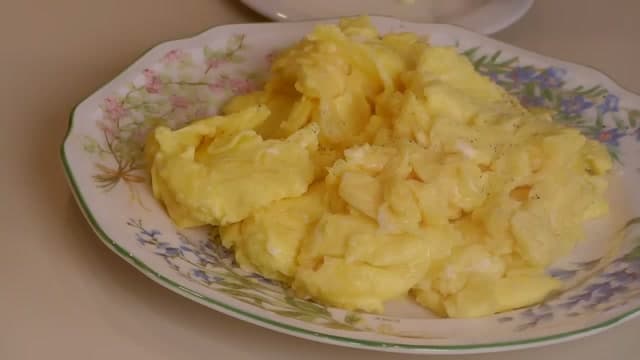
Slide the eggs onto a plate and season with salt and a grind of pepper. Use white pepper if you do not want visible black specks.

Add any toppings now. Salsa, cheese, herbs, hot sauce. Keeping them separate from the cooking process is what lets the eggs stay fluffy and bright yellow.

Products used in this step

Products Used

❖ The Recipe

How to Make Perfect Fluffy Scrambled Eggs

Serves
3 servings
Prep
2 min
Cook
6 min
Total
8 min

Ingredients

4 items
  • 6large eggs
  • 1 pat (about 1 tablespoon)butter
  • to taste (after cooking)salt
  • to tastewhite or black pepperwhite pepper avoids visible specks

Nutrition

estimated · per servingEstimated from the ingredient list, not measured. Actual values vary by brand, preparation, and serving size. Not a substitute for measured nutrition data.
Calories
173kcal
Protein
12g
Fat
14g
Carbs
1g
Sodium
250mg

Method

  1. 1
    Crack and Beat the Eggs. Crack your eggs into a bowl.
  2. 2
    Heat the Pan Low and Add Butter. Set your non-stick pan to low heat.
  3. 3
    Pour the Eggs In. Pour the beaten eggs into the warm buttered pan.
  4. 4
    Pull the Curds to the Center. Once the bottom layer starts to set, use a spatula to gently draw the cooked egg toward the center.
  5. 5
    Fold Gently and Remove Early. As the curds get larger, fold them over on themselves to cook the interior.
  6. 6
    Season and Serve. Slide the eggs onto a plate and season with salt and a grind of pepper.

Your Guide

AmyLearnsToCook

As an Amazon Associate we earn from qualifying purchases. Links on this page may be affiliate links - clicking them and buying doesn't change your price, but helps support ShowMeStepByStep.

Tags

Test your knowledge

Did the lesson stick? Find out in 2 minutes.

5 quick questions covering what you just read. No signup, no score saved — just a gut check.

Quick reference

Key takeaways from How to Make Perfect Fluffy Scrambled Eggs

5 questions, answers, and one-line explanations. Tap to expand.

  1. 1.Single biggest factor in fluffy eggs?

    Answer: Low heat (about 3/10)

    High heat sears the outside before the inside cooks = rubbery curds. Low and slow is the only way to silky.

  2. 2.Add cheese or salsa WHILE the eggs cook?

    Answer: No, add after cooking

    Wet additions steam the eggs and turn them gray. Cook eggs plain; load toppings on the plate.

  3. 3.What is the 'pull' technique?

    Answer: Draw curds into center

    Pull cooked curds into center while tilting the pan so runny egg flows to hot edges. Forms large fluffy curds instead of broken bits.

  4. 4.When should you pull the eggs off heat?

    Answer: Just before they look done

    Looking perfect in the pan = overcooked on the fork. Residual carryover is real, plan for it.

  5. 5.Why use white pepper instead of black?

    Answer: No visible black flecks

    Purely aesthetic. White blends invisibly into yellow eggs; black shows up as flecks. Use either based on preference.

What's next

Related collections

Curated theme pages that include this tutorial.

Weekly Digest

Liked this cooking tutorial?

Pick the categories you want to hear about. Weekly digest of new step-by-step tutorials. No spam, easy unsubscribe.

Send me tutorials about

We only email about new tutorials. Easy unsubscribe anytime.