How to Make Mayonnaise

CookingEasy5:428 stepsBrowse more →

By ShowMeStepByStepPublished

Based on a video by Martha Stewart.

Store-bought mayo has its place, but homemade is a different animal. It's brighter, fresher, and you control exactly what goes in. Martha Stewart walks through her classic method in this five-minute video, and the magic move is emulsification: pulling oil and a tiny bit of liquid together into something thick, silky, and stable.

You only need one egg yolk, a teaspoon of Dijon, a teaspoon of lemon juice, and a cup of neutral oil. The yolk does the heavy lifting because it's packed with lecithin, the natural emulsifier that holds the oil droplets in suspension. If you've made tomato sauce, salsa, or BBQ sauce from scratch, this is the next pantry staple to add to the rotation.

The whole thing takes about ten minutes by hand or under a minute with an immersion blender. Both methods are covered below.

Step-by-Step Guide

1

Gather Room-Temperature Ingredients

0:08
Step 1: Gather Room-Temperature Ingredients

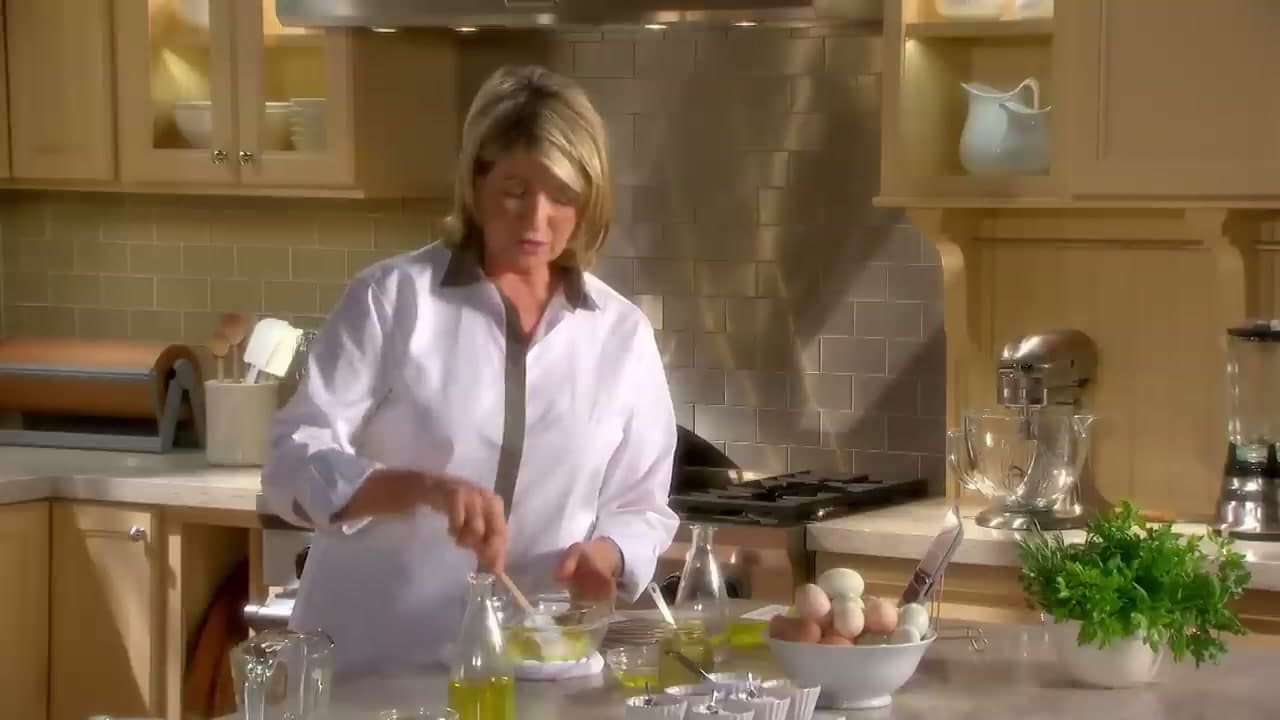
Pull your ingredients out 20 to 30 minutes ahead so everything sits at room temperature. Cold yolk and cold oil refuse to emulsify cleanly, and a broken mayo is a sad thing. You'll need one large egg yolk, one teaspoon of Dijon mustard, one teaspoon of fresh lemon juice, one cup of grapeseed oil, salt, and a pinch of white pepper.

Grapeseed is Martha's pick because it's stable and flavorless, so the mayo tastes clean. Canola works too. Avoid extra-virgin olive oil for your first batch, since it can taste bitter when whipped this aggressively.

Tip

Crack the egg straight from the fridge if you forgot to set it out, then float the unbroken egg in a bowl of warm water for five minutes to take the chill off.

2

Separate the Egg and Reserve the Yolk

0:20
Step 2: Separate the Egg and Reserve the Yolk

Crack one large egg and separate the yolk into your mixing bowl. Save the white for another use. An omelet, a meringue, a whiskey sour. One yolk handles a full cup of oil because of all that lecithin doing the emulsifying work.

Use the freshest egg you can find. The fresher the yolk, the more emulsifying power it carries.

Tip

If you're worried about raw eggs, look for pasteurized eggs in the carton or use a yolk from a pasteurized liquid egg product.

Products used in this step

3

Add Mustard and Lemon Juice

0:38
Step 3: Add Mustard and Lemon Juice

Add one teaspoon of Dijon mustard and one teaspoon of fresh lemon juice to the yolk. This is your emulsifier base. The mustard adds a second emulsifier and brings flavor, while the lemon juice gives the acidic backbone that keeps mayo from tasting flat.

White wine vinegar works in place of lemon juice if that's what you have on hand. Same teaspoon, same result.

Tip

Use a real lemon. Bottled lemon juice has a metallic edge that comes through in something this delicate.

Products used in this step

4

Whisk the Yolk Base Smooth

1:20
Step 4: Whisk the Yolk Base Smooth

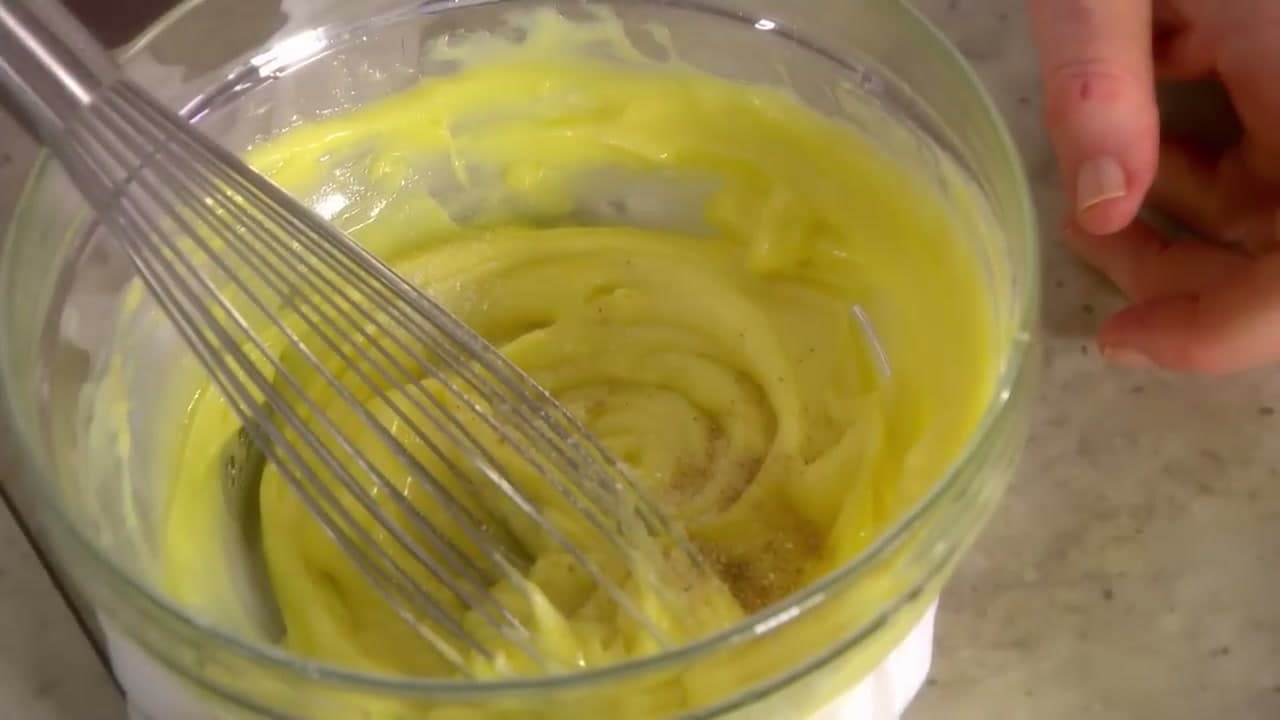
Whisk the yolk, mustard, and lemon juice together until the mixture looks smooth and slightly lighter in color. Just ten or fifteen seconds. You want everything fully combined before a single drop of oil goes in.

Anchor your bowl on the counter with a damp kitchen towel twisted into a ring. This keeps both hands free, one for the whisk and one for the oil, so the bowl cannot wobble when you start pouring.

Tip

A balloon whisk moves more liquid per stroke than a flat whisk and saves your arm.

Products used in this step

5

Drizzle the Oil Drop by Drop While Whisking

1:45
Step 5: Drizzle the Oil Drop by Drop While Whisking

Start adding the grapeseed oil one drop at a time, whisking constantly. Do not rush this. The first quarter cup is the danger zone and the make-or-break moment for your emulsion.

Once the mixture visibly thickens and turns pale and creamy, you can speed up to a thin steady stream. Keep whisking the whole way through. If your arm gets tired, that's the workout Martha promised. Stop when all one cup of oil is incorporated and the mayo looks silky and stiff enough to hold a soft peak.

Tip

If the mayo breaks (looks curdled or thin), start over in a clean bowl with a fresh yolk and slowly whisk the broken sauce into it. You'll rescue almost every separation this way.

6

Season with Salt, Pepper, and Adjust

3:05
Step 6: Season with Salt, Pepper, and Adjust

Taste the mayo. Add about a quarter teaspoon of salt and a pinch of white pepper, then whisk to blend. Taste again. If it's flat, add a few more drops of lemon juice. If it feels too thick, whisk in a teaspoon of room-temperature water to loosen it.

White pepper keeps the mayo looking clean and white. Black pepper works fine too if that's what you have, you'll just see the specks.

Tip

Want aioli? Stir in one finely grated garlic clove with the salt. Want herb mayo? Fold in two tablespoons of minced fresh herbs at the end.

7

Try the Immersion Blender Shortcut

4:28
Step 7: Try the Immersion Blender Shortcut

If you own an immersion blender, you can skip the whisk entirely. Add the yolk, mustard, lemon juice, and full cup of oil to a tall narrow container like a two-cup measure. Drop the blender head all the way to the bottom and pulse without moving it for about ten seconds.

You'll hear the emulsion form. The sound changes as the mixture thickens. Slowly lift the blender as the mayo climbs up. Total time is under a minute, and it works every time.

Tip

The narrow container is the secret. A wide bowl gives the blender too much room and the oil never gets pulled into the yolk fast enough.

8

Store and Use Within a Week

3:38
Step 8: Store and Use Within a Week

Scrape the finished mayo into a clean glass jar with a tight lid. Refrigerate immediately. Homemade mayo keeps five to six days in the fridge because there are no preservatives, so make it in small batches and don't try to stretch a single yolk into a month's supply.

Use it on a BLT, fold it into chicken salad, thin it with olive oil for a salad dressing, stir in herbs for a sandwich spread, or grate in a garlic clove to turn it into aioli for fries and roasted potatoes.

Tip

Always use a clean spoon when scooping out of the jar. Cross-contamination shortens the shelf life faster than time does.

Products used in this step

Products Used

❖ The Recipe

How to Make Mayonnaise

American
Serves
Makes about 1 cup
Prep
10 min
Cook
0 min
Total
10 min

Ingredients

6 items
  • 1large egg yolkroom temperature, freshest you can find
  • 1 tspDijon mustard
  • 1 tspfresh lemon juice
  • 1 cupgrapeseed oilor another neutral oil like canola
  • 1/4 tspsaltor to taste
  • pinchwhite pepper

Method

  1. 1
    Gather Room-Temperature Ingredients. Pull your ingredients out 20 to 30 minutes ahead so everything sits at room temperature.
  2. 2
    Separate the Egg and Reserve the Yolk. Crack one large egg and separate the yolk into your mixing bowl.
  3. 3
    Add Mustard and Lemon Juice. Add one teaspoon of Dijon mustard and one teaspoon of fresh lemon juice to the yolk.
  4. 4
    Whisk the Yolk Base Smooth. Whisk the yolk, mustard, and lemon juice together until the mixture looks smooth and slightly lighter in color.
  5. 5
    Drizzle the Oil Drop by Drop While Whisking. Start adding the grapeseed oil one drop at a time, whisking constantly.
  6. 6
    Season with Salt, Pepper, and Adjust. Taste the mayo.
  7. 7
    Try the Immersion Blender Shortcut. If you own an immersion blender, you can skip the whisk entirely.
  8. 8
    Store and Use Within a Week. Scrape the finished mayo into a clean glass jar with a tight lid.

Your Guide

Martha Stewart

As an Amazon Associate we earn from qualifying purchases. Links on this page may be affiliate links - clicking them and buying doesn't change your price, but helps support ShowMeStepByStep.

Tags

What's next

Weekly Digest

Liked this cooking tutorial?

Pick the categories you want to hear about. Weekly digest of new step-by-step tutorials. No spam, easy unsubscribe.

Send me tutorials about

We only email about new tutorials. Easy unsubscribe anytime.