How to Make Chimichurri Sauce (Authentic Argentinian Recipe)

By ShowMeStepByStepPublished Updated

Based on a video by Chef Vivien.

Chimichurri is the bright, herby, garlicky sauce Argentinians spoon over grilled meat at every asado. It's all herbs, garlic, vinegar, and olive oil. No cooking required, ready in 10 minutes, and the flavor only gets better as it rests.

Chef Vivien walks through the traditional method using a mortar and pestle. Hand-crushing the garlic, salt, and spices builds a deeper, more rustic flavor than a food processor ever will. A blender shreds the herbs and turns them into paste. The mortar smashes them just enough to release their oils while keeping real texture in every bite.

The other key move is adding the parsley last, right before you serve. The base of garlic, spices, vinegar, and oil can sit in the fridge for a week, but parsley fades fast once it hits acid. Whisk it in an hour or two before dinner and the sauce stays vivid green all the way to the plate. Spoon it over grilled steak, chicken, or fish.

Step-by-Step Guide

1

Step 1: Gather Your Ingredients

0:40
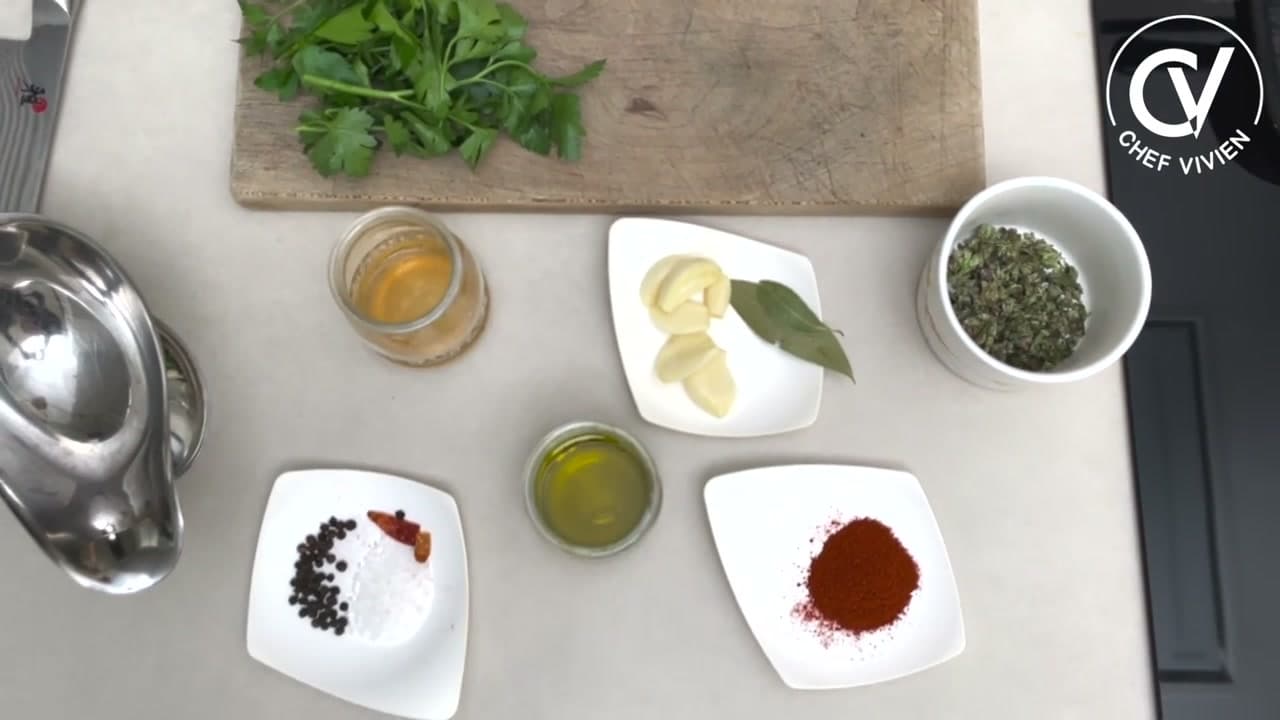
Step 1: Step 1: Gather Your Ingredients

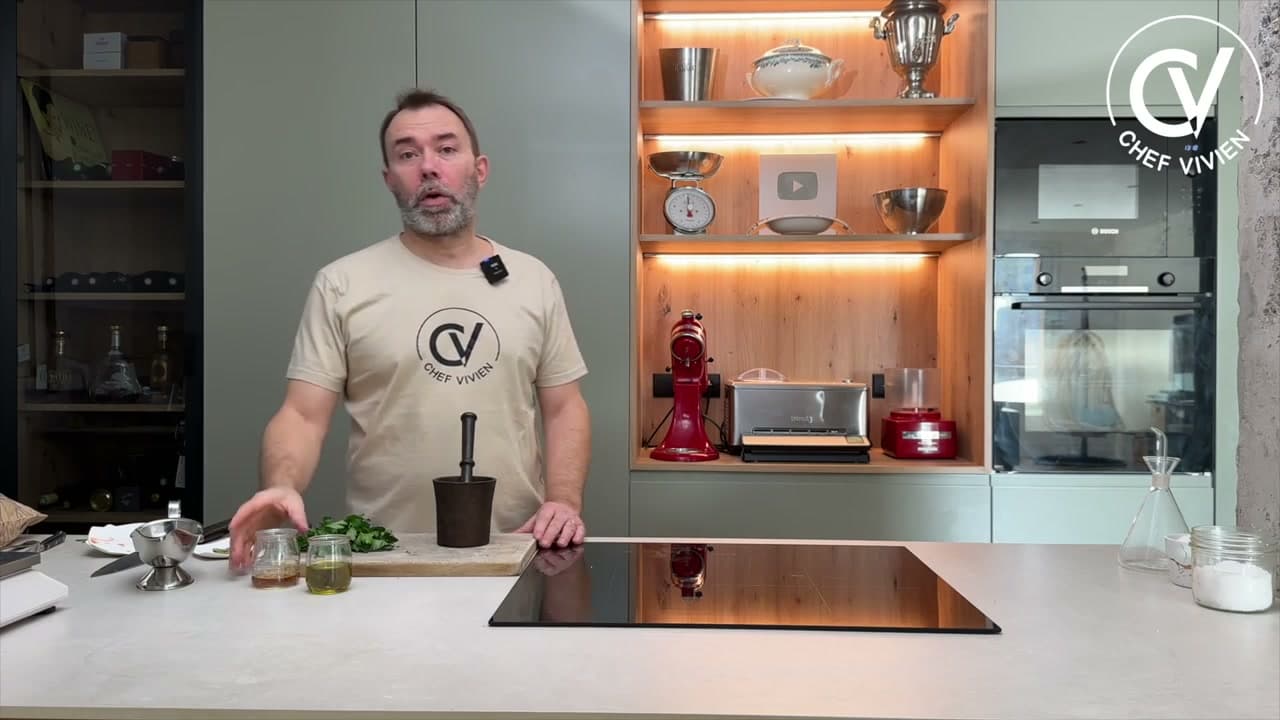
Pull everything together before you start crushing. You need fresh flat-leaf parsley, dried oregano, four garlic cloves, red chili pepper flakes, smoked paprika (pimenton de la Vera if you can get it), whole black peppercorns, coarse salt, two bay leaves, red wine vinegar, and a good extra-virgin olive oil.

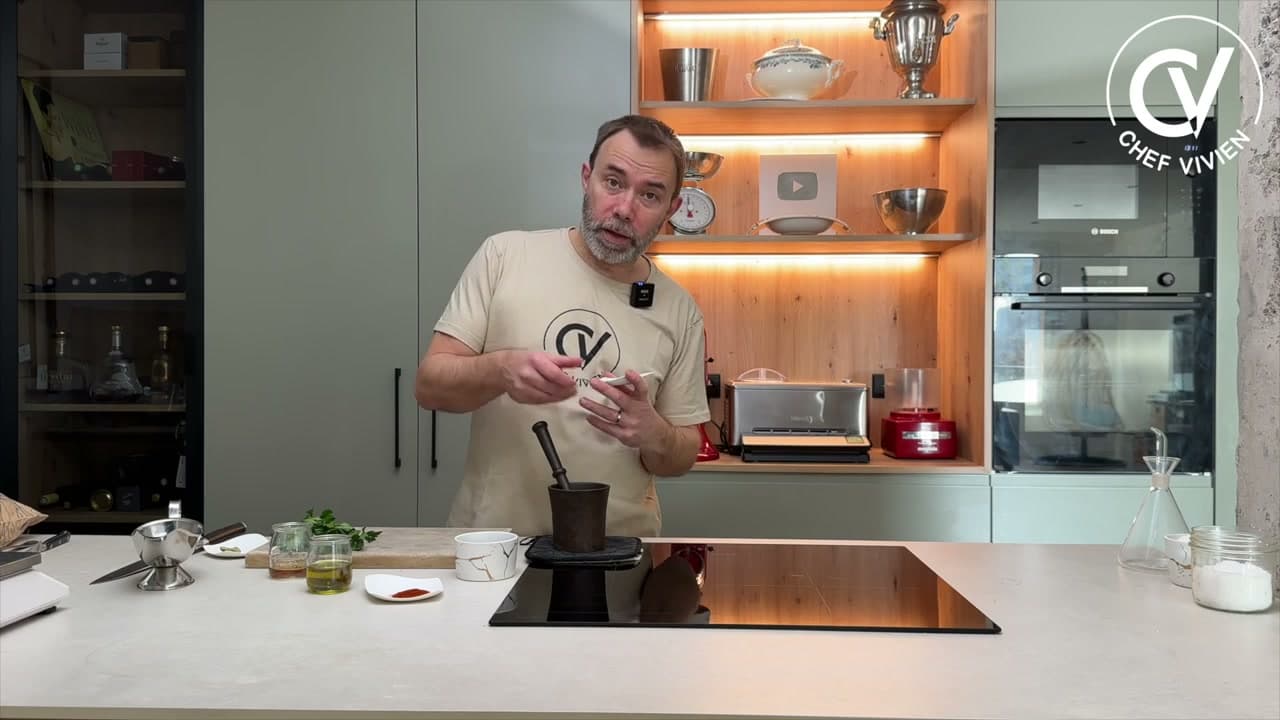
The traditional Argentinian way uses a mortar and pestle to crush everything by hand. A small electric blender works if you don't have one, but you'll lose the rustic texture that gives real chimichurri its character. The herbs should still look like herbs, not green paste.

Tip

Watch this step Smoked paprika is what separates good chimichurri from great. Standard sweet paprika works but you'll miss the low, woody warmth that ties everything together.
2

Step 2: Peel and Prep the Garlic

1:15
Step 2: Step 2: Peel and Prep the Garlic

Peel four garlic cloves, slice each one down the middle, and pull out the green germ in the center. The germ is the bitter, sharp part of garlic and it shows up loud in any sauce that doesn't get cooked. Pulling it out gives you cleaner, sweeter garlic flavor.

Drop the cleaned cloves straight into the mortar. Set the mortar on a folded towel to keep it from sliding around when you start grinding.

Tip

Watch this step Older garlic has a longer, greener germ that's more bitter. Fresh garlic in spring might not need this step at all, but it never hurts.

3

Step 3: Crush Garlic, Salt, and Spices in the Mortar

1:55
Step 3: Step 3: Crush Garlic, Salt, and Spices in the Mortar

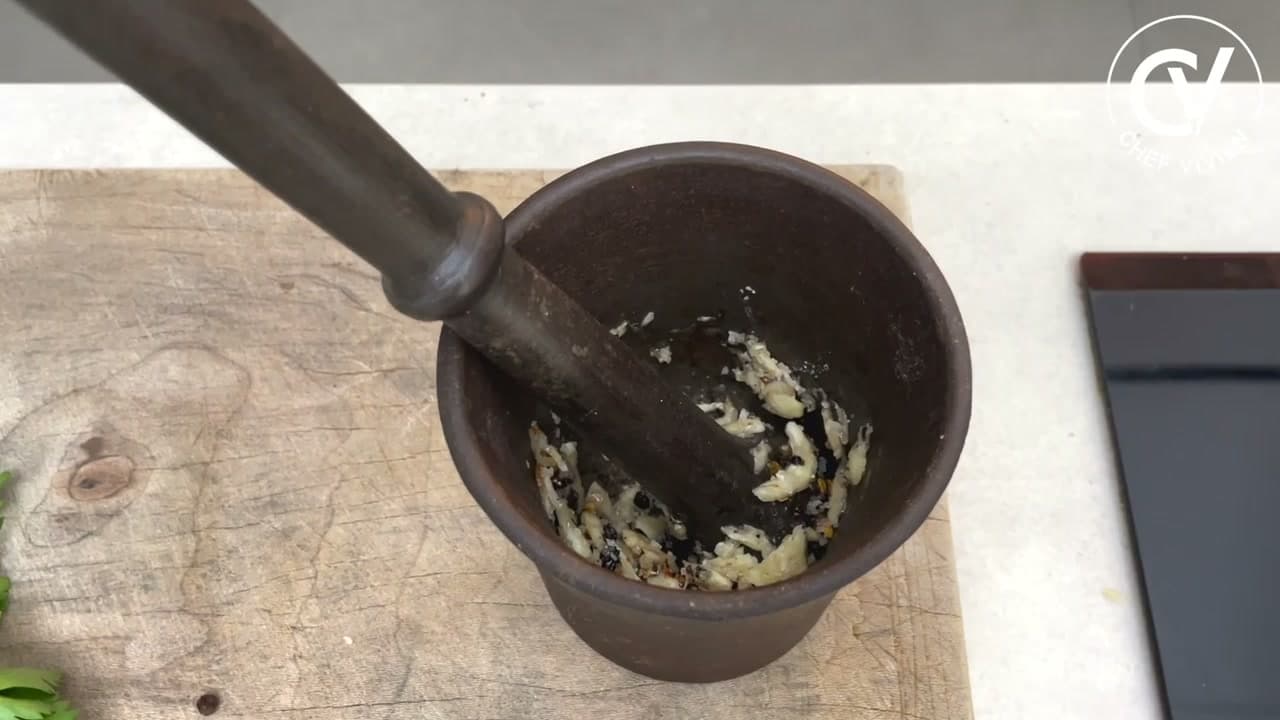
Add a teaspoon of coarse salt and a teaspoon each of black peppercorns and red chili pepper flakes to the mortar with the garlic. The salt is the secret here. It works as an abrasive that helps break the garlic down fast, so you're not just spinning slick cloves around the bowl.

Grind in firm circular motions until everything turns into a coarse fragrant paste. Keep your face back from the bowl. Crushed garlic and chili release sharp fumes that hit hard and fast if you're hovering over it.

Tip

Watch this step Use kosher salt or sea salt flakes. Fine table salt dissolves too quickly and won't give you the same grinding action against the garlic.

4

Step 4: Add Smoked Paprika and Oregano

2:35
Step 4: Step 4: Add Smoked Paprika and Oregano

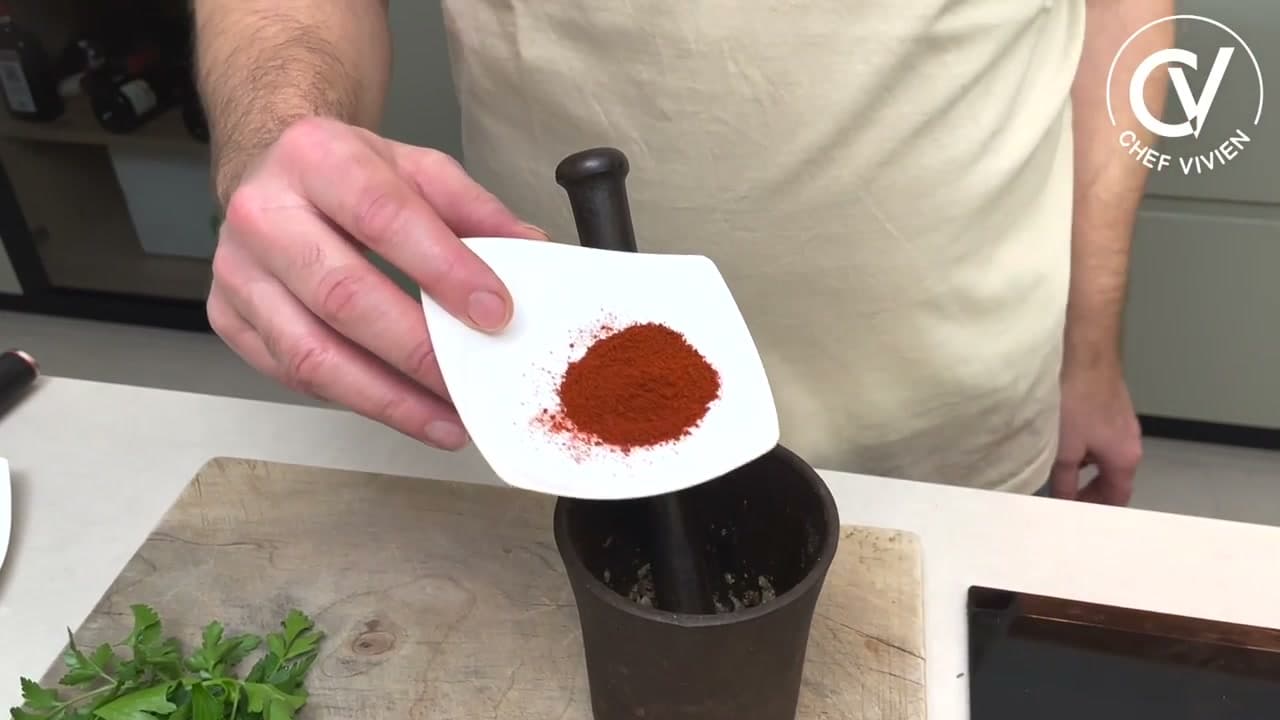
Once the garlic paste is broken down, add two teaspoons of smoked paprika and two tablespoons of dried oregano. The smoked paprika brings a low woody warmth that balances the sharpness from the raw garlic and chili. Without it the sauce tastes flat and one-dimensional.

Mix the spices through the paste with the pestle until the color is uniform and you can smell the oregano lifting off the bowl.

Tip

Watch this step Mediterranean oregano is more delicate. Mexican oregano is more citrusy and floral. Either one works in chimichurri, but if you've got fresh oregano flowers, those are unbeatable.

5

Step 5: Stir in the Red Wine Vinegar

3:55
Step 5: Step 5: Stir in the Red Wine Vinegar

Pour in two tablespoons of red wine vinegar and stir it through the paste. Red wine vinegar is traditional, but apple cider vinegar or sherry vinegar work too. Skip the balsamic. It's too sweet and too dark for chimichurri and you'll end up with the wrong color and the wrong flavor.

No vinegar on hand? Fresh lemon juice gets you close in a pinch. Stir until the paste loosens into something closer to a wet slurry.

Tip

Watch this step If your vinegar is more than a year old it loses some bite. A fresh bottle of red wine vinegar makes a noticeable difference in a sauce where the vinegar is front and center.

6

Step 6: Stream in the Olive Oil

4:35
Step 6: Step 6: Stream in the Olive Oil

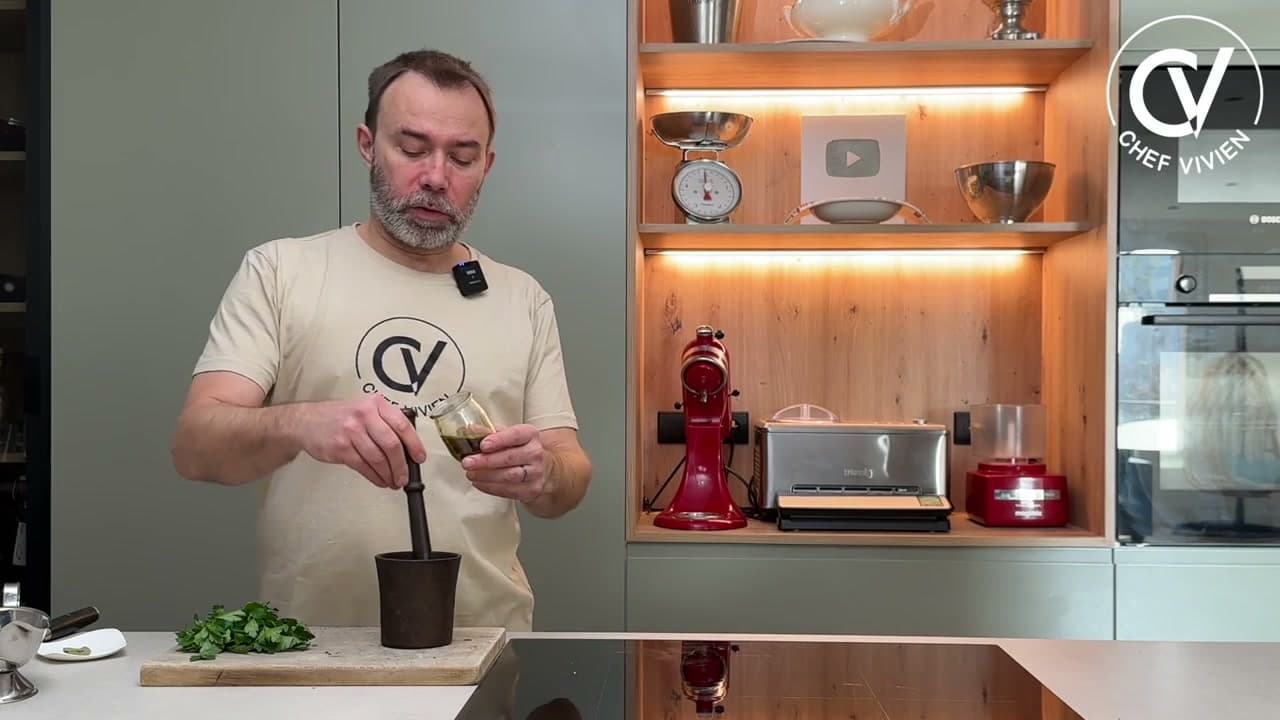
Now stream in about 100 ml of extra-virgin olive oil, pouring it in slowly the way you would for a vinaigrette. A steady thin stream helps the oil emulsify with the vinegar instead of separating right away. Keep stirring with the pestle as you pour.

At this point you have your chimichurri base. The base can live in the fridge for up to a week. Add the parsley fresh just before you plan to eat, never days ahead.

Tip

Watch this step A fruity, peppery Spanish or Argentinian olive oil suits the sauce best. Light or refined oils get lost behind the vinegar and herbs.

7

Step 7: Finely Chop the Parsley

5:15
Step 7: Step 7: Finely Chop the Parsley

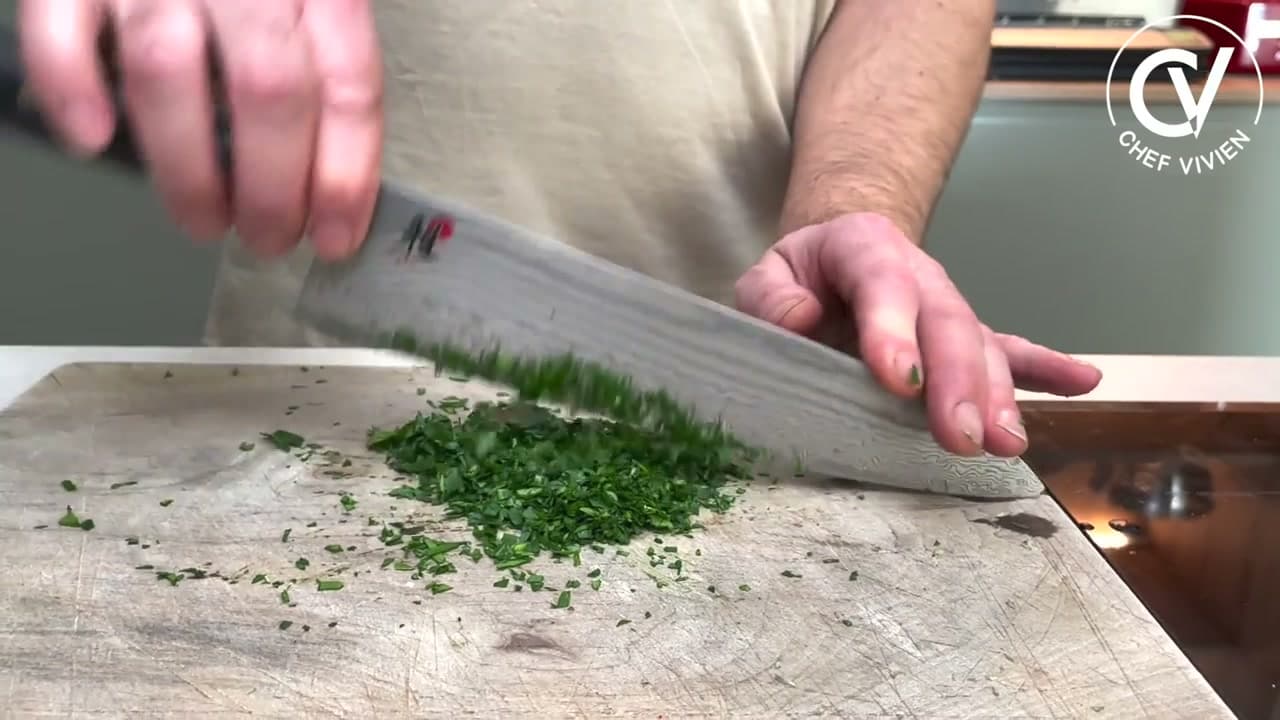
Wash a big bunch of flat-leaf parsley and pat it dry. Chop it finely with a sharp chef's knife using the French technique: keep the tip of the knife on the board and rock the blade up and down through the leaves, gathering and re-chopping until the parsley is uniformly fine.

Don't bother stripping leaves one at a time. The small tender stems are flavorful and chop in fine with the leaves. Strip out only the thick lower stems.

Tip

Watch this step A dull knife bruises parsley and turns it dark. If your chimichurri keeps coming out muddy green instead of vivid, sharpen your knife.

8

Step 8: Fold in Parsley, Rest, and Serve

7:18
Step 8: Step 8: Fold in Parsley, Rest, and Serve

Stir the chopped parsley into the sauce. Tear two bay leaves and lay them on top to infuse rather than chopping them in. You want the subtle bay flavor without leaving dry leaf shards in someone's bite.

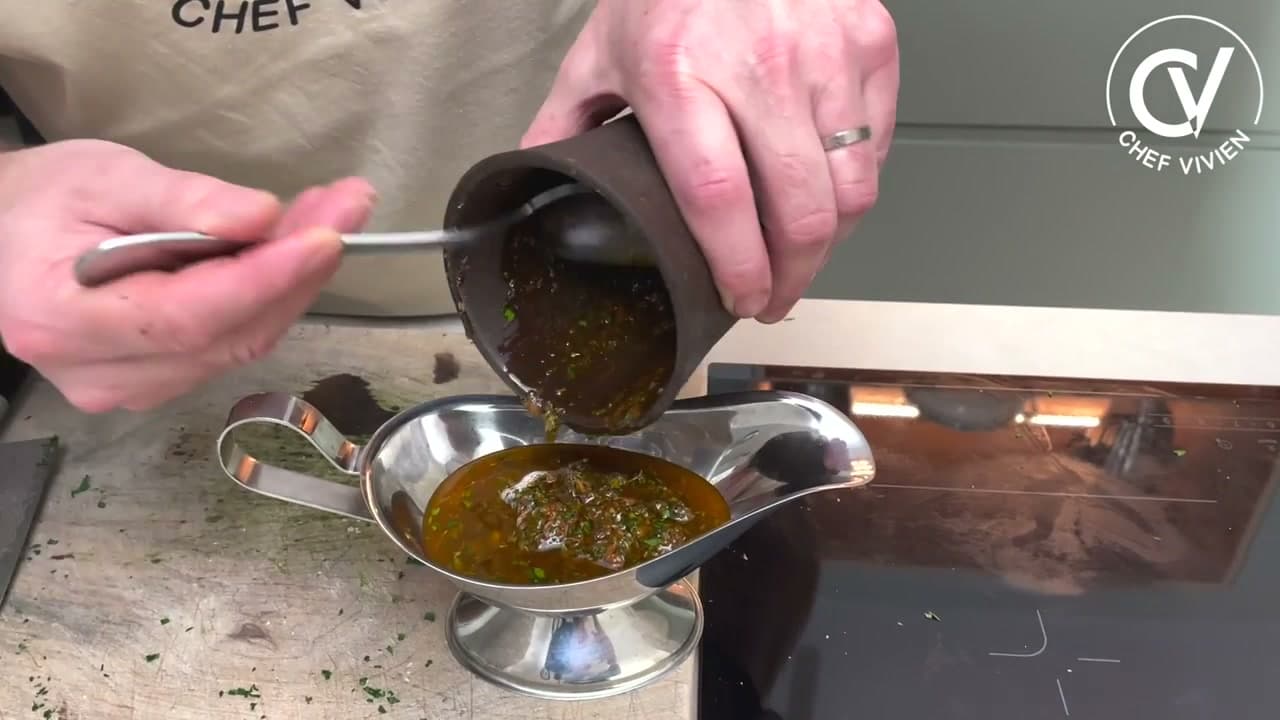
Let the finished chimichurri rest at room temperature for at least one to two hours before serving so the flavors meld. Pull the bay leaves and spoon the sauce into a small bowl or gravy boat to bring to the table. Spoon it over grilled steak, chicken, or fish. Leftovers keep in a sealed jar in the fridge for a few days, but chimichurri is at its best the day you make it.

Tip

Watch this step If you're making it ahead, keep the base (no parsley) in the fridge and stir in fresh chopped parsley about an hour before dinner. Two-day-old parsley in chimichurri turns dull.

Products Used

❖ The Recipe

How to Make Chimichurri Sauce (Authentic Argentinian Recipe)

Latin American
Serves
Makes about 1 cup
Prep
10 min
Cook
0 min
Total
10 min

Ingredients

10 items
  • 1 bunchflat-leaf parsleyfinely chopped, added at the end
  • 4garlic clovesgerm removed
  • 1 tspred chili pepper flakes
  • 1 tspblack peppercornsfreshly cracked in the mortar
  • 2 tspsmoked paprikapimenton de la Vera
  • 2 tbspdried oregano
  • 2 tbspred wine vinegarapple cider or sherry vinegar work too; never balsamic
  • 100 mlextra-virgin olive oilstreamed in slowly like a vinaigrette
  • 2bay leavestorn and infused, removed before serving
  • 1 tspcoarse saltplus more to taste

Nutrition

estimated · per servingEstimated from the ingredient list, not measured. Actual values vary by brand, preparation, and serving size. Not a substitute for measured nutrition data.
Calories
110kcal
Protein
1g
Fat
12g
Carbs
2g
Fiber
1g
Sugar
0g
Sodium
300mg

Method

  1. 1
    Step 1: Gather Your Ingredients. Pull everything together before you start crushing.
  2. 2
    Step 2: Peel and Prep the Garlic. Peel four garlic cloves, slice each one down the middle, and pull out the green germ in the center.
  3. 3
    Step 3: Crush Garlic, Salt, and Spices in the Mortar. Add a teaspoon of coarse salt and a teaspoon each of black peppercorns and red chili pepper flakes to the mortar with the garlic.
  4. 4
    Step 4: Add Smoked Paprika and Oregano. Once the garlic paste is broken down, add two teaspoons of smoked paprika and two tablespoons of dried oregano.
  5. 5
    Step 5: Stir in the Red Wine Vinegar. Pour in two tablespoons of red wine vinegar and stir it through the paste.
  6. 6
    Step 6: Stream in the Olive Oil. Now stream in about 100 ml of extra-virgin olive oil, pouring it in slowly the way you would for a vinaigrette.
  7. 7
    Step 7: Finely Chop the Parsley. Wash a big bunch of flat-leaf parsley and pat it dry.
  8. 8
    Step 8: Fold in Parsley, Rest, and Serve. Stir the chopped parsley into the sauce.
☐ The Checklist

How to Make Chimichurri Sauce (Authentic Argentinian Recipe)

Tools
6
Materials
10
Steps
8
Video
8 min

Your Guide

Chef Vivien

As an Amazon Associate we earn from qualifying purchases. Links on this page may be affiliate links - clicking them and buying doesn't change your price, but helps support ShowMeStepByStep.

Tags

Test your knowledge

Did the lesson stick? Find out in 2 minutes.

5 quick questions covering what you just read. No signup, no score saved — just a gut check.

Quick reference

Key takeaways from How to Make Chimichurri Sauce (Authentic Argentinian Recipe)

5 questions, answers, and one-line explanations. Tap to expand.

  1. 1.Why is a mortar and pestle preferred over a blender for chimichurri?

    Answer: It crushes garlic without turning the herbs into paste

    A blender shreds herbs into paste. The mortar keeps them looking like herbs.

  2. 2.After peeling each garlic clove, what do you remove before crushing?

    Answer: The green germ down the center of the clove

    The green germ is the sharp, bitter part of the garlic. Pulling it gives cleaner flavor in a raw sauce.

  3. 3.What does coarse salt actually do when you add it early to the mortar?

    Answer: Acts as an abrasive that breaks the garlic down

    Salt grinds against the slick garlic cloves so the pestle has something to work against.

  4. 4.Which vinegar should you NOT use for chimichurri?

    Answer: Balsamic vinegar

    Balsamic is too sweet and too dark — wrong color and wrong flavor for chimichurri.

  5. 5.When making chimichurri ahead, what should you add only at the very end?

    Answer: Fresh chopped parsley

    Two-day-old parsley turns dull. Keep the base in the fridge and fold in fresh parsley an hour before serving.

What's next

Related collections

Curated theme pages that include this tutorial.

Weekly Digest

Liked this cooking tutorial?

Pick the categories you want to hear about. Weekly digest of new step-by-step tutorials. No spam, easy unsubscribe.

Send me tutorials about

We only email about new tutorials. Easy unsubscribe anytime.