What Is a W-4? The Form That Sets Your Tax Withholding

TaxesEasy6:106 steps5-question quiz at endBrowse more →

By ShowMeStepByStepPublished Updated

Based on a video by Katie St Ores CFP.

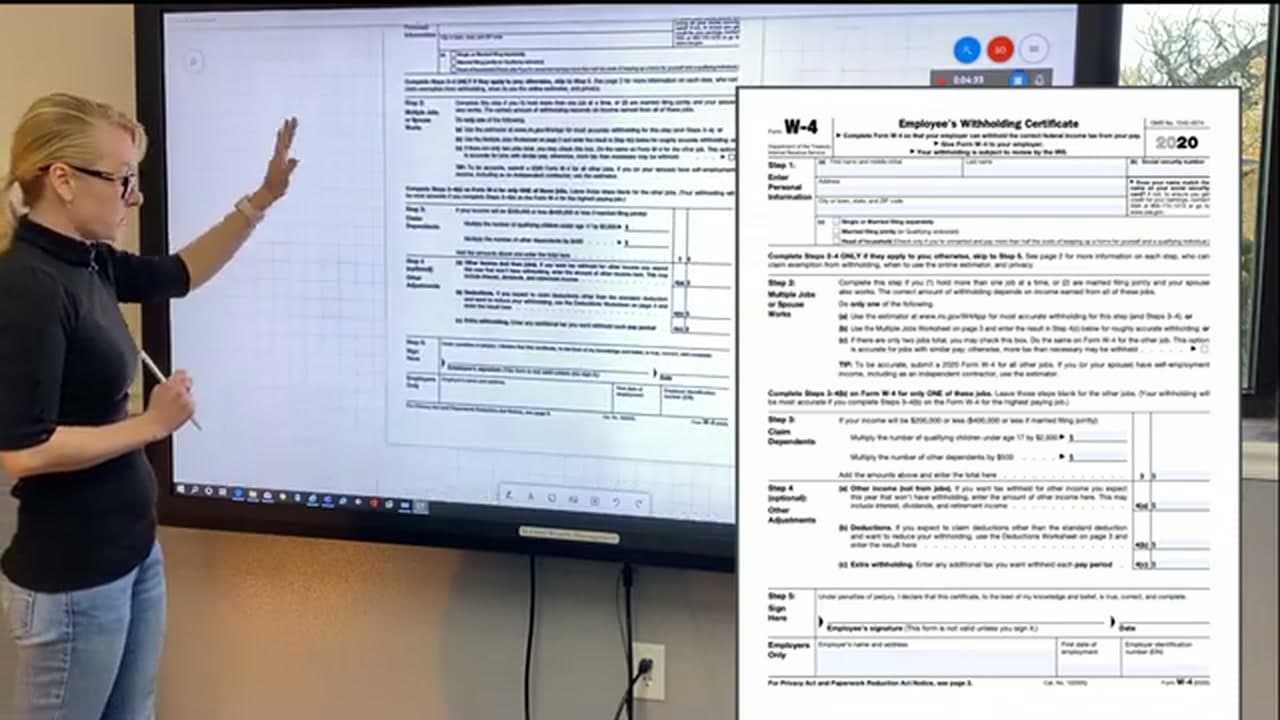
A W-4 is the form you fill out and hand to your employer so they know how much federal tax to take out of your paycheck. Its official name is the Employee's Withholding Certificate. You give the W-4 to your employer. That is the opposite direction from the W-2, which your employer gives to you.

The two forms get mixed up constantly because the names look almost identical. Here is the clean split: the W-4 goes from you to your employer at the start of a job and sets your withholding. The W-2 comes back to you once a year and reports what you actually earned and what was withheld. This walkthrough is based on a clear explainer from Katie St Ores, a Certified Financial Planner, and it uses both forms side by side so the difference finally sticks. If you already know what a W-4 is and just need to complete one, here is how to fill out a W-4 step by step.

Step-by-Step Guide

1

Step 1: What a W-4 Actually Is

1:06
Step 1: Step 1: What a W-4 Actually Is

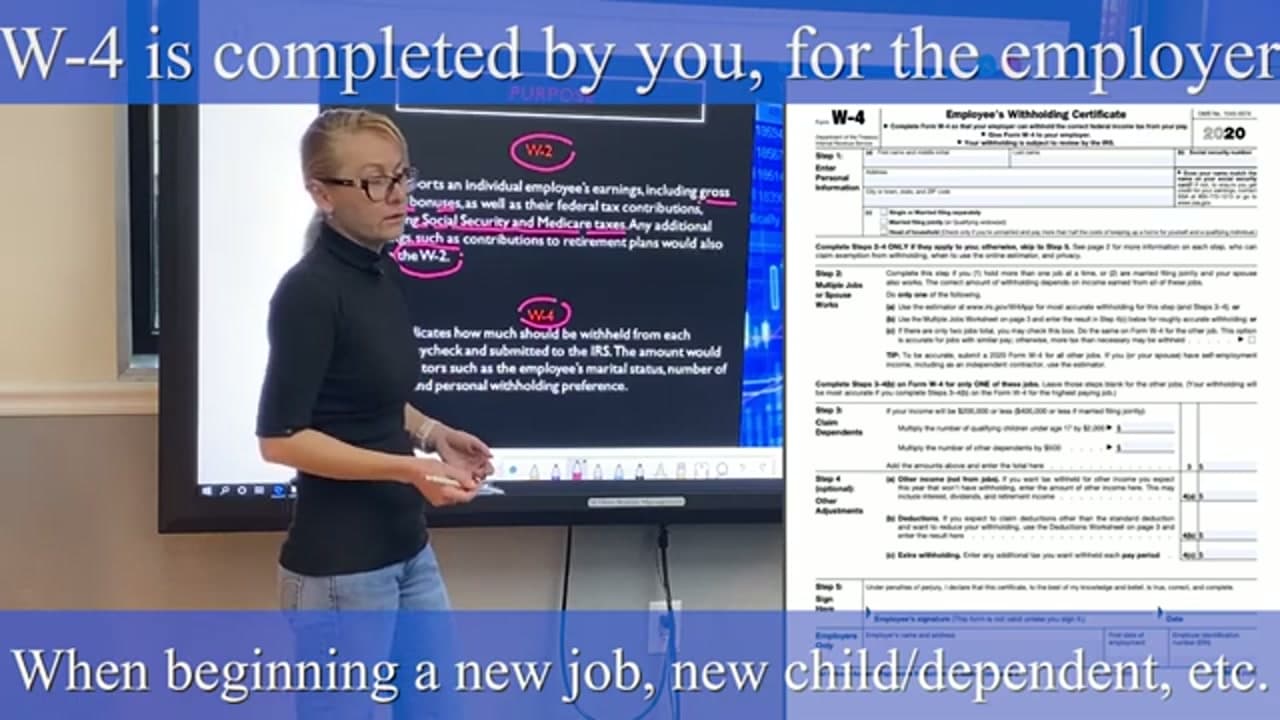
The W-4 is the Employee's Withholding Certificate. You fill it out when you start a job, and it tells your employer how much federal income tax to hold back from each paycheck. It asks for your personal information, your filing status, how many dependents you have, and any extra adjustments you want.

Think of it as a set of instructions. You are not paying anything on the W-4 itself. You are telling your employer how to handle the tax that comes out of your pay all year long.
2

Step 2: How the W-2 Is Different

0:40
Step 2: Step 2: How the W-2 Is Different

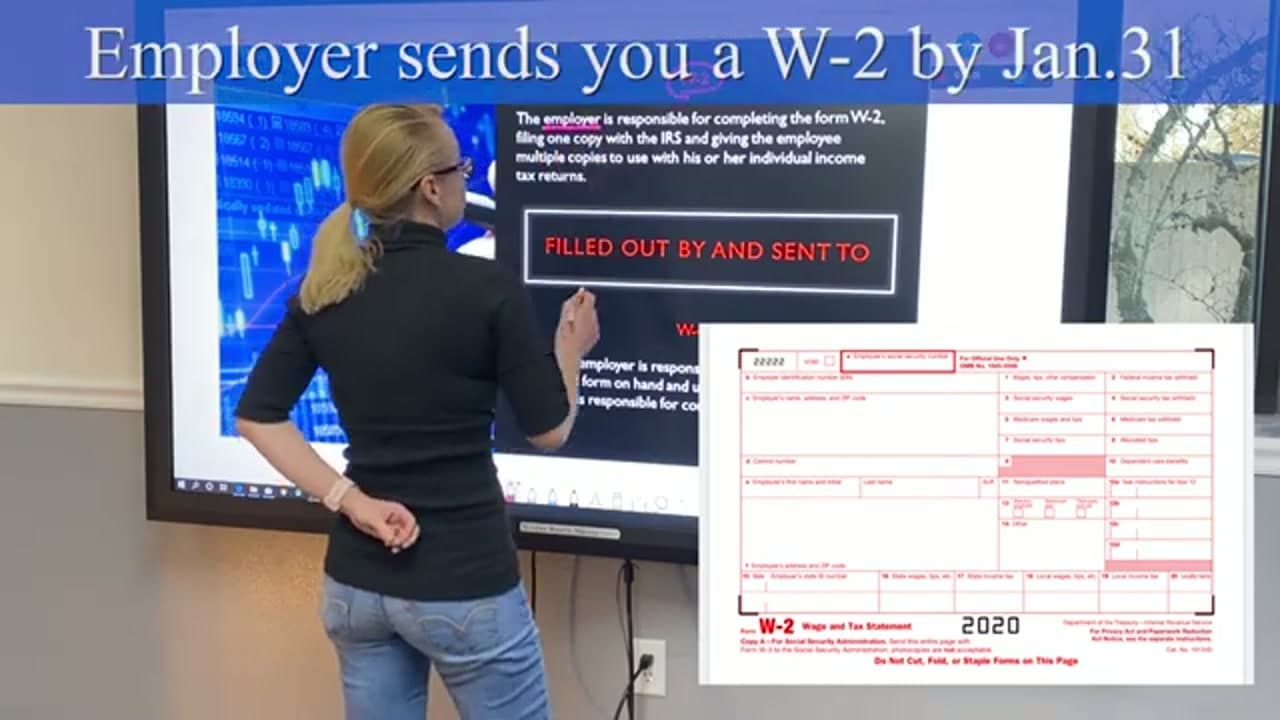
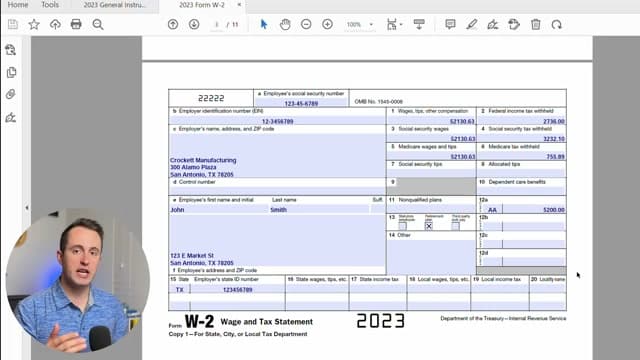
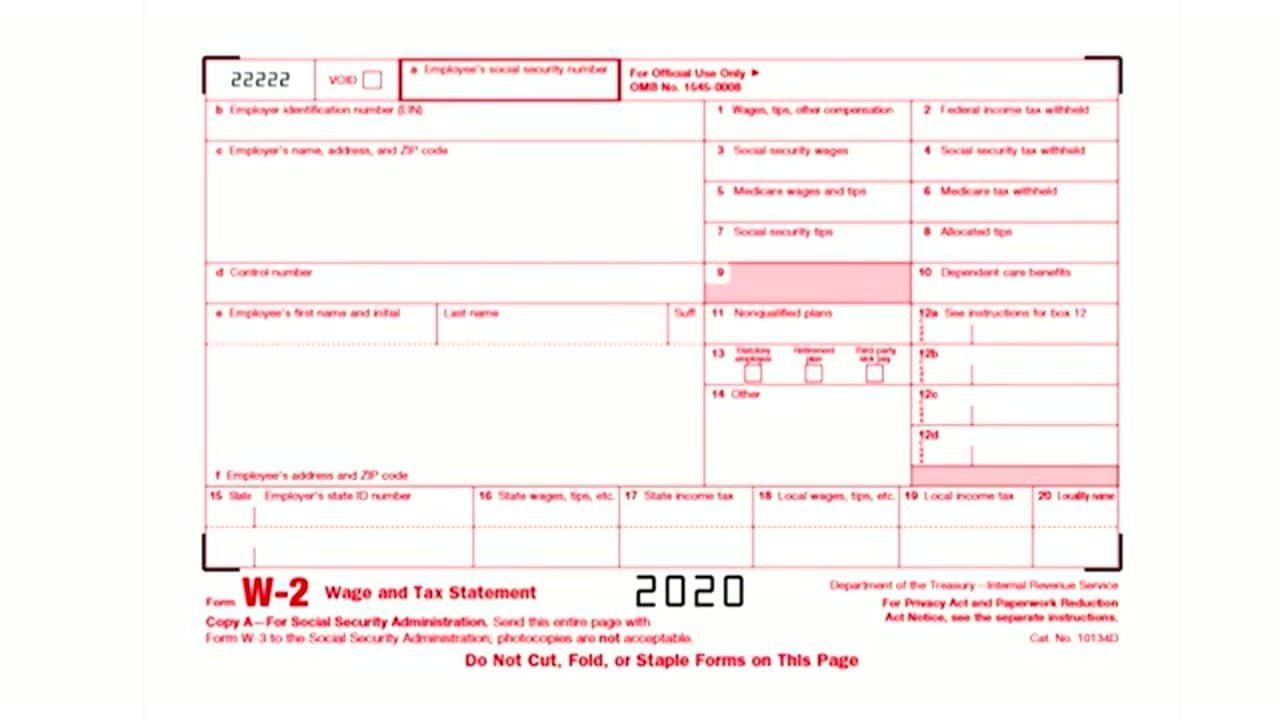
The W-2 is the form that moves in the other direction. Your employer fills it out once a year and sends it to you, along with a copy to the IRS. It lists your gross pay, tips and bonuses, and the federal tax, Social Security, and Medicare that were withheld.

You do not fill out a W-2. You receive it and use it to file your tax return. The easy way to remember it: you give your employer the W-4, and your employer gives you the W-2.

3

Step 3: The W-4 Controls Your Paycheck Withholding

2:10
Step 3: Step 3: The W-4 Controls Your Paycheck Withholding

Here is why the W-4 matters so much. The number you land on decides how much tax leaves each paycheck and gets sent to the IRS on your behalf. Claim more allowances and less comes out now, which means a bigger check but a smaller refund. Claim fewer and more is withheld, which can mean a refund later.

Your marital status, your number of dependents, and your own preferences all feed into that amount. Get it roughly right and you avoid a nasty surprise at tax time.

Tip

Only Steps 1 and 5 of the current W-4 are actually required to fill out. Steps 2 through 4 fine-tune your withholding, but the form is valid with just your personal info and your signature.

4

Step 4: Who Fills Out Each Form

3:15
Step 4: Step 4: Who Fills Out Each Form

The responsibility splits cleanly. Your employer must give you a blank W-4, but it is your job to complete it and hand it back. Nobody fills out your W-4 for you.

The W-2 is the reverse. Your employer completes it, files one copy with the IRS, and gives you your copies to use when you file. So the W-4 is your paperwork to return, and the W-2 is your employer's paperwork to deliver.

5

Step 5: What Information Sits on Each

4:10
Step 5: Step 5: What Information Sits on Each

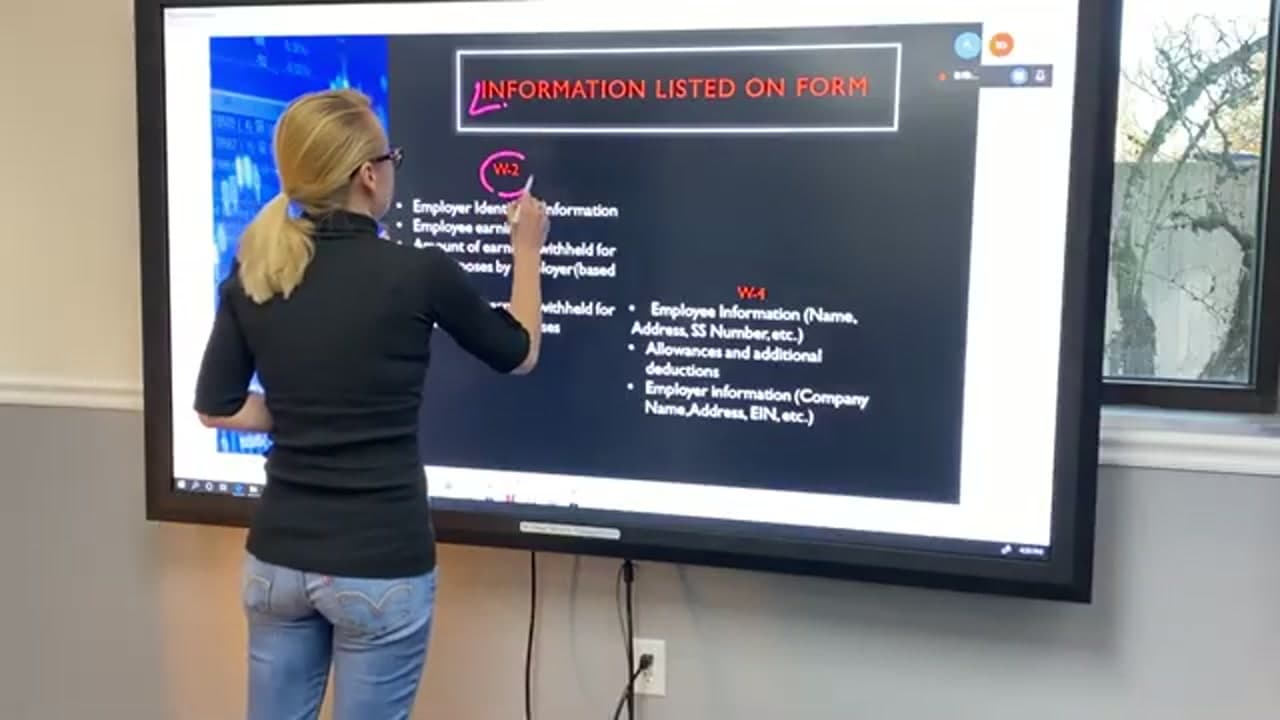
The W-2 carries the employer's details plus your wages, tips, bonuses, and the amounts withheld for taxes. Those withheld amounts are not random. They are driven by the choices you made on your W-4.

The W-4 holds your personal information, your dependents and adjustments, and your employer's details at the bottom. So the two forms are linked: what you put on the W-4 today shapes the numbers that show up on your W-2 in January.

6

Step 6: When to Fill Out or Update a W-4

5:00
Step 6: Step 6: When to Fill Out or Update a W-4

You complete a W-4 whenever you start a new job, usually before your first paycheck and often in your first week. But it is not a one-time form. You can submit a new one any time your situation changes.

Got married, had a child, or picked up a second job in the same year? That is your cue to update your W-4 so your withholding matches your real life. The W-2, by contrast, is fixed to the calendar. Your employer has to get it to you by January 31 so you can file by April 15.

Tip

If your first W-4 no longer fits your life, you do not have to wait for a new job to change it. Ask your employer for a fresh form and submit an updated W-4 whenever your marital status or number of dependents changes.

Your Guide

Katie St Ores CFP

As an Amazon Associate we earn from qualifying purchases. Links on this page may be affiliate links - clicking them and buying doesn't change your price, but helps support ShowMeStepByStep.

Tags

Test your knowledge

Did the lesson stick? Find out in 2 minutes.

5 quick questions covering what you just read. No signup, no score saved — just a gut check.

Quick reference

Key takeaways from What Is a W-4? The Form That Sets Your Tax Withholding

5 questions, answers, and one-line explanations. Tap to expand.

  1. 1.What does a W-4 control?

    Answer: How much federal tax comes out of your paycheck

    The W-4 sets your federal withholding so the right amount leaves each check.

  2. 2.Which way does a W-4 travel?

    Answer: From you to your employer

    You hand the W-4 to your employer, the opposite direction from the W-2.

  3. 3.What is the official name of the W-4?

    Answer: Employee's Withholding Certificate

    The W-4 is formally the Employee's Withholding Certificate.

  4. 4.When do you usually first fill out a W-4?

    Answer: At the start of a new job

    You complete a W-4 when you start a job, then update it as life changes.

  5. 5.You owed a lot at tax time and want less owed next year. What do you change?

    Answer: Update your W-4 to withhold more

    Updating your W-4 changes how much tax is withheld going forward.

Did this work for you?

What's next

Related collections

Curated theme pages that include this tutorial.

Weekly Digest

Liked this taxes tutorial?

Pick the categories you want to hear about. Weekly digest of new step-by-step tutorials. No spam, easy unsubscribe.

Send me tutorials about

We only email about new tutorials. Easy unsubscribe anytime.