What Is a 1099? The Tax Form for Non-Employee Income

TaxesEasy7:327 steps5-question quiz at endBrowse more →

By ShowMeStepByStepPublished Updated

Based on a video by Intuit QuickBooks.

A 1099 is a tax form that reports money you were paid when you were not somebody's employee. If you did contract work, sold on the side, earned interest at the bank, or picked up gig income, the payer sends you a 1099 so both you and the IRS have a record of it. Think of it as the freelancer's version of a W-2.

The one most people see is the 1099-NEC, which stands for non-employee compensation. A business fills it out to report what it paid you as an independent contractor, then mails you a copy and files another with the IRS. This walkthrough, based on a clear explainer from Hector Garcia, CPA, on the Intuit QuickBooks channel, covers what a 1099 is, the common types a regular person receives, who sends them and when, and what you actually do with one at tax time.

Step-by-Step Guide

1

Step 1: What a 1099 Form Actually Is

0:55
Step 1: Step 1: What a 1099 Form Actually Is

A 1099 is how income gets reported to the IRS when it did not come from a regular job. The most common one is the 1099-NEC, short for non-employee compensation. A business uses it to tell the IRS how much it paid you as an independent contractor during the year.

If you did freelance, contract, or gig work, this is the form that shows up. The payer keeps one copy, sends one to the IRS, and mails a copy to you. That copy is your cue to report the income on your own return.

2

Step 2: A 1099 Is Not a W-2

0:02
Step 2: Step 2: A 1099 Is Not a W-2

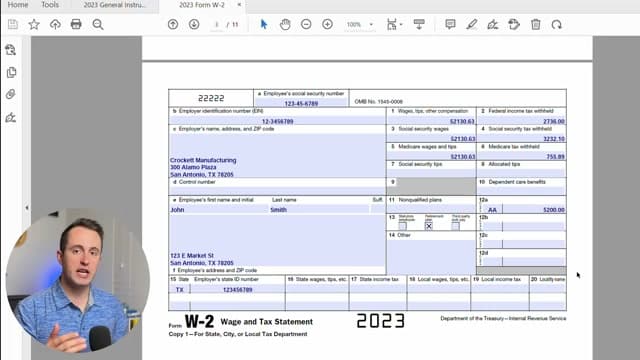
The quickest way to understand a 1099 is to compare it to a W-2. A W-2 goes to employees, with taxes already taken out of each paycheck. A 1099 goes to people who are not employees, and nothing has been withheld.

That difference matters. When you get a 1099, no income tax, Social Security, or Medicare has been held back for you. The full amount was paid to you, so a share of it is still owed. Knowing which form you hold tells you whether taxes are handled or still your job.

3

Step 3: What Is Printed on a 1099-NEC

1:58
Step 3: Step 3: What Is Printed on a 1099-NEC

A 1099-NEC holds a handful of details, and it helps to know what you are looking at. Up top is the payer: their company name, address, and tax ID. Below that is you, the recipient, listed with your Social Security number or an EIN if you work as a business.

The number that matters most is total compensation, the full amount that payer sent you for the year. There is also a box for any tax withheld, but that box is almost always empty on a contractor's form.

4

Step 4: The Common Types You Might Receive

2:38
Step 4: Step 4: The Common Types You Might Receive

The 1099-NEC is just one of many. As a regular person, a few others show up often. A 1099-INT reports interest your bank paid you. A 1099-DIV covers dividends from investments. A 1099-MISC catches things like rent or prize money, and a 1099-G reports government payments such as unemployment.

They all do the same job: report a specific kind of income to the IRS. When one arrives, the letters after the dash tell you what type of money it is reporting.

5

Step 5: The $600 Rule

1:40
Step 5: Step 5: The $600 Rule

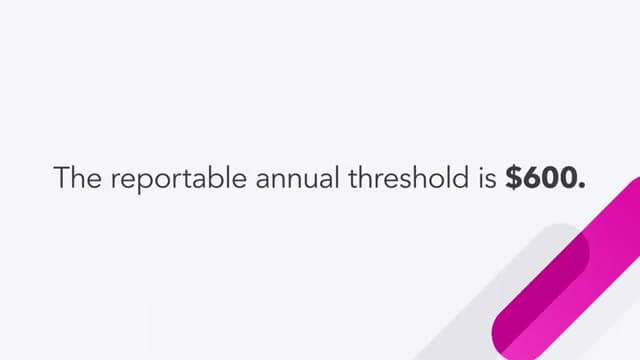
A business generally has to send a 1099-NEC only once it has paid you $600 or more across the whole year. Under that amount, you probably will not get a form from them.

Here is the part people miss: not getting a 1099 does not mean the money is tax-free. If a client paid you $400 and never sent a form, that income still counts and still needs to be reported. The form is a paperwork threshold, not a line where taxes suddenly start.

Tip

Keep your own record of what you earned during the year. If a 1099 never arrives or shows the wrong amount, your own bookkeeping is what protects you at tax time.

6

Step 6: Who Sends It and When

4:45
Step 6: Step 6: Who Sends It and When

The business that paid you is the one that fills out and files the 1099. Before they pay a contractor, they usually ask for a W-9, the short form where you give your legal name and tax ID so they can prepare the 1099 correctly later.

Timing is predictable. Around January, payers send out 1099s for the prior year. So the forms covering last year's income land in your mailbox or inbox in the first few weeks of the new year, right as tax season opens.

7

Step 7: What to Do With It at Tax Time

5:40
Step 7: Step 7: What to Do With It at Tax Time

When a 1099 arrives, first check that the amount matches your own records. Then hold onto it. Every 1099 you receive gets reported on your tax return, and the IRS already has a matching copy, so leaving one off is how people trigger a notice.

Because nothing was withheld, set aside a portion of 1099 income for taxes as you earn it rather than getting surprised in April. If your situation is more than a simple side gig, a tax pro or good software makes sorting it out much easier.

Your Guide

Intuit QuickBooks

As an Amazon Associate we earn from qualifying purchases. Links on this page may be affiliate links - clicking them and buying doesn't change your price, but helps support ShowMeStepByStep.

Tags

Test your knowledge

Did the lesson stick? Find out in 2 minutes.

5 quick questions covering what you just read. No signup, no score saved — just a gut check.

Quick reference

Key takeaways from What Is a 1099? The Tax Form for Non-Employee Income

5 questions, answers, and one-line explanations. Tap to expand.

  1. 1.What kind of income does a 1099 report?

    Answer: Money you earned as something other than an employee

    A 1099 covers non-employee income like freelance, gig, or interest earnings.

  2. 2.Which 1099 do most freelancers and contractors see?

    Answer: 1099-NEC

    NEC stands for non-employee compensation, the standard contractor form.

  3. 3.A 1099 is often called the freelancer's version of which form?

    Answer: The W-2

    Like a W-2 reports employee pay, a 1099 reports a contractor's pay.

  4. 4.Who fills out and sends you a 1099-NEC?

    Answer: The business that paid you

    The payer fills it out, mails you a copy, and files another with the IRS.

  5. 5.Why can 1099 income leave you with a tax bill in the spring?

    Answer: No tax was withheld along the way

    Unlike a paycheck, 1099 income usually has no withholding, so set money aside.

Did this work for you?

What's next

Related collections

Curated theme pages that include this tutorial.

Weekly Digest

Liked this taxes tutorial?

Pick the categories you want to hear about. Weekly digest of new step-by-step tutorials. No spam, easy unsubscribe.

Send me tutorials about

We only email about new tutorials. Easy unsubscribe anytime.