How to Take Notes: The 5 Best Methods

By ShowMeStepByStepPublished

Based on a video by Thomas Frank.

Most students take notes the same way they always have - scribbling whatever the professor says, copying every line off the slides, then never opening the notebook until finals week. There's a better way. Actually, there are five.

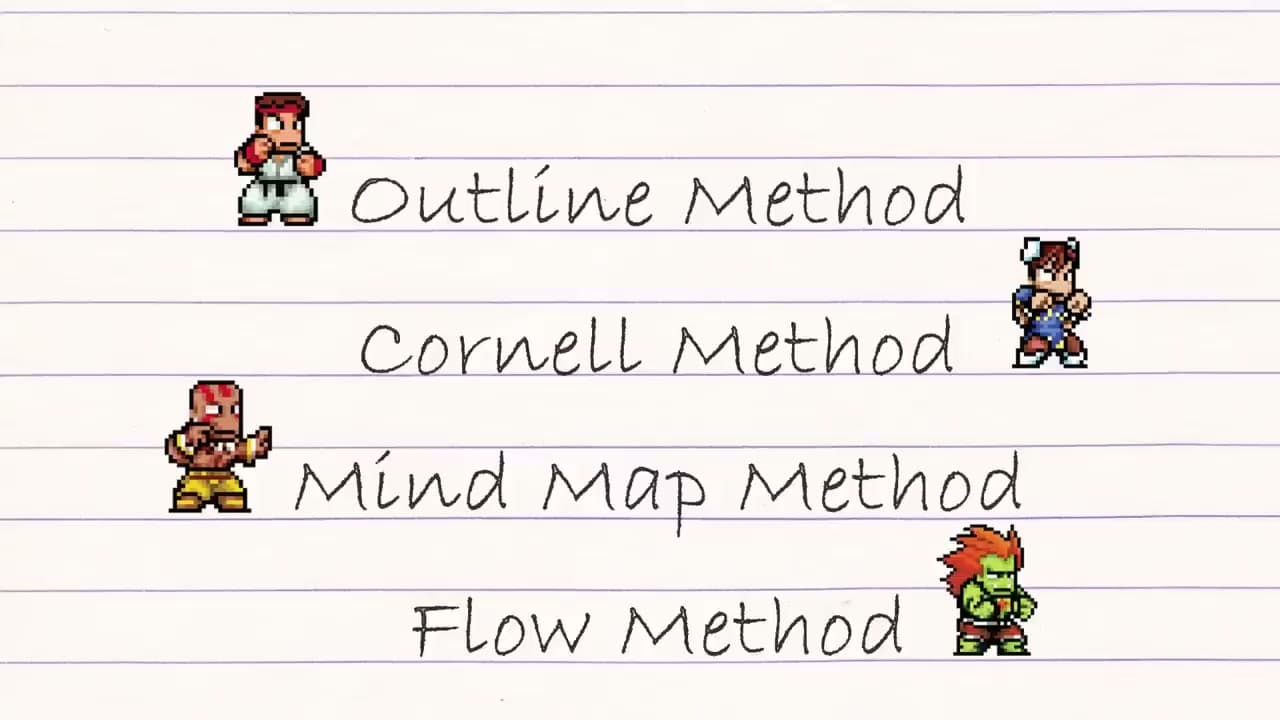
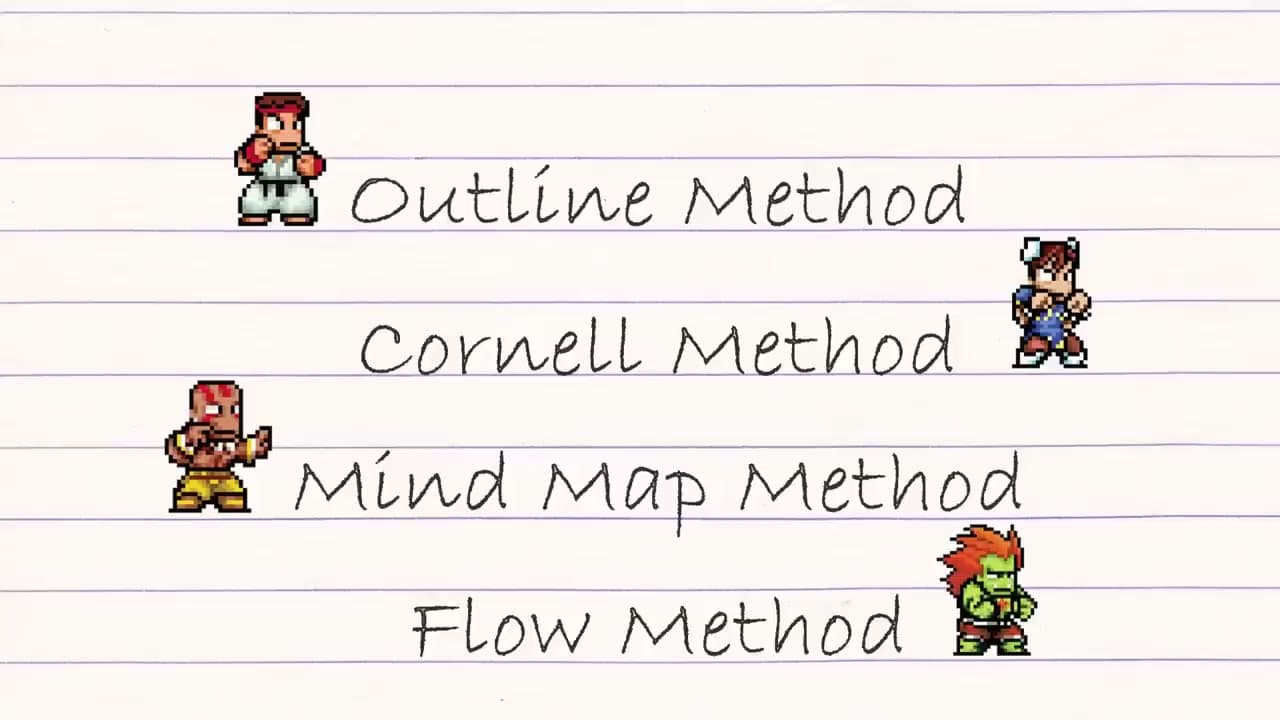
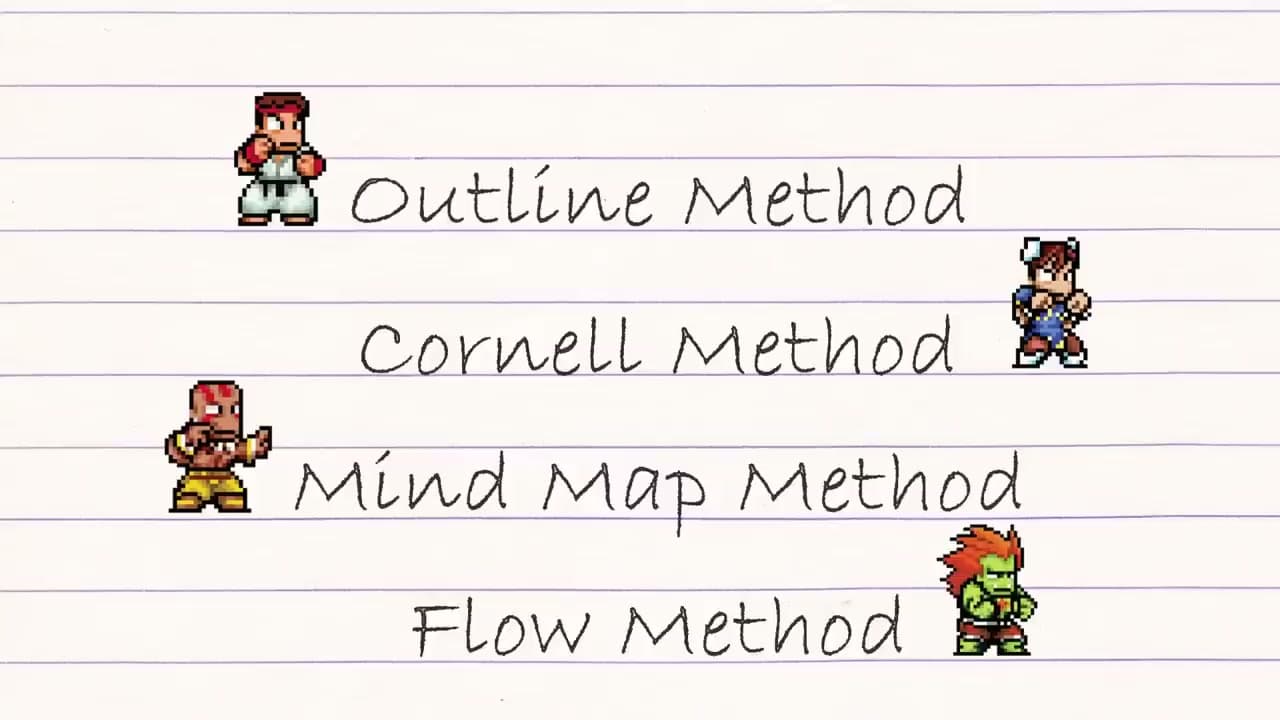
This walkthrough from Thomas Frank at College Info Geek breaks down the five note-taking methods that are widely accepted as the most effective: outline, Cornell, mind map, flow, and write-on-slides. Each one suits a different kind of class. Once you know what each method does well, you can match the method to the class instead of fighting it. Pair the right system with active recall and you'll spend less total time studying for better grades.

Step-by-Step Guide

1

Step 1: Pick a Method That Matches How You Think

0:00
Step 1: Step 1: Pick a Method That Matches How You Think

There isn't one perfect note-taking system. There are five solid ones, and the right one depends on the class, the professor, and how your brain organizes information. A history lecture full of stories is different from a math class full of derivations, and your notes should reflect that.

Before you walk into your next lecture, decide on a method. A little planning here pays off all semester. The five we'll cover: outline, Cornell, mind map, flow, and write-on-slides.

Tip

If you're not sure which method fits, default to outline for content-heavy classes and flow for lectures that build understanding. You can always switch after the first week.
2

Step 2: Try the Outline Method for Structured Lectures

0:32
Step 2: Step 2: Try the Outline Method for Structured Lectures

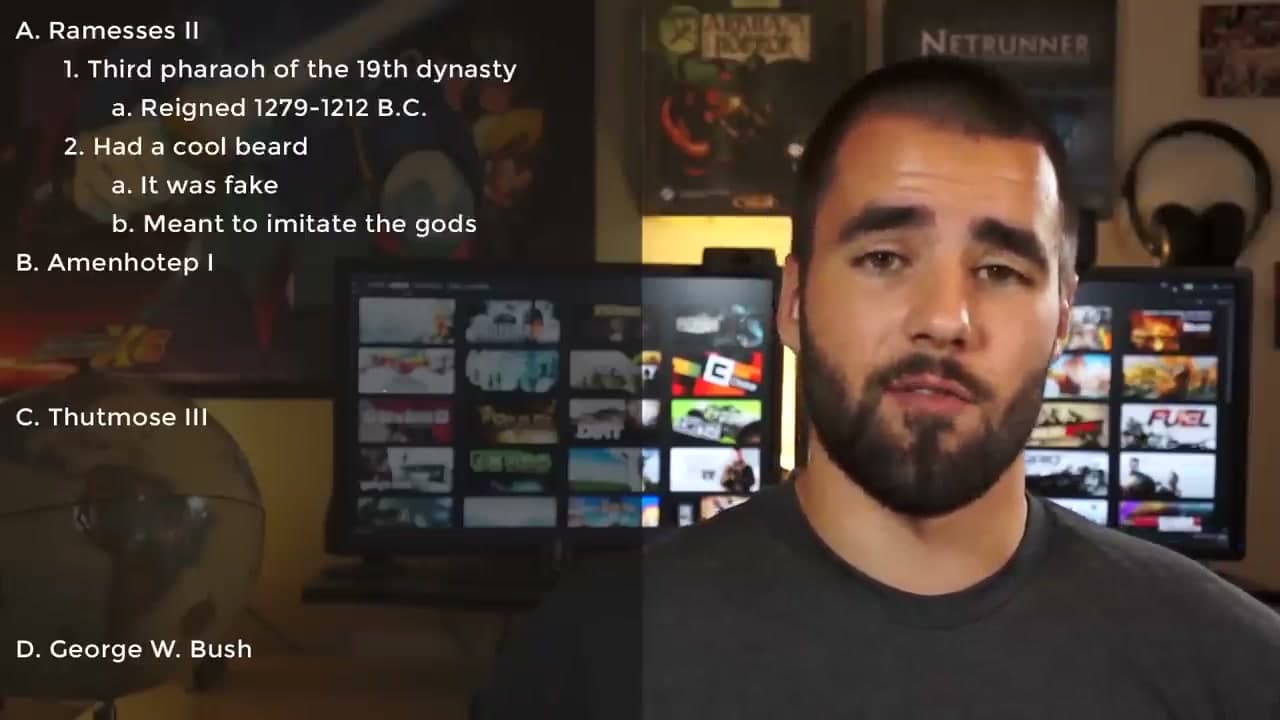
The outline method is built on bullet points and hierarchy. Top-level bullets capture the main points. Indented sub-bullets fill in the details. It works beautifully when your professor moves in a clear, linear order.

On paper, leave whitespace under each main point so you can add detail later. On a laptop in something like Notion, Evernote, or Obsidian, you can reorganize bullets and nest new ones without rebuilding your page. For dense factual material, this is usually the lowest-effort method that still produces useful notes.

Tip

Use a consistent indentation pattern: I, A, 1, a. The visual rhythm makes it easy to skim later, and your brain treats the indentation as a memory cue.

3

Step 3: Use the Cornell Method to Build Review-Ready Notes

1:35
Step 3: Step 3: Use the Cornell Method to Build Review-Ready Notes

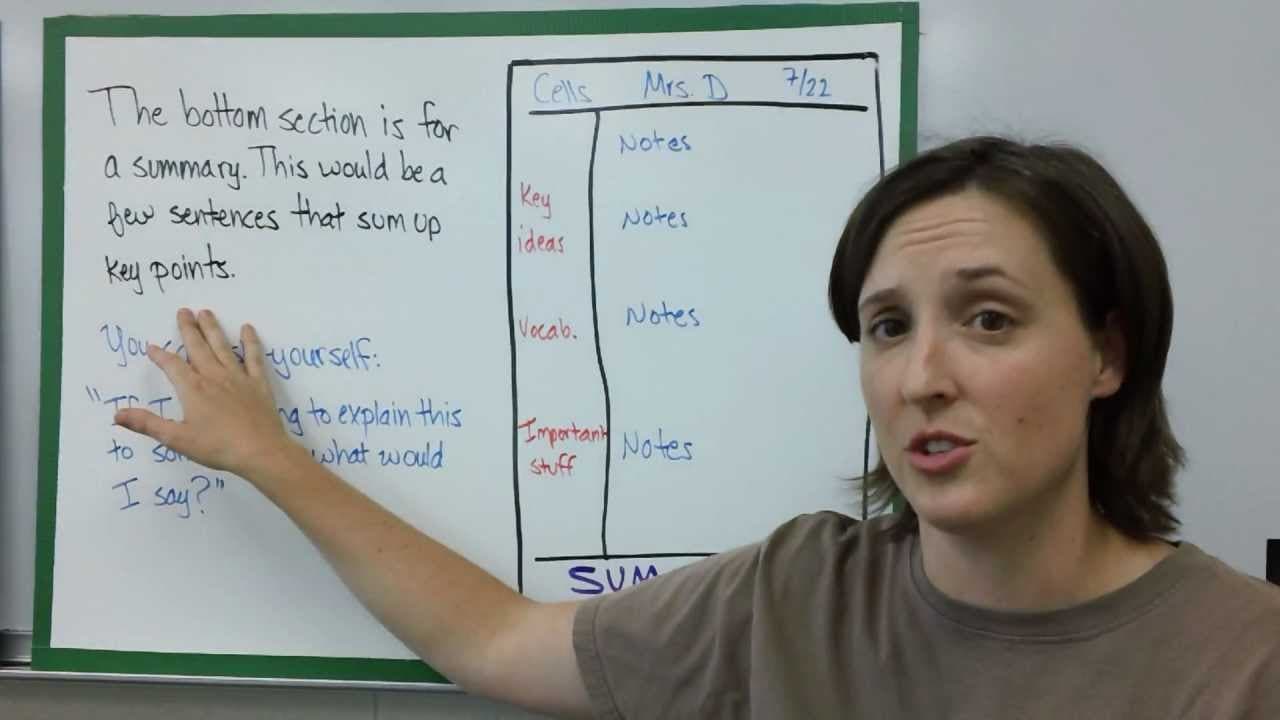
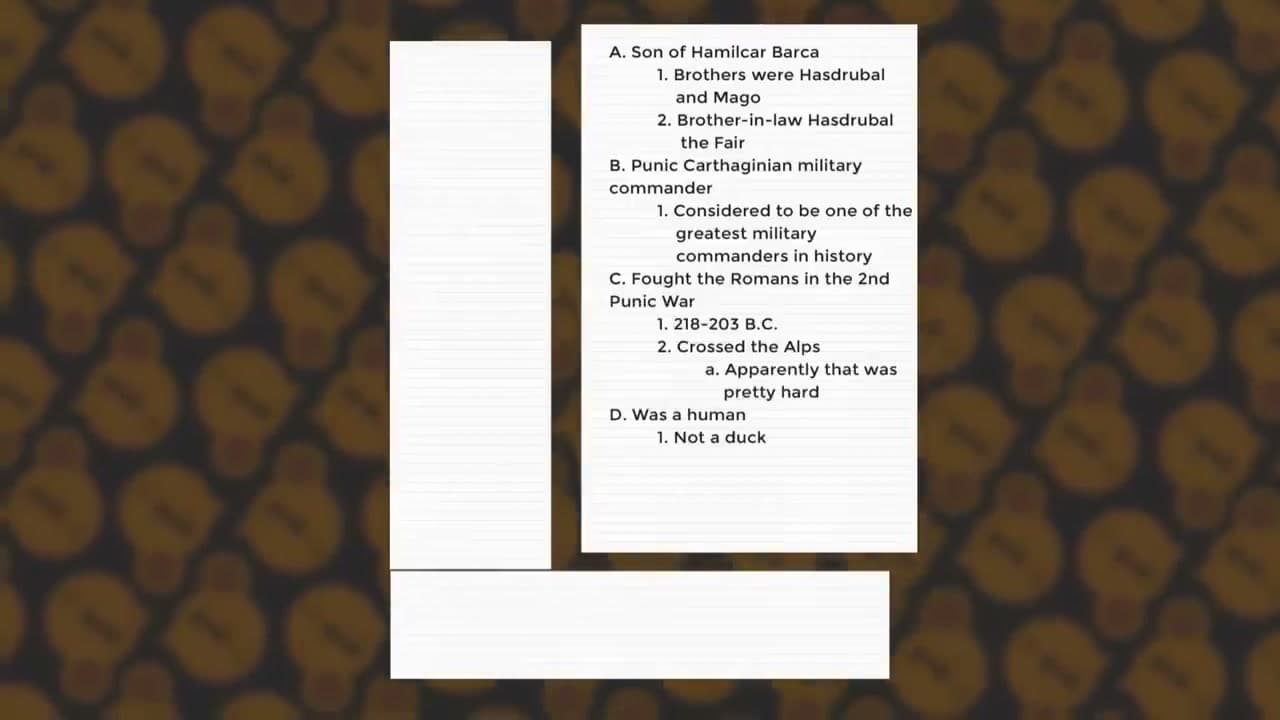
Developed at Cornell in the 1950s by Walter Pauk, this method divides your page into three sections. Draw a vertical line about a third of the way from the left edge, then a horizontal line a couple of inches from the bottom.

During class, write normal notes in the wide right column. As soon as you can after class, fill the narrow left column with cue questions that match each section, then summarize the whole lecture at the bottom. The structure forces you to review while it's fresh, so your notes are already exam-ready by the time finals roll around.

Tip

You can buy pre-printed Cornell paper, but ruling the lines yourself takes 10 seconds and forces you to think about the page layout before the lecture starts.

4

Step 4: Map Out Connected Topics With a Mind Map

2:47
Step 4: Step 4: Map Out Connected Topics With a Mind Map

Start with a blank page and write your main topic in a circle in the middle. Branch off sub-topics, then branch off those. Mind maps work best when ideas connect in non-linear ways, which makes them great for brainstorming, planning essays, or studying topics with lots of cross-references.

They're less useful for fast-moving lectures where you can't keep up with the branching. Save mind maps for after-class consolidation, or for the kind of class where the professor genuinely jumps around between connected ideas.

Tip

Use color for the main branches. Your brain hooks color cues to specific concepts surprisingly well, and a five-color mind map is easier to recall than a black-and-white one.

5

Step 5: Learn While You Listen With the Flow Method

3:45
Step 5: Step 5: Learn While You Listen With the Flow Method

The flow method was invented by Scott Young, the writer who taught himself the entire MIT computer science curriculum in a single year. Instead of transcribing the lecture, you build your own mental model on the page as the professor talks.

Sketch arrows between related points. Add side notes when something clicks. Write in your own phrasing, not the professor's. The goal is to actually learn the material during class, not to record it for later. Your notes will be messier, but you'll walk out understanding more.

Tip

The flow method takes practice. Your first few attempts will feel like you're missing things. That feeling is the point - you're filtering for what matters instead of transcribing everything.

6

Step 6: Annotate the Slides When the Professor Provides Them

4:55
Step 6: Step 6: Annotate the Slides When the Professor Provides Them

If your professor posts slides ahead of class, print them and write directly on the printout. You get a built-in timeline because the slides follow the lecture order, and you write less because the slide already has the key points.

It's not as deep as the flow method, but for dense, content-heavy lectures it's the lowest-effort way to walk out with usable notes. Use the margins for your own thoughts and connections - that's where actual learning happens, not on the slide bullets themselves.

Tip

Print slides 3-up with note lines on the right. PowerPoint has a built-in handout layout that does exactly this, and it gives you the perfect amount of margin space.

7

Step 7: Pick One Method per Class and Review Within 24 Hours

6:05
Step 7: Step 7: Pick One Method per Class and Review Within 24 Hours

Match the method to the class. A history lecture full of stories suits flow. A math class with clean structure suits outline. A class with posted slides? Annotate those. A bio class with interconnected systems? Mind map.

Whatever you pick, review your notes within a day. The Cornell method bakes this in with its cue column and summary, but you can add a five-minute review pass to any system. That review is where notes turn into real memory. Without it, you're just collecting paper.

Tip

Stack the review onto an existing habit - the train ride home, or right after dinner. Habit-stacking is the easiest way to make a daily 5-minute pass stick.

Products Used

Your Guide

Thomas Frank

As an Amazon Associate we earn from qualifying purchases. Links on this page may be affiliate links - clicking them and buying doesn't change your price, but helps support ShowMeStepByStep.

Tags

What's next

Weekly Digest

Liked this learning tutorial?

Pick the categories you want to hear about. Weekly digest of new step-by-step tutorials. No spam, easy unsubscribe.

Send me tutorials about

We only email about new tutorials. Easy unsubscribe anytime.