How to Grow Onions from Seed (Beginner Start to Finish)

GardeningEasy10:458 steps5-question quiz at endBrowse more →

By ShowMeStepByStepPublished Updated

Based on a video by The Ripe Tomato Farms.

Onions are one of those crops that quietly reward you for starting them yourself. In this tutorial from The Ripe Tomato Farms, you will learn how to grow onions from seed, from the packet all the way to sturdy seedlings ready for the spring garden. There are three ways to plant onions, but seeds give you the widest variety choice and the strongest plants for just a few cents.

Onions are slow, cool-weather growers that need about 90 days to mature, so northern gardeners start them indoors 8 to 10 weeks before the last frost. You will sow shallow in a proper seed-starting mix, germinate warm between 68 and 78 degrees, and watch them sprout in about a week. Then comes the one tip that makes or breaks an onion crop.

That tip is day length. Onions bulb based on the hours of light they sense, so seedlings kept under bright 16-hour light try to bulb far too early. Keep the light short while they are small, trim the tops to keep them upright, and you will raise a tray of healthy starts. Get the variety and the early light right and you are most of the way to a bin full of sweet, homegrown onions.

Step-by-Step Guide

1

Step 1: Choose Seeds Over Sets or Starts

8:30
Step 1: Step 1: Choose Seeds Over Sets or Starts

There are three ways to plant onions: from sets (tiny dormant bulbs), from already-sprouted starts, or from seeds you sow yourself. Sets and starts give you a head start, but they cost more and you are stuck with the one or two varieties a shop happens to carry that year.

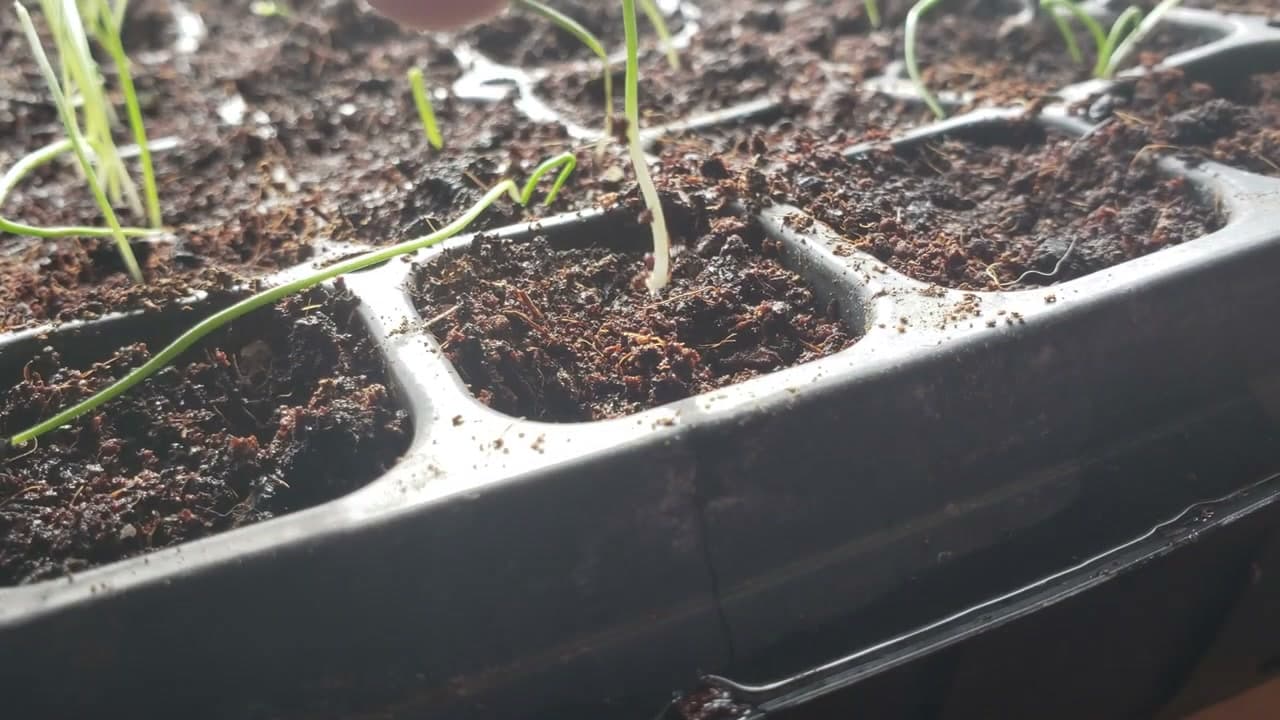
Seeds win on choice and value. A packet costs a few cents and gives you any variety you want, from sweet Walla Wallas to long-keeping yellow storage onions. The plants you raise yourself also tend to be sturdier than bought starts. That is what these healthy seedlings grew into.

Tip

Watch this step Buy onion seed fresh each year. Onion seed loses viability fast, so a packet left over from two seasons ago will germinate poorly.
2

Step 2: Use a Proper Seed-Starting Mix

3:52
Step 2: Step 2: Use a Proper Seed-Starting Mix

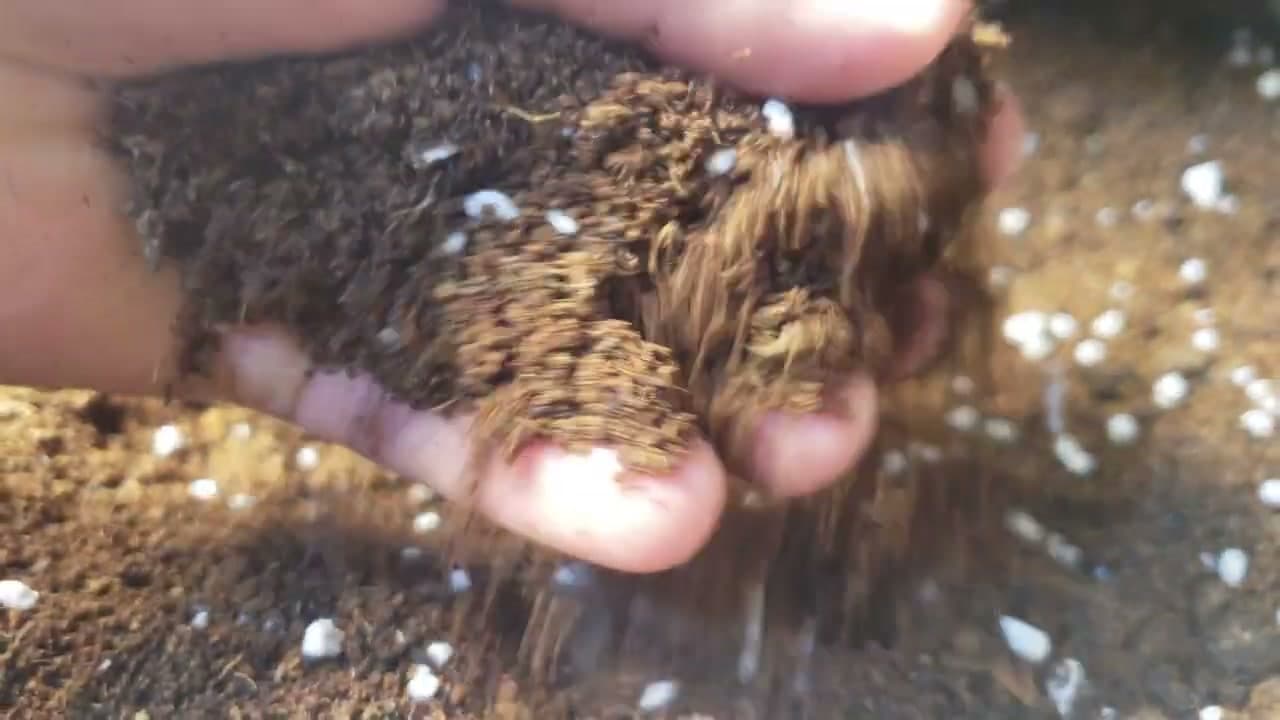
Onion seeds will technically sprout in garden dirt or straight compost, but you are after the best germination and the strongest seedlings, and a real seed-starting mix gets you there. The light, fluffy texture holds moisture without packing down around the shallow roots.

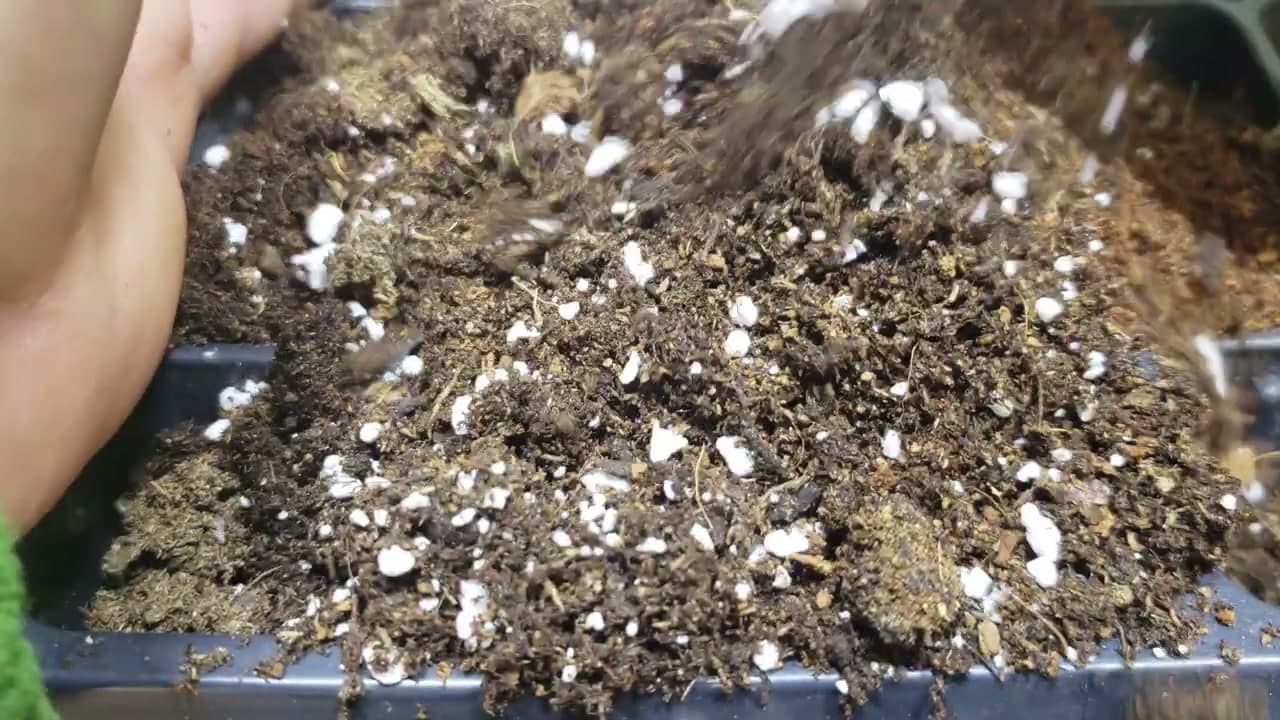
You can buy a bag or make your own by blending regular potting soil with about 25 percent coconut coir or peat moss and roughly 5 percent perlite, then sifting out the big chunks. That is the mix being crumbled here, with the white flecks of perlite mixed through.

Tip

Watch this step Moisten the mix before you fill the cells, not after. Dry peat and coir repel water and float, which makes for uneven wet and dry pockets.

3

Step 3: Pick the Right Container

4:55
Step 3: Step 3: Pick the Right Container

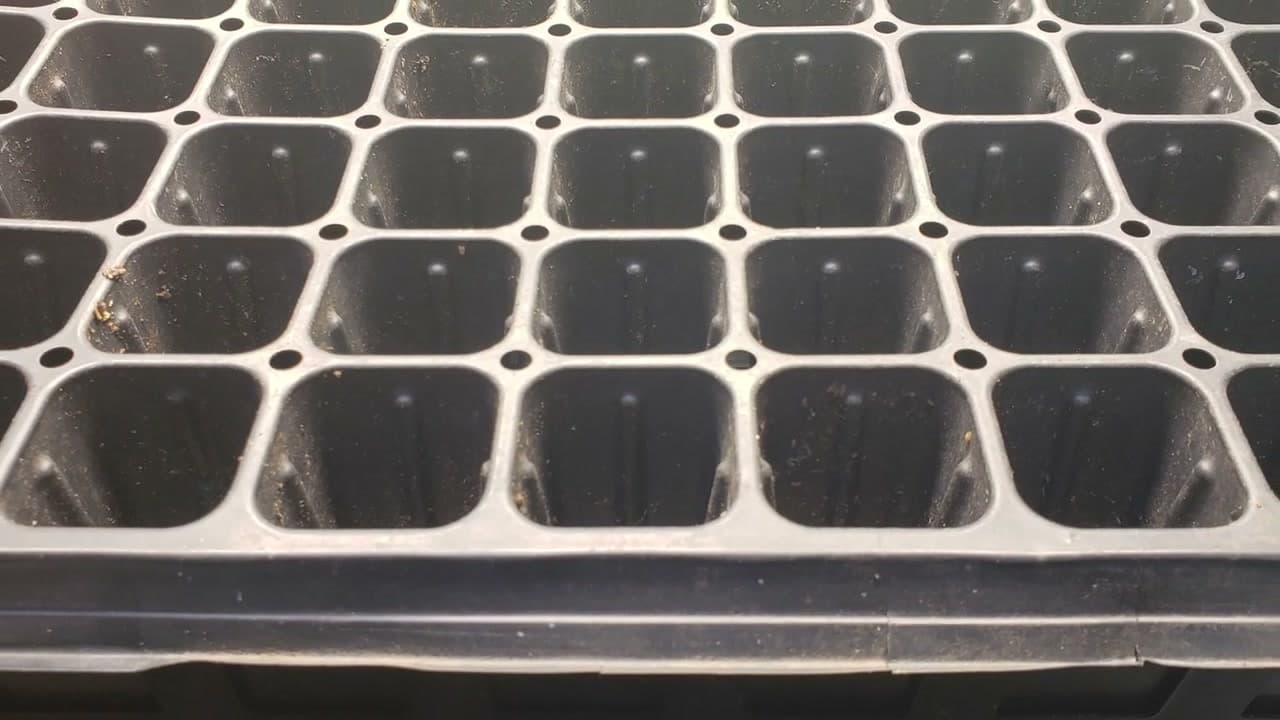
Almost anything works as long as it is at least two inches tall and has drainage holes. A standard 1020 tray with cell inserts, like the one shown here, is the easy choice because it keeps each seedling tidy and drains well.

Onions are forgiving here. You can crowd several seeds into one cell and pull the little clump apart at planting time without much fuss. Reusable cell trays pay for themselves over a few seasons.

Tip

Watch this step Set the cell tray inside a solid 1020 bottom tray with no holes. That gives you a reservoir so you can water from below later.

4

Step 4: Fill and Moisten the Cells

6:24
Step 4: Step 4: Fill and Moisten the Cells

Fill each cell with the seed-starting mix and press it down gently to settle it, then top off and skim the surface level. You want firm contact for the seeds, not compacted soil.

Before sowing, water the soil from below by setting the tray in a shallow bath for a couple of hours. Bottom-watering wets the mix all the way through without blasting seeds around or crusting the surface.

Tip

Watch this step Aim to start your seeds 8 to 10 weeks before your last spring frost. Onions are slow, and that head start lets them bulb up in cool weather instead of racing the summer heat.

5

Step 5: Sow the Seeds Shallow

7:14
Step 5: Step 5: Sow the Seeds Shallow

Onion seeds go in shallow, about a quarter to a half inch deep. You can poke a small hole and drop a seed in, set the seed on the surface and push it down with a blunt tool, or scatter seeds and sprinkle a little more mix on top to bury them.

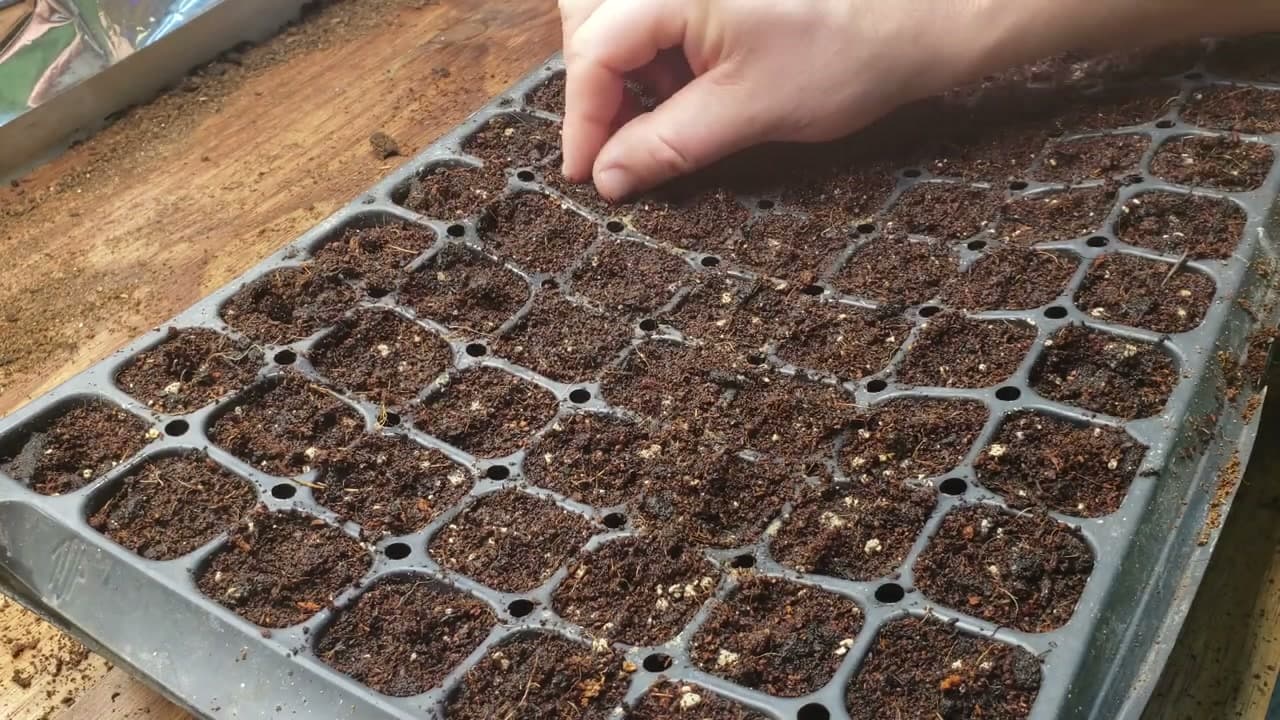
Pick whichever method feels natural. Here the seeds are being placed cell by cell into the moist mix. Multi-seeding a few per cell is fine since you will separate them later.

Tip

Watch this step A pinch of seed goes a long way. Onion seed is small and dark, so sow over a light surface or a paper plate if you struggle to see where each one lands.

6

Step 6: Cover and Germinate Warm

7:32
Step 6: Step 6: Cover and Germinate Warm

Pop a humidity dome over the tray to make a little greenhouse, then keep the soil between 68 and 78 degrees Fahrenheit. That is slightly cooler than tomatoes and peppers like, and it is the sweet spot for onions.

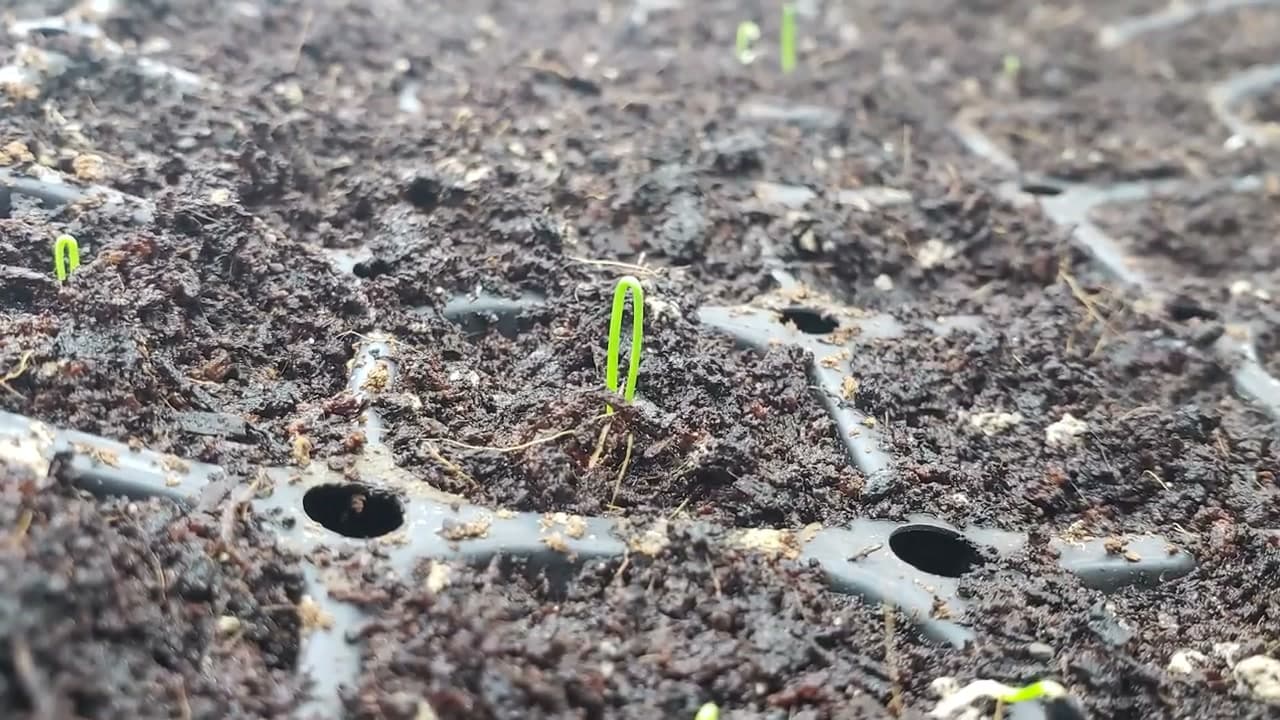
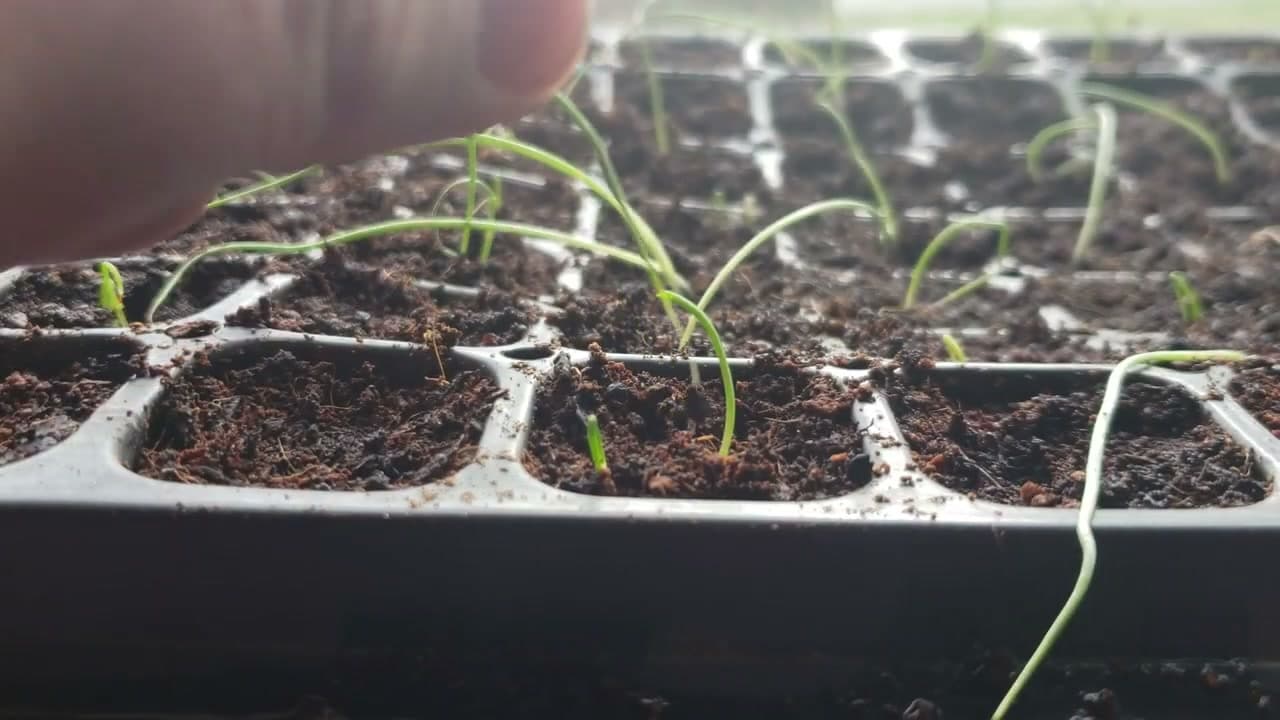
At that temperature the seeds sprout fast, usually within a week. You will see thin green loops push up out of the mix like the young sprouts shown here. Take the dome off and move the tray off the heat mat as soon as they break the surface.

Tip

Watch this step A seedling heat mat under the tray holds that 68 to 78 degree range far more steadily than room air, especially if you start seeds in a cool basement or garage.

7

Step 7: Keep the Day Length Short

8:45
Step 7: Step 7: Keep the Day Length Short

This is the tip that trips up most beginners. Onions decide when to form a bulb based on how many hours of light they get. Give tiny seedlings 14 to 16 hours like you would tomatoes and you trick them into bulbing way too early, before the plant can support it.

Keep the light under 10 hours for short-day varieties and under 12 for long-day ones while they are this small. They do not need intense heat or light at this stage, so an inexpensive shop light on a timer is plenty.

Tip

Watch this step Put your grow light on a plug-in timer and set it for 10 hours. It is the simplest way to stop early bulbing without thinking about it every day.

8

Step 8: Trim the Tops to Stay Upright

8:40
Step 8: Step 8: Trim the Tops to Stay Upright

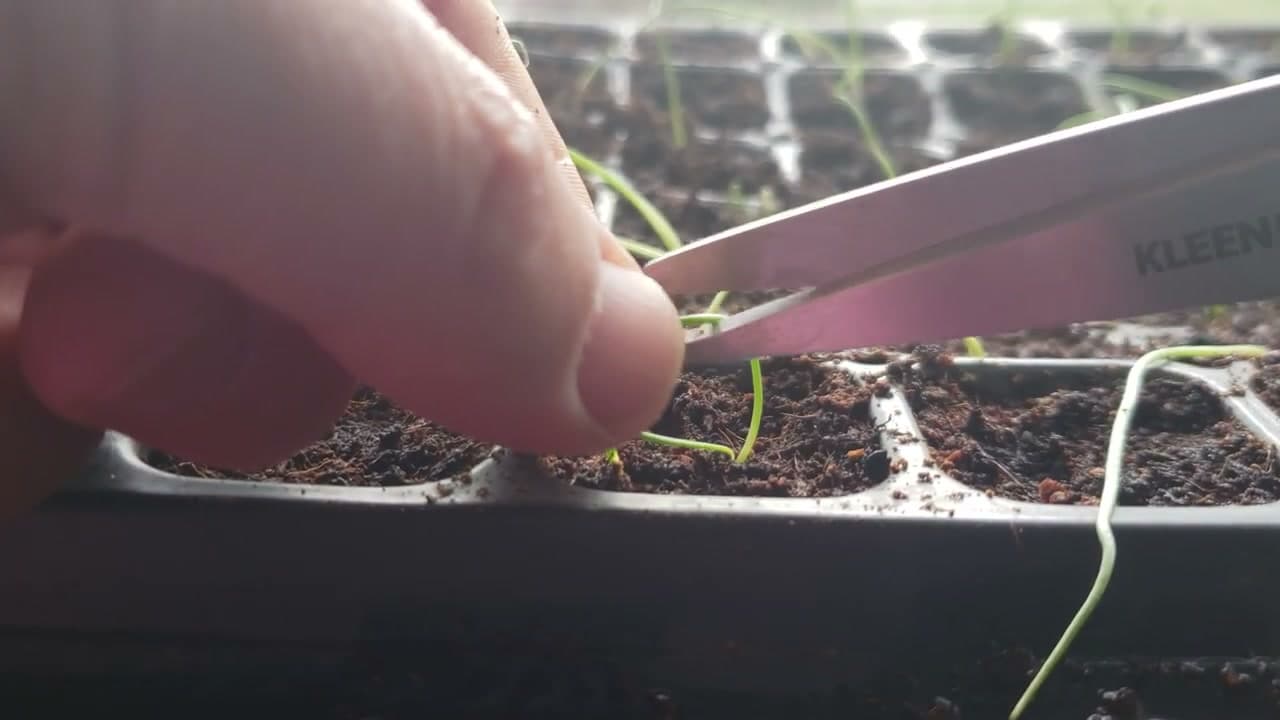
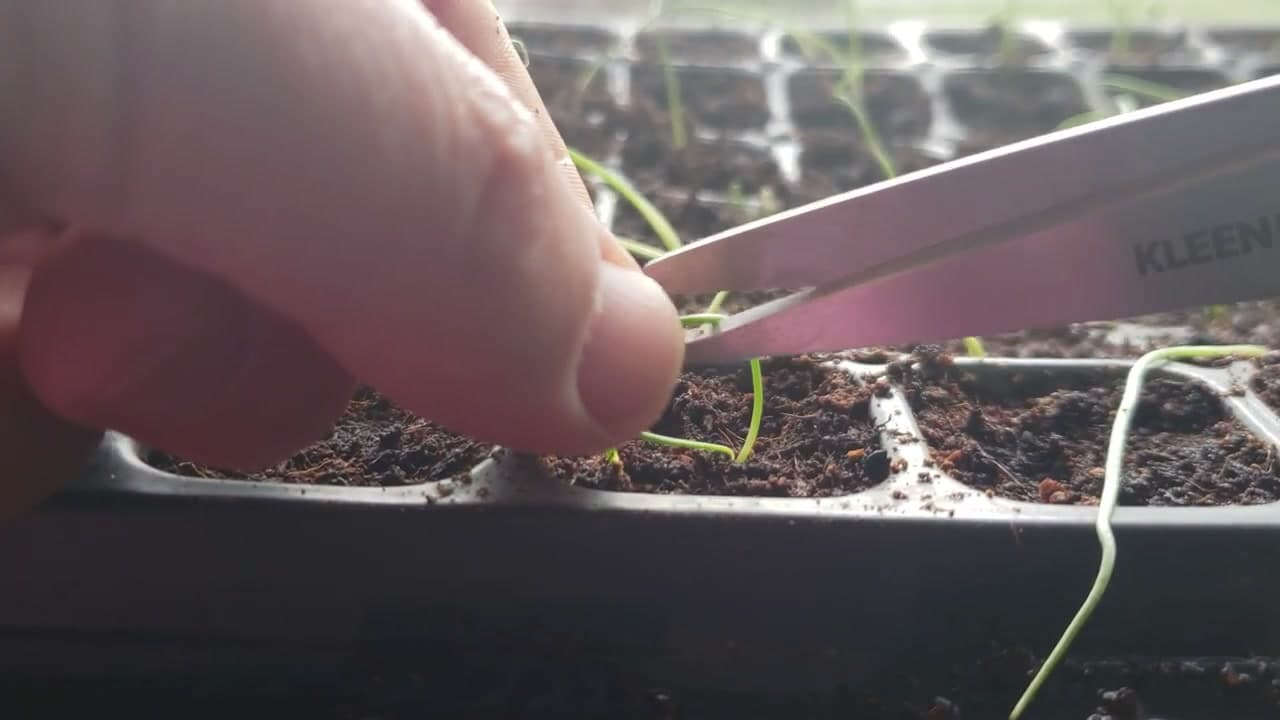
Once the seedlings reach a few inches they flop over and get unruly. Trim the tops back to about three or four inches with clean scissors and they stand up straight and put energy into their roots instead.

You may also spot the onion loop, where the growing tip stays stuck in the soil. Do not yank it, the roots are too fragile and the whole plant will lift out. Just snip the loop and pull the top free. Keep the seedlings moist but never soggy, hold the schedule for the full two-plus months, and they are ready to plant out in spring.

Tip

Watch this step Save your trimmings. The snipped tops taste like mild green onion and are great sprinkled over eggs or a salad.

Products Used

☐ The Checklist

How to Grow Onions from Seed (Beginner Start to Finish)

Tools
8
Materials
4
Steps
8
Video
11 min

Your Guide

The Ripe Tomato Farms

As an Amazon Associate we earn from qualifying purchases. Links on this page may be affiliate links - clicking them and buying doesn't change your price, but helps support ShowMeStepByStep.

Tags

Test your knowledge

Did the lesson stick? Find out in 2 minutes.

5 quick questions covering what you just read. No signup, no score saved — just a gut check.

Quick reference

Key takeaways from How to Grow Onions from Seed (Beginner Start to Finish)

5 questions, answers, and one-line explanations. Tap to expand.

  1. 1.Why does this method favor seeds over sets or starts?

    Answer: Seeds give you more variety choice and value

    A cheap seed packet unlocks any variety you want, while sets limit you to what a shop carries.

  2. 2.Why moisten the seed-starting mix before filling the cells, not after?

    Answer: Dry peat and coir repel water and float

    Dry peat and coir repel water, so wetting after filling leaves uneven wet and dry pockets.

  3. 3.What soil temperature range is the sweet spot for germinating onions?

    Answer: 68 to 78 degrees Fahrenheit

    Onions sprout best at 68 to 78 degrees, a touch cooler than tomatoes and peppers like.

  4. 4.What trips up most beginners and causes onions to bulb way too early?

    Answer: Giving tiny seedlings too many hours of light

    Onions bulb based on day length, so too many light hours tricks small seedlings into bulbing early.

  5. 5.Why trim the seedling tops back to a few inches?

    Answer: It stops them flopping and pushes energy to roots

    Trimming the floppy tops keeps seedlings upright and sends their energy into building roots.

Did this work for you?

What's next

Related collections

Curated theme pages that include this tutorial.

Weekly Digest

Liked this gardening tutorial?

Pick the categories you want to hear about. Weekly digest of new step-by-step tutorials. No spam, easy unsubscribe.

Send me tutorials about

We only email about new tutorials. Easy unsubscribe anytime.