How to Caramelize Onions

CookingMedium6:437 steps

Based on a video by Helen Rennie.

Caramelized onions are one of the most misunderstood things in a home kitchen. Recipe blogs say "10 minutes" and hand you pale, wilted onion mush. Real caramelized onions take 45 minutes and look like dark amber jam. They're worth every second on a French onion soup, a burger, a grilled cheese, or stirred into pasta.

This method comes from chef and cooking teacher Helen Rennie, whose technique pulled millions of views because she gets the three things home cooks usually miss: the right onion (yellow, not sweet), the right pan (stainless, not nonstick), and enough oil (a lot more than you'd think).

Set aside an hour. Make a big batch. The onions keep in the fridge for 10 days and elevate everything they touch.

Step-by-Step Guide

1

Start with Yellow Onions

0:28
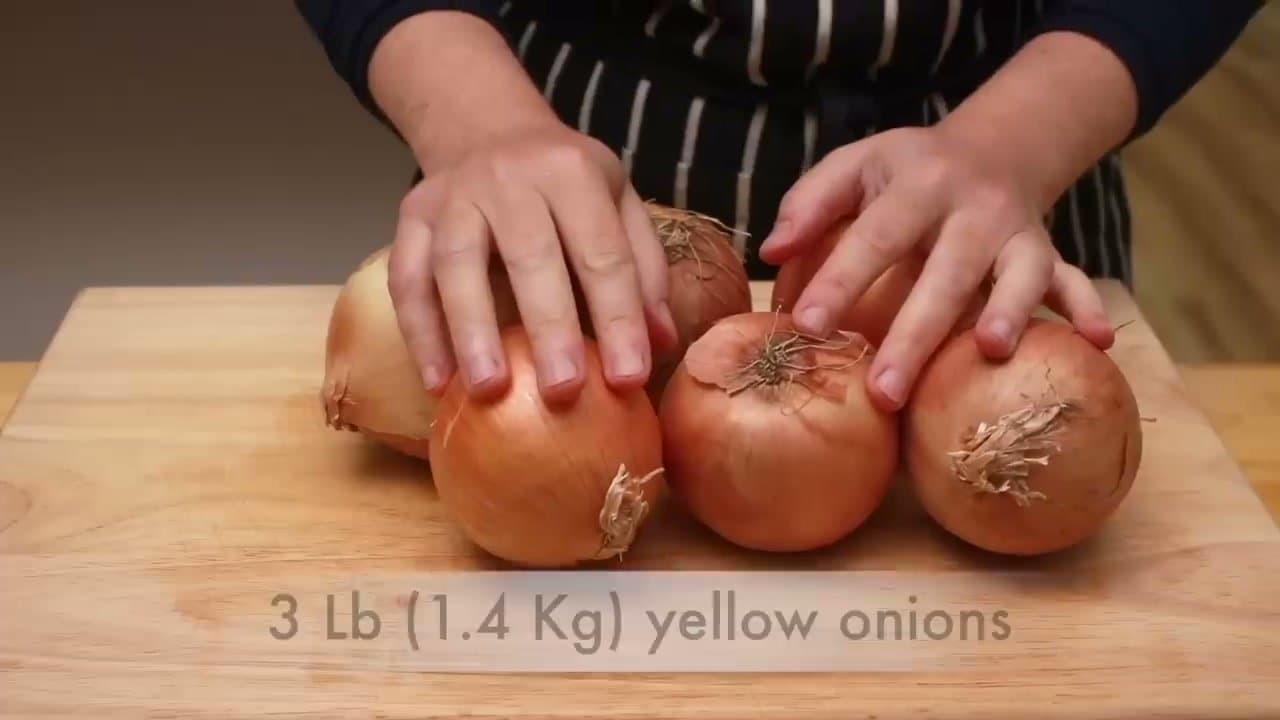
Step 1: Start with Yellow Onions

Yellow onions caramelize better than any other variety. The sugar content is balanced enough to brown without burning. Sweet onions, red onions, and Vidalias look tempting but they either burn too fast or turn mushy.

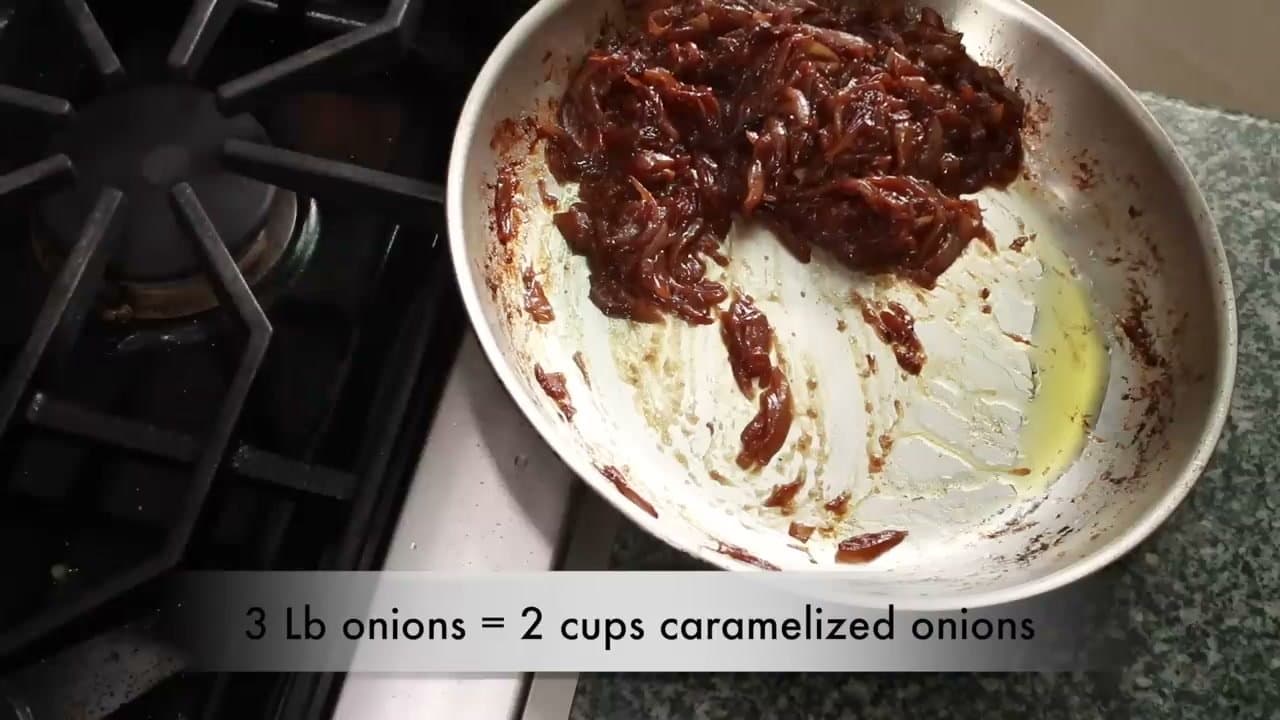
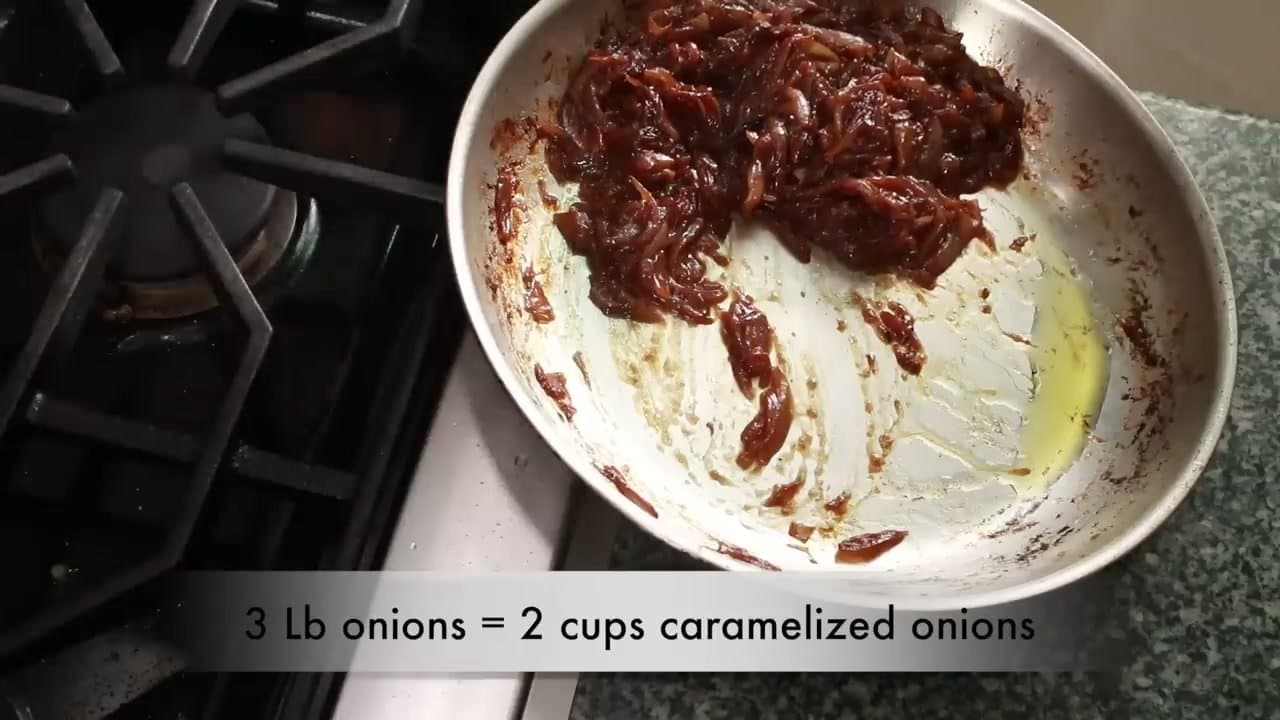
For this method you need 3 pounds of yellow onions, which cooks down to about 2 cups of caramelized onions. It's a lot less than you'd think, so don't scale down unless you're cooking a smaller batch deliberately.

Watch this moment in the video.

Tip

Onions with tight papery skins and no soft spots caramelize most evenly. Skip any bulbs that feel spongy - the extra water content slows the browning.

Products used in this step

2

Slice the Onions Pole to Pole

1:02
Step 2: Slice the Onions Pole to Pole

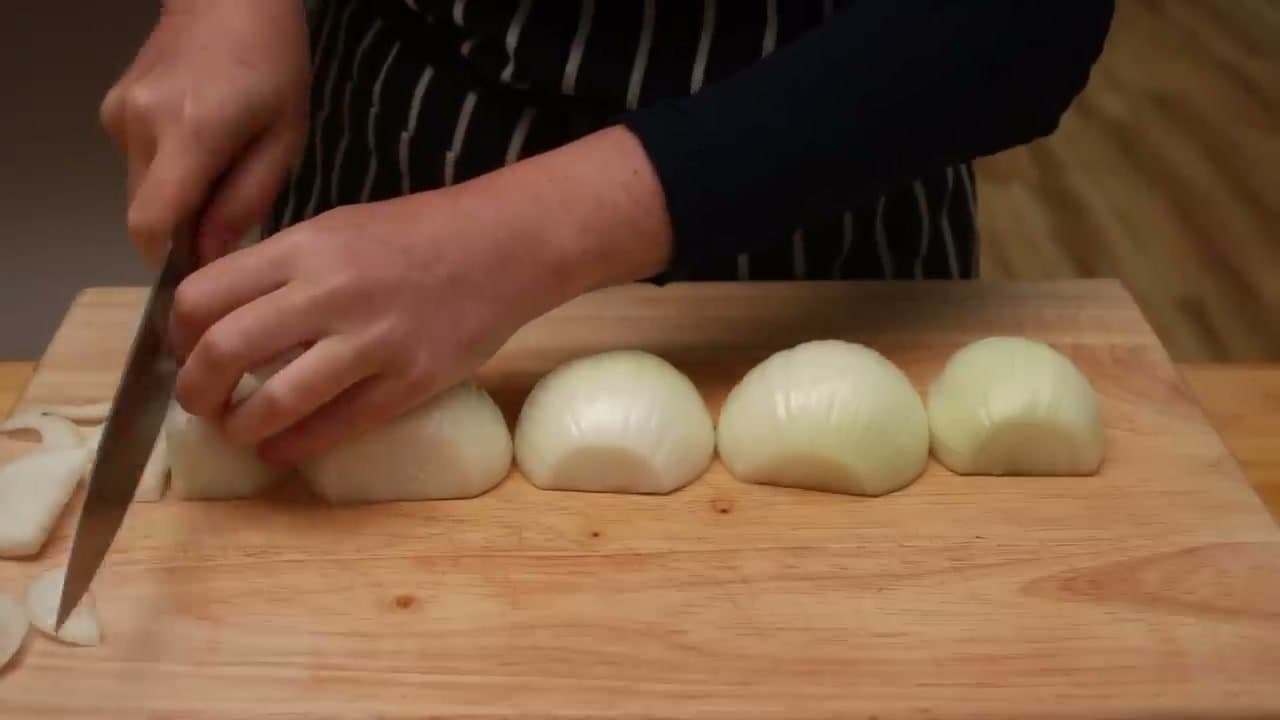
Cut off the top, slice the onion in half pole to pole, and peel off the first outer layer (it's always tough and dry).

Slice each half from root to tip in thin strips, about 1/8 inch thick. This direction of cut matters.

Pole-to-pole strips hold their shape and cook evenly. If you slice crosswise into half-moons, they turn to mush by the end of the cook.

Watch this moment in the video.

Tip

A sharp chef's knife plus a claw grip cuts your crying time roughly in half. Dull knives crush onion cells and release more sulfur compounds.

3

Heat Olive Oil in a Stainless Steel Skillet

2:25
Step 3: Heat Olive Oil in a Stainless Steel Skillet

Use stainless steel, not nonstick. The brown bits (the fond) that stick to stainless are where the flavor develops.

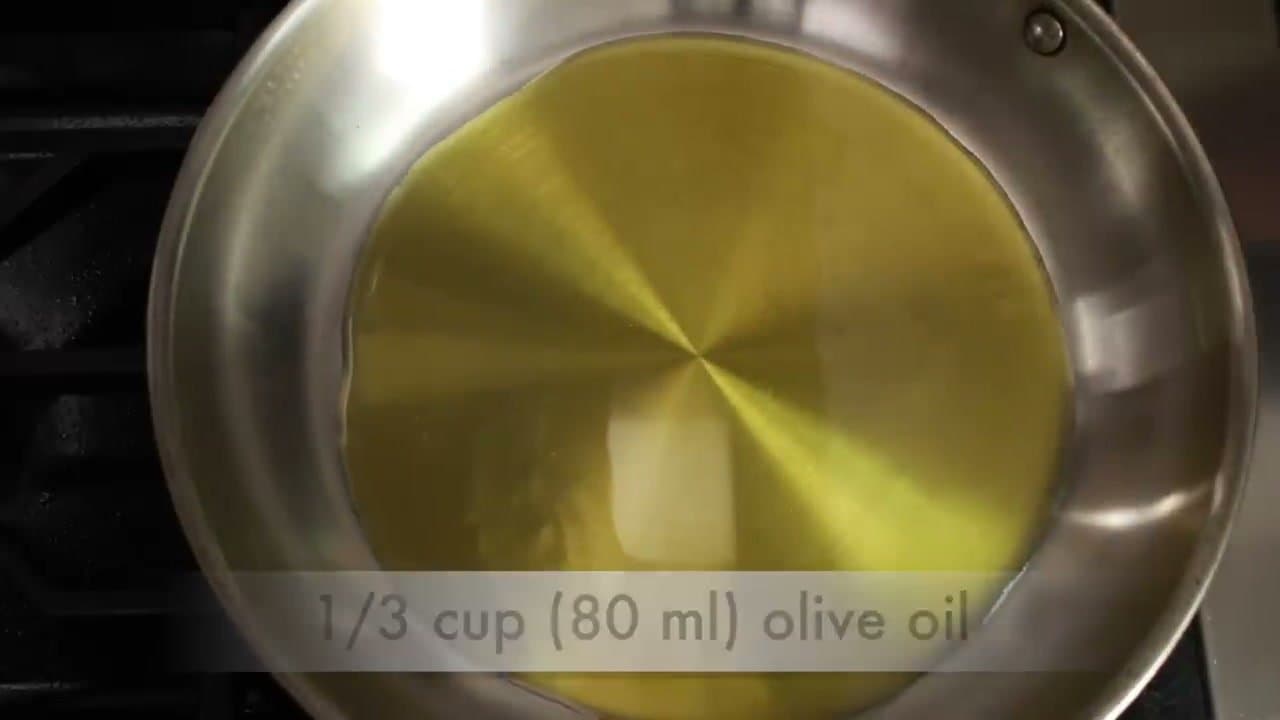
For 3 pounds of onions, use a 12-inch pan with 1/3 cup of olive oil. For 1.5 pounds, a 10-inch pan with 1/4 cup of oil.

Set the heat to medium-high and wait for the oil to shimmer. The oil seems excessive, but you'll pour most of it off at the end. It's not optional - it carries flavor into the onions.

Watch this moment in the video.

Tip

A wider, shallower pan caramelizes faster than a deeper one because more surface area touches heat. A 12-inch tri-ply stainless skillet is the workhorse.

4

Add Onions and Salt, Leave Them Alone

2:50
Step 4: Add Onions and Salt, Leave Them Alone

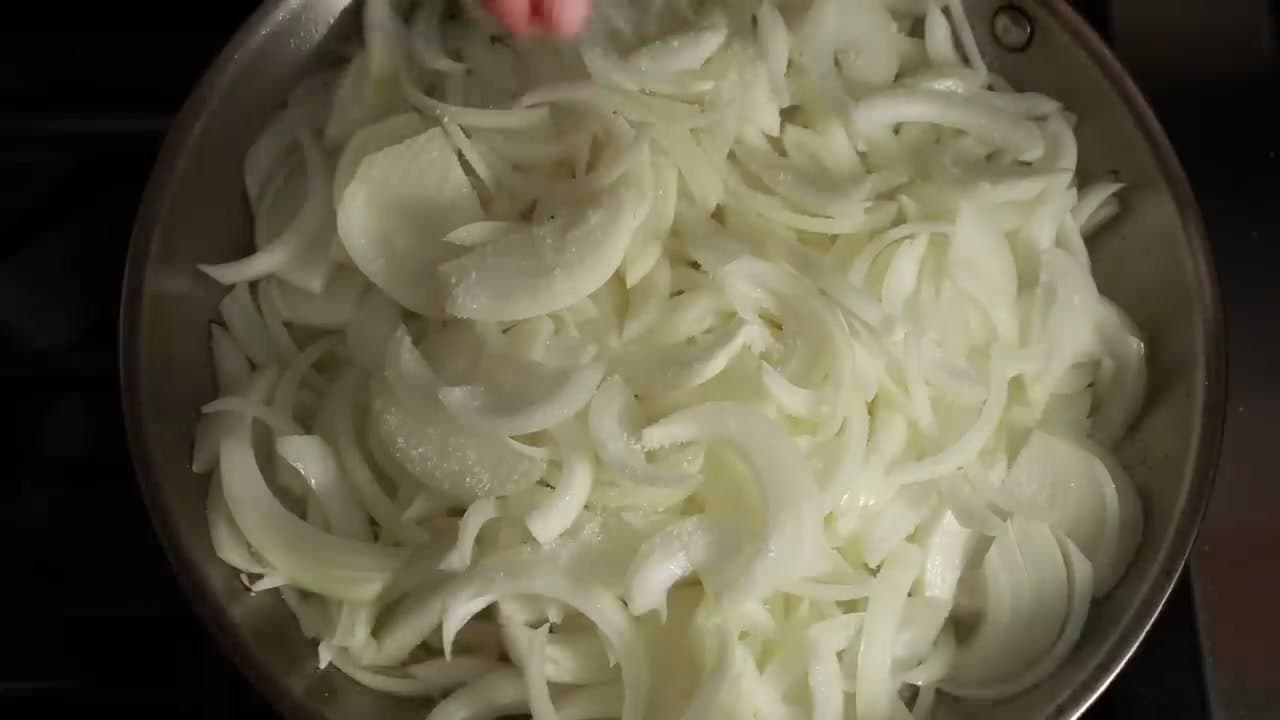
Tip the sliced onions into the shimmering oil. Add 2 teaspoons of kosher salt (or 1 teaspoon of table salt). Stir once to distribute, then leave the pan alone for about 3 minutes.

The bottom layer needs direct contact with the hot pan to brown, and stirring interrupts that.

Peek at the edges to see how much color they've picked up. When you see golden brown on the bottom, it's time to stir.

Watch this moment in the video.

Tip

Diamond Crystal kosher salt measures differently than Morton's - Diamond is fluffier, so 2 teaspoons equals roughly 1.5 teaspoons of Morton's or 1 teaspoon of table salt.

Products used in this step

5

Stir and Continue Browning at Medium-High

3:30
Step 5: Stir and Continue Browning at Medium-High

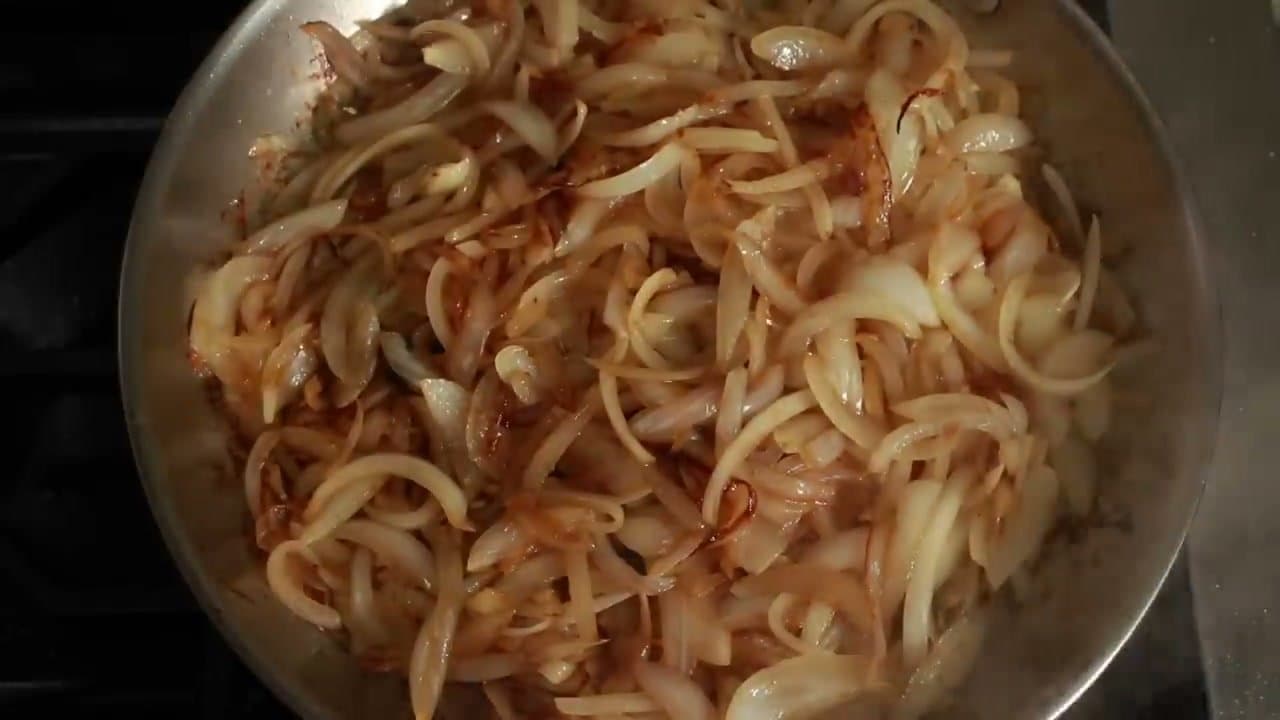
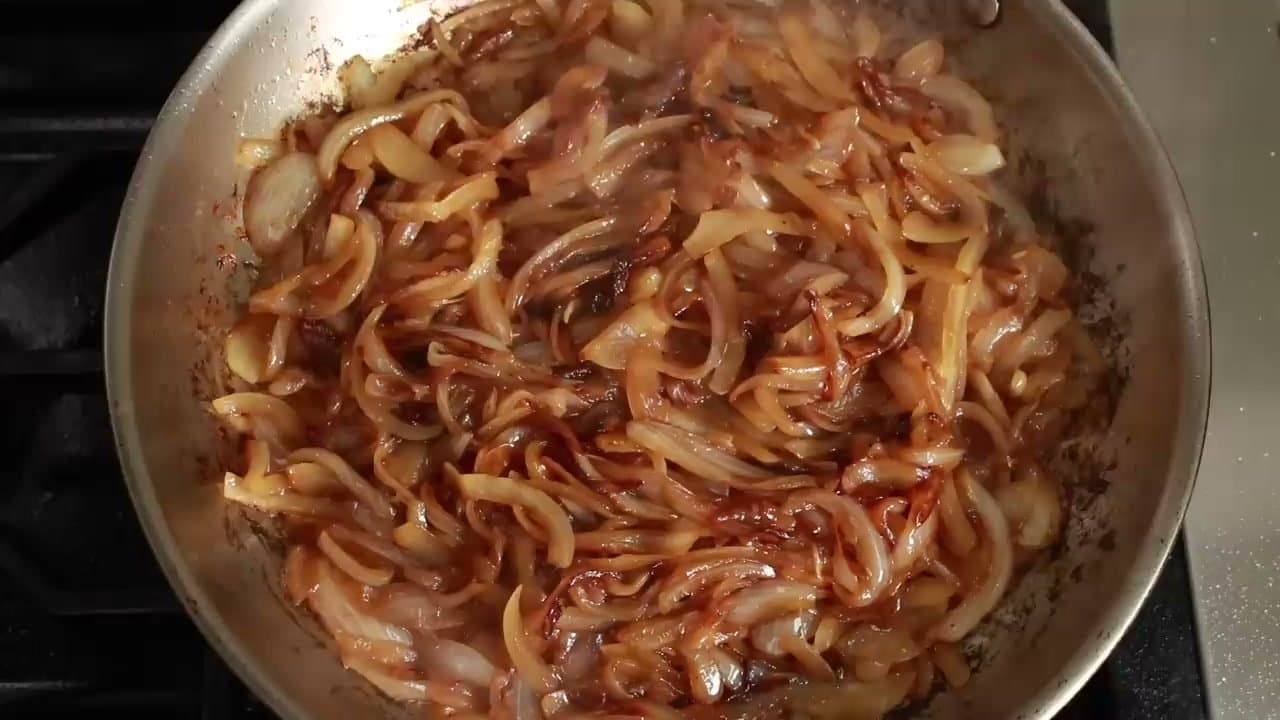
Stir to move the browned bottom onions up and the paler ones down. Let them sit again until the new bottom browns, about 5 more minutes this time.

If the pan looks dry, add another splash of oil. If the brown bits turn black instead of amber, the heat is too high - drop it a notch.

Keep stacking the onions back toward the pan's center after each stir so the edges don't dry out.

Watch this moment in the video.

Tip

A wooden spatula works better than metal here. Metal scrapes fond off the pan too aggressively; wood sweeps it up without shearing it free of its flavor.

Products used in this step

6

Drop to Very Low Heat for the Long Simmer

4:15
Step 6: Drop to Very Low Heat for the Long Simmer

Turn the heat to the lowest setting your burner will go. On an electric stove, move the pan to a smaller, colder burner. The skillet takes a minute or two to cool, so stir more during that transition.

Once the pan cools, the onions can sit 5 to 8 minutes between stirs. This is where the magic happens. The onion strips turn syrupy and jam-like.

20 minutes at low heat gives you tender, sweet onions. 40 minutes gives you deep, almost-burnt-caramel jam.

Watch this moment in the video.

Tip

Switch from a stirring spoon to a flat wooden spatula once the onions are syrupy. The flat edge scrapes the fond up into the onions where it belongs.

7

Finish with Balsamic and Drain the Oil

5:05
Step 7: Finish with Balsamic and Drain the Oil

Add a splash of balsamic vinegar (about a tablespoon). Stir it in over the low heat for 2 more minutes so it picks up the brown bits. Taste and add salt if needed.

Tilt the pan and push the onions to one side. The excess oil pools at the bottom and you can spoon most of it off.

Save the drained oil for pasta or bread dipping. The onions store in the fridge for about 10 days.

Watch this moment in the video.

Tip

3 pounds of onions produces roughly 2 cups of finished onions. They freeze well in 1/4-cup portions so you can pull exactly what a single dish needs.

Products Used

❖ The Recipe

How to Caramelize Onions

Serves
about 2 cups caramelized onions
Prep
15 min
Cook
45 min
Total
1 hr

Ingredients

4 items
  • 3 poundsyellow onionssliced pole-to-pole about 1/8 inch thick
  • 1/3 cupolive oilfor a 12-inch pan; use 1/4 cup for a 10-inch pan with 1.5 lbs onions
  • 2 teaspoonskosher saltor 1 teaspoon table salt
  • 1 tablespoonbalsamic vinegaradded at the end

Method

  1. 1
    Start with Yellow Onions. Yellow onions caramelize better than any other variety.
  2. 2
    Slice the Onions Pole to Pole. Cut off the top, slice the onion in half pole to pole, and peel off the first outer layer (it's always tough and dry).
  3. 3
    Heat Olive Oil in a Stainless Steel Skillet. Use stainless steel, not nonstick.
  4. 4
    Add Onions and Salt, Leave Them Alone. Tip the sliced onions into the shimmering oil.
  5. 5
    Stir and Continue Browning at Medium-High. Stir to move the browned bottom onions up and the paler ones down.
  6. 6
    Drop to Very Low Heat for the Long Simmer. Turn the heat to the lowest setting your burner will go.
  7. 7
    Finish with Balsamic and Drain the Oil. Add a splash of balsamic vinegar (about a tablespoon).

Your Guide

Helen Rennie

As an Amazon Associate we earn from qualifying purchases. Links on this page may be affiliate links - clicking them and buying doesn't change your price, but helps support ShowMeStepByStep.

Tags

Related Tutorials