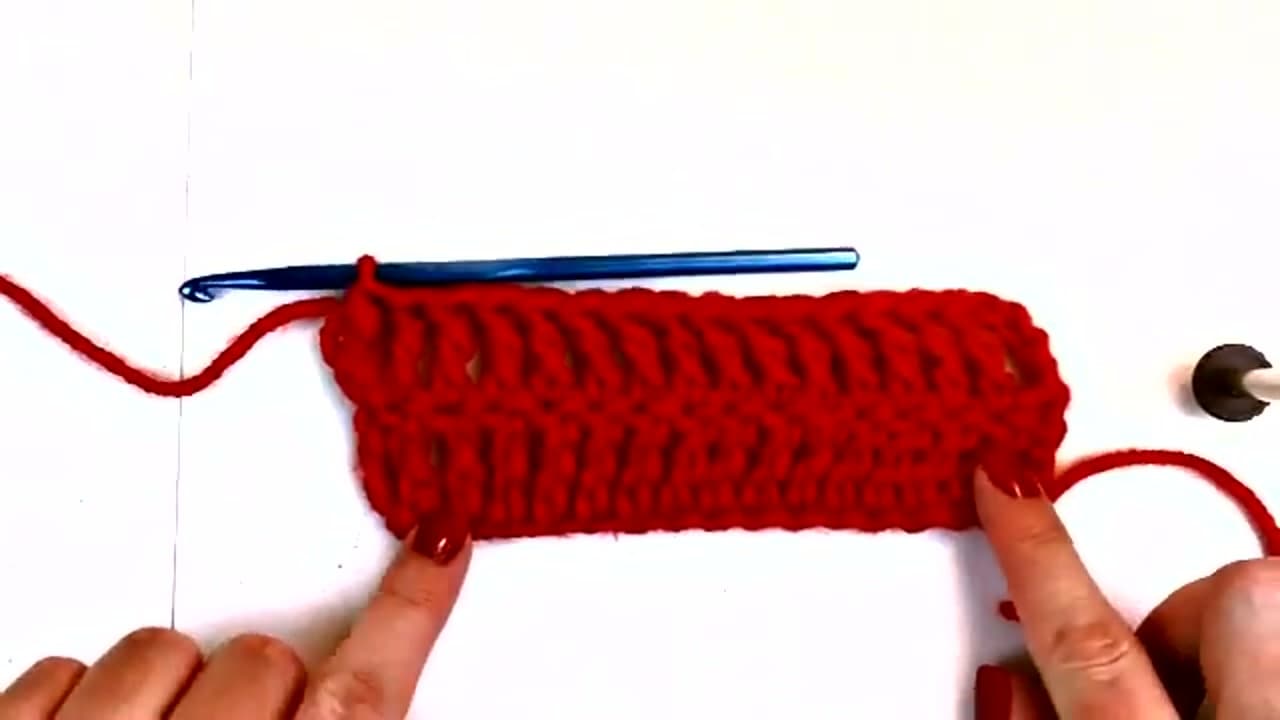
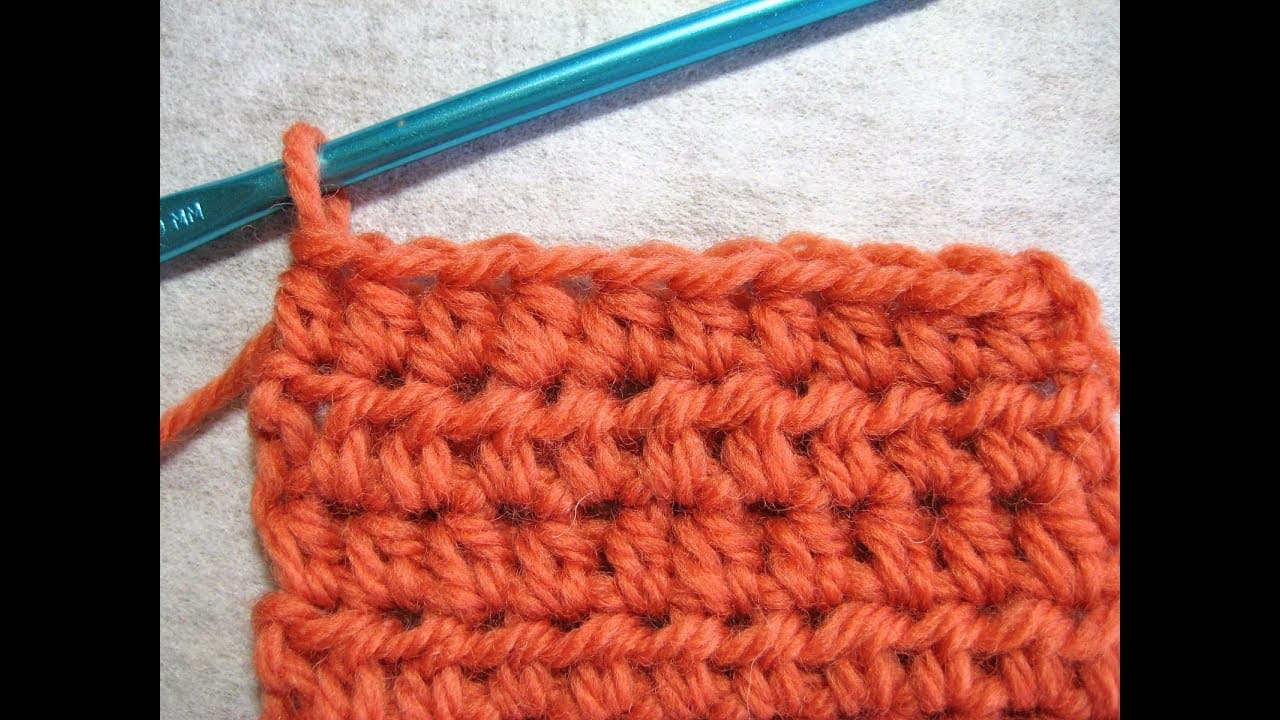
The treble crochet is the tall one. Bobby Thompson from Crochet Guru calls it the tallest of the basic stitches, and once you make a row of it you will see why. Each stitch stretches up about twice the height of a single crochet, so the fabric grows fast and opens up with airy little gaps. It is the stitch behind lacy shawls, summer tops, and any pattern that wants drape instead of density.
If you already know how to double crochet, you are most of the way there. A treble is the same motion with one extra yarn over at the start and one extra pull-through in the middle. This walkthrough breaks the stitch into the exact hook moves so you can follow along loop by loop.
One stitch, two names
Treble crochet and triple crochet are the same stitch. American patterns usually write it as triple or abbreviate it tr. You wrap the yarn over the hook twice before you start, which is the easy way to remember it: two wraps, triple crochet.
A quick warning if you ever follow a British pattern. UK terms run one step taller than US terms, so a UK "treble" is actually a US double crochet, and what we are making here is a UK "double treble." Check which system a pattern uses before you start. Everything on this page is US terminology.
Where the treble sits in the stitch family
All the basic stitches use the same core motion with a different number of yarn overs. Working up from shortest to tallest:
- Single crochet - no yarn over to start, pull through both loops at once
- Half double crochet - one yarn over, pull through all three loops at once
- Double crochet - one yarn over, pull through two loops at a time
- Treble crochet - two yarn overs, pull through two loops at a time (this page)
Learn the treble and you have the whole core set. Taller stitches like the double treble are just one more wrap on top of this.
Before you start
Use a smooth, light-colored worsted yarn and a hook that matches your yarn label, around 5.0 mm to 5.5 mm. Light yarn lets you see each loop clearly while you learn, which matters more than you would think. Make a foundation chain of about 15 to practice on. The first treble of every row goes into the fifth chain from the hook, and those four skipped chains stand in for your first stitch.
Counting your stitches
At the end of each row, the turning chain counts as a stitch. That trips up almost everyone at first. Bobby's rule is the one to memorize: always work your last stitch of the row into the top of the turning chain from the row below. Skip it and your edges pull in and lose a stitch every row. Hit it every time and your rectangle stays straight.