How to Crochet a Bear (Easy Beginner Amigurumi Pattern)

CrochetEasy35:4110 stepsBrowse more →
Also in:Crafts

By ShowMeStepByStepPublished

Based on a video by Little World of Whimsy.

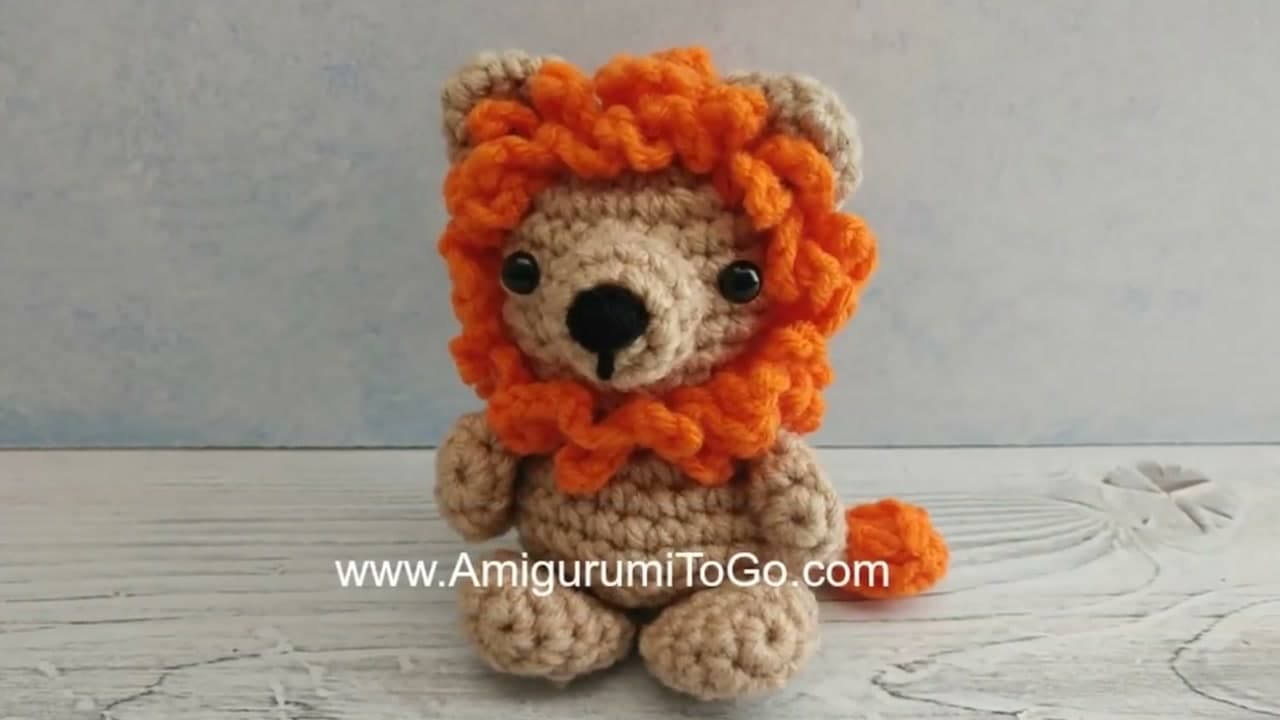
Meet Waffle the Bear - a tubby little amigurumi you can finish in an afternoon. The whole bear is one piece. You start with a foundation chain instead of a magic ring, build the body in single crochet with a few increases and decreases, then sew on two small arms, two little ears, and a white muzzle with an embroidered nose. The finished bear is about 3.5 inches tall and stands on its own rounded base.

Annabelle from Little World of Whimsy walks the whole pattern in real time. If you've already crocheted one amigurumi - even something basic like our crochet sphere or the classic beginner whale - you can finish this bear today.

What you'll need

The version in the video uses two balls of WeCrochet Brava sport-weight yarn (one lavender, one white) and a 3.25 mm Clover Amour hook. You can use worsted-weight yarn instead if you size up your hook to about 4 mm - the bear will just come out a bit bigger. Stick to sport-weight if you want the snug, dense fabric that hides the stuffing.

You'll also need 6 mm safety eyes (the small ones - 9 mm read too cartoony on a bear this size), polyester fiberfill, stitch markers, a tapestry needle, and a few sewing pins to hold the pieces in place before sewing them on.

Stitch abbreviations

The pattern uses standard amigurumi shorthand:

  • ch - chain
  • sc - single crochet
  • inc - increase (two single crochets in one stitch)
  • dec - invisible decrease (working through the front loops of the next two stitches)
  • MR - magic ring (used for the arms, ears, and muzzle - see our magic ring walkthrough if you're new to it)

Why a foundation chain instead of a magic ring

Most amigurumi animals start with a magic ring, which builds a perfect circle. This bear starts with a chain-7 foundation worked into both sides of the chain, which builds an oval. That oval is what gives the bear its slightly elongated, tubby shape instead of being perfectly round. The rest of the body grows outward from that oval, so the whole bear keeps a hint of width through the middle.

Choosing your color

Lavender is the version in the video, but the same pattern works in any color. Brown gives you a classic teddy. White makes a polar bear. Black with a white muzzle is a panda. If you swap colors mid-body the bear will read as a different animal - cream + a brown muzzle and you've basically got a hamster.

More amigurumi animals to try next

Once you've finished your bear, you've got the technique to make every other amigurumi animal on the site. They all use the same shape language - single crochet in continuous rounds, plus a few signature features.

Tips before you start

Work tighter than you think you need to. Loose amigurumi shows the stuffing through the gaps. If you can see your finger through the fabric when you hold a finished round up to the light, drop down a hook size.

Keep a stitch marker in the first stitch of every round. The whole bear is worked in a continuous spiral with no joins, so the marker is the only way to know where each round starts and ends.

Pin the muzzle, ears, and arms onto the body before you sew anything. The muzzle should sit centered, with its top edge level with the top of the eyes. The ears go on top of the head with a slight curve. The arms sit roughly halfway down the body. If something looks off, move the pin - you can't easily undo a sewn-on piece.

Step-by-Step Guide

1

Step 1: Gather Your Yarn, Hook, and Safety Eyes

0:25
Step 1: Step 1: Gather Your Yarn, Hook, and Safety Eyes

Lay out everything before you start. You need two colors of sport-weight yarn (the main color for the body and ears, plus white for the muzzle), a 3.25 mm hook, 6 mm safety eyes, polyester fiberfill, stitch markers, scissors, black embroidery thread for the nose, and a tapestry needle for sewing the pieces together.

You can swap yarn weights if you want a bigger or smaller bear. Worsted weight with a 4 mm hook will give you a chubbier 4.5-inch bear. DK weight with a 3 mm hook will keep the proportions and finish closer to 3 inches. Just keep your hook a half-size smaller than the yarn label recommends so the stitches stay tight.

Tip

Skip the safety eyes if this bear is going to a child under three - the post can come loose with enough chewing. Embroider French knots or stitch on small felt circles instead.

2

Step 2: Start with a Chain-7 Foundation

1:45
Step 2: Step 2: Start with a Chain-7 Foundation

This bear doesn't start with a magic ring like most amigurumi. It starts with a foundation chain that builds an oval instead of a circle, which is what gives the body its slightly stretched, tubby shape.

Make a slip knot, put your hook through, and chain seven. Count out loud - that's seven chain stitches not counting the loop on your hook. You'll work into both sides of this chain in the next step to form the oval base of the body.

Tip

If you've only ever made magic rings, this is a good time to bookmark our magic ring walkthrough - you'll need it for the arms, ears, and muzzle later in this pattern.

Products used in this step

3

Step 3: Work Rounds 1-6 to Build the Base Oval

4:40
Step 3: Step 3: Work Rounds 1-6 to Build the Base Oval

Round 1 turns the chain into a 12-stitch oval. Skip the first chain from the hook and work 5 single crochets along one side of the chain. Put 2 single crochets into the last chain to round the end. Then turn the work and crochet 5 more single crochets along the other side of the chain. That's 12 stitches total.

Rounds 2 through 6 are the increase rounds. Round 2: inc in every stitch (24 sts). Round 3: 1 sc + inc repeated (30 sts). Round 4: 2 sc + inc repeated (36 sts). Round 5: 3 sc + inc repeated (42 sts). Round 6: 4 sc + inc repeated (48 sts). Drop a stitch marker into the last stitch of each round so you don't lose your place.

Tip

The shape will look hexagonal at the end of round 6 - that's normal. It smooths out once you stop increasing and the fabric starts curving upward.

Products used in this step

4

Step 4: Insert the Safety Eyes Between Rounds 9 and 10

11:00
Step 4: Step 4: Insert the Safety Eyes Between Rounds 9 and 10

Work four more plain single-crochet rounds (still 48 stitches each), then place the eyes between rounds 9 and 10. Count down from the top of the work - the foundation chain is round 1, the first 12-stitch round, then round 2 (24 sts), and so on.

Push each 6 mm safety eye through from the outside in, between two stitches (not through one). You want exactly 7 stitches between the two eyes for the right facial spacing. Snap the washer onto the back of each post. Once the washer locks on, the eye is in forever - so hold the bear up at arm's length and check the placement before you commit.

Tip

If the post goes through a stitch instead of between two, it'll pull the yarn and the eye will sit crooked. Spread the fabric gently with your hook tip to find the gap.

Products used in this step

5

Step 5: Shape the Body with One More Increase Round and Then Decreases

13:40
Step 5: Step 5: Shape the Body with One More Increase Round and Then Decreases

After placing the eyes, work one more increase round: 7 sc + inc repeated 6 times (54 stitches). Then 8 plain rounds of single crochet all around at 54 stitches each. The body will stretch into a tube taller than it is wide.

Now start the decreases for the rounded bottom. Round by round: 8 sc + dec (54 sts), 7 sc + dec (48 sts), 4 sc + dec repeated 8 times (40 sts), 3 sc + dec x8 (32 sts), 2 sc + dec x8 (24 sts). Use the invisible decrease - insert your hook through only the front loops of the next two stitches, yarn over, pull through both, then yarn over and pull through. It hides the dec on the inside.

Tip

The shape will start curving in noticeably during the decreases. That's the bottom of the bear forming.

6

Step 6: Stuff the Body Firmly Before It Closes

17:20
Step 6: Step 6: Stuff the Body Firmly Before It Closes

Once the opening narrows to around 24 stitches, pause and stuff. Pull the fiberfill into small chunks (about the size of a walnut) and push them in one at a time from the bottom up. Layering it like this keeps the stuffing smooth - one big wad of fiberfill always shows as a lump.

Stuff firmer than feels comfortable. If you press the bear and it bounces back, it's right. If your finger leaves a dent, push more in. Loose amigurumi sags within a week. Add a little more stuffing after every couple of decrease rounds until the opening is too small to fit any more.

Tip

If the stuffing shows through the stitches, your tension is too loose. Drop down half a hook size on your next amigurumi and the fabric will close up.

7

Step 7: Close the Top with the Final Decreases and Cinch

20:35
Step 7: Step 7: Close the Top with the Final Decreases and Cinch

The last few rounds close the body fast: 1 sc + dec x8 (16 sts), then dec x8 (8 sts), then dec x4 to close the final ring. Switch from the invisible decrease to a regular decrease here - the stitches get too small to fit your hook through both front loops.

Cut a tail about 8 to 10 inches long and pull the loop on your hook all the way through to finish off. Thread the tail through a tapestry needle, then weave it through the front loops of every remaining stitch around the top opening. Pull the tail tight to cinch the hole closed completely. Insert the needle down through the center of the bear and out anywhere else on the body, then snip the tail flush.

Tip

If a small gap remains after cinching, push the tip of your tapestry needle through it and pull the inside of the cinch tighter. You can also stitch over the gap once with the tail before burying it.

Products used in this step

8

Step 8: Make Two Arms and Two Ears with Magic Rings

22:20
Step 8: Step 8: Make Two Arms and Two Ears with Magic Rings

Each arm is tiny: start with a magic ring, work 6 sc inside it, then 3 more rounds of plain sc all around (still 6 stitches each round). Finish off with a 10-inch tail, fold the arm flat, and tuck the starting tail inside. Make two of these.

The ears use the same start but add one increase round. Magic ring with 6 sc, then round 2: inc in every stitch (12 sts), then 2 plain rounds at 12 stitches. Flip the work inside out as you go so the right side faces out. Finish off with a 10-inch tail, fold the ear flat, and trim the starting tail inside. Make two ears.

Tip

These pieces are small. Hold the magic ring tight against your finger as you work - if you let it slip, the stitches won't seat. A bent-tip tapestry needle helps when you're sewing pieces this small onto the body later.

Products used in this step

9

Step 9: Crochet the White Muzzle and Embroider the Nose

28:20
Step 9: Step 9: Crochet the White Muzzle and Embroider the Nose

Switch to white yarn for the muzzle. Magic ring with 6 sc, then round 2: 1 sc + inc repeated 3 times (9 sts). Round 3: 2 sc + inc repeated 3 times (12 sts). Round 4: plain sc all around (still 12 sts). Slip stitch into the next stitch to close, leave a 10-inch tail for sewing.

Now embroider the nose. Thread black embroidery thread through your needle and stitch a small triangle in the center of the muzzle, about three or four passes for good coverage. Lightly stuff the muzzle with a pinch of fiberfill before you sew it on - it should pop out from the face a little, not lie flat.

Tip

White yarn is the hardest to count stitches on because the loops blur together. Move your stitch marker every single round on the muzzle - you cannot squint your way out of this one.

Products used in this step

10

Step 10: Sew the Ears, Muzzle, and Arms onto the Body

35:25
Step 10: Step 10: Sew the Ears, Muzzle, and Arms onto the Body

Pin every piece in place before sewing. The muzzle goes centered on the face with its top edge level with the top of the safety eyes. The ears sit on top of the head with a slight curve outward. The arms go roughly halfway down the body, pointing slightly forward.

Sew each piece on with a whip stitch. Thread the tail through your tapestry needle, then go in through the body, come up through the edge of the piece you're sewing, and repeat all the way around. Pull each stitch snug but not tight enough to crumple the body. When you're done, bury the tail by pushing the needle through the body and out the back, then snip flush.

Trim every remaining tail flush with the body. If a strand of yarn still shows, push it back inside with the back of your needle. Your bear is finished. Pose it on a shelf, gift it, or add accessories like a tiny hat or a knit scarf to dress it up.

Tip

Want a panda instead? Use black yarn for the main body, white for the muzzle and a small white circle on each ear, and add black patches around the eyes. Polar bear: white body, white muzzle, black nose. Same pattern, different palette.

Products Used

☐ The Checklist

How to Crochet a Bear (Easy Beginner Amigurumi Pattern)

Tools
6
Materials
5
Steps
10
Video
36 min

Your Guide

Little World of Whimsy

As an Amazon Associate we earn from qualifying purchases. Links on this page may be affiliate links - clicking them and buying doesn't change your price, but helps support ShowMeStepByStep.

Tags

Free printable

Get the Crochet Cheat Sheet

Every basic stitch on one printable page. No spam, one-click unsubscribe.

What's next

Weekly Digest

Liked this crochet tutorial?

Pick the categories you want to hear about. Weekly digest of new step-by-step tutorials. No spam, easy unsubscribe.

Send me tutorials about

We only email about new tutorials. Easy unsubscribe anytime.