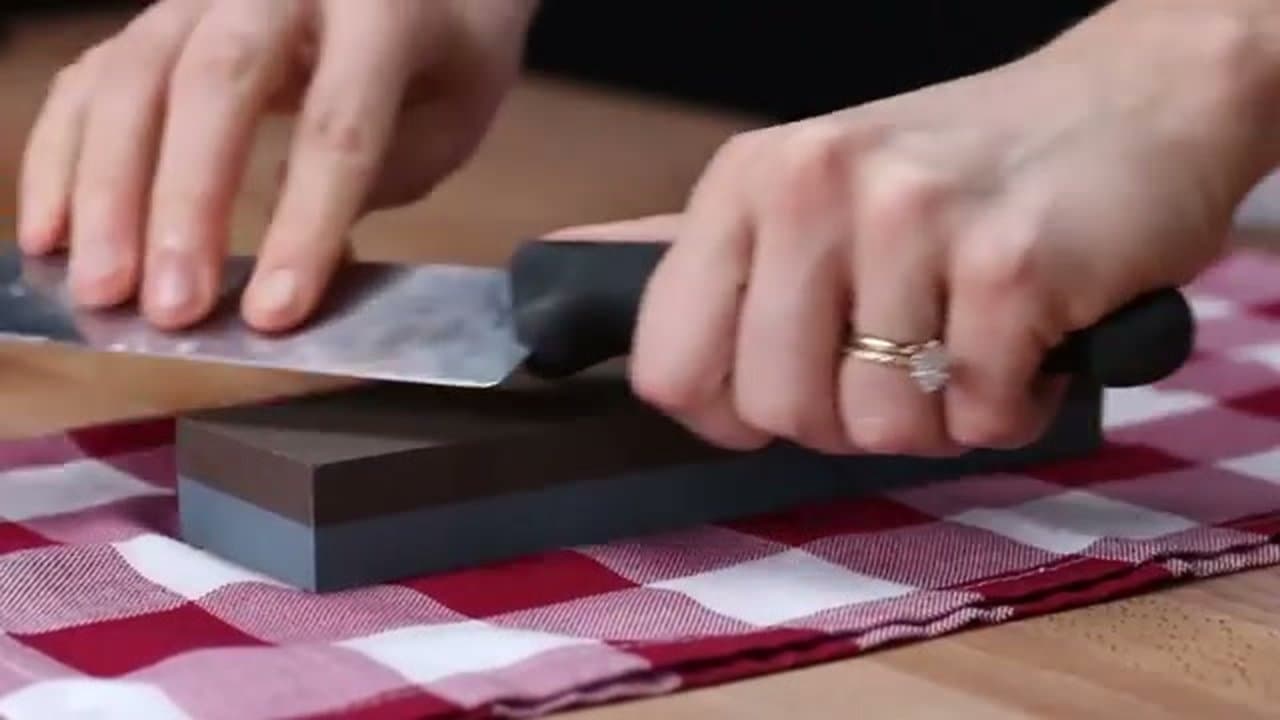
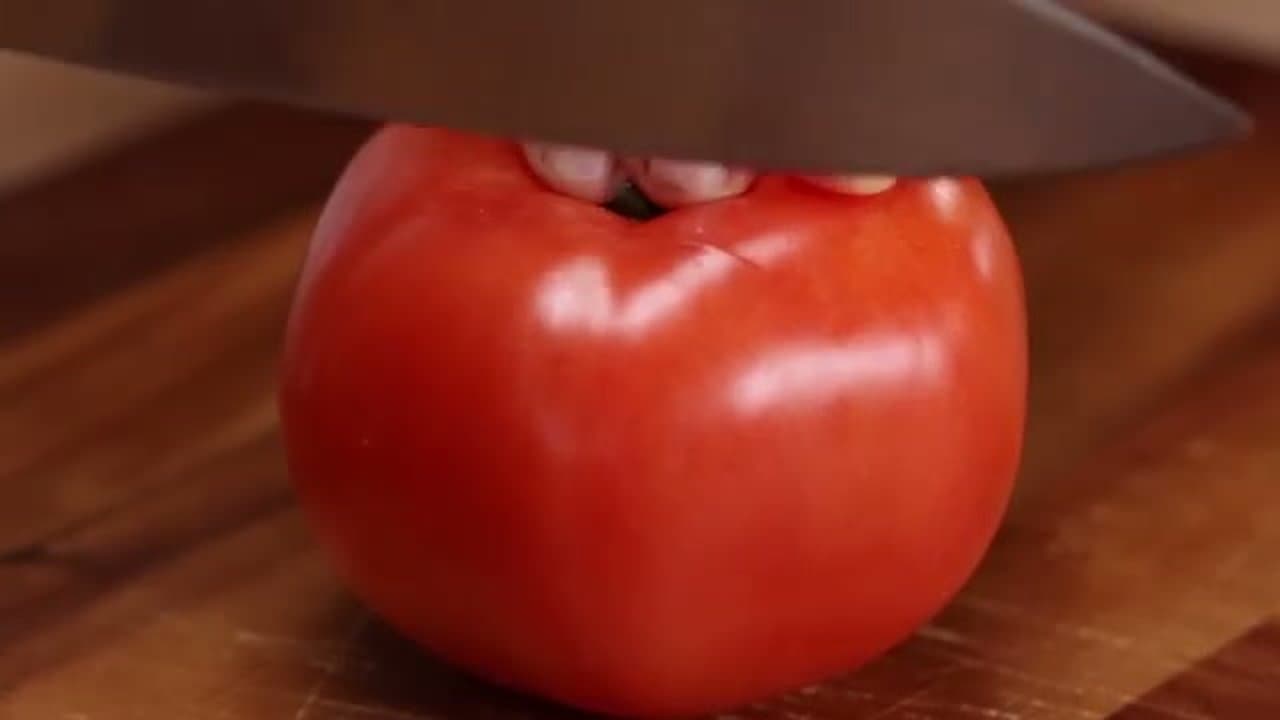
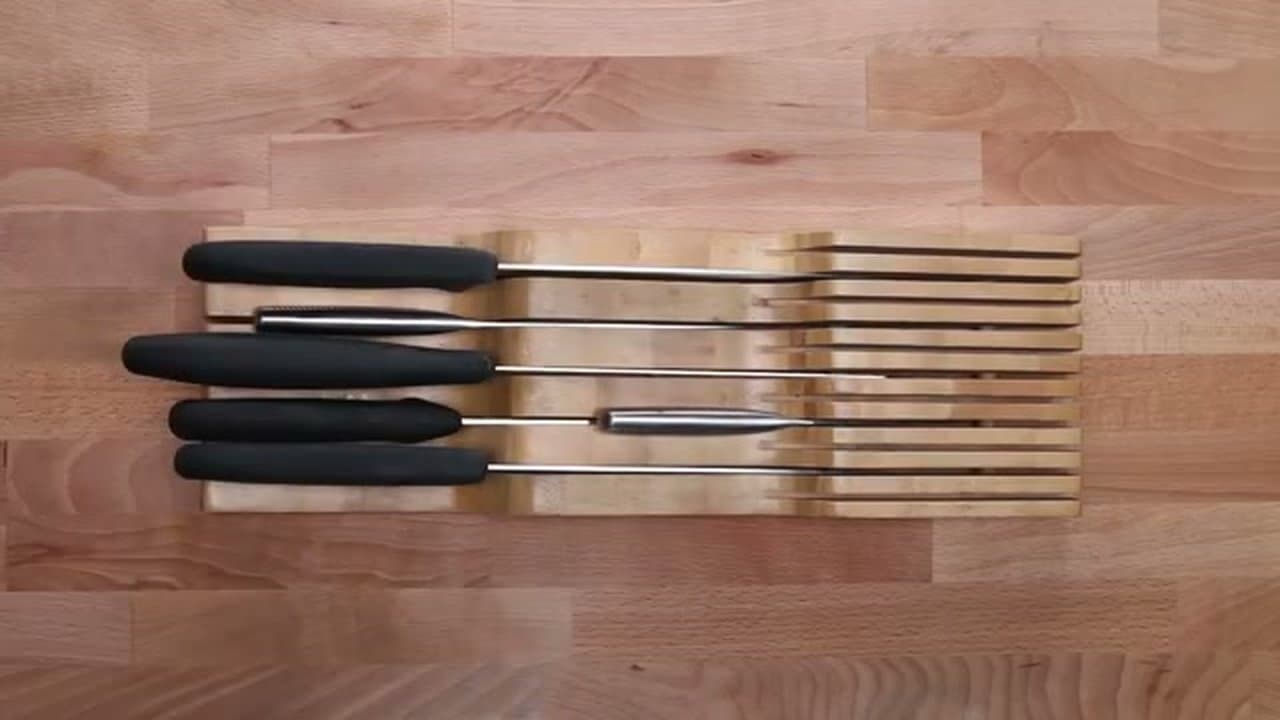
To sharpen knives at home, hone the edge with a steel before each cooking session, run them through a pull-through sharpener for weekly touch-ups, and use a whetstone at a 20-degree angle for fully dull blades. Test sharpness on a ripe tomato. Store knives in a block or on a magnetic strip to keep the edge.
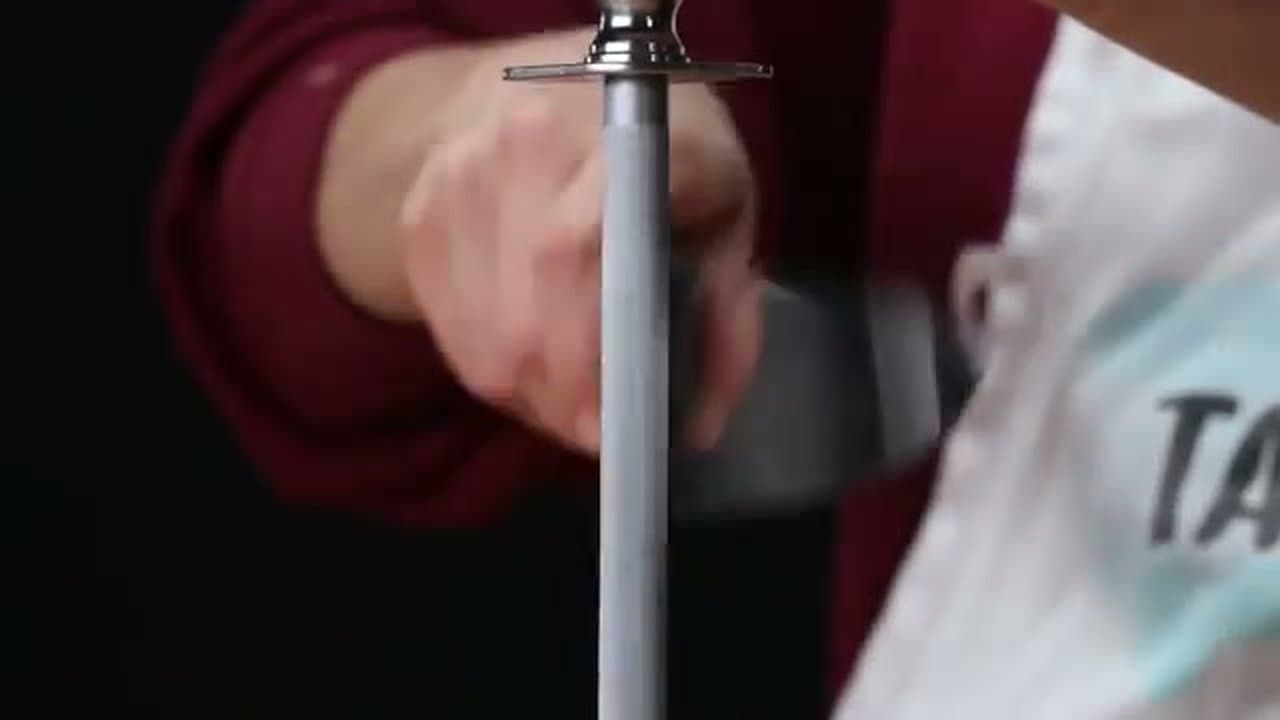
- Hone the blade with a steel before cooking. It straightens the edge and extends time between true sharpenings.
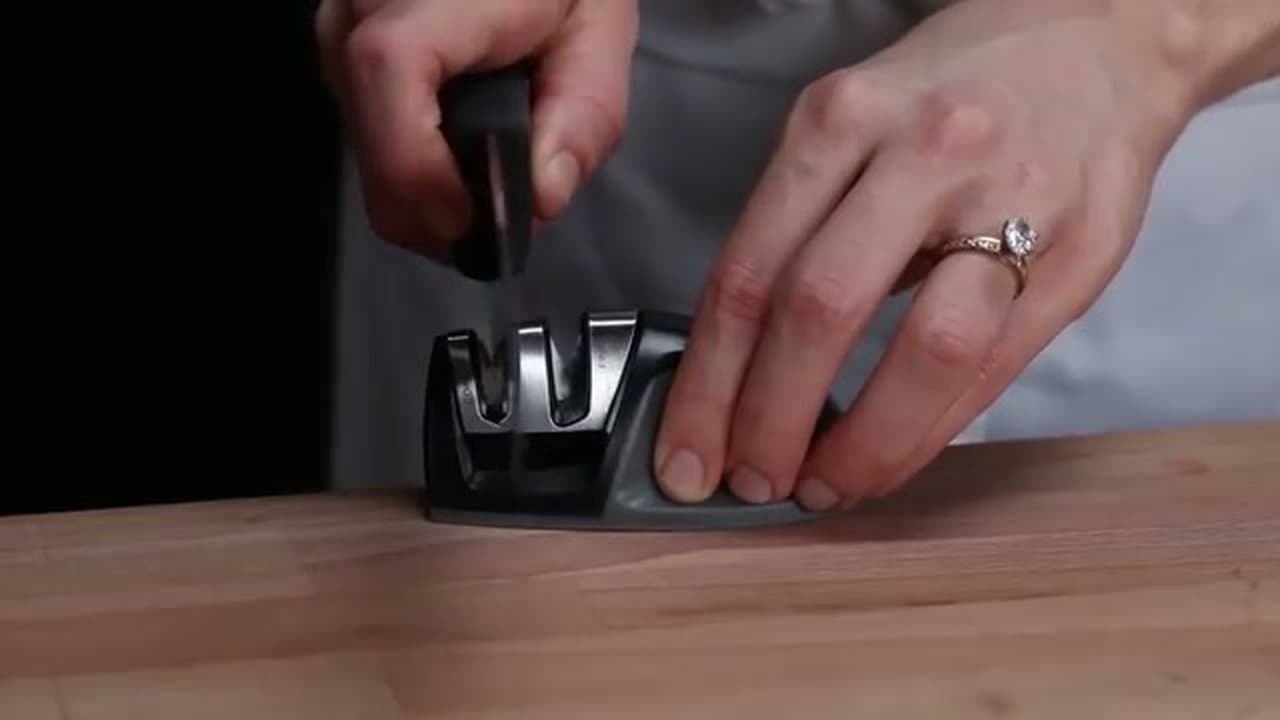
- Use a pull-through sharpener for a quick weekly touch-up on everyday kitchen knives.
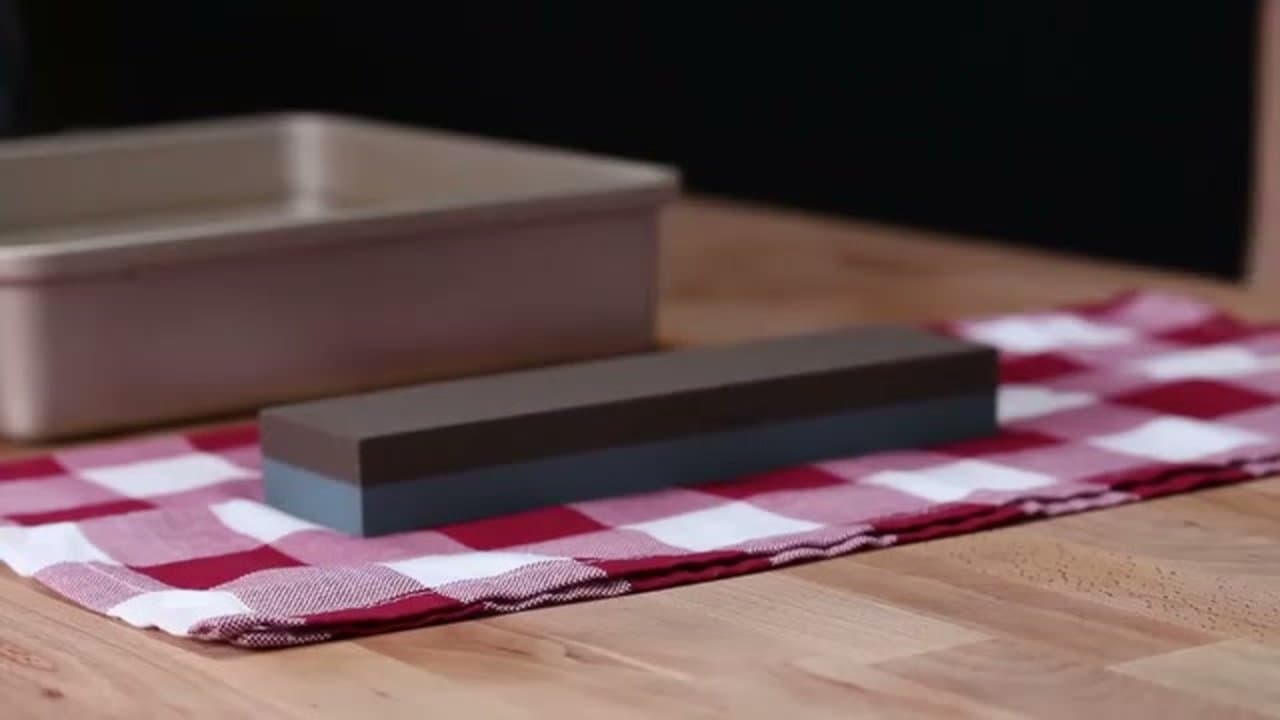
- Soak and use a whetstone at a 20-degree angle when a blade has gone truly dull.
- Test sharpness by slicing a ripe tomato. A sharp knife glides through the skin without tearing.
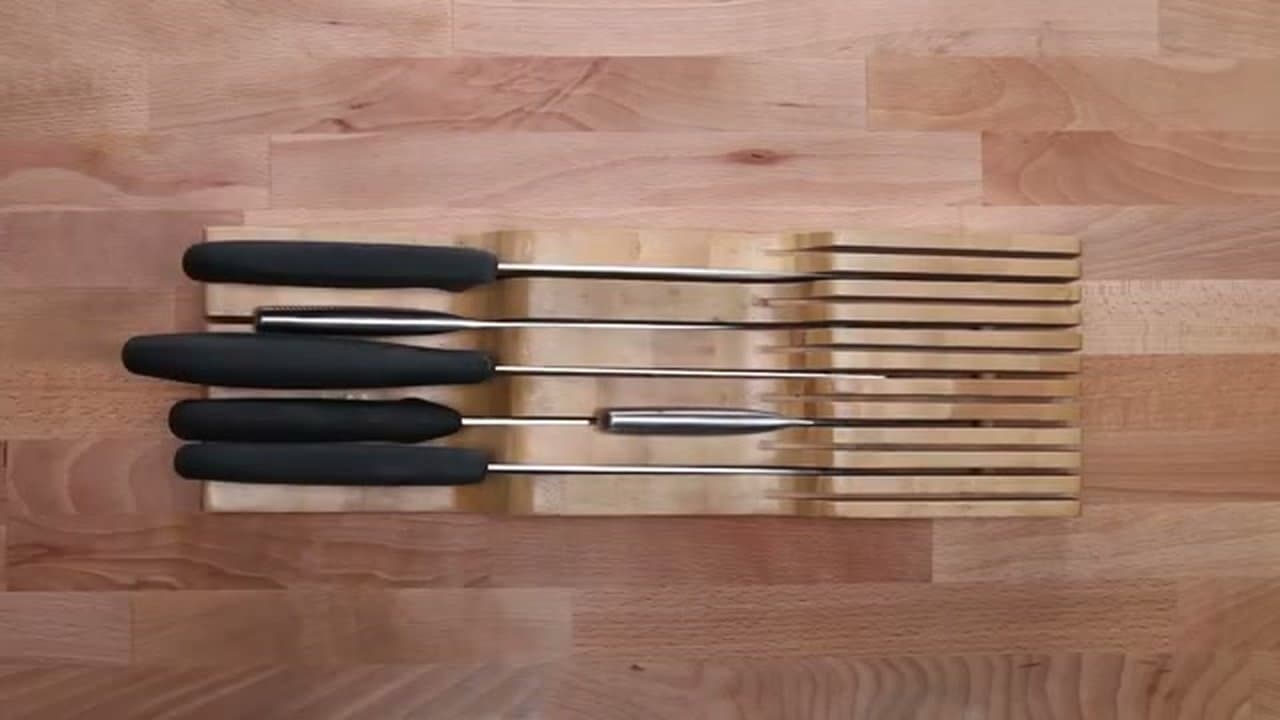
- Store knives properly in a wood block, on a magnetic strip, or with blade guards to protect the edge.
Dull knives aren't just annoying. They're dangerous, because you end up pushing harder and slipping more often. This walkthrough (adapted from a Tasty video) covers each sharpening method in detail so you can match the approach to how dull your knife actually is.
Common questions about sharpening knives at home
Answers to the questions home cooks ask most often: how often to sharpen, what angle to use, whether pull-throughs damage knives, and how to tell when an edge is gone.
How often should you sharpen kitchen knives?
For most home cooks, a true sharpening once or twice a year is enough. The work in between is honing, which you should do every few uses with a steel. Honing realigns a microscopically rolled edge in 30 seconds and extends the time between full sharpenings dramatically. If you cook every day on hard cutting boards or work with a lot of bone-in proteins, sharpen quarterly instead.
What angle do you sharpen kitchen knives at?
Most Western chef's knives sharpen at a 20-degree angle per side. Japanese knives sharpen at a steeper 15-degree angle per side because their thinner steel cuts cleaner but takes more careful maintenance. To find 20 degrees by eye, hold the spine of the knife two stacked quarters off the stone. To find 15 degrees, use one and a half quarters. A few cheap angle guides clip onto the spine if you'd rather not eyeball it.
Are pull-through sharpeners bad for knives?
Cheap pull-throughs scrape too much metal off and leave a rough, scratched edge that dulls fast. Better ones with ceramic or diamond rods at fixed angles do a respectable job for everyday kitchen knives and are far better than letting blades go dull. The trade-off is precision: a pull-through removes more steel than a whetstone for the same sharpening result, which shortens the life of an expensive knife. Use them on workhorse knives, save the whetstone for blades you care about.
How do you know when a knife needs sharpening?
The tomato test is the standard: a sharp knife slices a ripe tomato by gliding through the skin under its own weight, no sawing. If the knife slips on the skin or you have to press hard, it needs work. The paper test is a faster diagnostic: hold a sheet of printer paper vertically and slice down through it. A sharp blade makes a clean cut from heel to tip. A dull blade tears, snags, or refuses to bite.