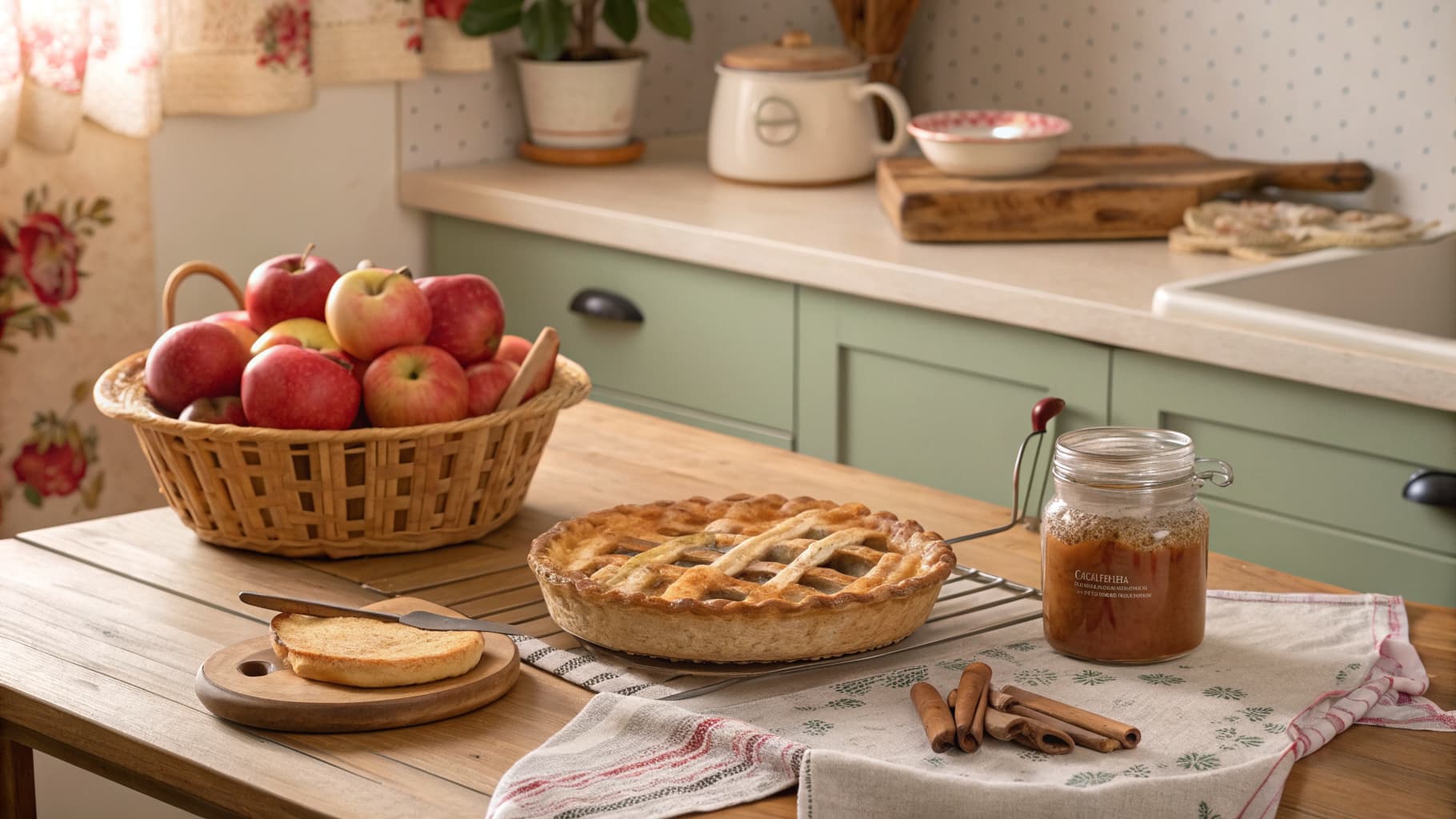
How to Make Beef Wellington

CookingAdvanced9:149 stepsPart of Cooking Basics5-question quiz at endBrowse more →
The finished result: How to Make Beef Wellington

By ShowMeStepByStepPublished Updated

Based on a video by Joshua Weissman.

Beef Wellington is a tenderloin wrapped in mushroom duxelles and puff pastry, and it goes wrong in one place: the bottom. Water leaves the mushrooms and the beef as it bakes, sinks into the pastry underneath, and you cut into grey paste instead of a crisp shell. Joshua Weissman blocks that water twice, and the second block is a thin crepe most recipes leave out.

It is a long recipe rather than a hard one. Nine steps, two of which are just the fridge doing the work, and most of it can be done the day before. Give yourself an afternoon for the first attempt.

Buy a centre-cut tenderloin, not a whole fillet

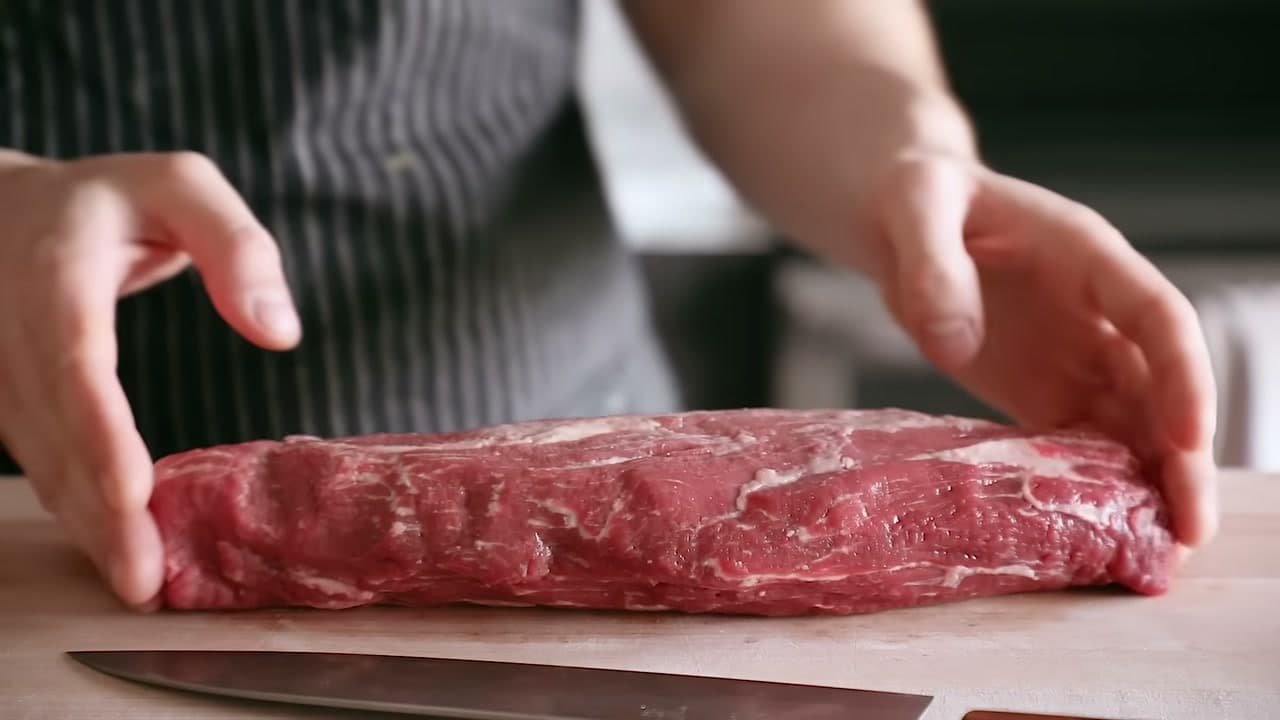
Ask the butcher for a thick piece from the middle, around a pound and a half, which feeds four to six. The tapered tail end of a whole tenderloin is the problem: it is thinner, so it reaches medium while the centre is still rare. An even pink cross-section is the reason anyone makes this dish.

The silverskin has to come off. It is the pale membrane along one side, it does not render, and it contracts in the oven and pulls the beef into a banana shape. A thin blade and five minutes takes care of it.

Dry duxelles is the whole game

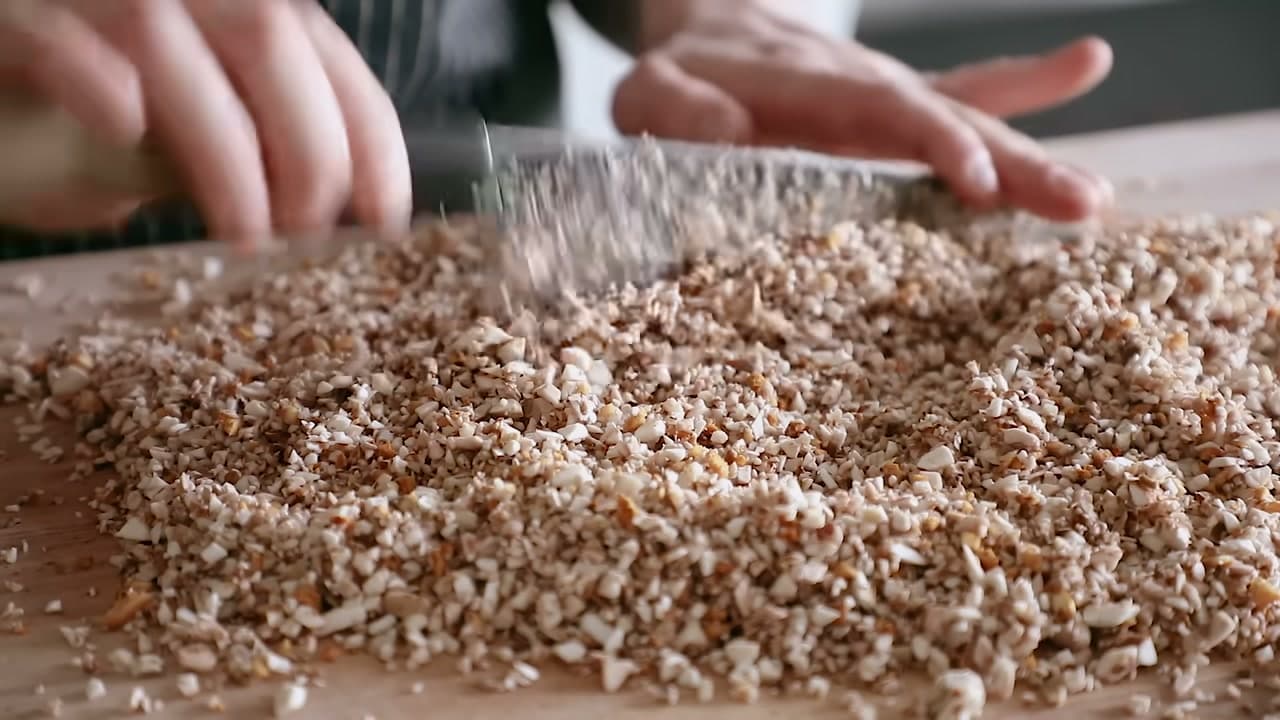
Duxelles is mushrooms, shallots and garlic cooked down to a dark paste. A pound of cremini looks like far too much and reduces to roughly a cup. Chop it fine, close to a coarse crumb, because larger pieces hold water where the pan never reaches it.

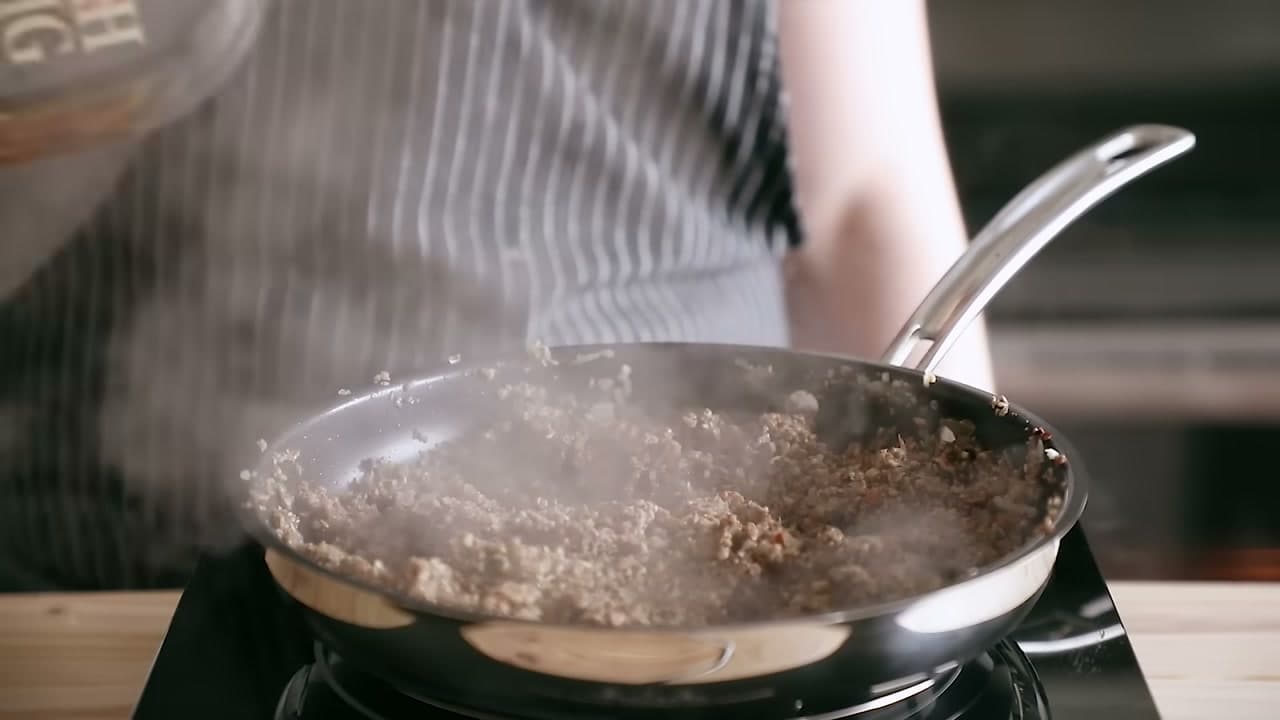
Cook it well past the point where it looks finished. Drag a spoon through the centre of the pan and watch the channel: if liquid runs back in, keep going. The whiskey and thyme are worth adding, but add them with enough time left for the alcohol to cook off.

The three reasons a Wellington goes soggy

  • Damp duxelles. Every drop you leave in the pan ends up in the pastry base.
  • A warm log. Wrapping warm beef in puff pastry melts the butter in the dough before the oven can turn it into layers.
  • No barrier between the two. Prosciutto holds the duxelles together and slows the moisture, and the crepe underneath absorbs what still gets through.

The prosciutto is doing a structural job, not a flavour one. Six to eight slices, overlapped into a single sheet, laid on the crepes rather than directly on the beef. Skip it and the duxelles smears sideways as you roll.

Chill between every stage, and keep the pastry cold

There are two rests that are not optional. The seared beef cools completely before it meets the duxelles, and the rolled log goes into the fridge until it is firm before any pastry touches it. A slack log slices into flat ovals.

Thaw puff pastry in the fridge overnight, not on the counter. Cold pastry rolls and lifts without tearing; warm pastry stretches, sticks and splits at the seam. If it feels limp while you work, put the whole board back in the fridge for ten minutes. Small tears patch with an offcut and a dab of water.

Temperature, resting and what to do the day before

Bake at 425F and go by an instant-read thermometer through the end of the pastry, not by the clock. Pull it at 125F to 130F in the centre for medium rare - it climbs another five degrees while it rests. The doneness numbers are the same ones in our guide to grilling a steak, if you want to practise on something cheaper.

Rest it 10 to 15 minutes before slicing, or the juice runs out onto the board and takes the pink with it. Slice thick, an inch or so, with a sharp knife and one smooth stroke.

Make the duxelles up to two days ahead. Sear, brush, layer and roll the log the day before, and leave it in the fridge wrapped in plastic. Only the pastry, the egg wash and the bake need to happen on the day. That leaves the oven free for mashed potatoes, gravy and green bean casserole. Feeding more people than a pound and a half of beef covers? Roast a turkey instead and save this for a smaller night.
What you'll need

Tools

Ingredients

  • 1.5 lb (650 g)beef tenderloin
  • 2 tbsphigh heat oil
  • for brushingdijon mustard
  • 1.5 sheetspuff pastry
  • 6 to 8 slicesprosciutto
  • 1 lb (468 g)mushrooms
  • 2shallots
  • 3 clovesgarlic
  • 2 tbspolive oil
  • 3 tbspwhiskey
  • leaves from 2 sprigsfresh thyme
  • 3.5 tbsp (51 g)all purpose flour
  • 140 mlwhole milk
  • 1egg
  • 2egg yolks
  • to tastesalt and pepper

Step-by-Step Guide

9 steps · about 9 minutes.Check off each step as you go and your progress saves automatically.

1

Trim the Silverskin Off the Beef Tenderloin

1:05
Step 1: Trim the Silverskin Off the Beef Tenderloin - How to Make Beef Wellington

Take a thick centre-cut piece of tenderloin, around a pound and a half, and pull off the silverskin. Slide a thin knife under it, angle the blade up towards the membrane and draw it along.

Silverskin does not render. Leave it on and it shrinks in the oven, squeezing the beef out of shape inside the pastry.

Tip

Ask the butcher for a centre cut. The tapered tail end cooks faster than the middle and ruins an even pink slice. Watch this step

Used in this stepBoning Knife
2

Chop the Cremini Mushrooms Fine for the Duxelles

1:50
Step 2: Chop the Cremini Mushrooms Fine for the Duxelles - How to Make Beef Wellington

A pound of mushrooms, chopped down to something close to a coarse crumb. Cremini on their own are fine, or use a mix if you have one.

Fine matters here. Big pieces hold water, and water is the enemy of the pastry base. A food processor does it in seconds if you pulse rather than blitz.

Tip

Pulse in batches. Overfill the processor and the bottom turns to paste while the top stays in chunks. Watch this step

Used in this stepFood ProcessorChef Knife
3

Cook the Mushroom Duxelles Until the Pan Is Dry

2:30
Step 3: Cook the Mushroom Duxelles Until the Pan Is Dry - How to Make Beef Wellington

Sweat two chopped shallots and three cloves of garlic in olive oil, then add the mushrooms. They release a lot of liquid, and you keep going until all of it has gone.

Three tablespoons of whiskey and the leaves from a couple of thyme sprigs go in near the end if you want them. Cook until the pan is dry again.

Tip

Drag a spoon through the middle. If liquid runs back into the gap it is not ready. This takes longer than you expect. Watch this step

Used in this stepStainless Steel Skillet
4

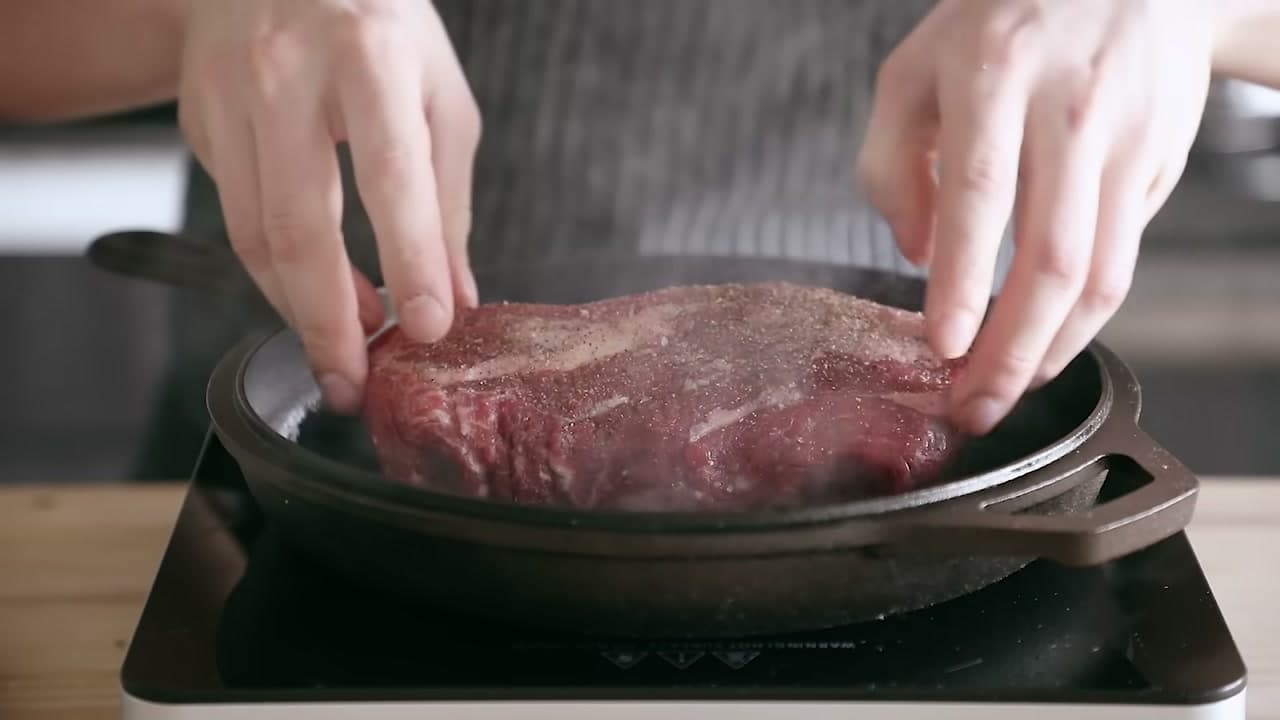
Sear the Beef Tenderloin in a Hot Skillet

3:02
Step 4: Sear the Beef Tenderloin in a Hot Skillet - How to Make Beef Wellington

Season the tenderloin, get a couple of tablespoons of high-heat oil smoking, and sear every surface including the ends. You want deep colour all over.

This is the only browning the beef gets. Inside the pastry it steams rather than roasts, so whatever crust you build now is the crust you end up with.

Tip

Keep it quick. You are colouring the outside, not cooking the middle, which still has the oven to come. Watch this step

5

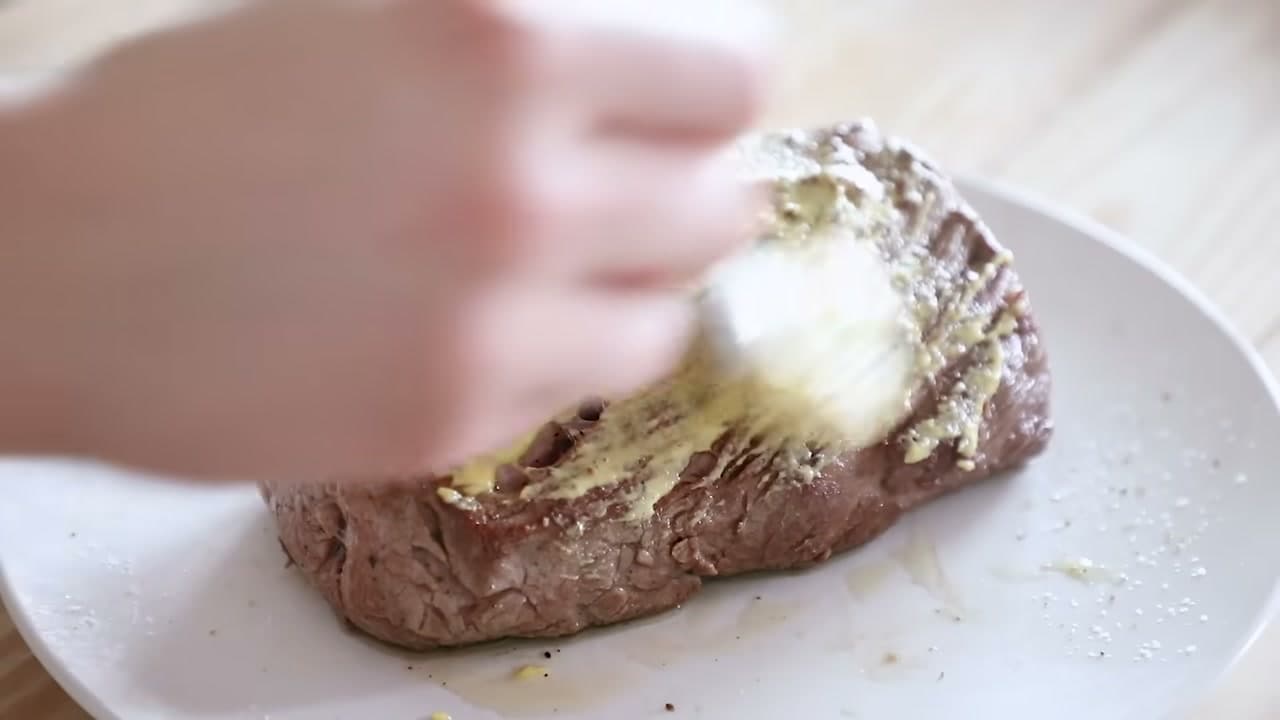
Brush the Seared Tenderloin With Dijon Mustard

3:26
Step 5: Brush the Seared Tenderloin With Dijon Mustard - How to Make Beef Wellington

While the beef is still warm, paint it all over with dijon mustard. Use a good one - it is a small amount doing a lot of work.

The mustard cuts through the richness of the pastry and the prosciutto, and it helps the duxelles cling to the meat rather than sliding off as you roll.

Tip

Let the beef cool fully after this. Wrapping warm meat in pastry melts the butter in the dough before it ever sees the oven. Watch this step

6

Cook Thin Crepes to Keep the Puff Pastry Crisp

4:06
Step 6: Cook Thin Crepes to Keep the Puff Pastry Crisp - How to Make Beef Wellington

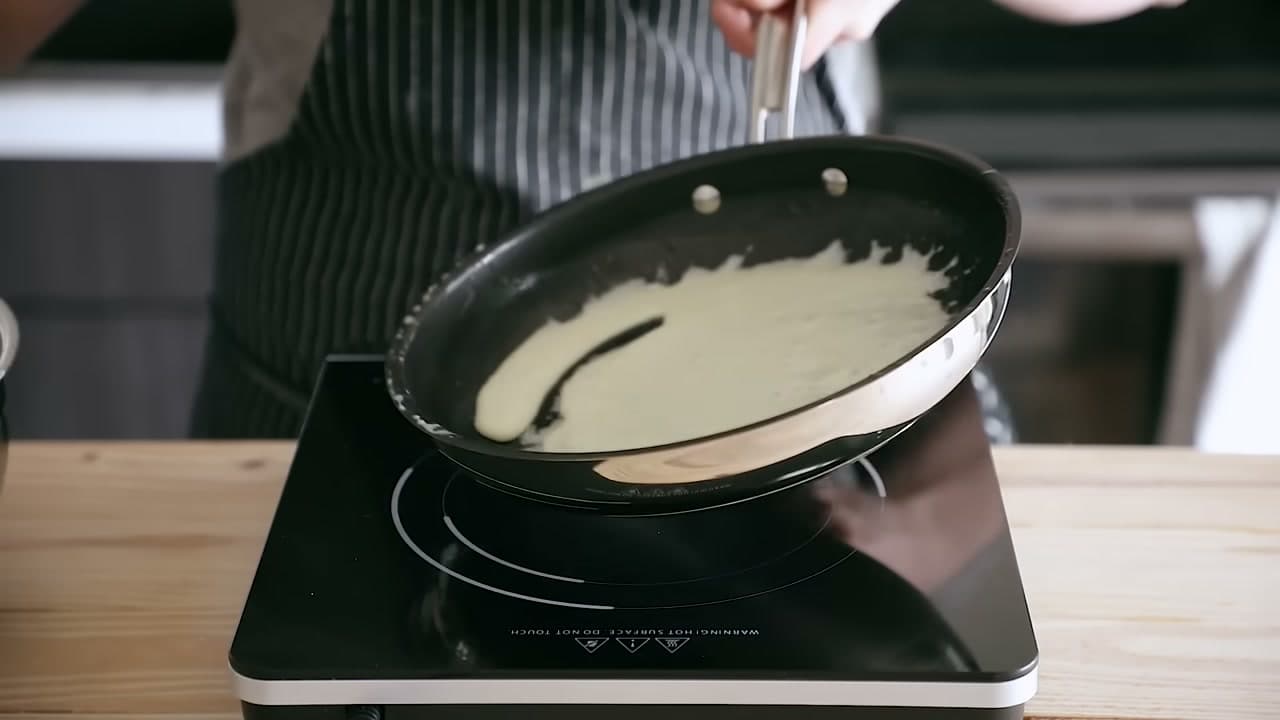
Whisk 3.5 tablespoons of flour with 140ml of whole milk, an egg and a pinch of salt, then cook thin crepes in a lightly oiled pan.

This is the trick that separates a good wellington from a soggy one. The crepe sits between the wet duxelles and the pastry and absorbs what would otherwise go into the base.

Tip

Thin is the goal, not neat. Nobody sees these, and a thick crepe reads as a doughy layer in the finished slice. Watch this step

Used in this stepNonstick Crepe Pan
7

Layer Crepe, Prosciutto and Duxelles

4:50
Step 7: Layer Crepe, Prosciutto and Duxelles - How to Make Beef Wellington

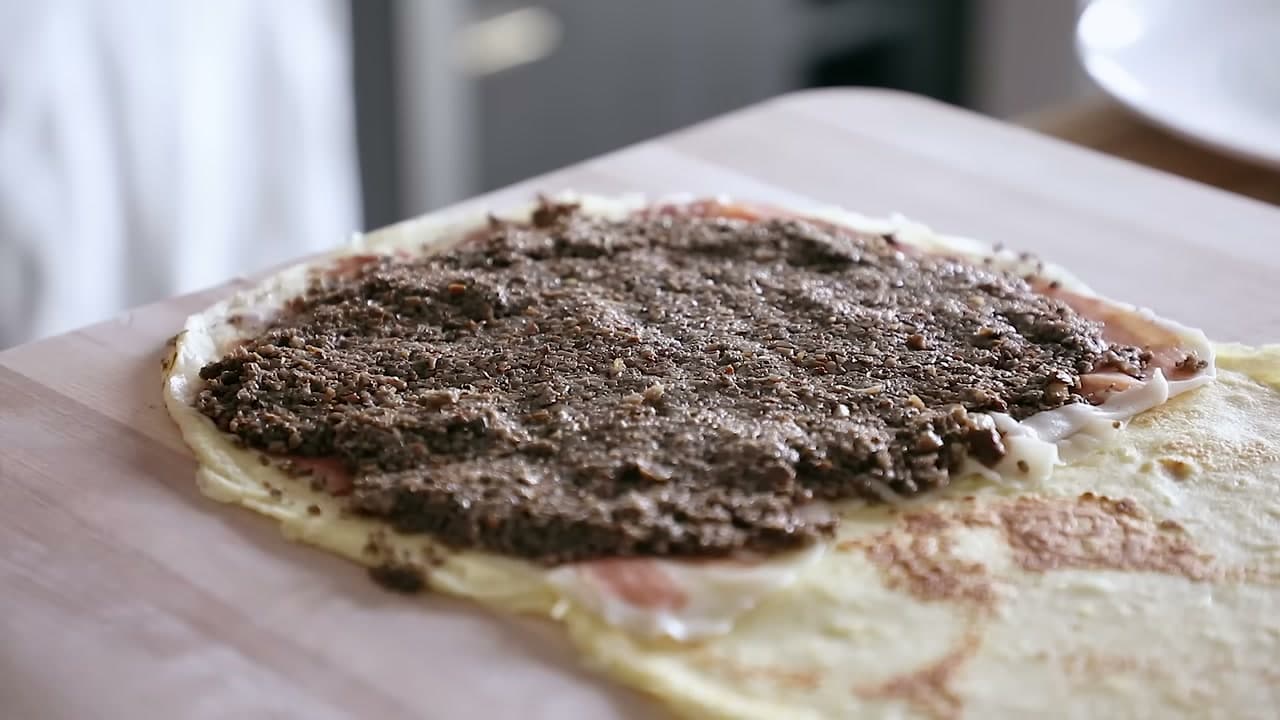
Lay the crepes out on plastic wrap so they overlap into one sheet. Cover them with six to eight slices of prosciutto, then spread the cooled duxelles over the top in an even layer.

Leave a clear margin at the far edge. You need somewhere for the roll to close without duxelles squeezing out of the seam.

Tip

The duxelles must be cold. Spreading it warm softens the prosciutto fat and the whole layer tears as you roll. Watch this step

8

Roll the Tenderloin Tight in Plastic Wrap and Chill

5:12
Step 8: Roll the Tenderloin Tight in Plastic Wrap and Chill - How to Make Beef Wellington

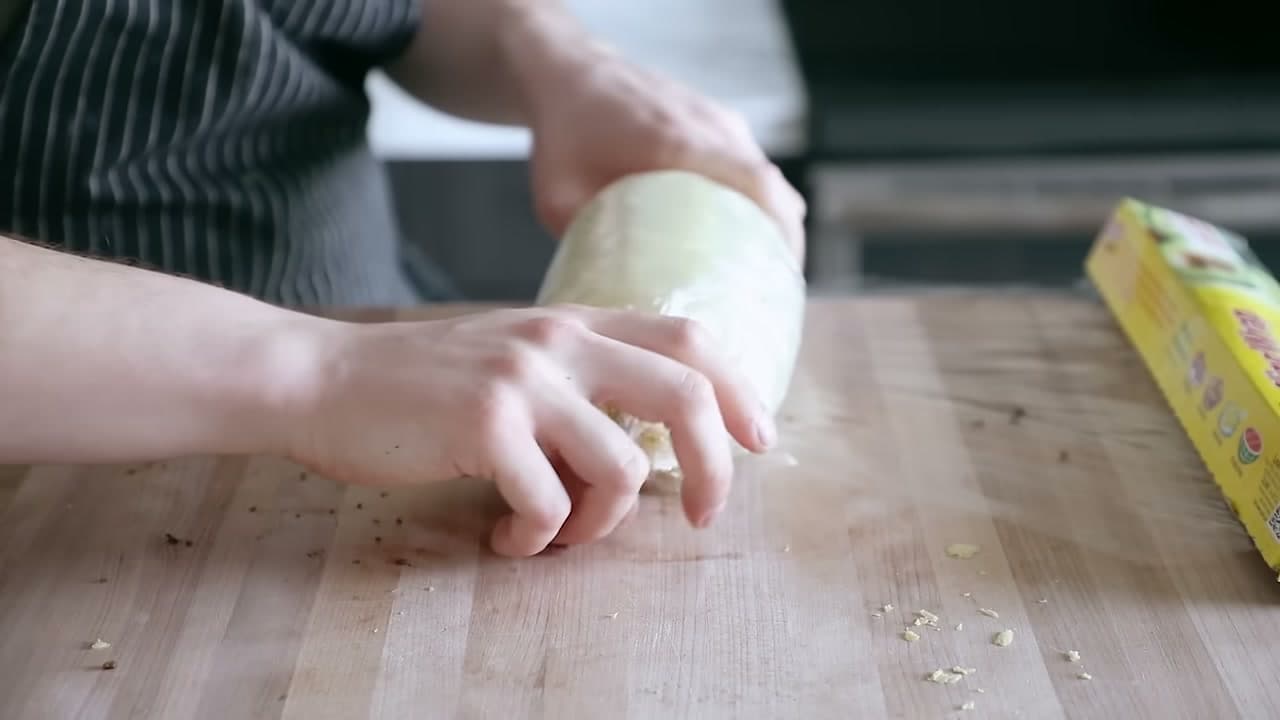
Set the beef along one edge and roll it up in the plastic wrap, pulling as you go so there are no air pockets. Twist the ends like a cracker to tighten the cylinder.

Into the fridge until it is properly firm. A slack log will not hold a round cross-section, and the slices are the whole point of this dish.

Tip

Twisting the ends tighter forces out trapped air. Keep twisting until the log feels solid through the wrap. Watch this step

Used in this stepPlastic Wrap Dispenser
9

Wrap in Puff Pastry, Lattice the Top and Bake

6:43
Step 9: Wrap in Puff Pastry, Lattice the Top and Bake - How to Make Beef Wellington

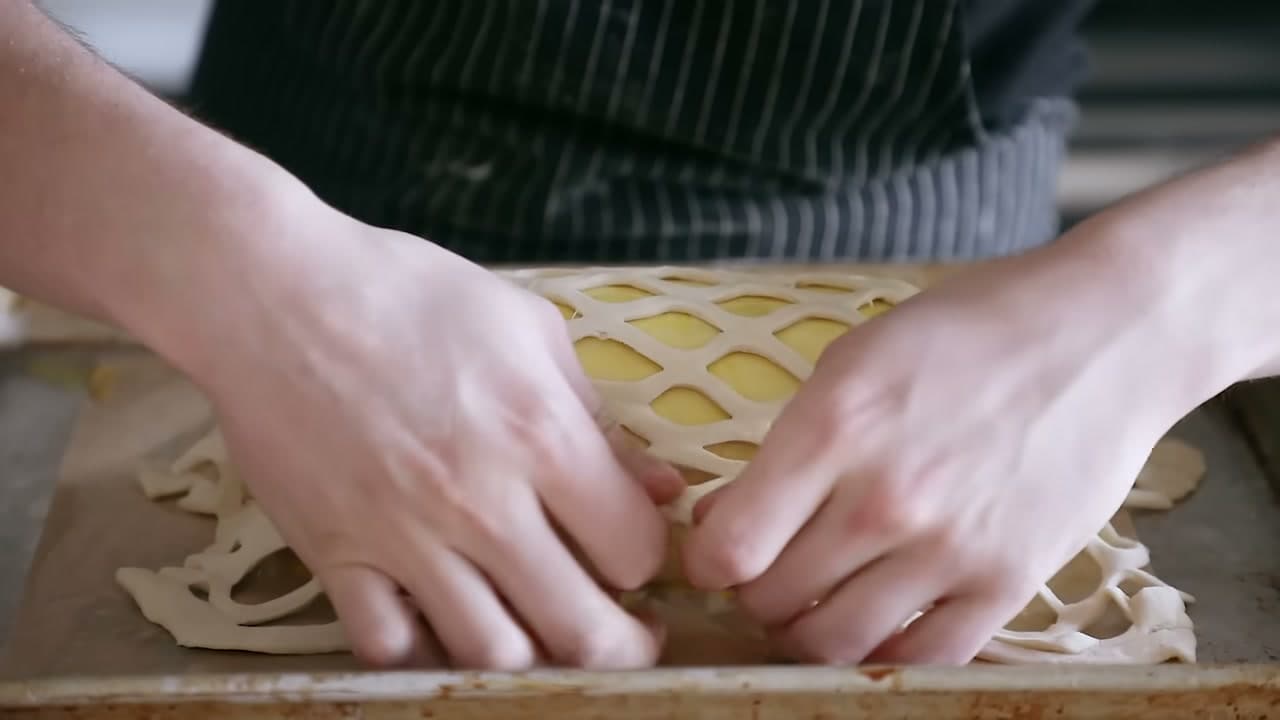
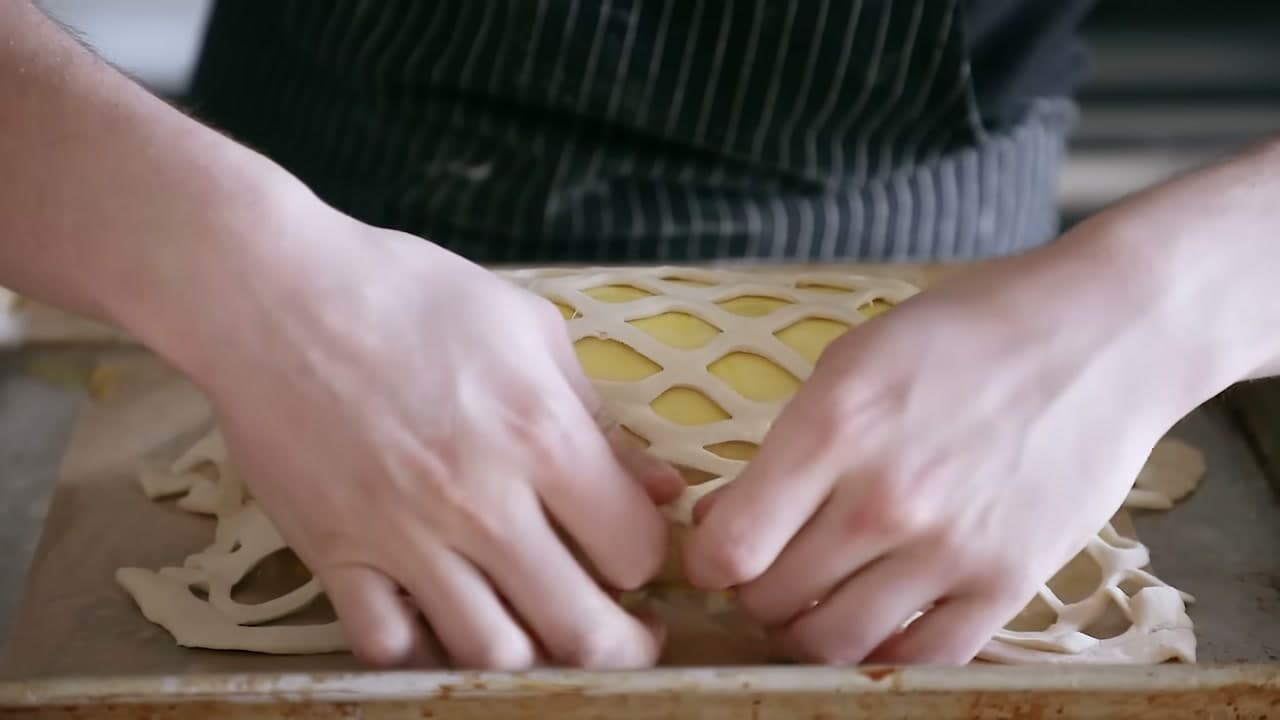
Unwrap the chilled log onto a sheet of puff pastry and roll it up, trimming and sealing the seam underneath. Brush with egg yolk wash.

For the lattice, run a lattice cutter over a second half sheet, stretch it open and drape it over the top. Egg wash again, then bake at 425F, or 400F on convection.

Tip

Skip the lattice and one sheet of pastry is enough. It is decoration, not structure, and the wellington bakes the same without it. Watch this step

Keep going

How to Make Butternut Squash Soup (Roasted, No Cream)

Products Used

The Recipe

How to Make Beef Wellington

British
Serves
Serves 4 to 6
Prep
1 hr 30 min
Cook
40 min
Total
2 hr 10 min

Ingredients

16 items
  • 1.5 lb (650 g)beef tenderloinideally a thick centre cut
  • 2 tbsphigh heat oilcanola or similar
  • for brushingdijon mustarduse a good one
  • 1.5 sheetspuff pastryone sheet if you skip the lattice
  • 6 to 8 slicesprosciutto
  • 1 lb (468 g)mushroomscremini, or a mix
  • 2shallots
  • 3 clovesgarlic
  • 2 tbspolive oilfor the duxelles
  • 3 tbspwhiskeyoptional, to deglaze the duxelles
  • leaves from 2 sprigsfresh thymeoptional
  • 3.5 tbsp (51 g)all purpose flourfor the crepe
  • 140 mlwhole milkfor the crepe
  • 1eggfor the crepe
  • 2egg yolksfor the egg wash
  • to tastesalt and pepper

Nutrition

estimated · per servingEstimated from the ingredient list, not measured. Actual values vary by brand, preparation, and serving size. Not a substitute for measured nutrition data.
Calories
980kcal
Protein
47g
Fat
61g
Carbs
44g
Sodium
680mg

Method

  1. 1
    Step 1: Trim the Silverskin Off the Beef Tenderloin. Take a thick centre-cut piece of tenderloin, around a pound and a half, and pull off the silverskin.
  2. 2
    Step 2: Chop the Cremini Mushrooms Fine for the Duxelles. A pound of mushrooms, chopped down to something close to a coarse crumb.
  3. 3
    Step 3: Cook the Mushroom Duxelles Until the Pan Is Dry. Sweat two chopped shallots and three cloves of garlic in olive oil, then add the mushrooms.
  4. 4
    Step 4: Sear the Beef Tenderloin in a Hot Skillet. Season the tenderloin, get a couple of tablespoons of high-heat oil smoking, and sear every surface including the ends.
  5. 5
    Step 5: Brush the Seared Tenderloin With Dijon Mustard. While the beef is still warm, paint it all over with dijon mustard.
  6. 6
    Step 6: Cook Thin Crepes to Keep the Puff Pastry Crisp. Whisk 3.
  7. 7
    Step 7: Layer Crepe, Prosciutto and Duxelles. Lay the crepes out on plastic wrap so they overlap into one sheet.
  8. 8
    Step 8: Roll the Tenderloin Tight in Plastic Wrap and Chill. Set the beef along one edge and roll it up in the plastic wrap, pulling as you go so there are no air pockets.
  9. 9
    Step 9: Wrap in Puff Pastry, Lattice the Top and Bake. Unwrap the chilled log onto a sheet of puff pastry and roll it up, trimming and sealing the seam underneath.

The Checklist

How to Make Beef Wellington

Tools
11
Steps
9
Video
9 min

Your Guide

Joshua Weissman

As an Amazon Associate we earn from qualifying purchases. Links on this page may be affiliate links - clicking them and buying doesn't change your price, but helps support ShowMeStepByStep.

Tags

Sunday How-To

New cooking tutorials, every Sunday

One short email with the week's best step-by-step guides. Free, no spam, unsubscribe anytime.

Test your knowledge

Did the lesson stick? Start with this one.

5 questions covering what you just read. No signup, no score saved, and you can stop after this one.

Question 1 of 5

Why pull the silverskin off the tenderloin first?

Quick reference

Key takeaways from How to Make Beef Wellington

5 questions, answers, and one-line explanations. Tap to expand.

  1. 1.Why pull the silverskin off the tenderloin first?

    Answer: It shrinks and warps the beef

    Silverskin does not render, so it squeezes the beef out of shape in the oven.

  2. 2.What is the crepe layer for?

    Answer: Soaking up moisture from the duxelles

    It sits between the wet duxelles and the pastry so the base stays crisp.

  3. 3.How dry should the duxelles be before it goes anywhere near the beef?

    Answer: Completely dry, pan and all

    Water is what turns a wellington base soggy, so cook every drop of it off.

  4. 4.Why sear the beef hard before it gets wrapped?

    Answer: It is the only browning it gets

    Inside the pastry the beef steams, so no new crust forms after this point.

  5. 5.Why chill the rolled log before wrapping it in pastry?

    Answer: So it holds a round cross-section

    A slack log slices into flat ovals, and the slices are the whole point.

Did this work for you?

What's next

Related collections

Curated theme pages that include this tutorial.

Weekly Digest

Liked this cooking tutorial?

Pick the categories you want to hear about. Weekly digest of new step-by-step tutorials. No spam, easy unsubscribe.

Send me tutorials about

We only email about new tutorials. Easy unsubscribe anytime.