How to Keep Guacamole from Turning Brown

CookingEasy4:104 steps

By ShowMeStepByStepPublished Updated

Based on a video by Allrecipes.

Cut into an avocado and the green flesh starts turning brown within an hour. That's not spoilage — it's enzymatic browning. An enzyme called polyphenol oxidase reacts with oxygen in the air to form melanin, the same pigment that browns sliced apples and freshly cut potatoes. The fix isn't to neutralize the enzyme (most kitchen ingredients can't). The fix is to lock out the oxygen.

The avocado pit on top doesn't work. Lime juice doesn't really work either — not without making your guac taste like a margarita. Plastic wrap pressed onto the surface helps a little, but you'll still get brown spots by day two.

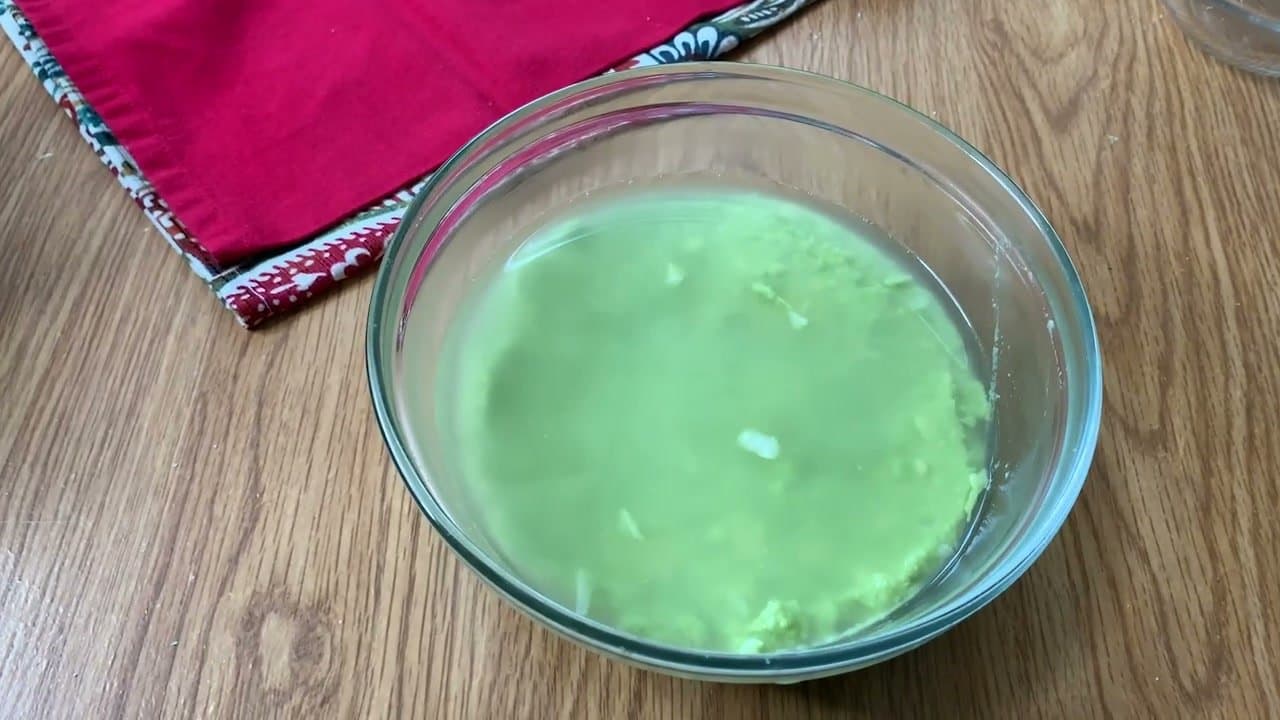
Matthew Francis from Allrecipes shows the trick that actually works: pour a half-inch of water right on top of the guacamole. Water and avocado fat don't mix, so the water just sits there as a perfect oxygen barrier. The next day, pour it off, stir, and your guac is bright green like it was just made.

You'll need a container with some headroom, a small amount of water, and about 30 seconds. Works for any guacamole recipe — chunky or smooth, with onion, with cilantro, with whatever mix-ins you like.

Common questions

How long does the water-trick guac actually last? Up to 3 days in the fridge if the surface stays fully sealed under water. After day 3 the texture starts to soften (water slowly migrates into the fat), so eat it sooner if you want it as fresh-tasting as day one.

Does the water dilute the flavor? No. Avocado fat repels water, so the seal sits on top without mixing in. Pouring it off the next morning leaves the guacamole's salt, lime, and onion exactly as you mixed them.

Can I freeze leftover guacamole instead? Yes, but the texture changes. Frozen-then-thawed guac is softer and a bit weepier — fine for spreading on toast or mixing into eggs, less great as a chip dip. Press plastic wrap onto the surface, freeze in a sealed container, thaw overnight in the fridge, and stir hard before serving.

What about lime juice on top? Acid does slow the browning enzyme — about 30%. But you need so much that the guacamole tastes sour. Use lime juice in the recipe for flavor, not as a storage technique. The water trick is more reliable and doesn't change the taste.

Why does the pit-on-top trick get repeated everywhere if it doesn't work? The pit prevents browning only on the small patch of guacamole it physically covers. Lift the pit and that patch is green; the rest of the surface is brown. Looks like proof at first glance, but the pit is just acting as a small piece of plastic wrap.

Can I use this trick for other dips? Only if the dip has high fat content (like avocado or hummus with olive oil). Salsa, queso, or low-fat dips will mix with the water and turn into soup. The water trick depends on fat-water immiscibility — without enough fat, there's nothing to keep the water from blending in.

Step-by-Step Guide

1

Step 1: Get your guacamole ready in a container

0:30
Step 1: Step 1: Get your guacamole ready in a container

Mash your avocados and mix in onion, lime, salt, and whatever else you like. The technique works on any guacamole recipe - the goal is just to keep the surface from oxidizing.

Use a container with some headroom. You'll need at least a half-inch of space above the guac to fit a layer of water on top.

Tip

Smooth the top of the guac with the back of a spoon before storage. A flat surface gives the water (or plastic wrap) a clean seal.

2

Step 2: For a few hours, press plastic wrap onto the surface

2:08
Step 2: Step 2: For a few hours, press plastic wrap onto the surface

If you're only storing the guac for an hour or two before serving, press plastic wrap directly onto the surface of the guacamole.

Push the wrap right against the guac everywhere - no air gaps around the edges. This works for short-term storage but you'll start seeing brown spots within 6-8 hours.

Products used in this step

3

Step 3: For overnight, pour a half-inch of water on top

2:40
Step 3: Step 3: For overnight, pour a half-inch of water on top

Slowly pour cold water on top of the guacamole until you have a layer about a half-inch deep. The water sits on top of the guac because oils and water don't mix.

Cover the container, refrigerate, and walk away. The water blocks every bit of air, so the guac underneath stays bright green for 1-2 days.

Tip

Pour gently and slowly. If you dump it in, you'll splash guacamole up the sides and create air pockets.

4

Step 4: Pour off the water, stir, and serve

2:50
Step 4: Step 4: Pour off the water, stir, and serve

When you're ready to eat, tilt the container and pour the water off. The guacamole is dense enough that it stays put - you'll get clear water out and bright-green guac left behind.

Give it a quick stir to mix any tiny bit of water that clung to the surface, then serve. Tastes like you just made it.

Products Used

❖ The Recipe

How to Keep Guacamole from Turning Brown

Mexican
Serves
Keeps 2 cups for up to 3 days
Prep
2 min
Cook
0 min
Total
2 min

Ingredients

4 items
  • 2 cupsfresh guacamolehomemade or store-bought
  • 1/2 inchwaterto seal the surface
  • 1 teaspoonlime or lemon juicealternative method
  • 1 sheetplastic wrappressed directly on the surface

Nutrition

estimated · per servingEstimated from the ingredient list, not measured. Actual values vary by brand, preparation, and serving size. Not a substitute for measured nutrition data.
Calories
100kcal
Protein
1g
Fat
9g
Carbs
6g
Fiber
4g
Sodium
200mg

Method

  1. 1
    Step 1: Get your guacamole ready in a container. Mash your avocados and mix in onion, lime, salt, and whatever else you like.
  2. 2
    Step 2: For a few hours, press plastic wrap onto the surface. If you're only storing the guac for an hour or two before serving, press plastic wrap directly onto the surface of the guacamole.
  3. 3
    Step 3: For overnight, pour a half-inch of water on top. Slowly pour cold water on top of the guacamole until you have a layer about a half-inch deep.
  4. 4
    Step 4: Pour off the water, stir, and serve. When you're ready to eat, tilt the container and pour the water off.

Your Guide

Allrecipes

As an Amazon Associate we earn from qualifying purchases. Links on this page may be affiliate links - clicking them and buying doesn't change your price, but helps support ShowMeStepByStep.

Tags

Related Tutorials