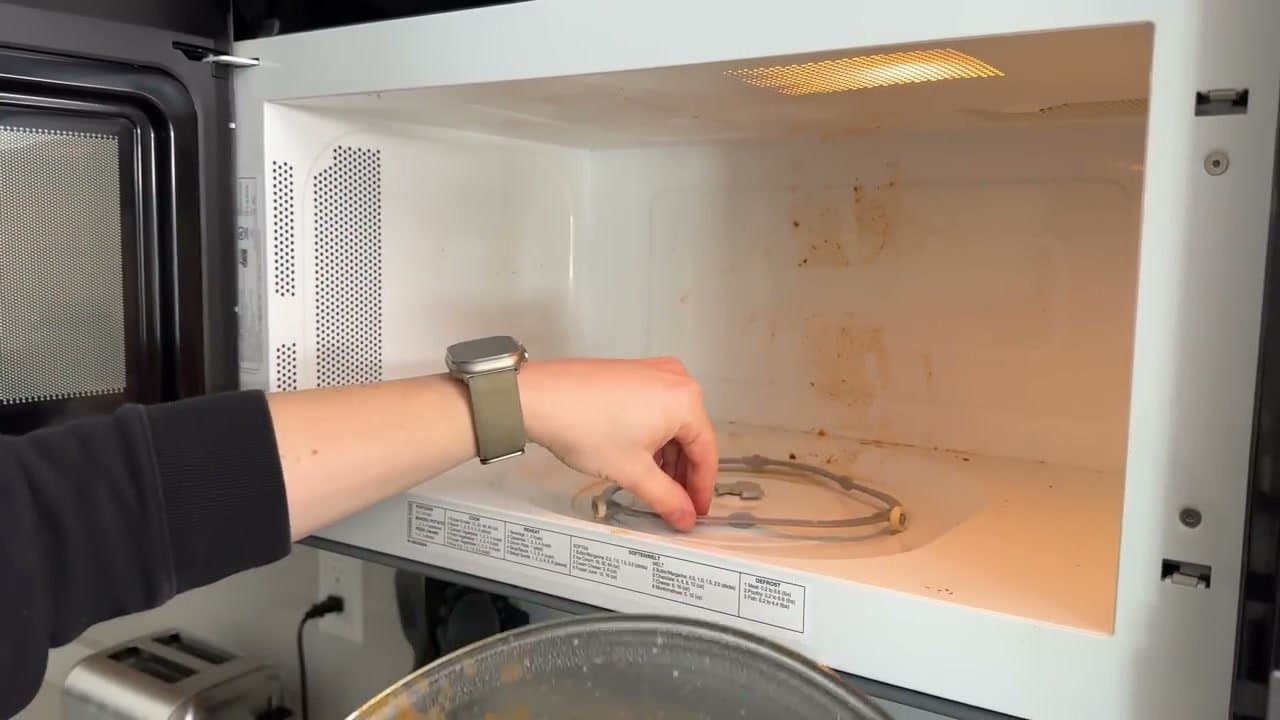
A dirty microwave feels worse than it is. The grease bakes on, the splatter dries hard, and scrubbing means dripping cleaner down your wrist for ten minutes.
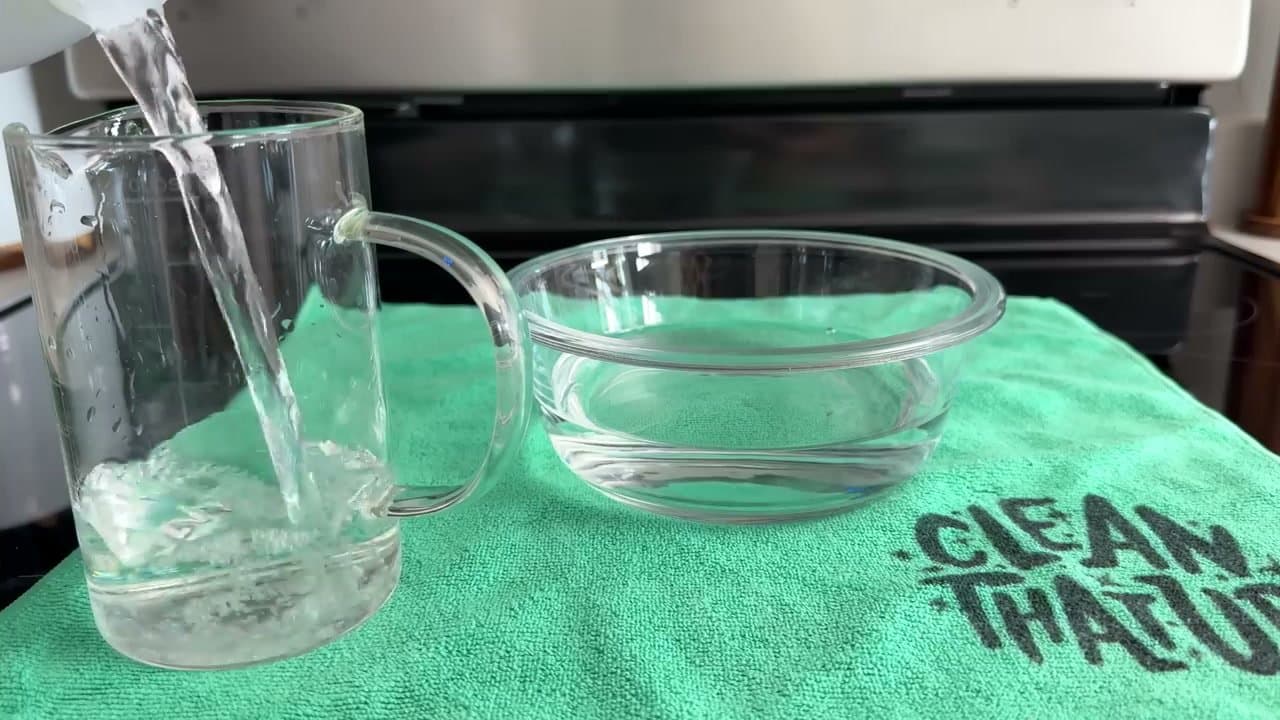
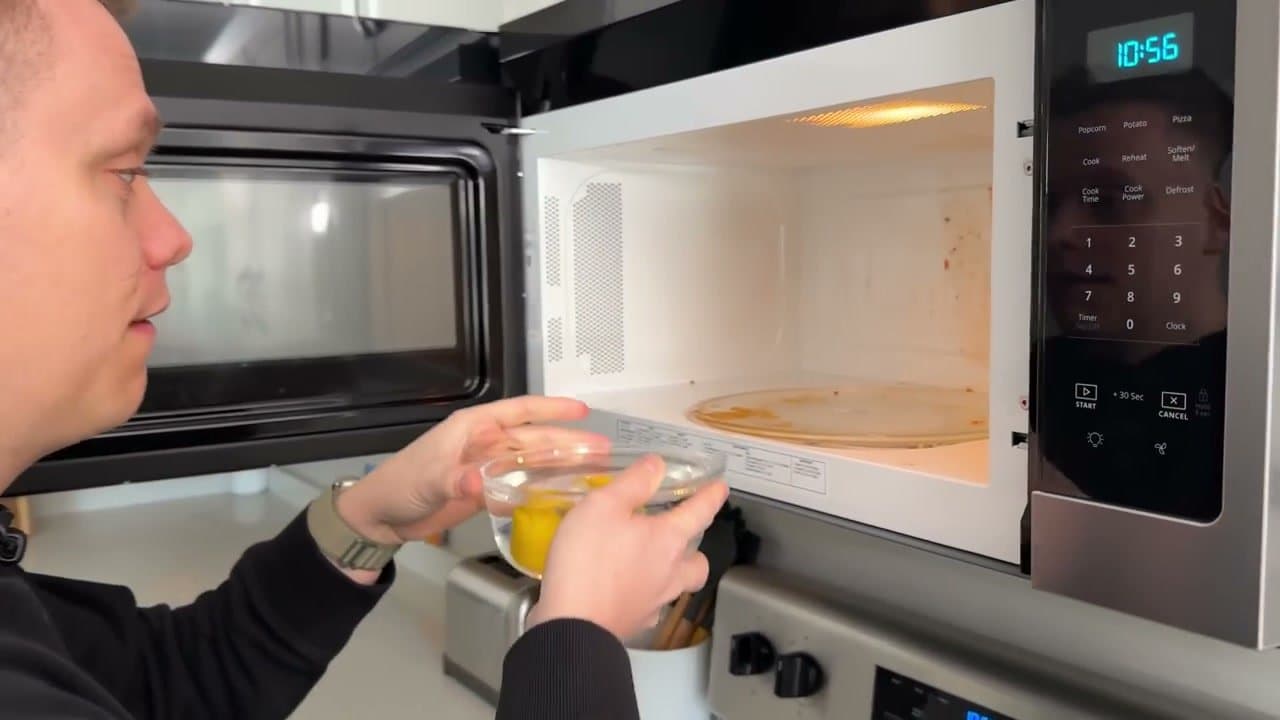
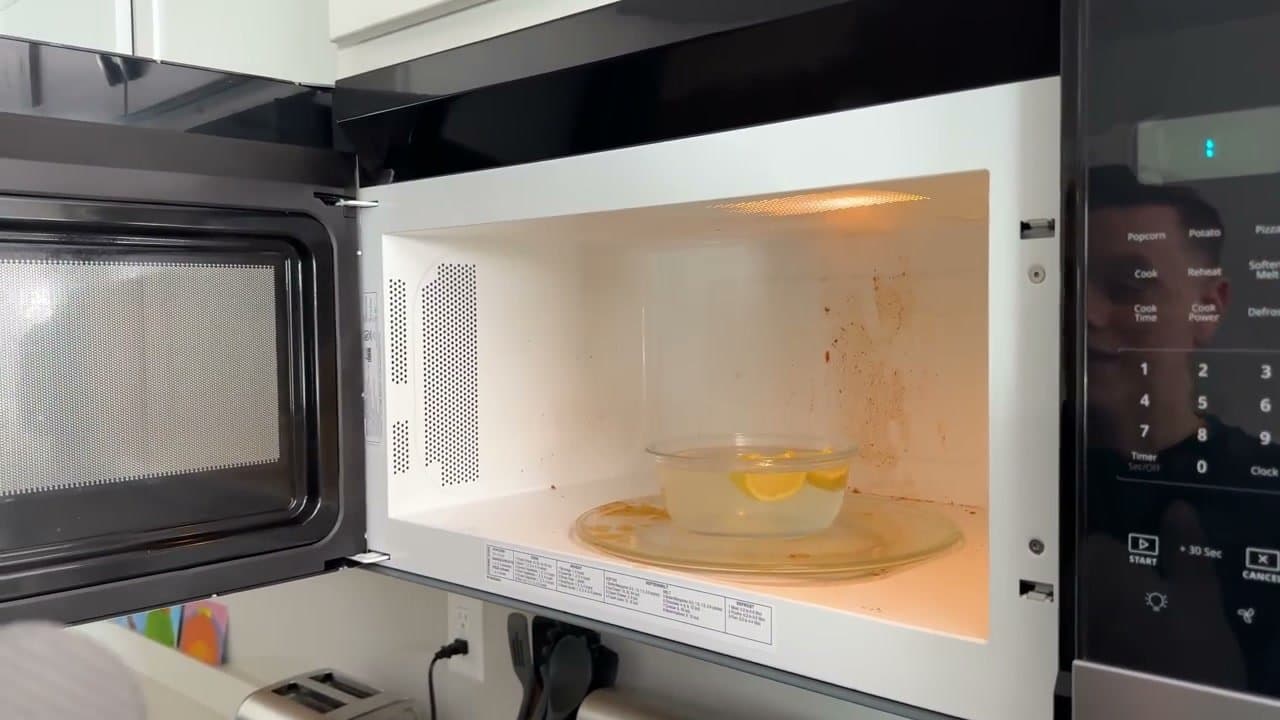
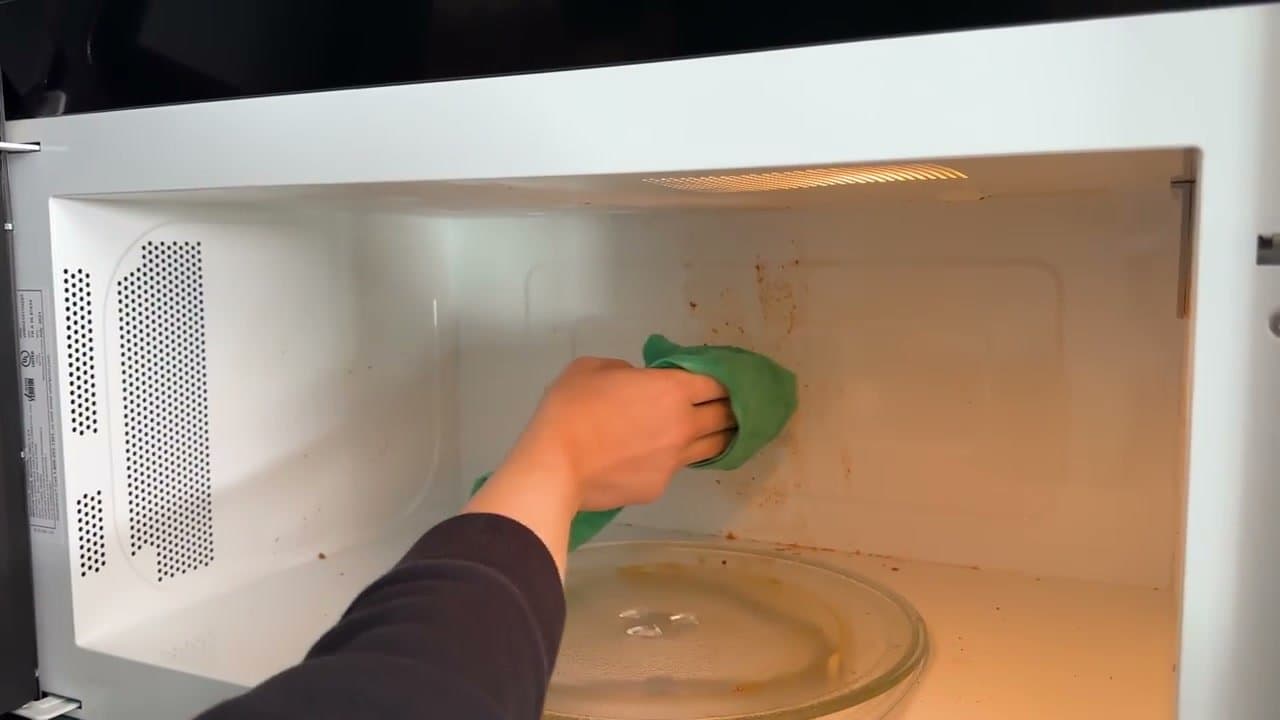
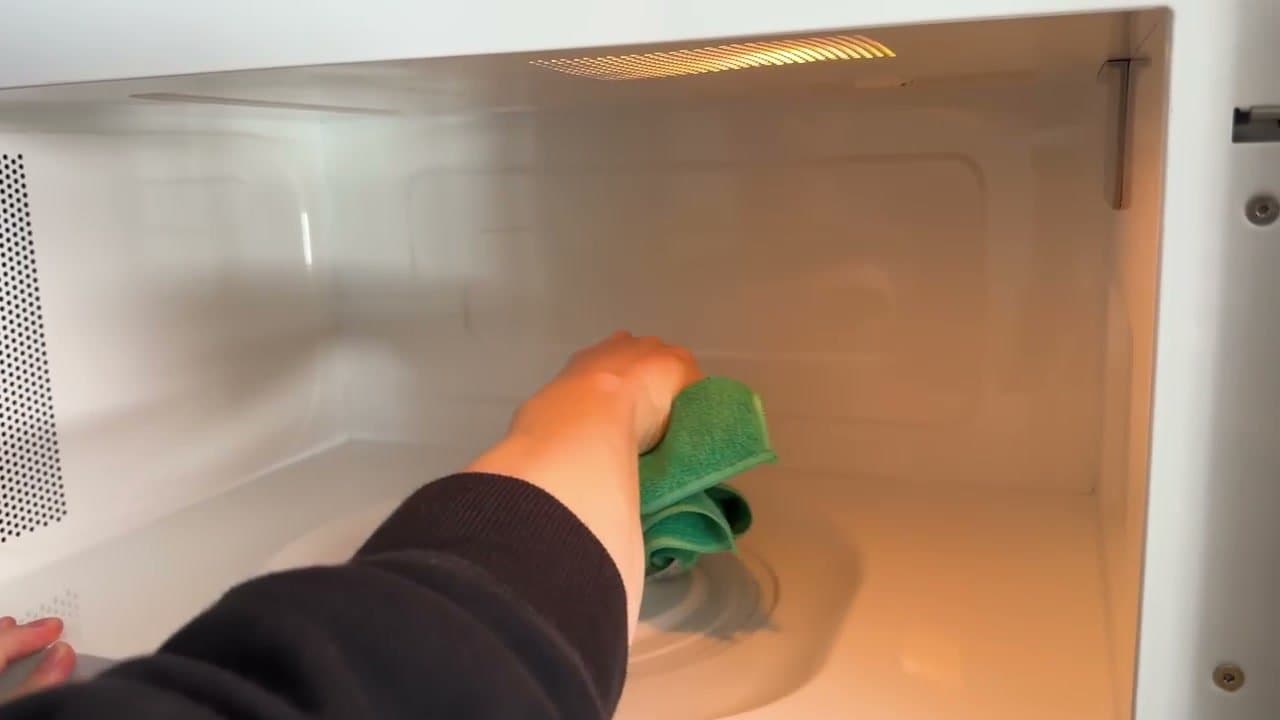
Brandon from Clean That Up uses a steam trick that does the work for you. A bowl of vinegar, water and a squeezed lemon runs for five minutes, and the steam softens everything stuck to the interior walls and ceiling so one swipe with a cloth takes it off.
What you need
- White vinegar and water, about a cup of each
- A lemon, if you have one
- A microwave-safe bowl or a glass measuring cup
- Two microfiber cloths, one damp and one dry
- Oven mitts, and a butter knife for the corners
- Dish soap and a scrub sponge
Why steam beats scrubbing on a microwave interior
Splatter is not a layer sitting on the surface. It is food cooked onto the enamel over months by the same energy that heats your lunch, which is why scrubbing it head on ends with an abrasive pad and a scratched finish. Steam works from the other side. Boiling vinegar water fills the cavity with vapor that condenses on every surface, the ceiling included, and that moisture loosens the food from underneath while the acid cuts the grease.
Splatter that survives the first round
Old tomato sauce and exploded egg take two rounds. Do not start scraping. Put the bowl back in for three more minutes, then leave the door shut for five before you wipe. The dwell time does more than the heat.
If a spot still holds, the edge of a scrub sponge lifts it. Keep steel wool and scouring powder out - the interior is painted enamel, and once you cut through it, moisture gets under the paint and the wall rusts. Same care for the waveguide cover, the beige square on the side wall. It is mica. Wipe it, never soak it. The same soften-then-wipe logic clears a baked-on oven.
The turntable, the roller ring and the track
The roller ring is the part people forget - grease collects in the wheel housings and dries into dark rings that transfer back onto the clean floor. Flip it over, run a dish brush through the wheels, check each one turns. Under the plate and the ring is a shallow track that fills with crumbs. Wipe it before the ring goes back, and dry the plate or it fogs the interior on first use.
The vent, the door seal and the handle
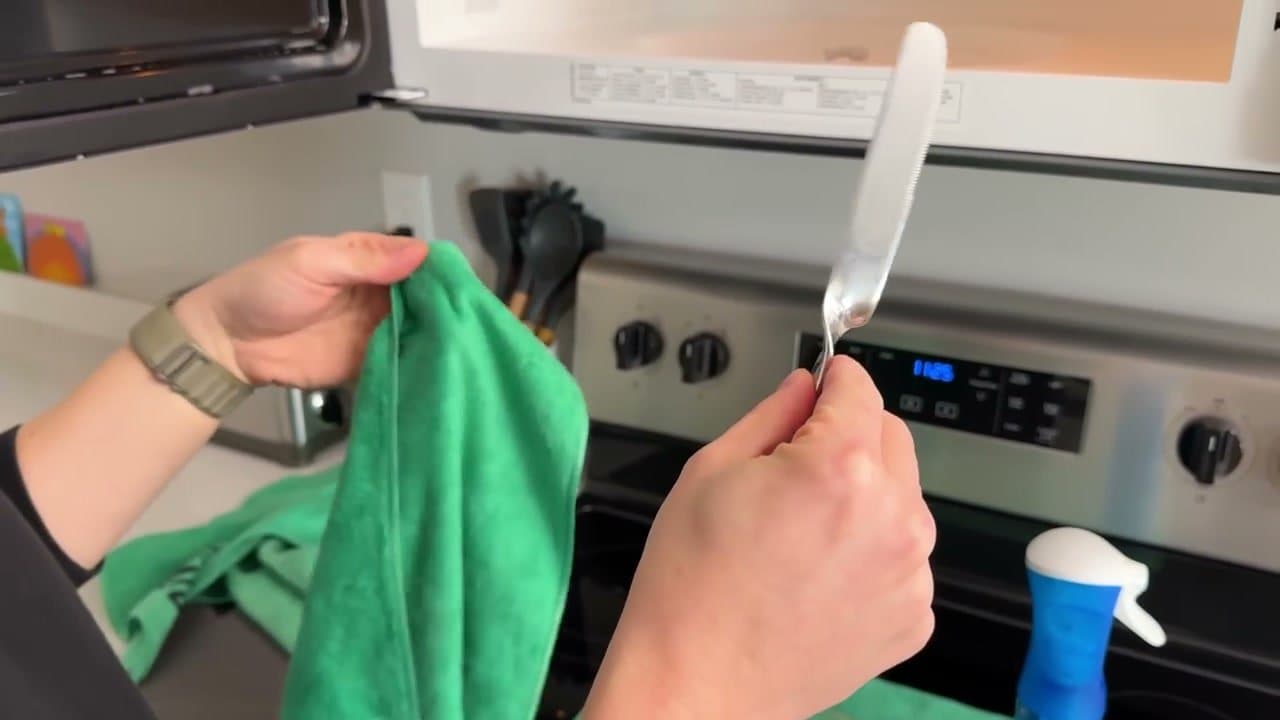
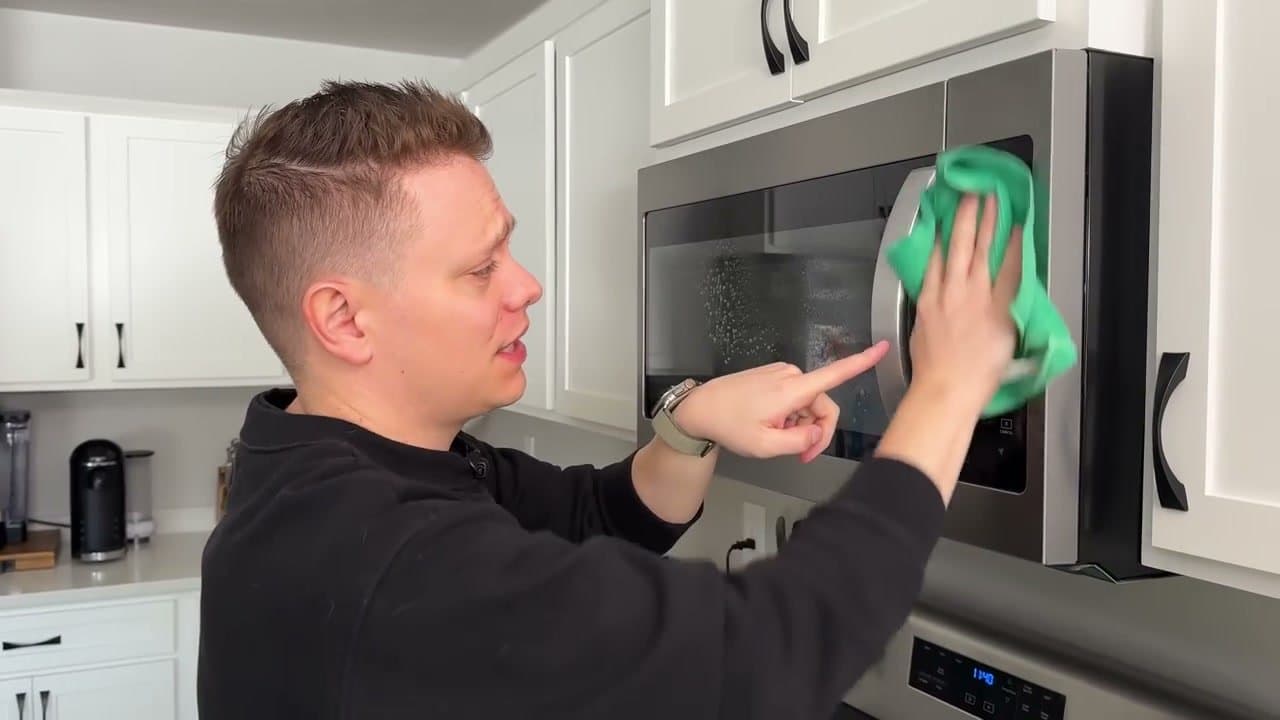
An over-the-range unit pulls cooking grease through a mesh filter underneath. Those slide out and go in the dishwasher; a clogged one makes the fan loud and pushes grease back into the room. The door seal, that flat frame around the opening, is a safety part rather than trim. Work the crumbs out of its groove with a cloth-wrapped butter knife and look it over while you are there - cracked, warped or scorched means stop using the unit. On a stainless door, the usual stainless routine finishes the outside.
Getting the burnt popcorn smell out
The smell lives in the plastic and the paint, not in any mess you can see, so wiping does nothing on its own. Steam with lemon first, then leave an open bowl of baking soda inside with the door closed overnight, and prop the door open during the day. A bad batch takes three nights.
Common mistakes
- Bleach or oven cleaner. Both attack the coating and the fumes hang around in a sealed cavity.
- Spraying the keypad. Liquid wicks behind the membrane and the buttons fire on their own.
- Metal in the bowl. A metallic rim or a twist tie will arc.
- Plain water in a smooth mug. It can superheat and erupt when you move it. The vinegar and the lemon rinds give the bubbles something to form on.
Wipe splatter the day it happens and this becomes a thirty-second habit. The same hour suits the air fryer and the toaster, or a dishwasher clean-out.