How to Clean a Coffee Maker Without Vinegar

By ShowMeStepByStepPublished Updated

Based on a video by Engineering Knowledge Hub.

Vinegar works, but it leaves a smell and taste that can linger for days. This guide walks you through three effective alternatives - citric acid, lemon juice, and commercial descalers - that remove mineral buildup just as well without the funky aftertaste. Your coffee maker will run cleaner and your next cup will taste the way it should.

Step-by-Step Guide

1

Step 1: Gather Your Supplies

0:06
Step 1: Step 1: Gather Your Supplies

Pick your cleaning method before you start. The citric acid route needs 1-2 tablespoons of food-grade citric acid powder dissolved in about a quart of warm water. If you're using lemon juice, squeeze 2-3 fresh lemons - you'll need enough for equal parts juice and water. Or grab a commercial coffee maker descaler from any grocery or hardware store. Have fresh water on hand for the rinse cycles regardless of which method you choose.

Tip

Food-grade citric acid is the best choice for most people - it's cheap, odorless, and dissolves limescale fast. You can find it in the canning or baking aisle.

2

Step 2: Mix the Citric Acid Solution

0:24
Step 2: Step 2: Mix the Citric Acid Solution

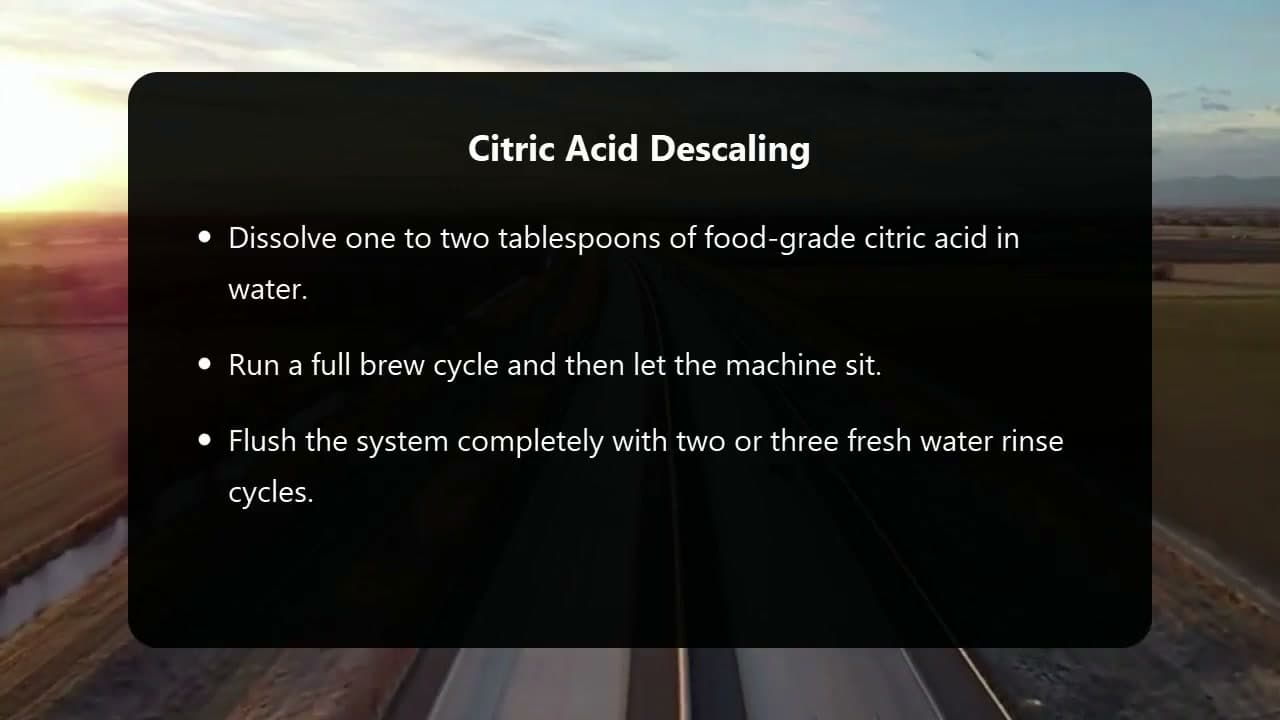
Dissolve 1 to 2 tablespoons of food-grade citric acid powder into about one quart (one liter) of warm water. Stir until the crystals are completely gone and the solution looks clear. This is the most effective vinegar-free descaling method - citric acid is odorless, breaks down mineral deposits like limescale, and leaves no aftertaste once rinsed. The warm water helps the crystals dissolve faster than cold.

Tip

Use 1 tablespoon for regular maintenance cleaning and 2 tablespoons if you haven't descaled in a while or if your water is hard.

3

Step 3: Run the Cleaning Cycle

0:36
Step 3: Step 3: Run the Cleaning Cycle

Pour the citric acid solution into your coffee maker's water reservoir just like you would with plain water. Place an empty carafe on the warming plate and start a full brew cycle. The solution circulates through all the internal components - the heating element, pump, and tubing - dissolving mineral buildup as it goes. You may notice some discoloration in the carafe from dislodged deposits. That's normal.

Tip

Make sure the carafe is empty before you start - you don't want to mix descaling solution with leftover coffee.

4

Step 4: Let the Machine Sit

0:54
Step 4: Step 4: Let the Machine Sit

Once the brew cycle finishes, discard the solution from the carafe and let the machine rest for 20 to 30 minutes. Don't skip this step. The citric acid continues working on stubborn mineral deposits inside the machine during this waiting period - deposits that a single pass through the heating element didn't fully dissolve. Harder water areas benefit most from the full 30-minute soak.

Tip

Set a timer so you don't forget. The soak window is flexible - 20-45 minutes all works fine.

5

Step 5: Flush with Fresh Water Rinse Cycles

1:07
Step 5: Step 5: Flush with Fresh Water Rinse Cycles

Fill the reservoir with clean, fresh water and run a complete brew cycle. Discard that water from the carafe. Repeat this at least two more times - three full rinse cycles total is the minimum. Each cycle flushes out residual citric acid and any loosened mineral particles. If you skip rinses or only do one, your next cup of coffee will have a noticeable sour or off taste. Run all three before calling it done.

Tip

After the last rinse, brew a small cup of plain water and taste it. If it tastes clean, you're good. If there's any trace sourness, run one more rinse cycle.

6

Step 6: Lemon Juice Alternative

1:35
Step 6: Step 6: Lemon Juice Alternative

Out of citric acid? Mix equal parts fresh lemon juice and water. Before pouring it in, strain the juice through a fine mesh sieve to remove all pulp and seeds - these can clog the machine's internal tubing. Use the strained mixture exactly the same way as the citric acid solution: one full brew cycle followed by the same two or three fresh water rinses. Lemon juice works well but has a slightly stronger scent during the cleaning cycle than citric acid.

Tip

Bottled lemon juice works in a pinch but fresh is better - the acidity level is more consistent and predictable.

7

Step 7: Commercial Descaler Option

1:52
Step 7: Step 7: Commercial Descaler Option

For expensive machines or ones with a manufacturer warranty, a dedicated commercial descaling solution is the safest route. These products are formulated specifically for coffee makers, so you don't have to guess about ratios. Read the package instructions and follow them exactly - dilution ratios and recommended cycle counts vary by brand. Keurig, Breville, and DeLonghi all make their own descalers, and there are universal options too.

Tip

Some machine warranties require the use of a manufacturer-approved descaler. Check your manual before using citric acid if your machine is still under warranty.

8

Step 8: Clean the Removable Parts

2:10
Step 8: Step 8: Clean the Removable Parts

While you have the machine apart for descaling, wash the carafe and filter basket with warm soapy water. Coffee oils build up on these surfaces and turn bitter over time - this is often why old coffee tastes stale even when you use fresh beans. Rinse well and let them air dry. Wipe down the exterior of the machine with a damp cloth. Do this weekly even between full descaling sessions to keep the coffee tasting clean.

Tip

Descale every 1-3 months depending on how hard your water is. If you notice slower brew times or weaker coffee, that's a sign mineral buildup is slowing the heating element.

Products Used

☐ The Checklist

How to Clean a Coffee Maker Without Vinegar

Tools
3
Materials
4
Steps
8
Video
3 min

Your Guide

Engineering Knowledge Hub

As an Amazon Associate we earn from qualifying purchases. Links on this page may be affiliate links - clicking them and buying doesn't change your price, but helps support ShowMeStepByStep.

Tags

What's next

Related collections

Curated theme pages that include this tutorial.

Weekly Digest

Liked this adulting tutorial?

Pick the categories you want to hear about. Weekly digest of new step-by-step tutorials. No spam, easy unsubscribe.

Send me tutorials about

We only email about new tutorials. Easy unsubscribe anytime.