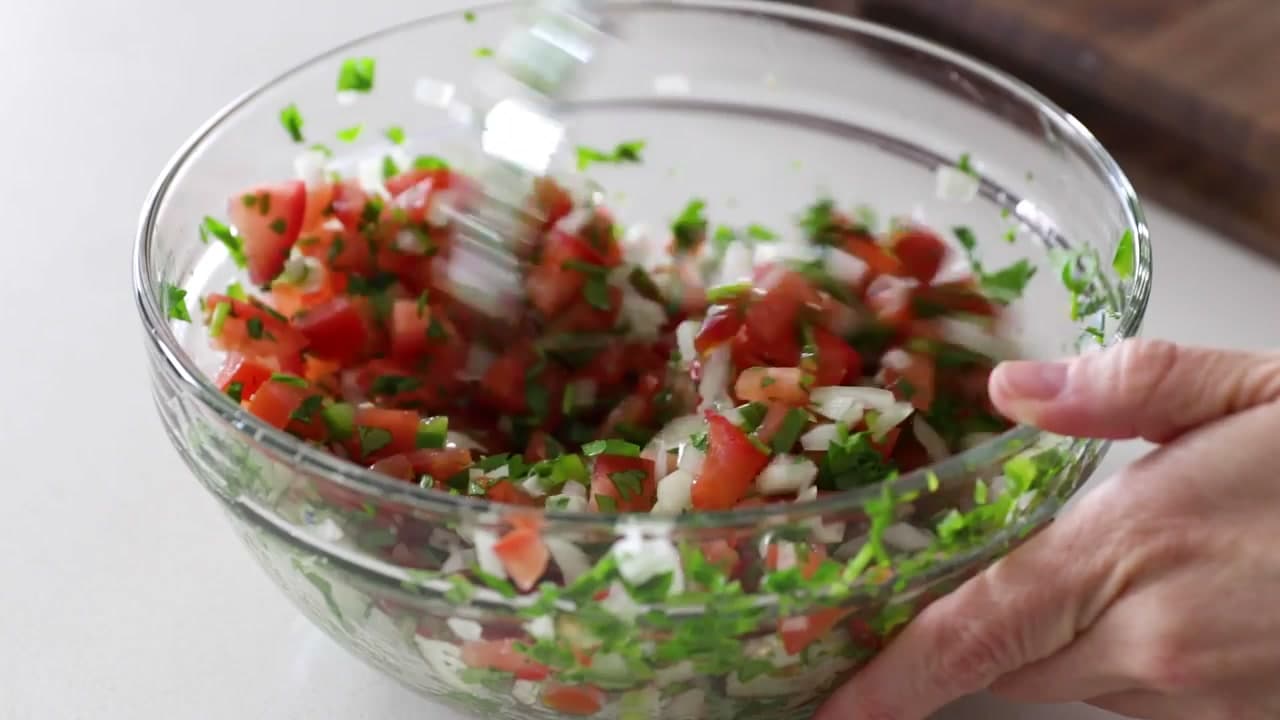
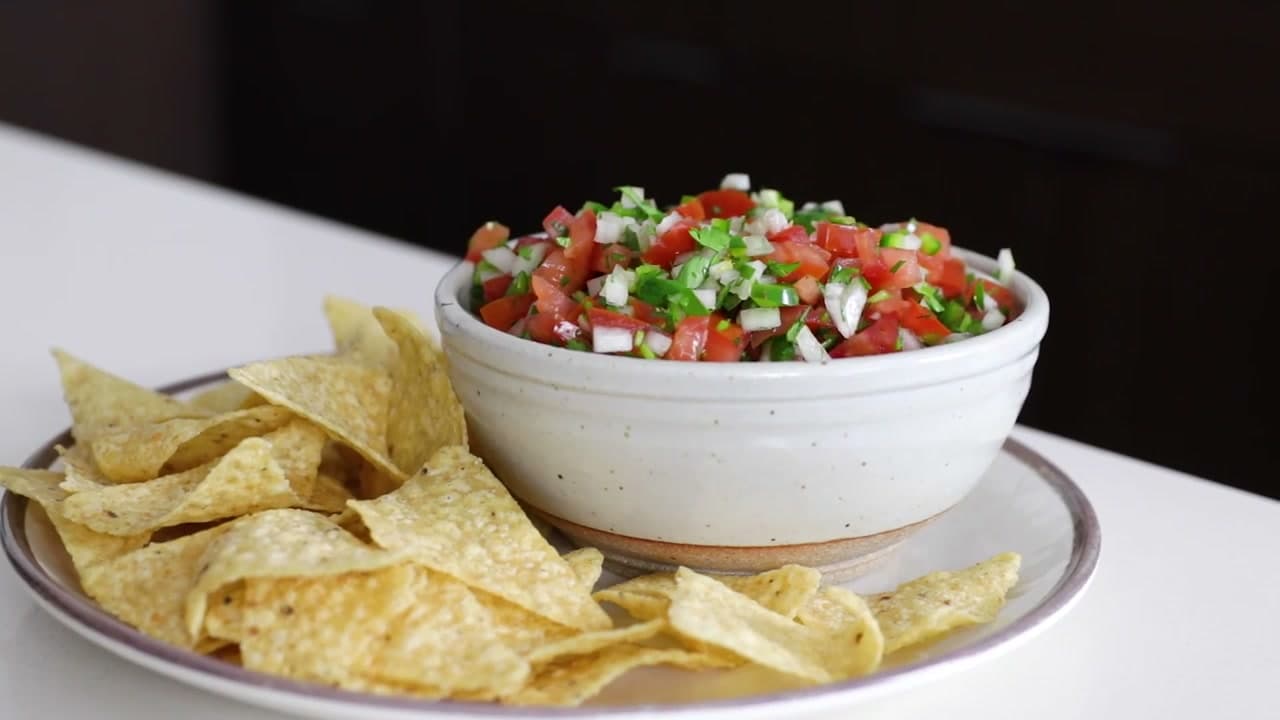
Pico de gallo is the fresh, chunky Mexican salsa you get at a taqueria: diced tomato, onion, chile, cilantro, lime, and salt, all raw, all tossed together in a bowl. This version comes from Lisa at Downshiftology, and it is about as classic as the recipe gets. Five ingredients, a knife, a cutting board, and fifteen minutes. Nothing touches the stove.
With no cooking to hide behind, the whole thing rides on two decisions: which tomatoes you buy and how you handle the water inside them. Get those right and you have a scoopable, chunky pico that holds up on a chip. Get them wrong and you have tomato soup with onions in it.
Which Tomatoes to Buy for Pico de Gallo
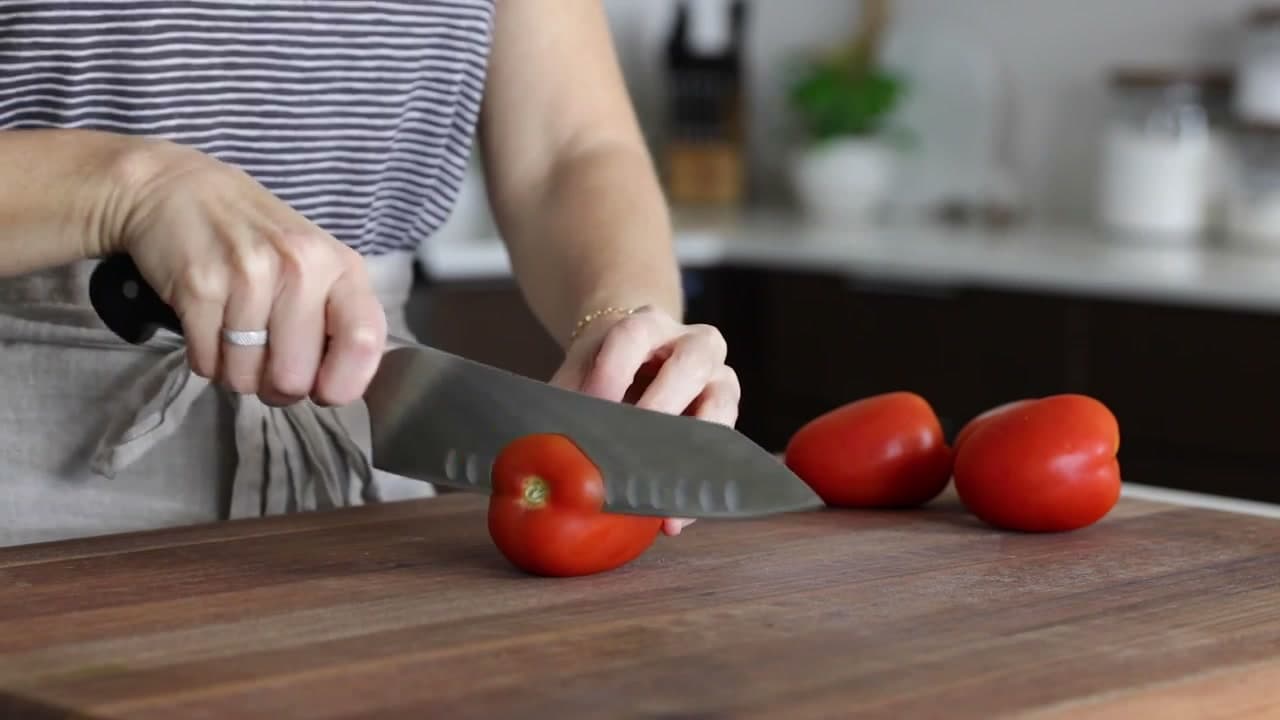
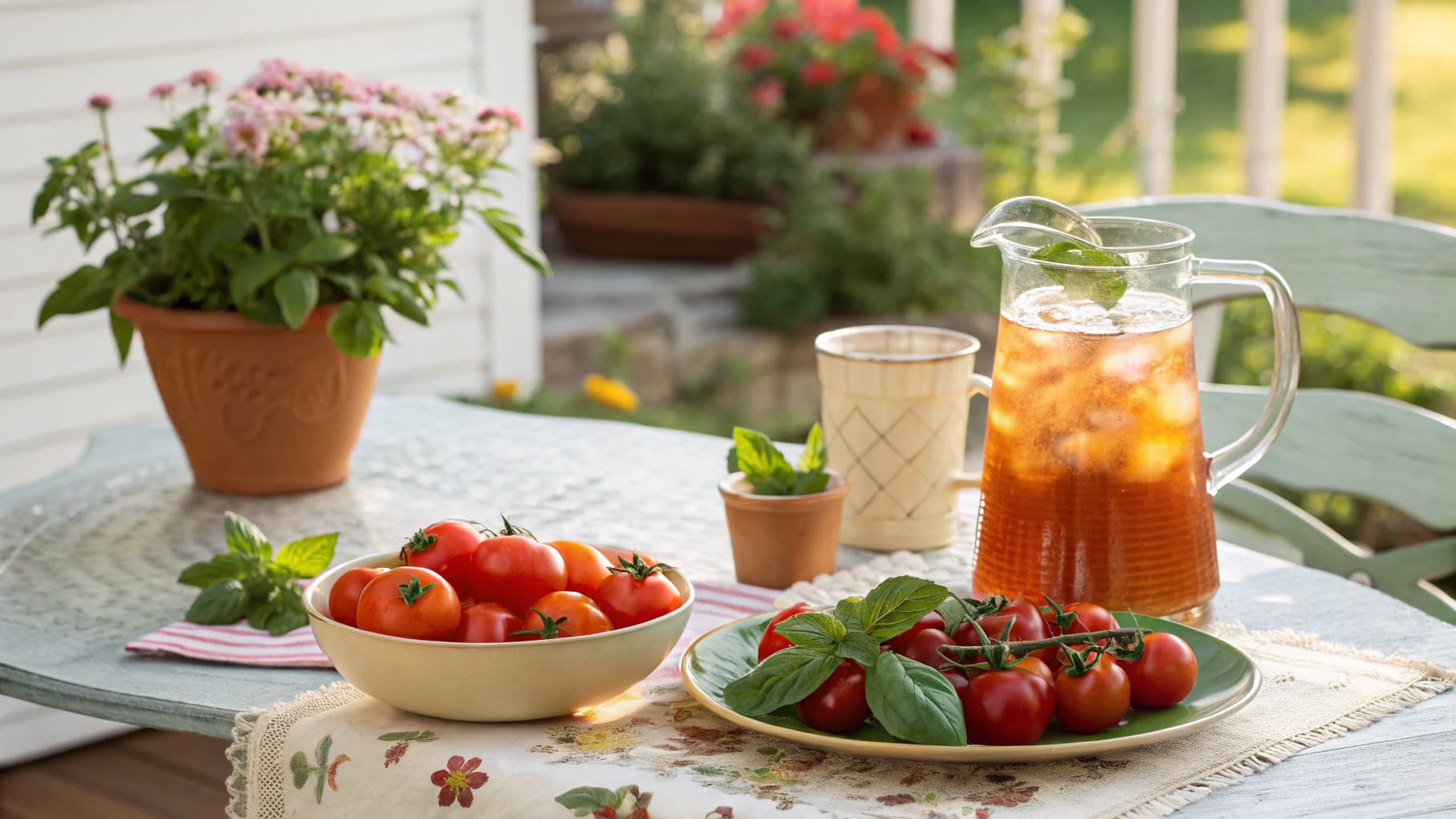
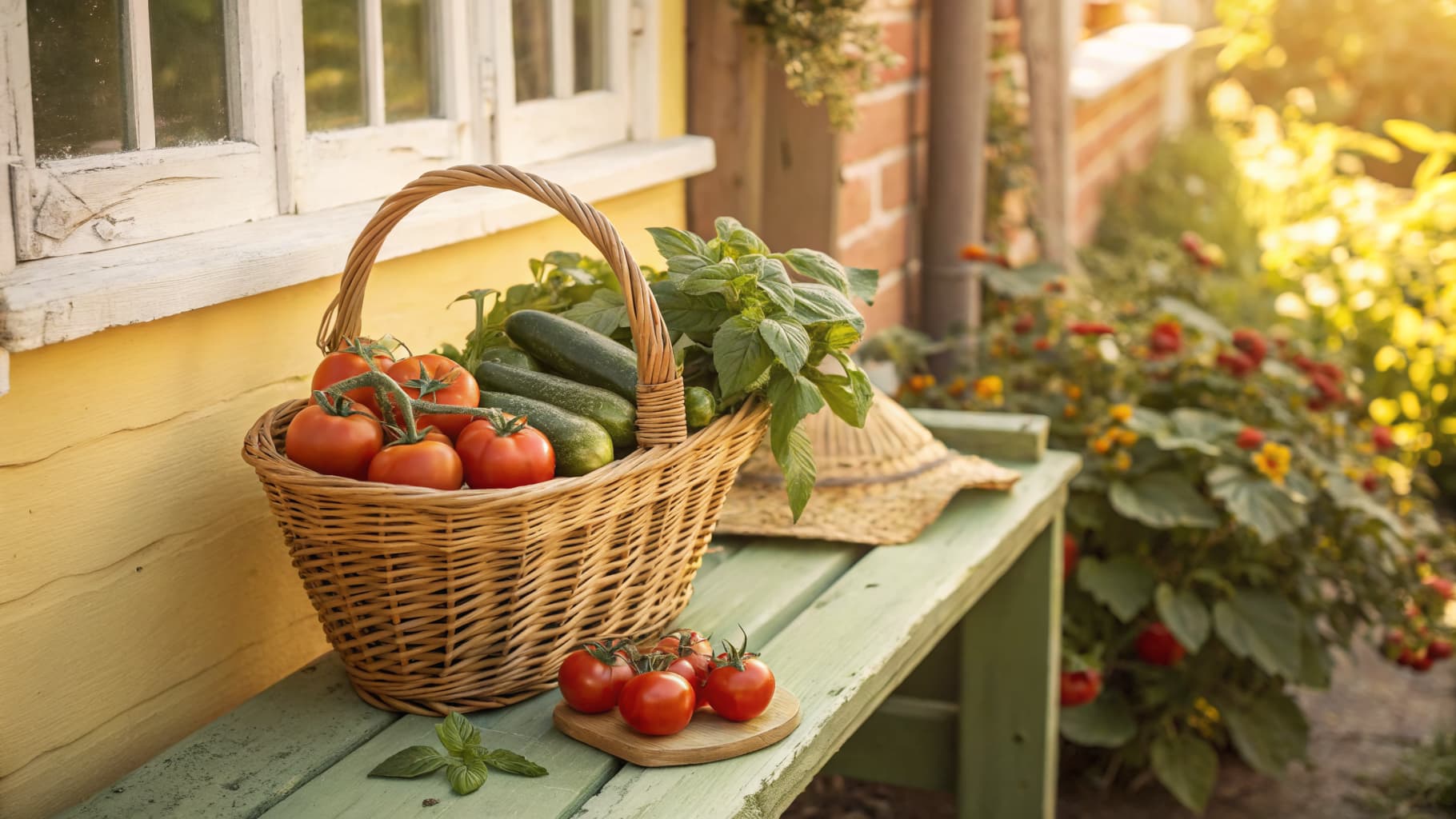
Roma tomatoes. Plum tomatoes are the same thing under a different name. They have thick walls, small seed cavities, and far less juice than a beefsteak or a slicing tomato, which is exactly what you want when nothing gets cooked down. Pick ones that are deep red and give a little under your thumb. Rock-hard Romas taste like nothing.
You do not need to peel them. The skin on a Roma is thin and you will never notice it in a quarter-inch dice. Ripe garden tomatoes work in late summer if you seed them well and drain the bowl. Cherry tomatoes are a last resort. They are all seed and juice.
Dice Size, Draining, and the 10-Minute Rest
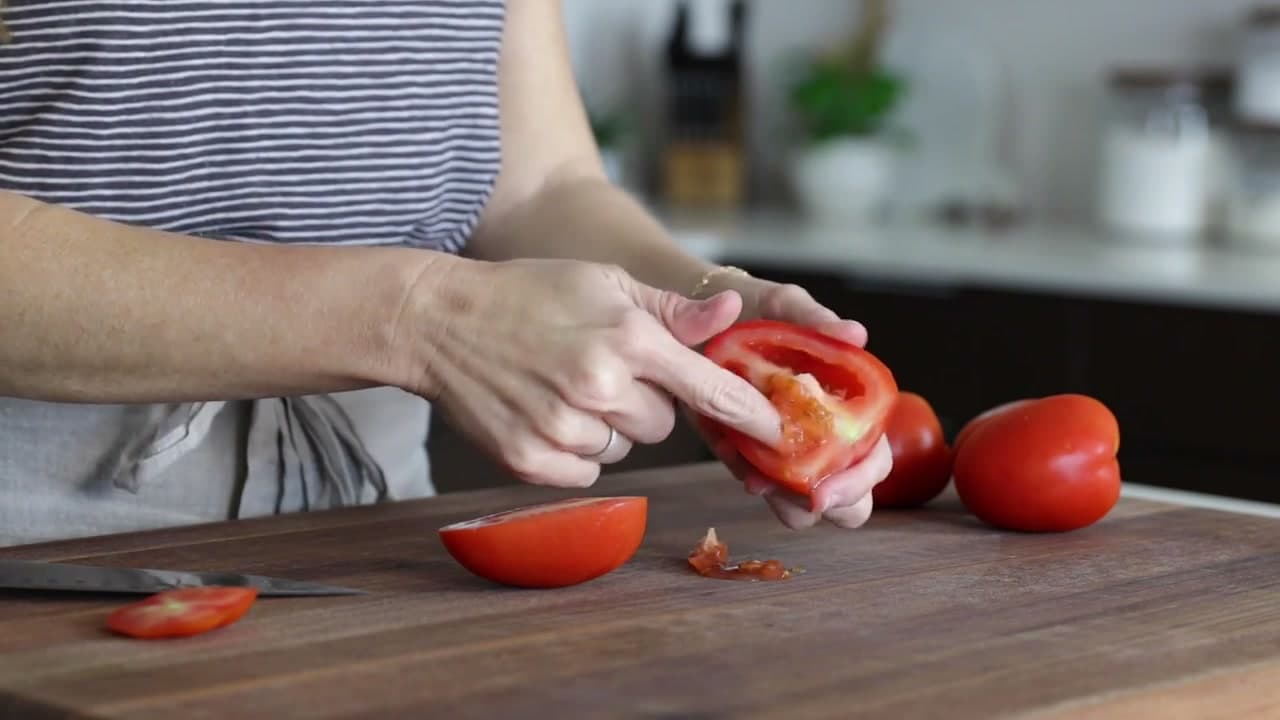
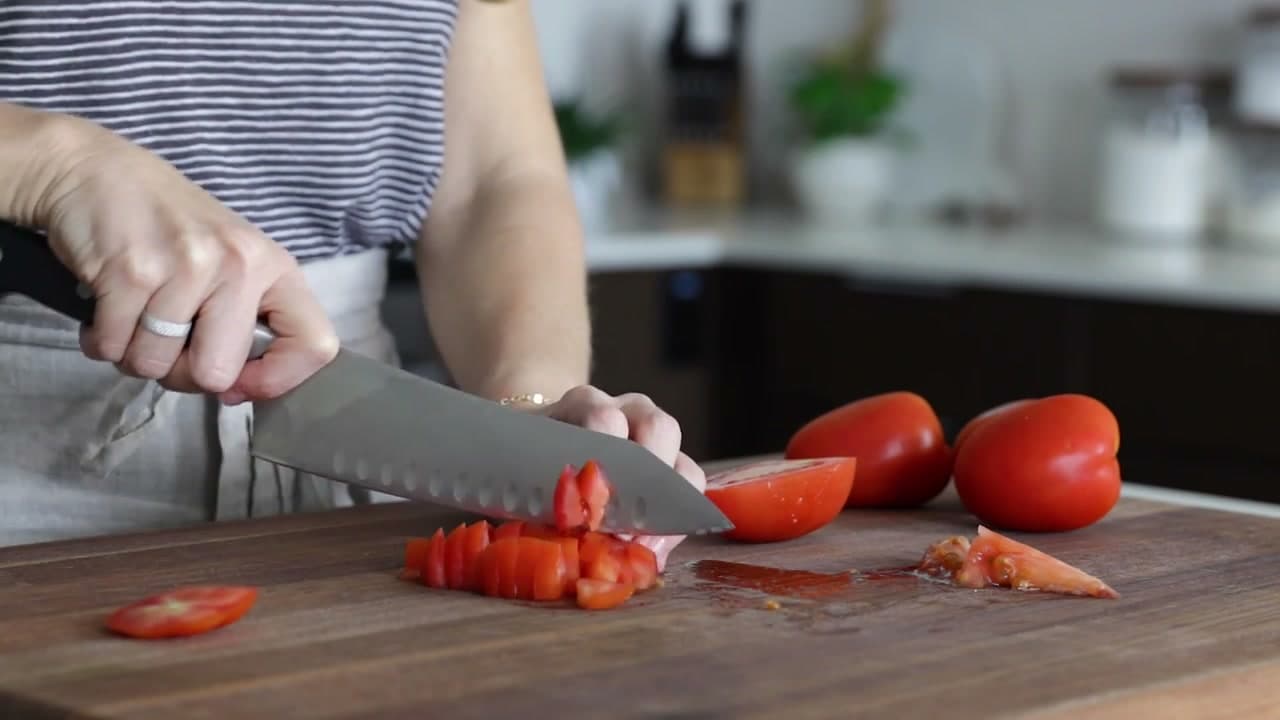
Aim for a quarter-inch dice on the tomato and a little smaller on the onion and chile. Bigger than that and a chip cannot carry it. Smaller and the texture blurs into a relish. Seed the tomatoes before you dice them. The gel around the seeds is where most of the water lives, and scooping it out is the single biggest thing that keeps pico from going soupy.
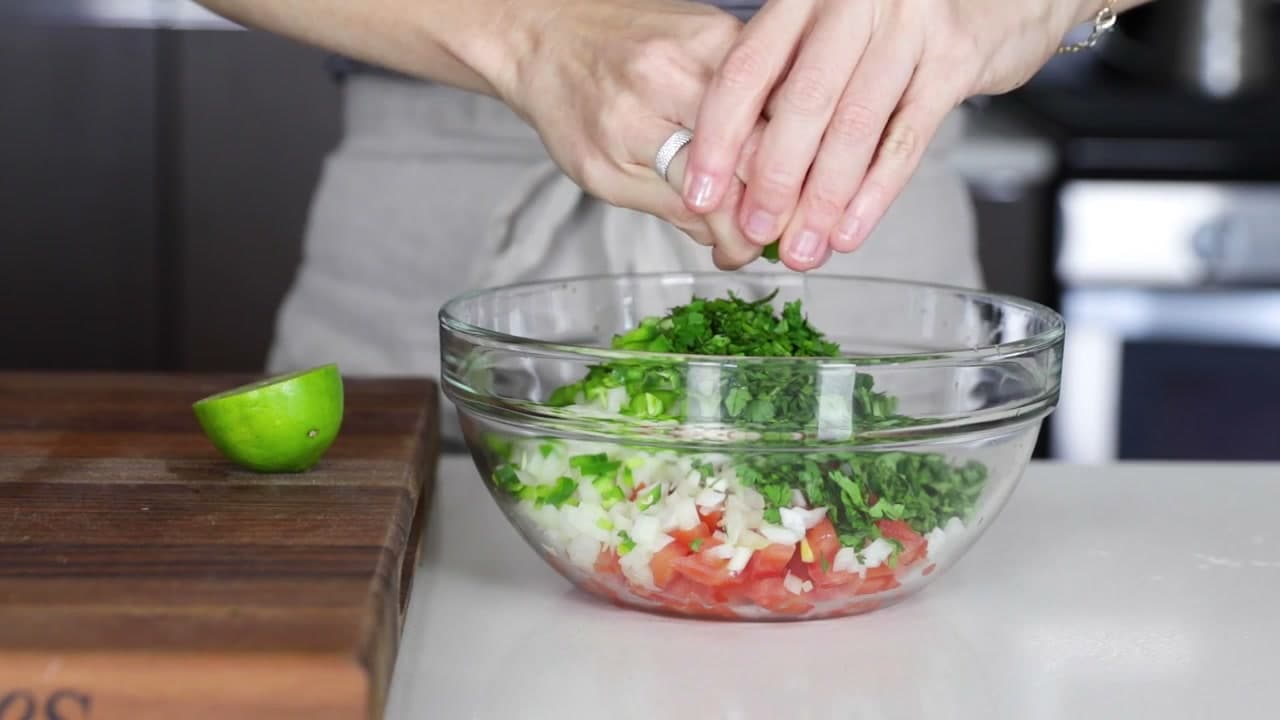
Salt does the rest. Once everything is in the bowl with the lime and salt, let it sit for 10 minutes. The salt pulls liquid out of the tomato and onion and seasons them from the inside. Then tip the bowl and pour off whatever pooled at the bottom. What is left is bright, seasoned, and stays chunky for hours.
Lime or Vinegar, and How Much Heat
Fresh lime juice is the traditional acid and the one that tastes right. Vinegar is the shortcut in jarred salsa and it flattens the flavor. In a pinch a splash of white vinegar will do, but plan on limes. One is enough for four tomatoes.
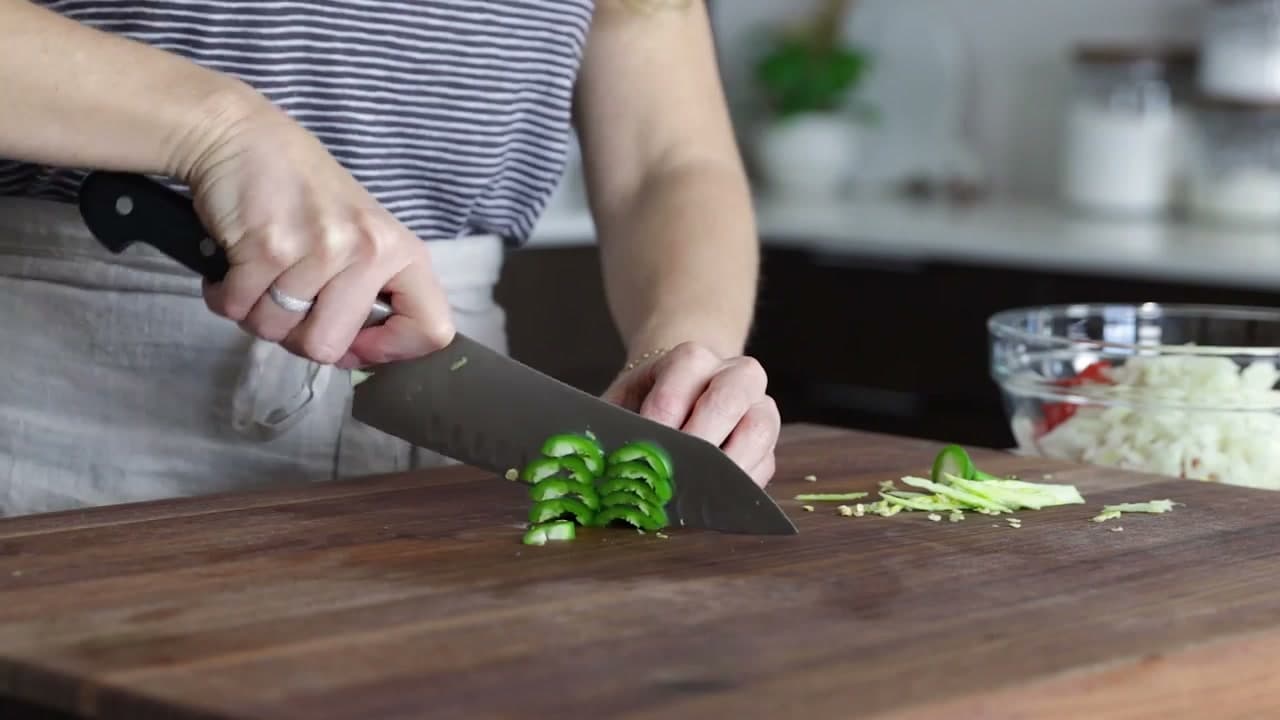
Serrano is the chile in most authentic Mexican pico de gallo. It is smaller and hotter than a jalapeno. For gentler heat, use a jalapeno, or keep the serrano and strip out the seeds and the white membrane, which is where the heat lives. Mince either one fine so no single bite gets the whole pepper. Add half, taste, then decide on the rest.
Pico de Gallo vs Salsa vs Salsa Fresca
Pico de gallo and salsa fresca are the same thing. Fresh sauce, chopped, never cooked, chunky enough to see every ingredient. What most people call salsa is smoother, usually blended, and often built on roasted or canned tomatoes, so it pours where pico scoops. Salsa verde is a different thing again, made from tomatillos instead of tomatoes.
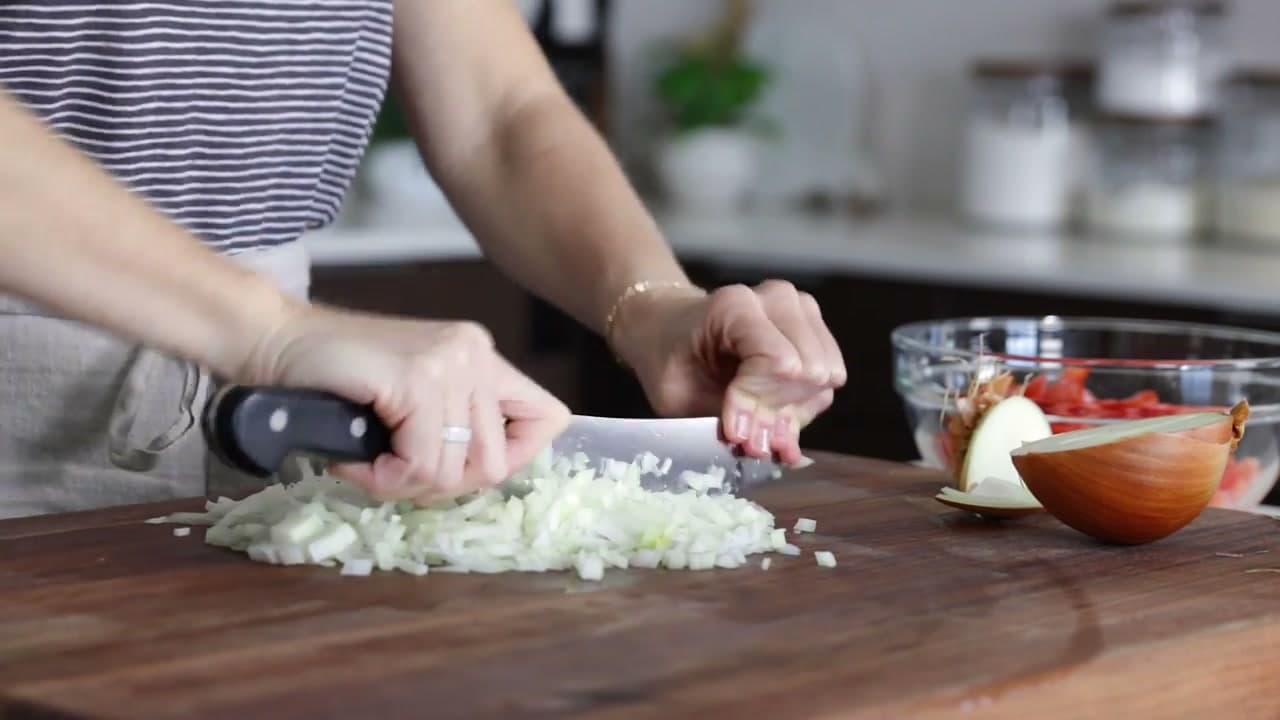
The onion matters too. White onion is the standard in Mexico for its clean, sharp bite. A yellow onion, which is what this video uses, is a touch sweeter and works fine. Either way, cut it small. If your knife skills are rusty, the onion dicing tutorial will get you to a small, even dice in a couple of minutes.
How Long Pico de Gallo Keeps
Two to three days in a sealed container in the fridge. It is best in the first few hours, while the tomato still has some snap. After a day it softens and more liquid collects at the bottom, so stir it and drain before you serve it again. It does not freeze. The tomato turns to mush when it thaws.
Make it the day you need it, a little ahead so the flavors settle. Then put it to work: on tortilla chips, on tacos, spooned over guacamole, or on grilled chicken and fish. A big bowl of it disappears fast.