How to Make Pancakes (Easy Classic Recipe)

CookingEasy8:058 stepsBrowse more →

By ShowMeStepByStepPublished

Based on a video by America's Test Kitchen.

The trick to pancakes that taste better than any box mix is leaving the batter lumpy. That sounds like a recipe writer being polite about a mistake, but it's the whole secret. Lumps mean the flour hasn't fully hydrated yet, and a thick batter is what gets you tall, fluffy pancakes instead of flat crepes. Whisk it smooth and you'll end up with a thin, runny batter and pancakes that spread into the size of dinner plates.

This is the America's Test Kitchen Easy Pancakes recipe. Hosts Julia Collin Davison and Bridget Lancaster walked through it on camera and admitted on tape that they used to use a box mix on Saturday mornings until this recipe converted them. It's two bowls - one dry, one wet - whisked together with intentional lumps, rested for ten minutes while you make coffee, and cooked on a lightly oiled griddle. The whole thing takes about twenty minutes start to finish.

A 350-degree electric griddle is the right tool for this. You can cook six four-inch pancakes at once instead of doing three at a time in a nonstick pan. If you're cooking for a crowd, hold the finished pancakes on a wire rack in a 200-degree oven so everyone sits down to a hot breakfast together. Read every step first, then make a pot of coffee and start measuring.

Step-by-Step Guide

1

Step 1: Whisk Together the Dry Ingredients

1:25
Step 1: Step 1: Whisk Together the Dry Ingredients

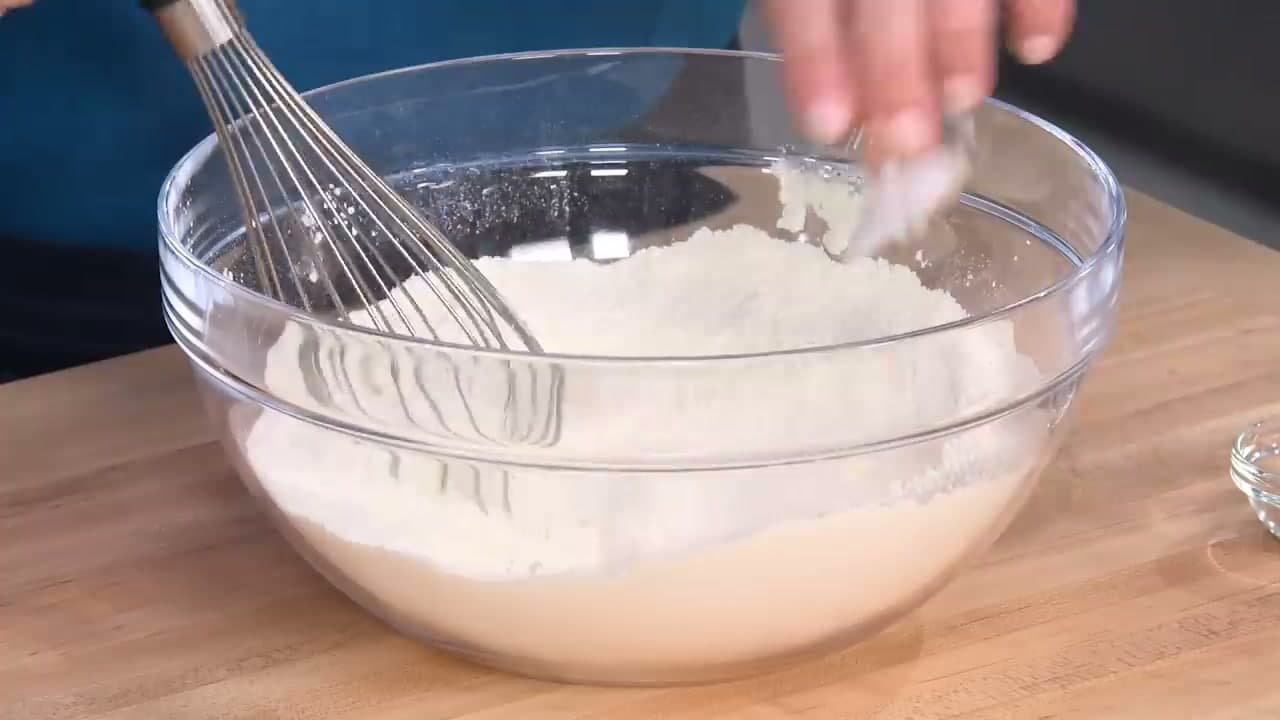
In a large mixing bowl, whisk 2 cups of all-purpose flour, 3 tablespoons of sugar, 4 teaspoons of baking powder, 1 teaspoon of salt, and 1/2 teaspoon of baking soda. The amount of baking powder is roughly double what you'd see in a standard recipe, and that's deliberate - it's the reason these pancakes climb so tall on the griddle. A quick 20 seconds with the whisk gets everything evenly distributed. No clumps of baking powder hiding in pockets means no bitter mouthfuls in the finished pancake.

Tip

Double the recipe and pour half into a zipper-lock bag with the rest of the ingredients written on it in marker. Next weekend's pancakes start as a homemade box mix, and you skip half the measuring.

2

Step 2: Whisk the Wet Ingredients in a Second Bowl

2:05
Step 2: Step 2: Whisk the Wet Ingredients in a Second Bowl

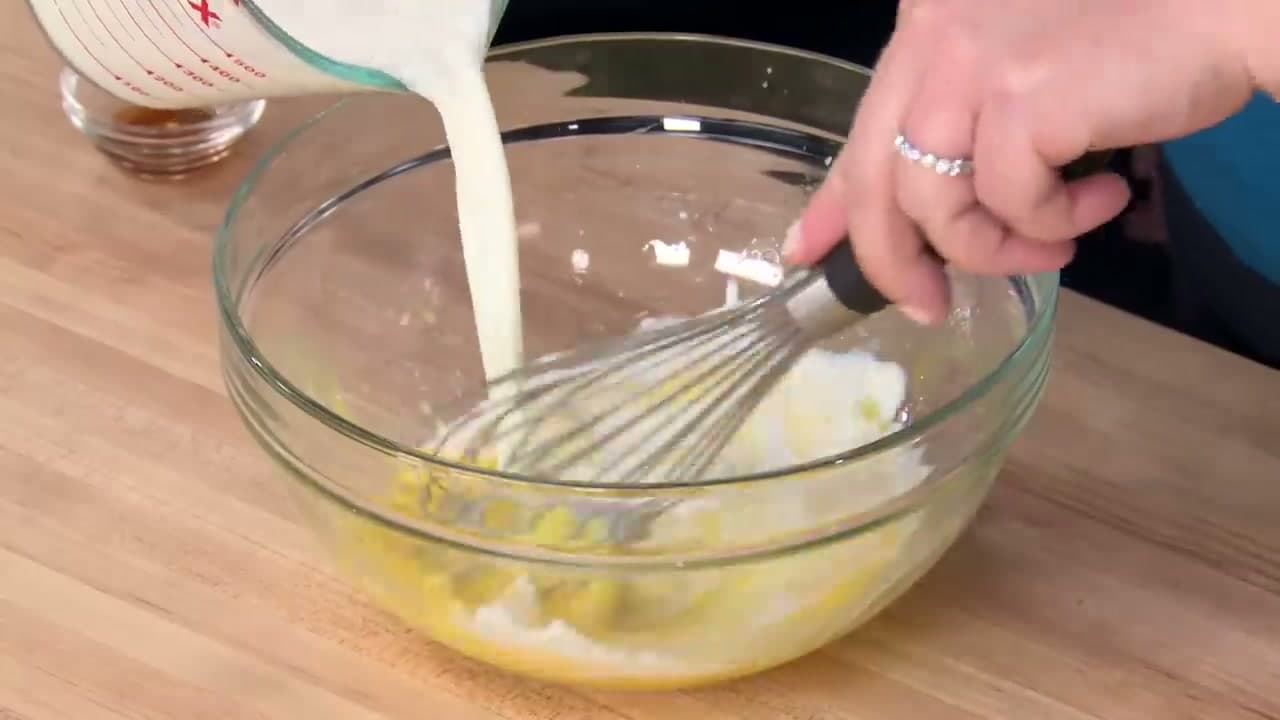
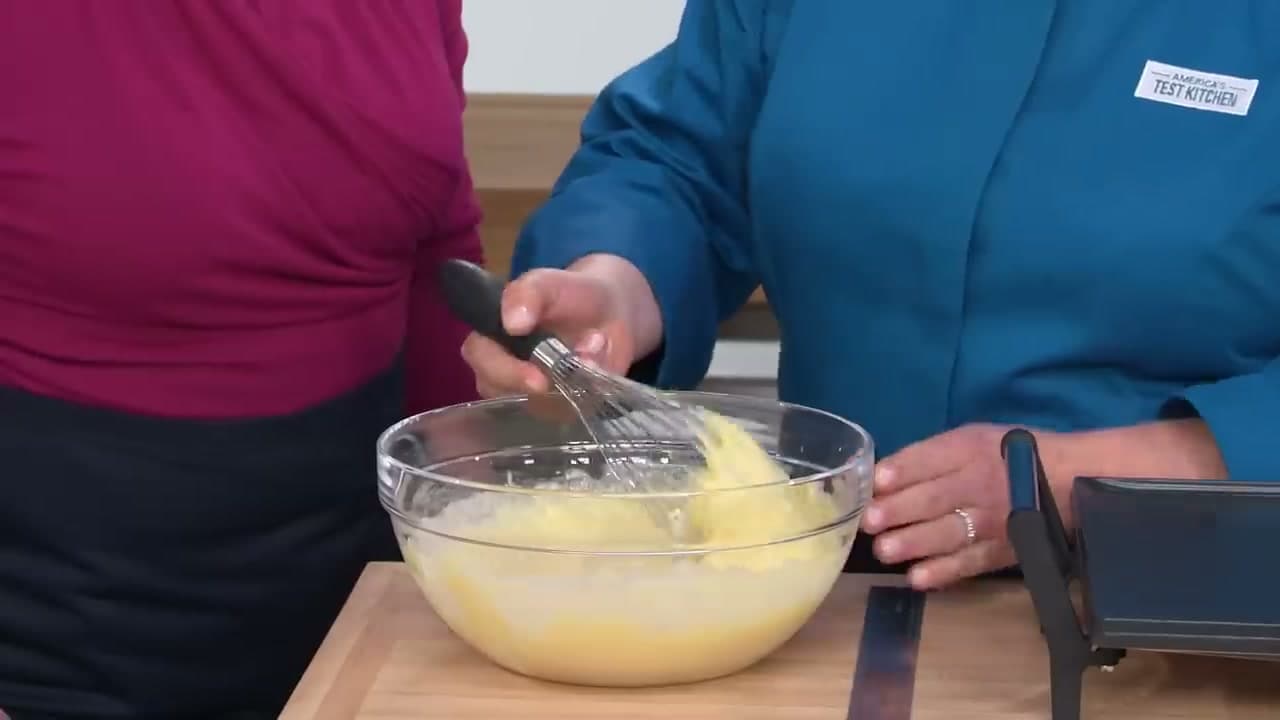
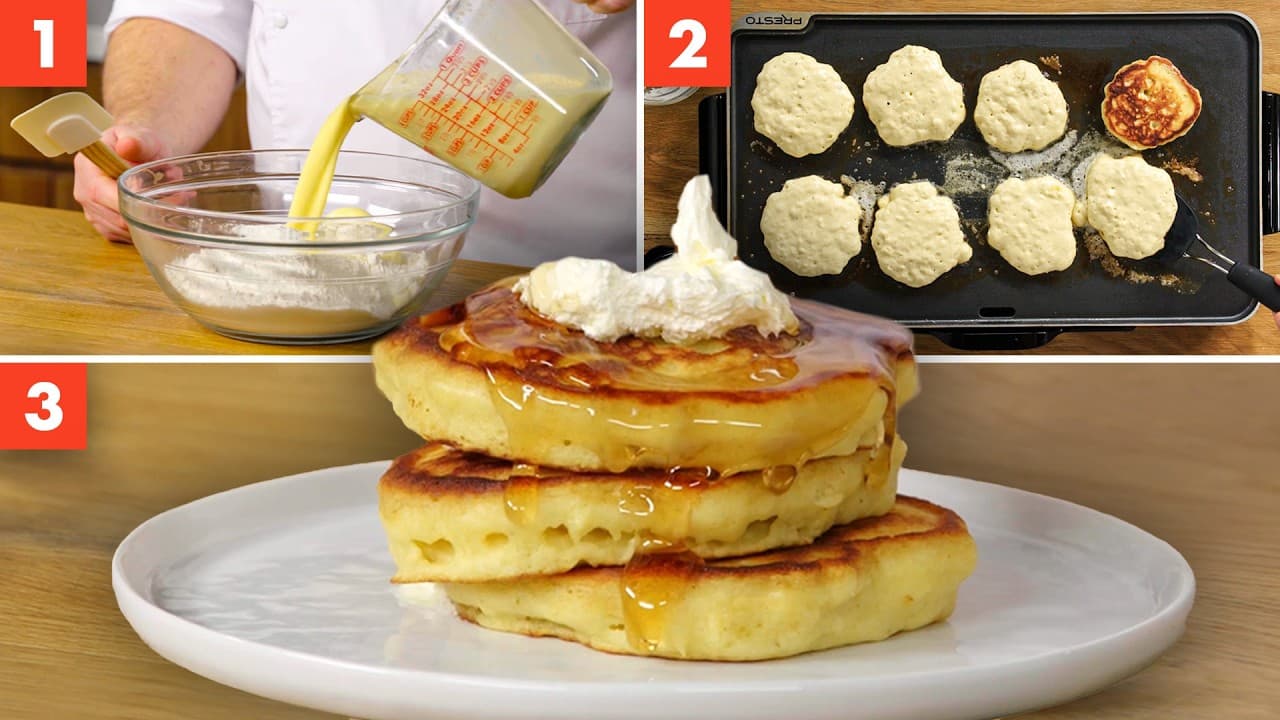
Crack 2 large eggs into a separate bowl. Pour in 1/4 cup of vegetable oil and whisk briefly - the oil helps break up the yolks without splashing them around the bowl. Add 1 1/2 cups of milk and 1/2 teaspoon of vanilla extract. Whisk just until the eggs are fully broken up and the mixture looks uniform. You're not whipping air in. Vanilla feels optional, but it's the thing that bridges the gap between fine pancakes and the ones people ask for the recipe on.

Tip

Pulling the eggs out of the fridge 30 minutes ahead helps - room-temperature wet ingredients blend faster and don't shock the leaveners later. If you forget, it still works.

3

Step 3: Combine Wet and Dry - Stop While It's Lumpy

2:22
Step 3: Step 3: Combine Wet and Dry - Stop While It's Lumpy

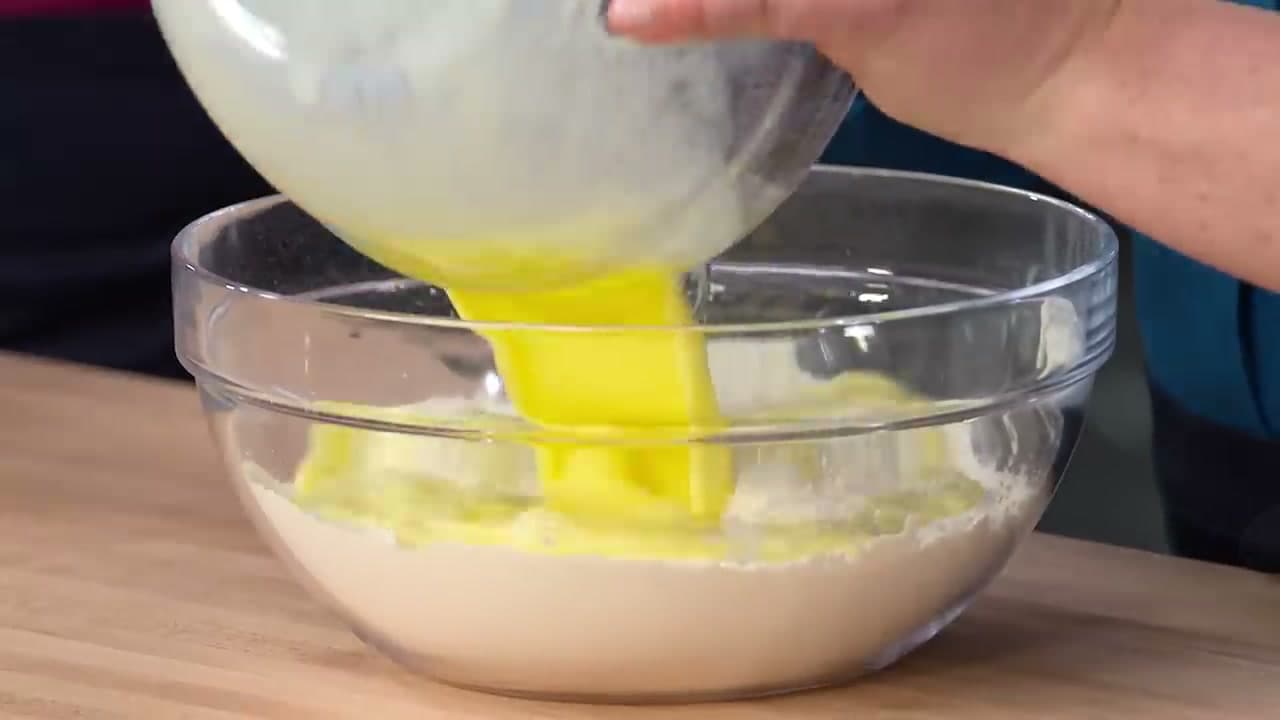
Pour the wet ingredients into the dry ingredients all at once. Whisk gently, just enough to wet all the flour. Stop as soon as the dry pockets disappear, even if the batter still looks like a cottage cheese situation. The lumps are the whole point. Over-mixing develops gluten and turns the batter thin and runny, which gives you flat pancakes that spread across the entire griddle. A thick, slightly clumpy batter is exactly what holds its shape and rises into something tall on the surface of the pan.

Tip

If the batter looks too smooth and you can pour it like cream, you whisked too much. It'll still cook into a pancake, just a thinner one. Add an extra two tablespoons of flour and a few quick strokes to recover.

4

Step 4: Let the Batter Rest for 10 Minutes

3:00
Step 4: Step 4: Let the Batter Rest for 10 Minutes

Cover the bowl with a clean dish towel and walk away for 10 minutes. This is when the lumpy clumps of flour soak up liquid and disappear on their own. The baking powder also gets a head start, so the batter is already lightly aerated when it hits the hot griddle. Use the rest as the coffee window. By the time the pot is brewed and you've poured a cup, the batter is exactly where you want it: thick enough that a spoonful holds its shape when you scoop it, smooth enough that it pours cleanly off a quarter-cup measure.

Tip

Don't skip the rest. A 5-minute version still works, but 10 minutes is the sweet spot. Longer than 20 starts to deflate the leavening reaction.

Products used in this step

5

Step 5: Heat the Griddle and Oil It Evenly

3:35
Step 5: Step 5: Heat the Griddle and Oil It Evenly

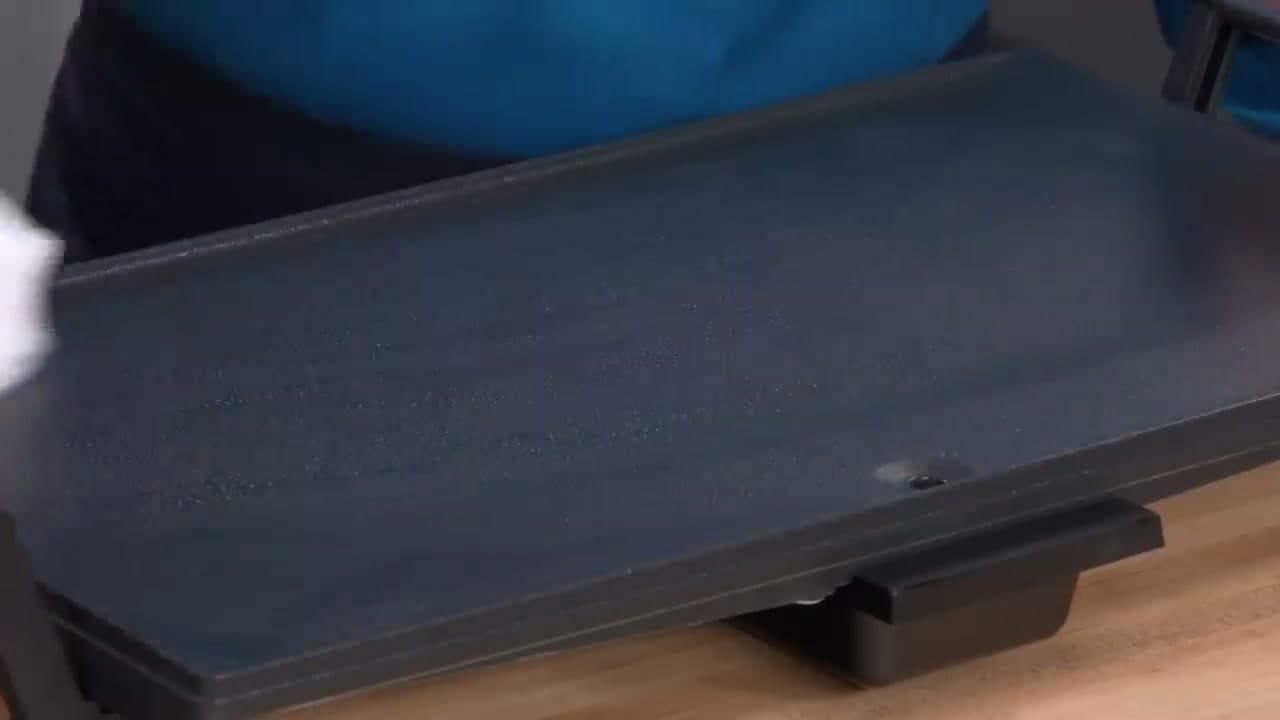
Set an electric griddle to 350 degrees. Pour about 1/2 teaspoon of vegetable oil onto the surface, then wipe it across the whole griddle with a folded paper towel. The goal is a thin, even film with zero puddles. Wherever oil pools, the heat can't transfer from the surface up into the batter, and you end up with light spots on the cooked pancake. A test cake confirms the temperature - drop a tablespoon of batter on the griddle and let it cook for one minute. If the underside is golden brown, you're ready for the real pancakes. If it's pale, the surface needs another minute to come up to heat.

Tip

No electric griddle? A 12-inch nonstick skillet over medium heat works for three pancakes at a time. The cook time is the same.

6

Step 6: Scoop the Batter into Four-Inch Rounds

4:17
Step 6: Step 6: Scoop the Batter into Four-Inch Rounds

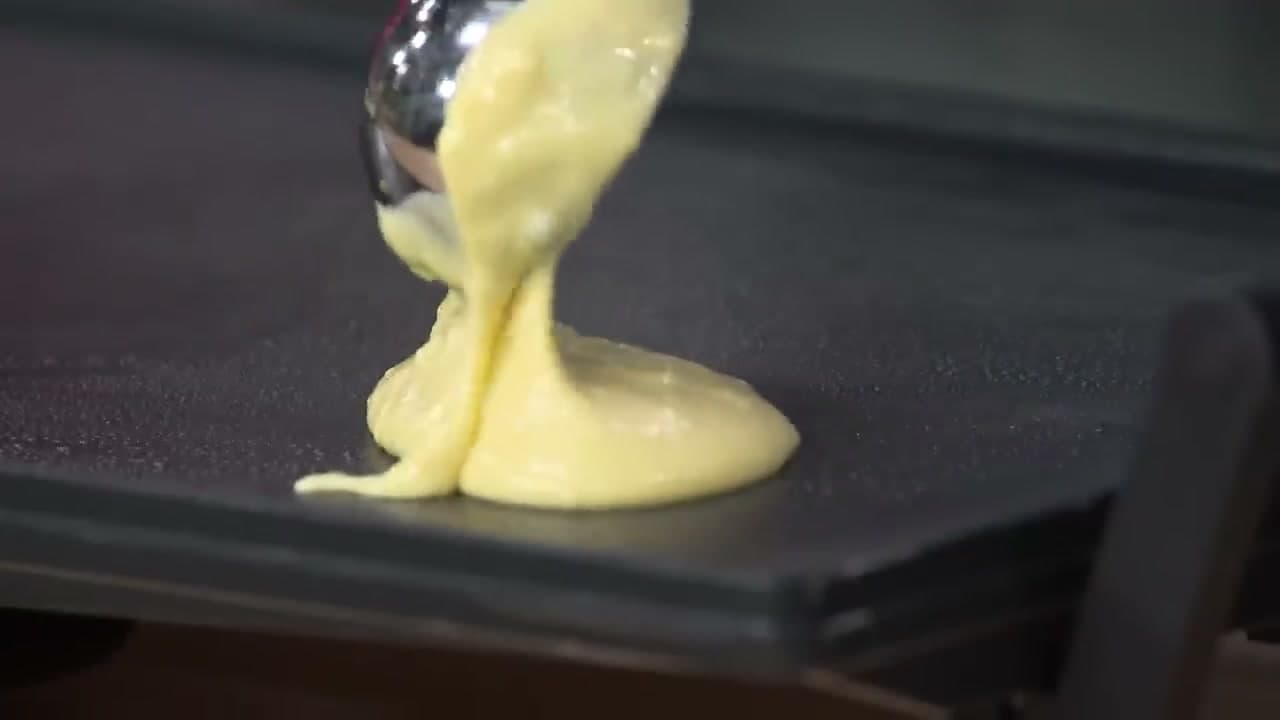
A spring-loaded portion scoop makes pancakes the same size, which means they finish cooking at the same time. A quarter-cup dry measuring cup does the same job - just smooth the top of the cup so each pancake starts at the same volume. Drop the batter onto the griddle and let it settle into a four-inch round. If it spreads into a six-inch round, the batter is too thin. Thick batter doesn't run, which is exactly what you want. Space the rounds two inches apart so they have room to puff up without bumping each other.

Tip

Don't try to nudge the batter into a round circle with the back of the scoop. It'll deflate the moment you press on it. Trust the batter to find its own shape.

7

Step 7: Cook 2 to 3 Minutes Per Side, Then Flip

4:55
Step 7: Step 7: Cook 2 to 3 Minutes Per Side, Then Flip

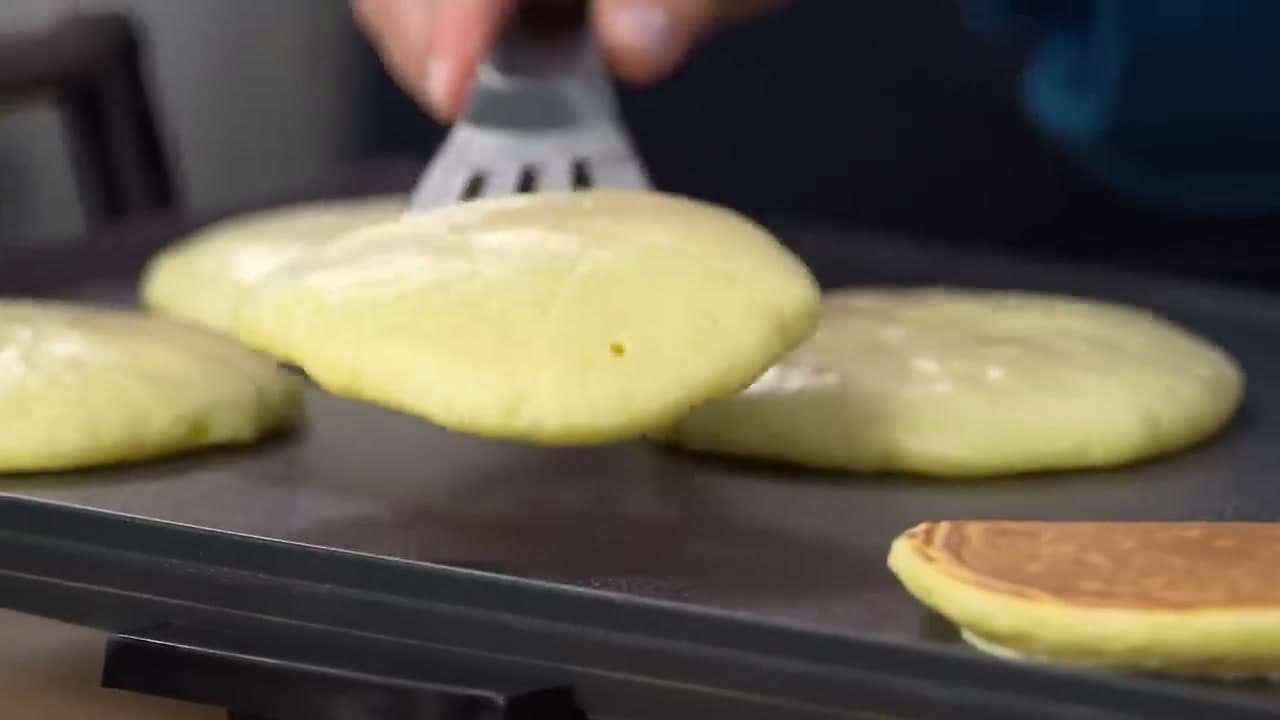
Watch the edges of the pancakes. They go from wet to dry in about two minutes, and the surface shifts from shiny to matte right around the same time. That's the flip cue. Slide a thin spatula under the pancake while keeping it close to the griddle - high-angle flipping is what makes them fold or land on each other. If the spatula bumps into the next pancake, slow down and push it gently out of the way before lifting. The second side cooks faster than the first, usually one to two minutes. The pancakes are done when both sides are deep golden brown and the centers spring back when you press them.

Tip

By the time the last pancake of a batch is poured, the first one is usually ready to flip. Work in a loop - scoop, scoop, scoop, scoop, scoop, scoop, then flip in the same order.

8

Step 8: Stack, Hold Warm, and Serve with Butter and Syrup

6:10
Step 8: Step 8: Stack, Hold Warm, and Serve with Butter and Syrup

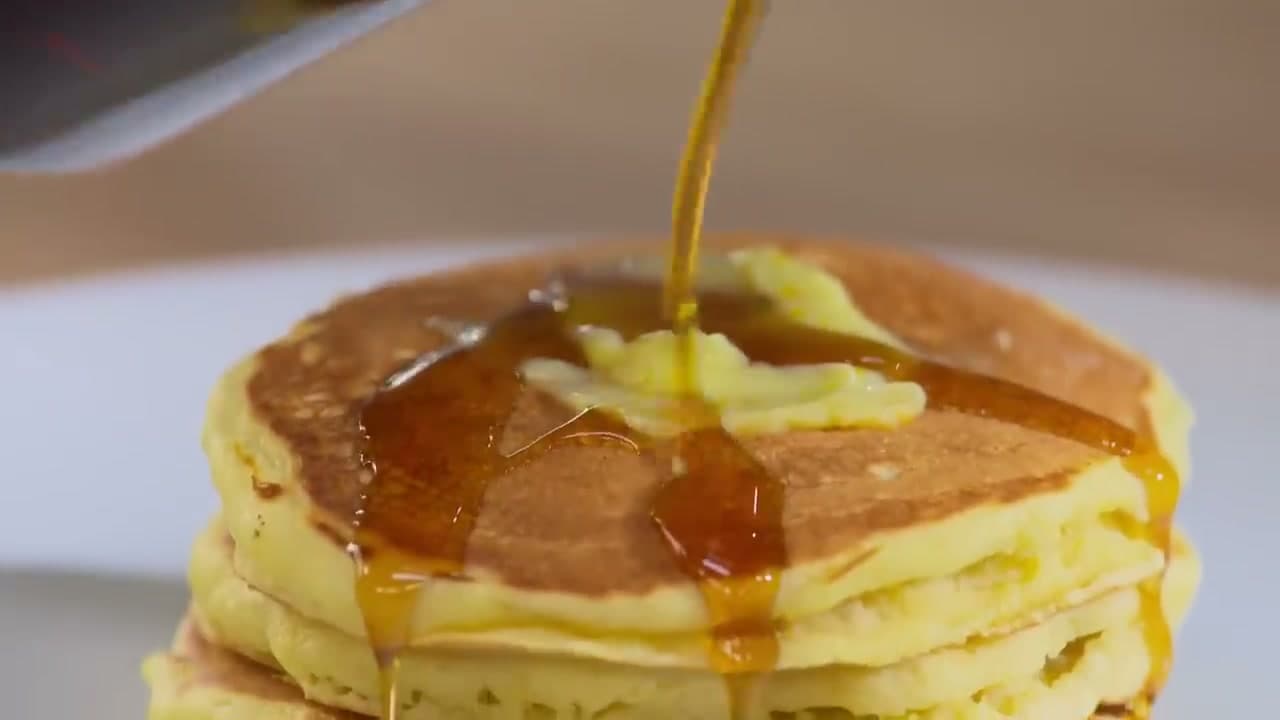
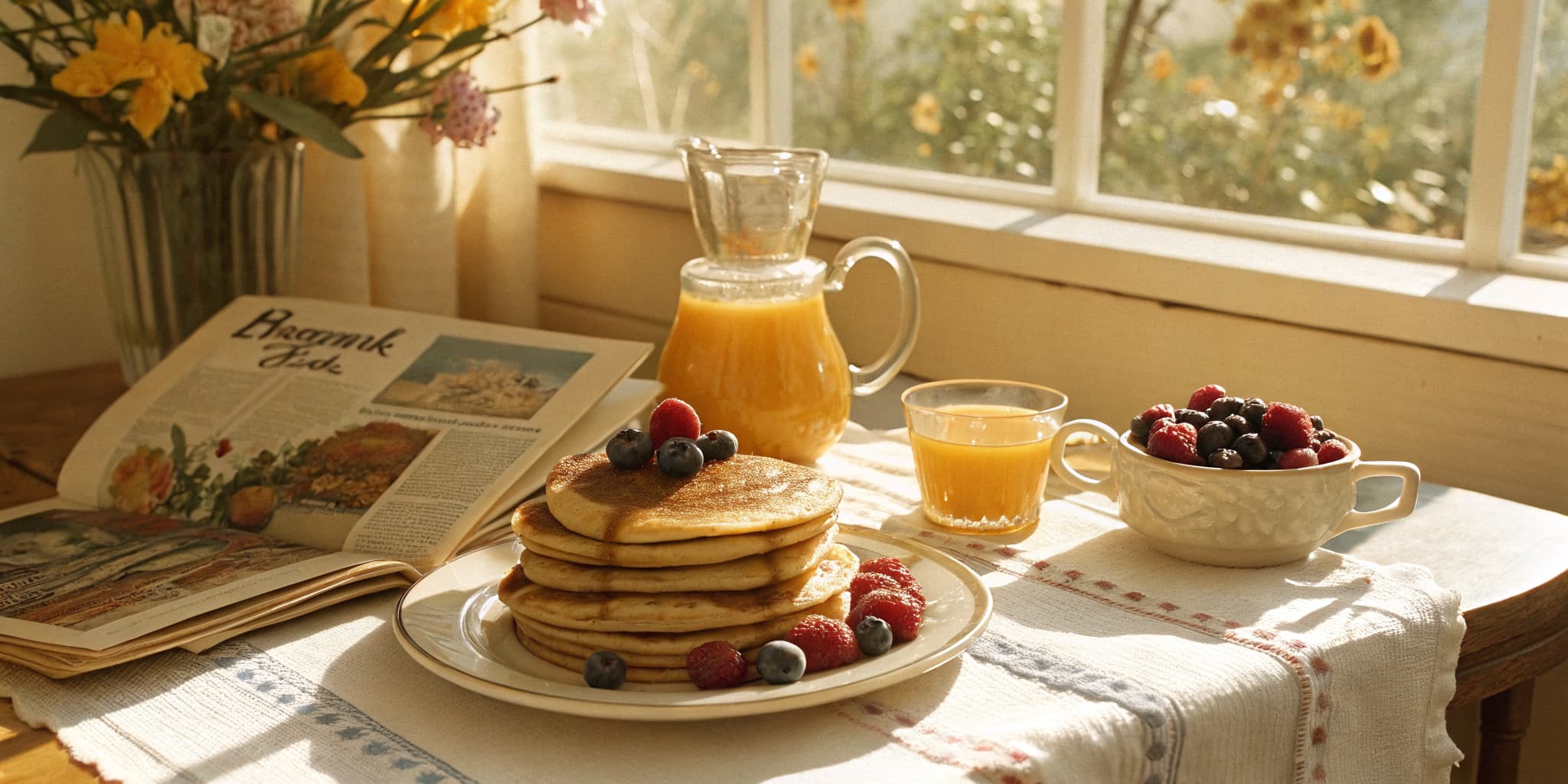
Pancakes are best the moment they come off the griddle, but a 200-degree oven with a wire rack inside is the trick for serving everyone at the same time. Lay the finished pancakes on the rack, not directly on a sheet pan - airflow underneath keeps them from sweating and going soggy. Three pancakes is a short stack, four or five is a tall stack. Top with a knob of softened butter and a generous pour of real maple syrup. America's Test Kitchen recommends a compound butter (orange and almond is their pick) for a Saturday-special version, but plain butter is never wrong.

Tip

Leftover cooked pancakes freeze well. Cool them flat on a rack, stack with parchment between each one, and bag. Reheat from frozen in a 350-degree oven for 8 minutes - they taste like fresh.

Products Used

❖ The Recipe

How to Make Pancakes (Easy Classic Recipe)

American
Serves
Makes about 12 four-inch pancakes (serves 4 to 6)
Prep
10 min
Cook
15 min
Total
25 min

Ingredients

11 items
  • 2 cupsall-purpose flour
  • 3 tbspgranulated sugar
  • 4 tspbaking powderalmost double a standard recipe - this is how you get tall, fluffy pancakes
  • 1 tsptable salt
  • 1/2 tspbaking sodaadds tang and helps the surface brown
  • 2large eggs
  • 1/4 cupvegetable oilplus another 1/2 tsp for the griddle
  • 1 1/2 cupswhole milk
  • 1/2 tspvanilla extract
  • for servingunsalted butter
  • for servingmaple syrup

Method

  1. 1
    Step 1: Whisk Together the Dry Ingredients. In a large mixing bowl, whisk 2 cups of all-purpose flour, 3 tablespoons of sugar, 4 teaspoons of baking powder, 1 teaspoon of salt, and 1/2 teaspoon of baking soda.
  2. 2
    Step 2: Whisk the Wet Ingredients in a Second Bowl. Crack 2 large eggs into a separate bowl.
  3. 3
    Step 3: Combine Wet and Dry - Stop While It's Lumpy. Pour the wet ingredients into the dry ingredients all at once.
  4. 4
    Step 4: Let the Batter Rest for 10 Minutes. Cover the bowl with a clean dish towel and walk away for 10 minutes.
  5. 5
    Step 5: Heat the Griddle and Oil It Evenly. Set an electric griddle to 350 degrees.
  6. 6
    Step 6: Scoop the Batter into Four-Inch Rounds. A spring-loaded portion scoop makes pancakes the same size, which means they finish cooking at the same time.
  7. 7
    Step 7: Cook 2 to 3 Minutes Per Side, Then Flip. Watch the edges of the pancakes.
  8. 8
    Step 8: Stack, Hold Warm, and Serve with Butter and Syrup. Pancakes are best the moment they come off the griddle, but a 200-degree oven with a wire rack inside is the trick for serving everyone at the same time.

Your Guide

America's Test Kitchen

As an Amazon Associate we earn from qualifying purchases. Links on this page may be affiliate links - clicking them and buying doesn't change your price, but helps support ShowMeStepByStep.

Tags

What's next

Related collections

Curated theme pages that include this tutorial.

Weekly Digest

Liked this cooking tutorial?

Pick the categories you want to hear about. Weekly digest of new step-by-step tutorials. No spam, easy unsubscribe.

Send me tutorials about

We only email about new tutorials. Easy unsubscribe anytime.