How to Make a Traditional Carbonara (No Cream, Just Eggs)

CookingEasy11:527 stepsBrowse more →

By ShowMeStepByStepPublished

Based on a video by Chef Jean-Pierre.

The Italian recipe police get loud whenever someone puts cream in a carbonara - and they are right. A real carbonara is eggs, Pecorino Romano, guanciale, and black pepper. That is it. The famous silky sauce is not cream at all - it is egg yolks gently warmed by the residual heat of just-drained pasta until they turn into a glossy, golden coating.

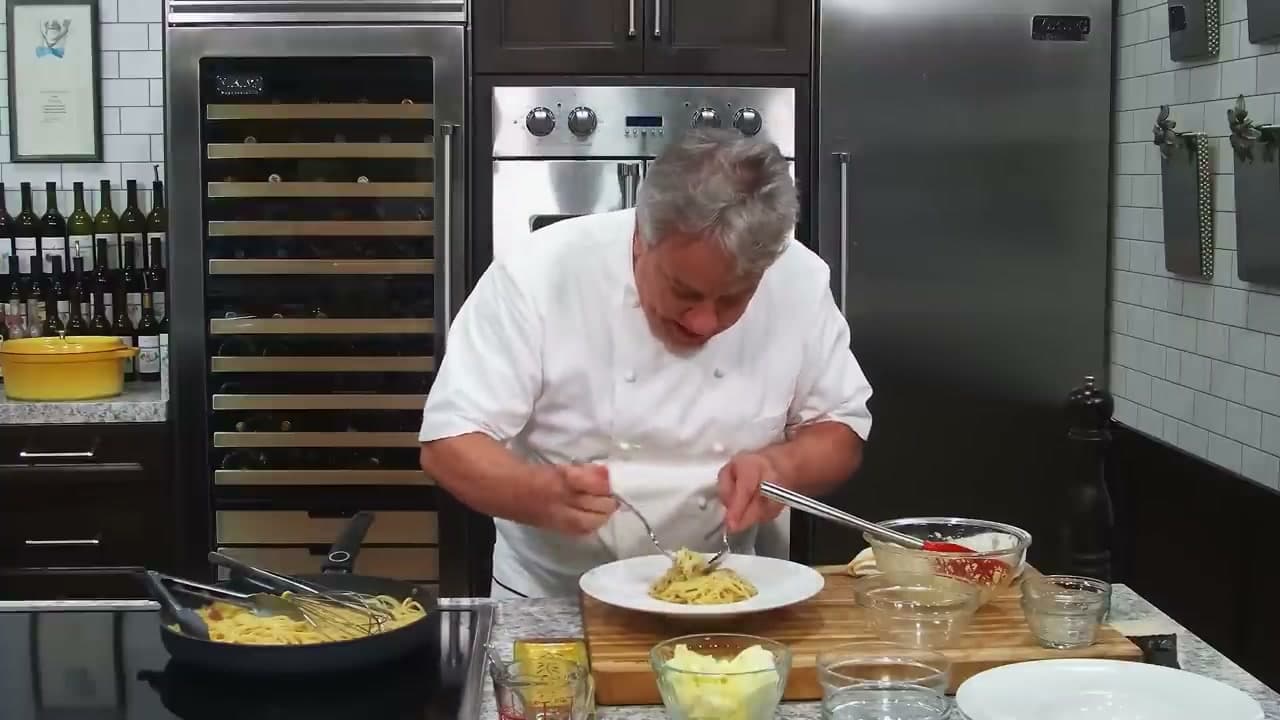
This walkthrough comes from Chef Jean-Pierre, a classically trained French chef who has been cooking and teaching for 40 years. He learned this recipe from his Italian mother and walks through it the traditional Roman way, no shortcuts and no dairy cream.

The two things that go wrong with carbonara. First is scrambled eggs. The egg mixture has to hit the pasta off the heat (or on very low heat) and get tossed constantly. Drop it on a hot pan and you have an omelet with spaghetti in it. Second is dry, gluey sauce. The starchy pasta water is the fix - splash some in while tossing and the sauce loosens into the silky cream you are after.

Substitutions. If you cannot find guanciale (cured pork jowl), pancetta is the next best swap. Regular bacon works in a pinch but it is smoked, which changes the flavor. Pecorino Romano is non-negotiable for the salty, sharp finish - do not swap in pre-shredded mozzarella or generic parmesan. Use freshly grated cheese, not the pre-shredded stuff with anti-caking powder; the powder fights the sauce.

This recipe takes about 30 minutes start to finish and serves four. While you are here, also worth knowing: how to cook pasta properly, how to make marinara sauce, and how to make meatballs for a full pasta night spread.
Step-by-Step Guide

1

Step 1: Get Your Big Pot of Salted Water Going

0:38
Step 1: Step 1: Get Your Big Pot of Salted Water Going

Fill your biggest pot with water and set it on high heat. Once it hits a rolling boil, salt it generously - more salt than you think feels right. Chef Jean-Pierre is very clear: salt is the only thing that goes in the pasta water. Never oil. The salt seasons the pasta from the inside, and the starchy salted water becomes the secret weapon for the sauce later.

Drop in 1 lb of dried spaghetti. Do not break the strands - just slide them in whole and let them soften and bend into the water on their own. The thicker spaghettoni shape is ideal if you can find it, but regular spaghetti works fine.

Tip

Your pasta water should taste like the sea. A small handful of kosher salt for a big pot is the right ballpark - the pasta only absorbs a fraction of it.

2

Step 2: Cut and Render the Guanciale Slowly

1:45
Step 2: Step 2: Cut and Render the Guanciale Slowly

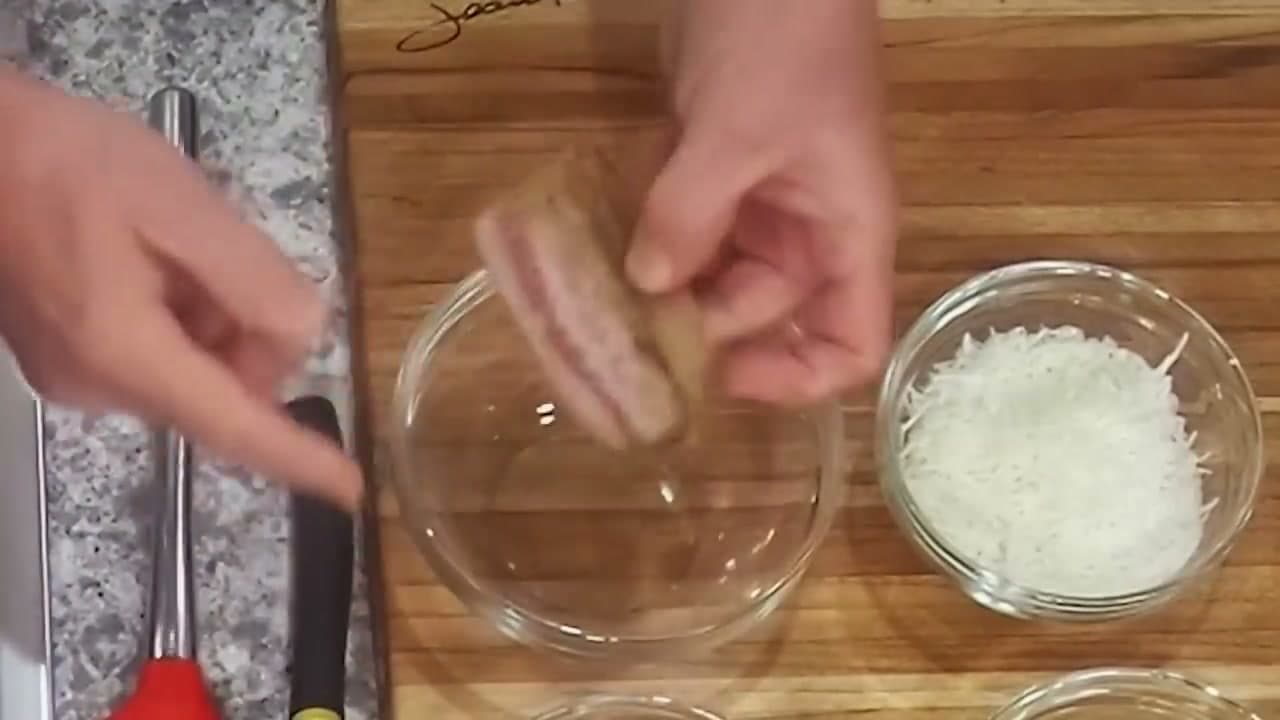
Guanciale is cured pork jowl - fattier and far more flavorful than pancetta or bacon. If you can find it at an Italian market, peel off the tough outer skin and cut the meat into matchsticks or short batons about a quarter-inch thick. Pancetta is the next best swap and needs no skin trimming. Plain bacon works too, but it is smoked, which shifts the flavor.

Drop the pork into a dry, cold non-stick pan with nothing else added. No oil. No butter. Set the heat to medium-low and let the fat melt out slowly. The goal is golden crispy edges with clear, melted fat pooled around them - not scorched lean meat in dried-out fat.

Tip

If the pan starts smoking, you are too hot. Pull it off the heat and let it cool down. Burnt guanciale is bitter and there is no rescuing it once it gets there.

3

Step 3: Whisk the Eggs, Cheese, and Pepper Off the Heat

3:40
Step 3: Step 3: Whisk the Eggs, Cheese, and Pepper Off the Heat

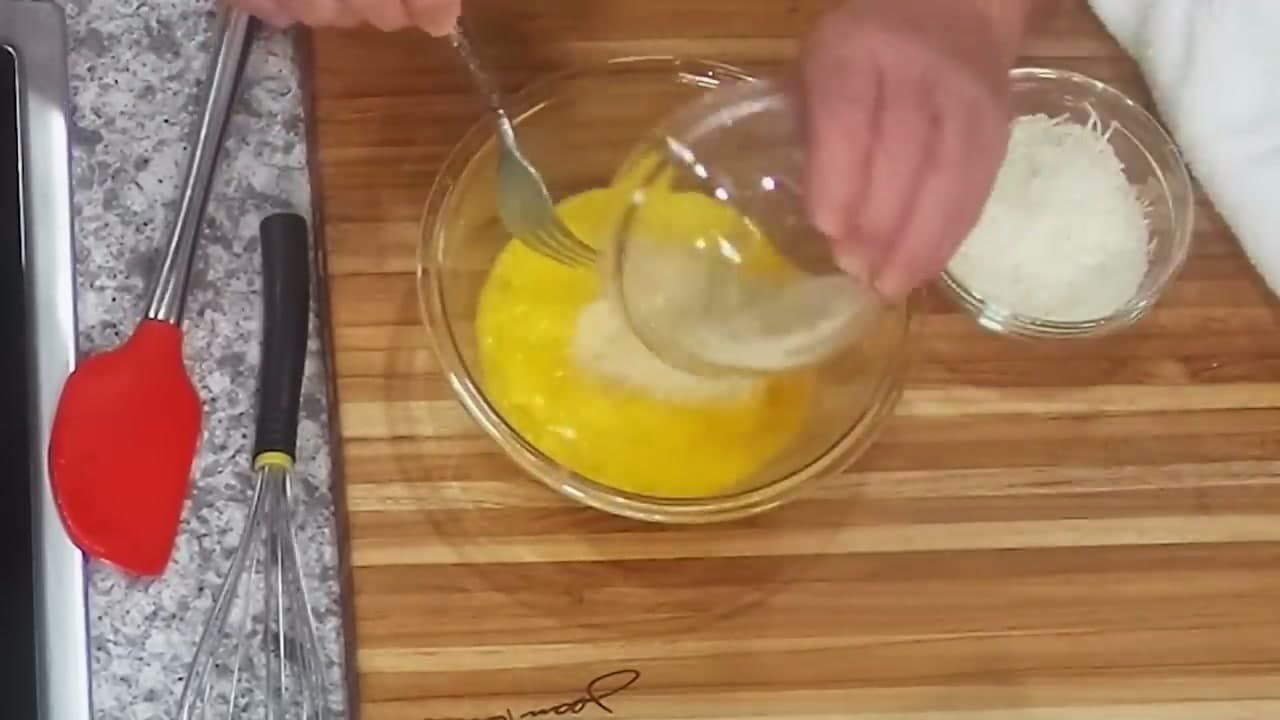
Crack 4 egg yolks and 1 whole egg into a bowl. Beat them with a fork like you are starting an omelet. Add 1 cup of freshly grated Pecorino Romano. Chef Jean-Pierre also adds a small handful of Parmigiano Reggiano for a milder, rounder finish - that part is optional.

Crack in plenty of fresh black pepper. Do NOT add salt. Pecorino Romano is already very salty cheese, and the pasta water is salty too. Mix everything into a thick, paste-like cream. This is the famous carbonara cream - no dairy cream in sight, just eggs, cheese, and pepper. It will turn silky when warmed by the residual heat of the just-drained pasta.

Tip

Use freshly grated cheese, not pre-shredded. Pre-shredded cheese has anti-caking powder coating it, which keeps it from melting smoothly into the sauce.

4

Step 4: Drain the Pasta and Save the Cooking Water

7:05
Step 4: Step 4: Drain the Pasta and Save the Cooking Water

Spaghetti needs about 10 to 12 minutes depending on the brand. Taste a strand around the time the box suggests. Al dente means firm to the bite - the noodle should give resistance but not feel raw or chalky in the center. Pull the pasta a hair before you think it is done; it will finish cooking in the sauce pan.

Before you drain, scoop out at least half a cup of the starchy salted pasta water and reserve it - this is the glue that pulls the sauce together. Chef Jean-Pierre also adds a little of that water directly to the guanciale pan at this stage to start building the base.

Tip

Use a ladle or a heatproof measuring cup to scoop the pasta water before you drain. If you forget and dump everything in the sink, the sauce will dry out and there is no real fix.

5

Step 5: Move the Pasta Straight Into the Guanciale Pan

7:10
Step 5: Step 5: Move the Pasta Straight Into the Guanciale Pan

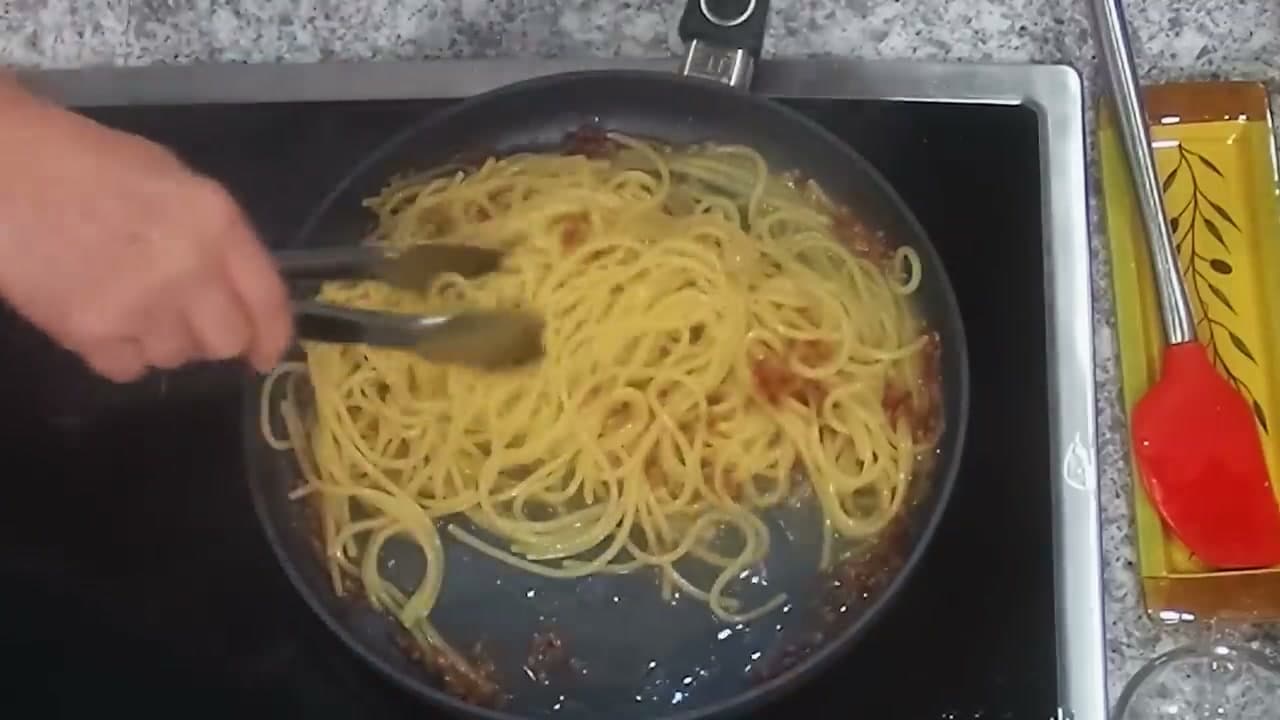
Lower the heat under the guanciale pan to its lowest setting (or pull the pan off the burner entirely for a moment to cool it down). Using tongs or a pasta spider, lift the cooked spaghetti right out of the boiling water and into the pan with the rendered fat. Do not bother fully draining it - the little bit of pasta water clinging to the noodles is exactly what you want.

Toss the pasta in the fat for a few seconds so every strand picks up the porky flavor and gets glossy. You are not cooking the pasta further here - you are coating it.

Tip

Tongs or a pasta spider are both better than dumping into a colander. The colander loses all the surface starch the sauce needs to cling to.

6

Step 6: Add the Egg-Cheese Cream and Toss Fast

8:20
Step 6: Step 6: Add the Egg-Cheese Cream and Toss Fast

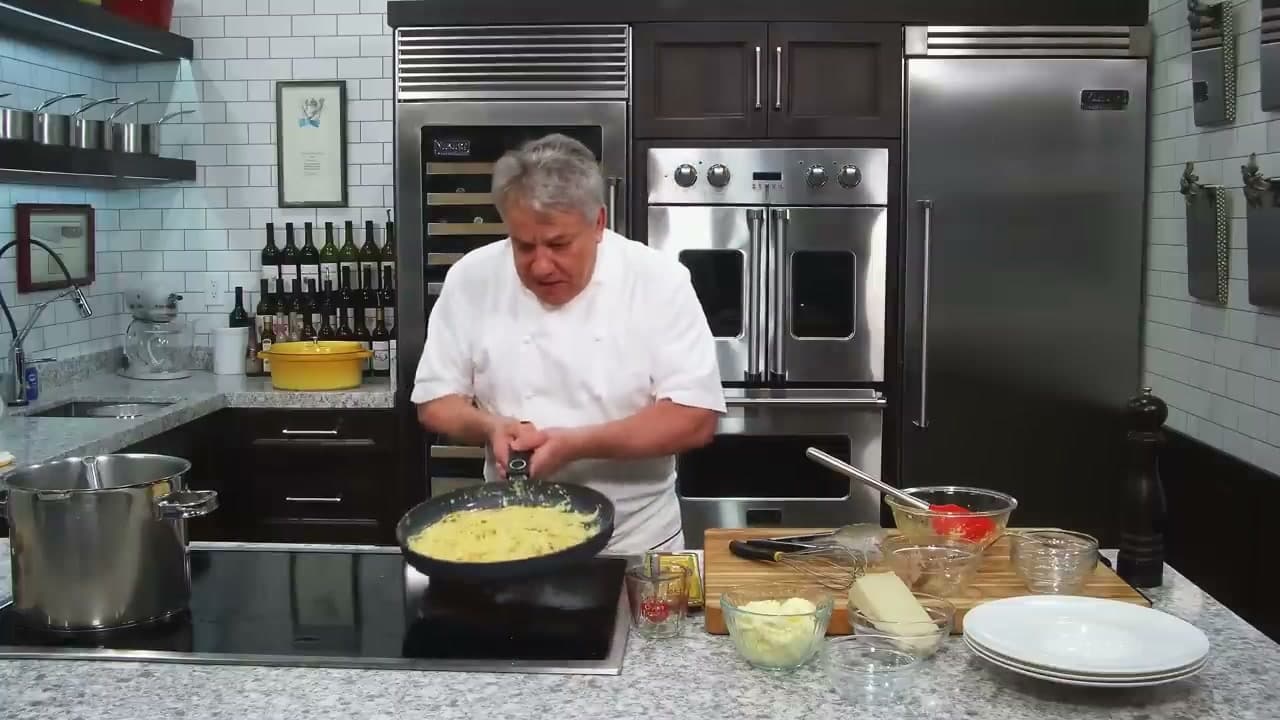
This is the crucial moment. With the heat very low (or completely off), pour the egg-cheese mixture over the hot pasta and start tossing immediately. Do not stop. The residual heat from the pasta and pan will gently cook the eggs into a silky, glossy sauce.

Move fast or you will end up with scrambled eggs sticking to the bottom of the pan. If the sauce looks too thick or pasty, splash in a little of the reserved pasta water to loosen it. Keep tossing until every strand is coated in a creamy, pale-yellow sauce. That glossy coating is the carbonara cream Chef Jean-Pierre is after - no dairy, just emulsified egg, cheese, fat, and starchy water.

Tip

Pull the pan off the heat the moment the sauce coats the pasta. Carbonara keeps cooking from the residual heat - if you leave it on the burner trying to thicken it more, you tip into scrambled-egg territory.

7

Step 7: Plate and Finish With Pecorino, Pepper, and Crispy Guanciale

9:55
Step 7: Step 7: Plate and Finish With Pecorino, Pepper, and Crispy Guanciale

Twist the pasta into a tall nest on a warmed plate or wide shallow bowl. Spoon any sauce left in the pan over the top so nothing goes to waste. Scatter a generous extra handful of freshly grated Pecorino Romano across the pasta and crack more black pepper over the cheese.

Place a few of the crispy guanciale pieces on top as a hero garnish. Drizzle a tiny bit of the reserved rendered pork fat over the top for the final shine if you saved any. Serve immediately while everything is still warm and silky - carbonara waits for no one. Cold carbonara goes from glossy to gluey in about three minutes.

Tip

Warm the plates before you plate. A cold ceramic plate pulls heat out of the pasta fast and the sauce stiffens up. Run hot water over the plates and dry them, or stack them on top of the oven for 30 seconds.

Products Used

❖ The Recipe

How to Make a Traditional Carbonara (No Cream, Just Eggs)

Italian
Serves
Serves 4
Prep
10 min
Cook
20 min
Total
30 min

Ingredients

9 items
  • 1 lbspaghetti or rigatonithicker spaghettoni is ideal
  • 6 ozguancialecut into matchsticks; pancetta or bacon as substitute
  • 4 largeegg yolks
  • 1 largewhole egg
  • 1 cup gratedPecorino Romano cheesefreshly grated, not pre-shredded
  • 1/4 cup gratedParmigiano Reggiano cheeseoptional, for a milder finish
  • 1 tbspblack peppercoarsely cracked, freshly ground
  • for pasta waterkosher saltgenerous - the water should taste like the sea
  • 1/2 cupreserved pasta waterscoop out before draining

Method

  1. 1
    Step 1: Get Your Big Pot of Salted Water Going. Fill your biggest pot with water and set it on high heat.
  2. 2
    Step 2: Cut and Render the Guanciale Slowly. Guanciale is cured pork jowl - fattier and far more flavorful than pancetta or bacon.
  3. 3
    Step 3: Whisk the Eggs, Cheese, and Pepper Off the Heat. Crack 4 egg yolks and 1 whole egg into a bowl.
  4. 4
    Step 4: Drain the Pasta and Save the Cooking Water. Spaghetti needs about 10 to 12 minutes depending on the brand.
  5. 5
    Step 5: Move the Pasta Straight Into the Guanciale Pan. Lower the heat under the guanciale pan to its lowest setting (or pull the pan off the burner entirely for a moment to cool it down).
  6. 6
    Step 6: Add the Egg-Cheese Cream and Toss Fast. This is the crucial moment.
  7. 7
    Step 7: Plate and Finish With Pecorino, Pepper, and Crispy Guanciale. Twist the pasta into a tall nest on a warmed plate or wide shallow bowl.

Your Guide

Chef Jean-Pierre

As an Amazon Associate we earn from qualifying purchases. Links on this page may be affiliate links - clicking them and buying doesn't change your price, but helps support ShowMeStepByStep.

Tags

What's next

Related collections

Curated theme pages that include this tutorial.

Weekly Digest

Liked this cooking tutorial?

Pick the categories you want to hear about. Weekly digest of new step-by-step tutorials. No spam, easy unsubscribe.

Send me tutorials about

We only email about new tutorials. Easy unsubscribe anytime.