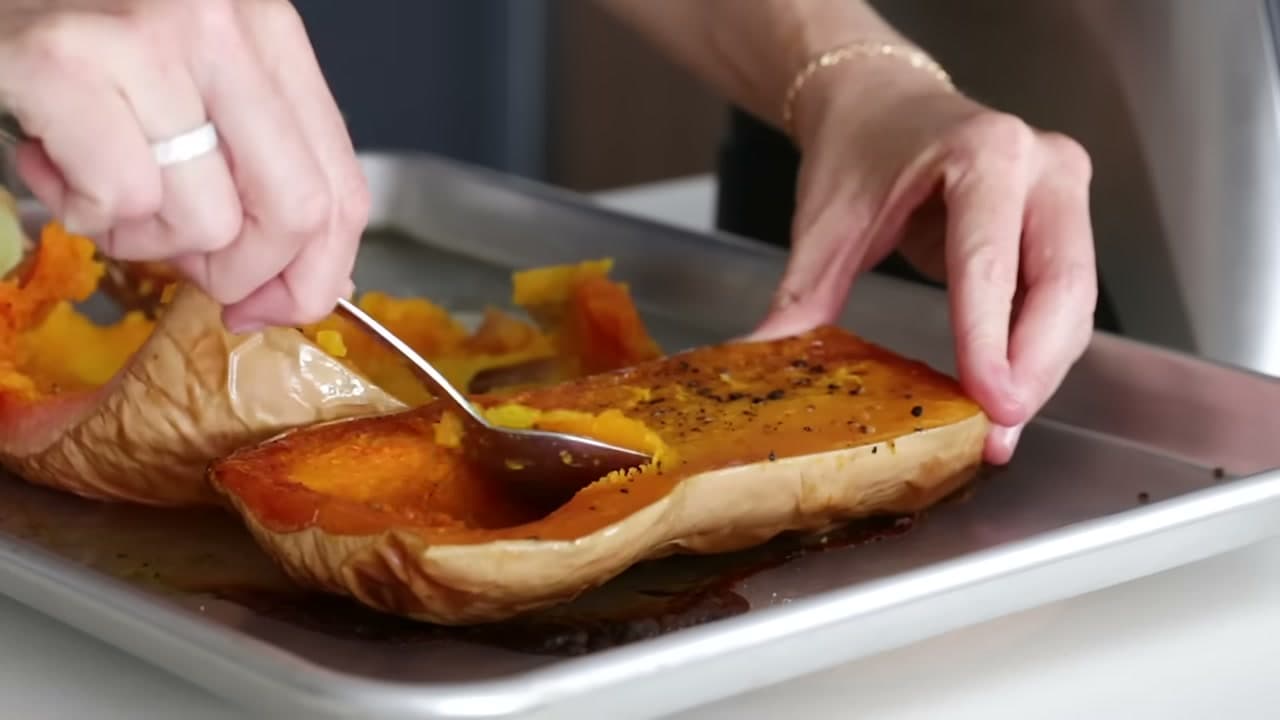
Butternut squash soup has a reputation for being fussy, and the squash itself is the reason. Peeling a raw one is slow going, and dicing it into cubes is how people cut themselves. Lisa Bryan of Downshiftology gets around all of it by roasting the squash in halves and scooping the cooked flesh out with a spoon.
That one change does more than save your knuckles. Roasting drives off water and caramelizes the natural sugar, so the soup tastes sweeter and rounder than a boiled version ever will, with no cream in it at all. The whole seasoning list is garlic, maple syrup, nutmeg, ground ginger, salt and pepper.
Roasting Beats Boiling, and It Is Not Close
Boiled squash gives you soup. Roasted squash gives you flavour. Cubes simmered in broth take on water and come out tasting flat, which is why boiled versions lean on cream and extra sugar to make up the gap.
An hour at 425F concentrates what is already in the squash. The cut face browns against the hot tray, the edges turn slightly sticky, and the flesh in the middle goes soft enough to fall off a spoon. Roasting the onion on the same tray gives you that effect twice over.
Cutting a Butternut Squash Without a Fight
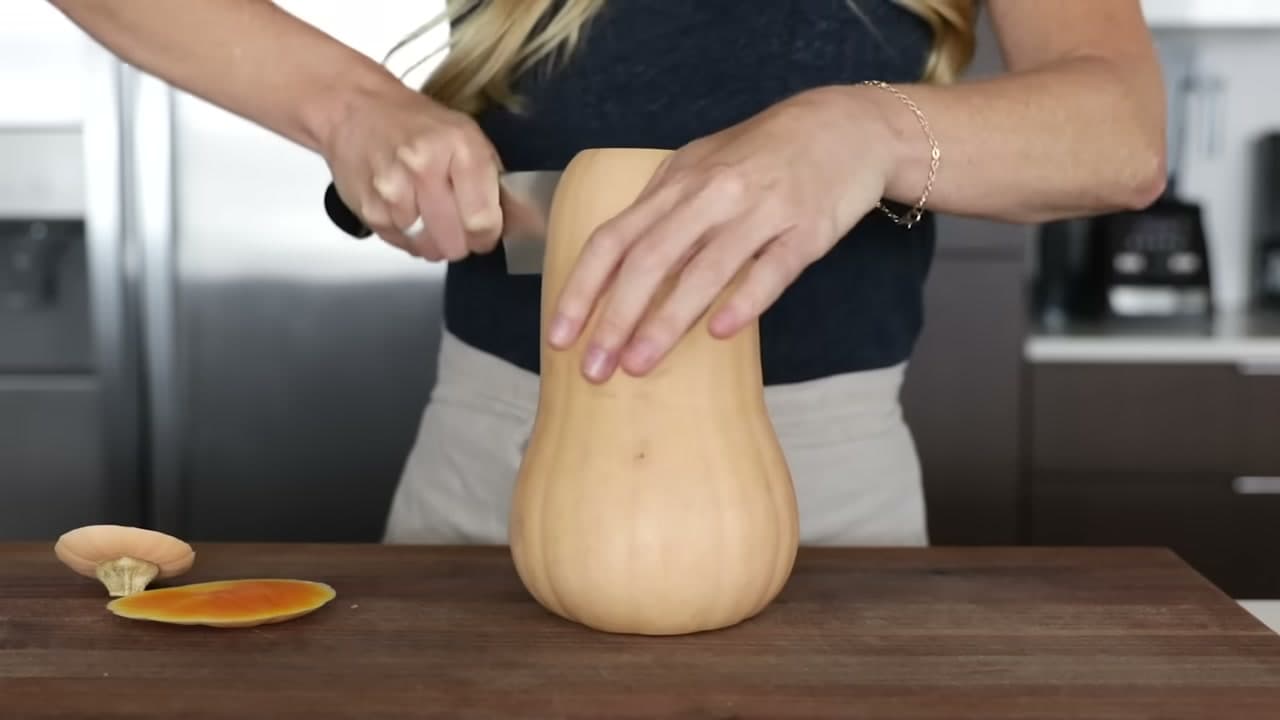
Winter squash is dense and round, so a dull blade skates across it. Trim both ends flat before anything else. That gives you a base and a top that sit still, and the squash stops rolling under your hand.
If it still feels like too much work, microwave the whole squash for three to four minutes and let it rest a minute. The skin softens enough for the knife to bite. A heavy chef knife and a slow rocking cut do the rest. Keep your free hand behind the blade, never in front of it.
What Gives It Body If There Is No Cream
The roasted flesh is the thickener. It blends to something close to a puree on its own, and the broth thins it back out to soup. Cream would mute the squash rather than add to it.
Two tablespoons of butter is optional, and it does soften the edges. Leave it out and the soup is vegan. For something closer to a bisque, stop at three cups of broth instead of four, or stir a splash of coconut milk in at the end.
Blend Hot Soup Carefully
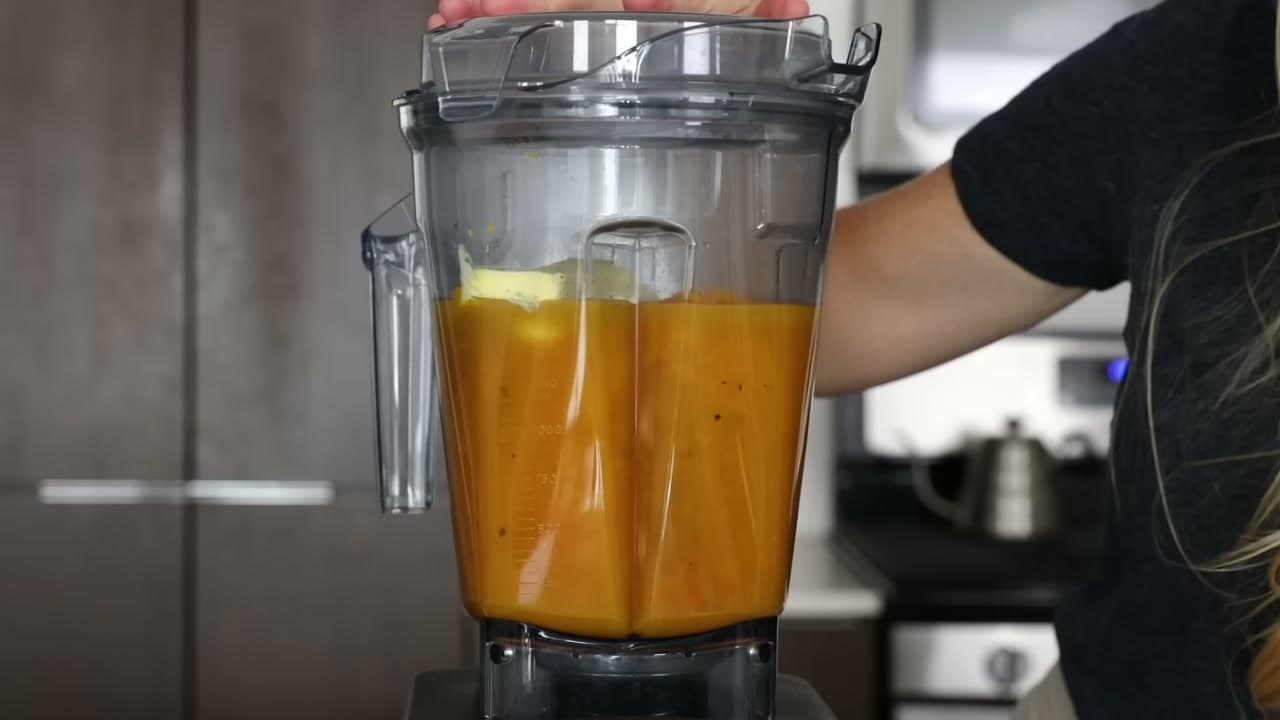
Hot liquid in a sealed jug builds steam pressure, and a full blender can push the lid off. Fill the jug no more than two thirds, open the vent in the lid, and hold a folded towel over the top before you press the button.
An immersion blender in a deep pot skips the transfer and the risk, though it leaves a slightly coarser texture. A jug blender run for a few minutes gets the soup silky and warms it through at the same time. The jug is smoother, the stick is safer.
Toppings, Storing and What to Serve With It
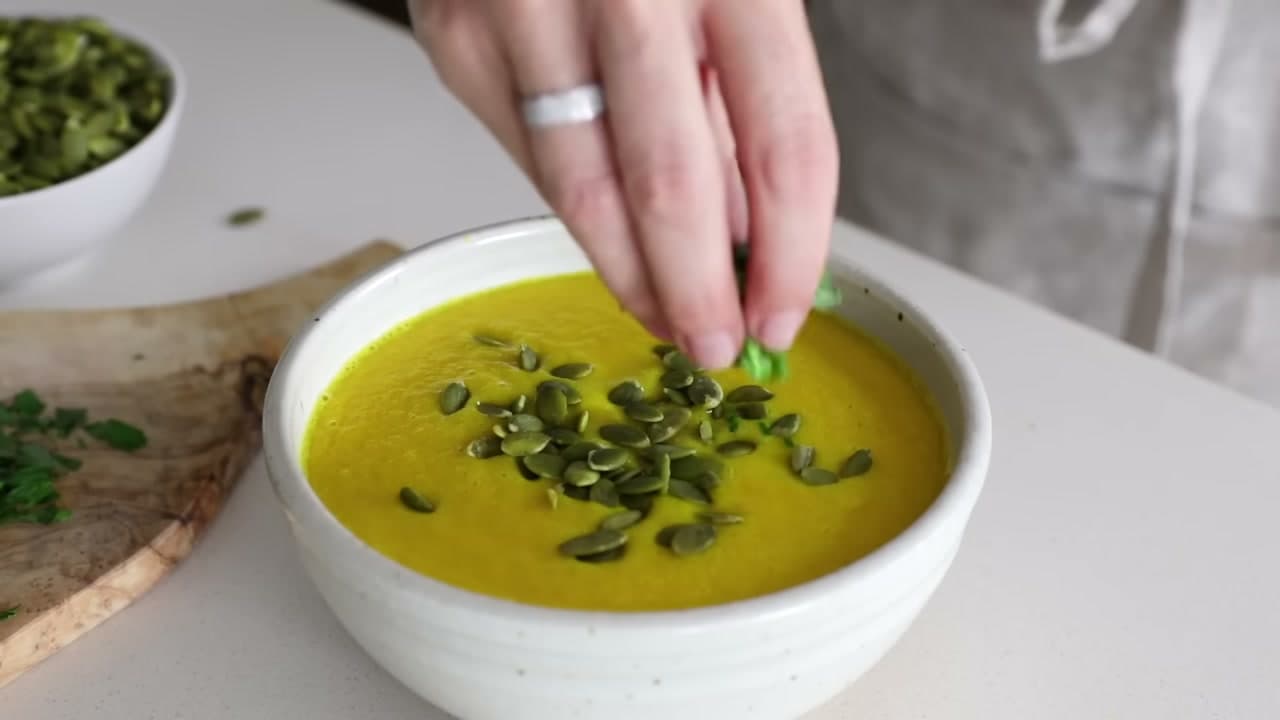
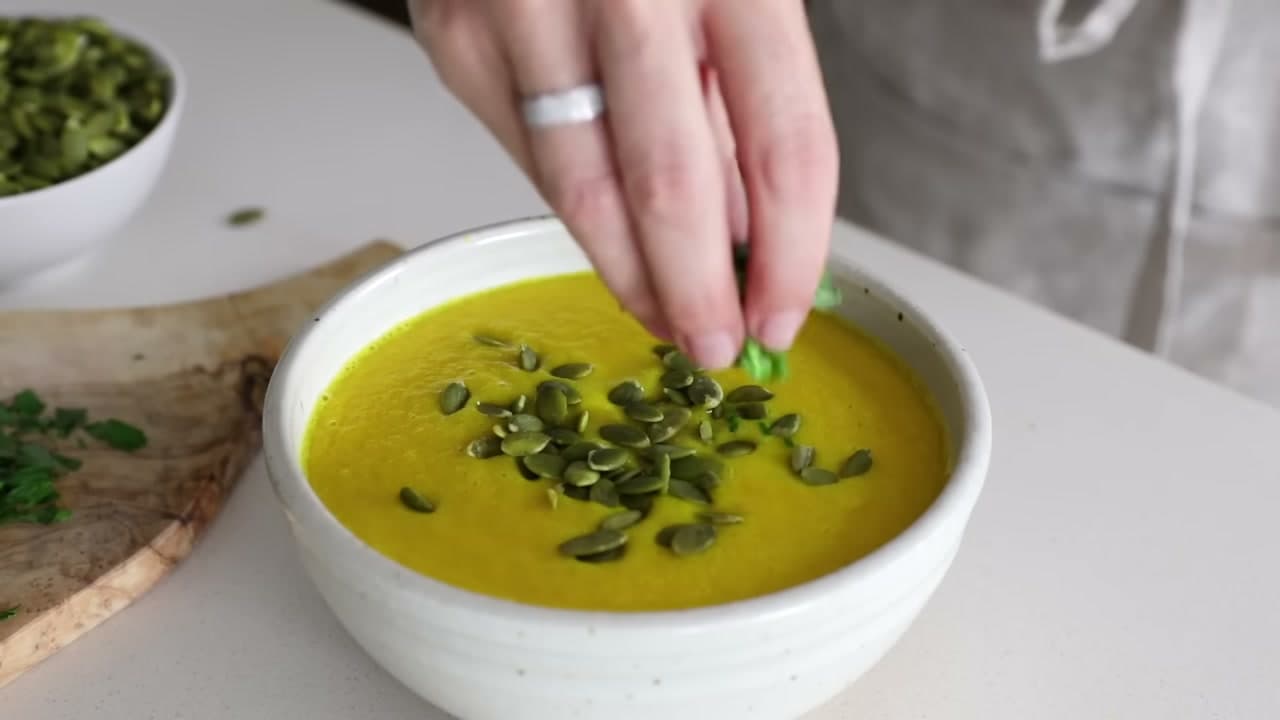
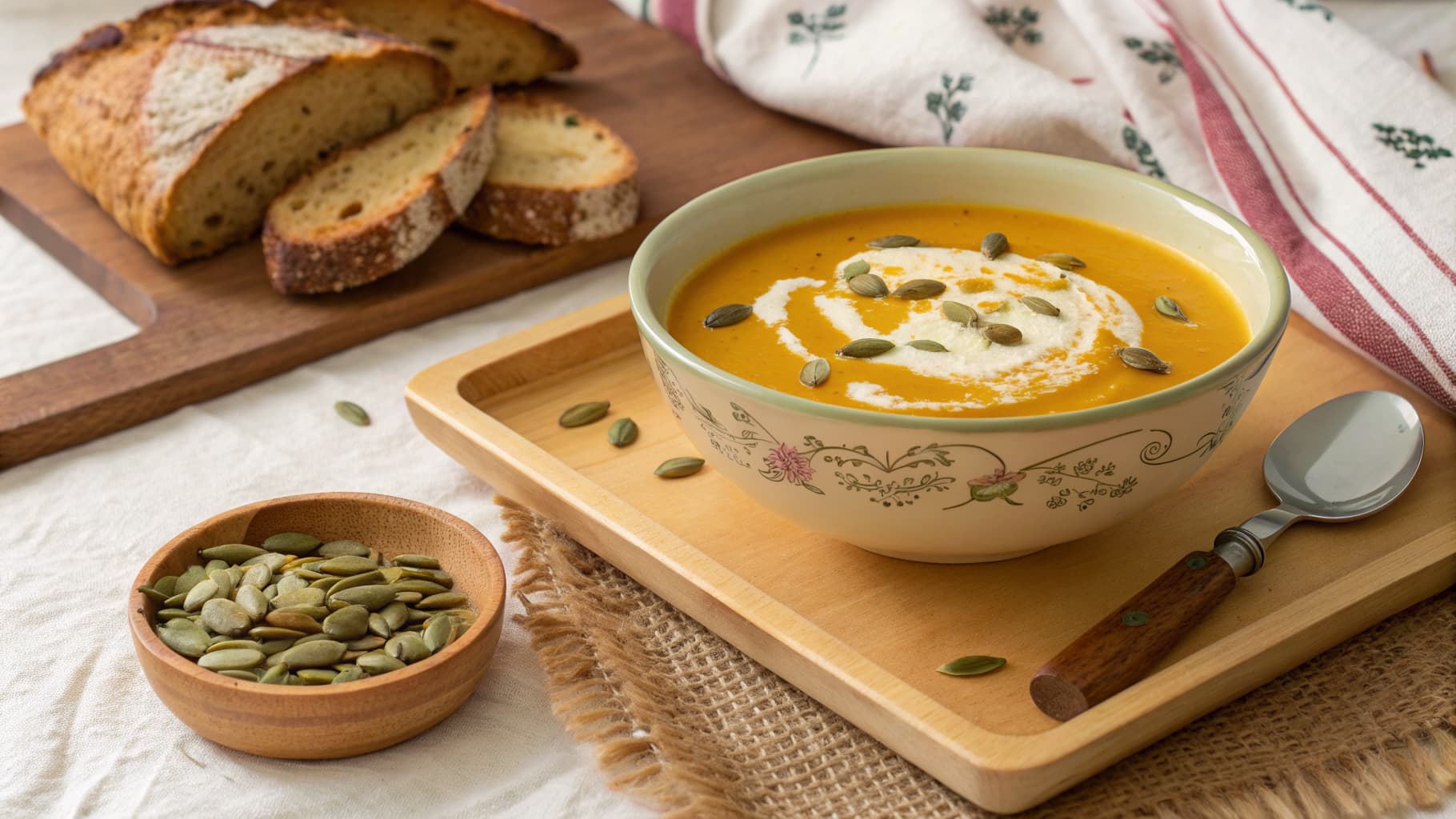
A smooth soup eats the same in every spoonful unless you put something on top. Pepitas are the easy answer, and the seeds you scooped out of the squash roast into exactly that - see how to roast pumpkin seeds. Other toppings that pull their weight:
- Sage leaves crisped in butter for thirty seconds
- Toasted pecans or walnuts, roughly chopped
- A swirl of plain yogurt or creme fraiche
- Chilli oil, or a few flakes of Aleppo pepper
The soup keeps five days in the fridge and three months in the freezer. Freeze it in portions, thaw overnight, and loosen it with broth rather than water so you are not watering down the flavour. Bread on the side makes it a meal, and dinner rolls are worth the extra hour. Want another pot next week? Try tomato soup, french onion soup or broccoli cheddar soup.