How to Make Homemade Bagels

The finished result: How to Make Homemade Bagels

By ShowMeStepByStepPublished Updated

Based on a video by Joshua Weissman Recipes .

A bagel is boiled bread. That one step is the difference between a bagel and a bread roll with a hole in it, and it is the step home recipes rush. Thirty seconds in hot water per side sets the skin before the oven can puff the dough. What comes out has a tight, glossy crust and a chew you have to work for.

The steps below follow Joshua Weissman's method for eight New York-style bagels, mixed by hand and cold-proofed overnight. What follows here is the part the steps skip: which flour to buy, what goes in the water, and the ways a batch goes sideways.

Bread Flour, and Why All-Purpose Goes Soft

Bagel dough runs stiff on purpose. Around 60 percent hydration, dry enough to feel wrong under your hands the first time. That stiffness needs protein behind it. Bread flour sits near 12 to 13 percent, all-purpose closer to 10, and high-gluten flour - what most bagel shops buy - runs about 14.

Use all-purpose and the dough still comes together. It just cannot hold that structure through a long cold proof and a boil, so the rings slump and you get a soft roll. The same flour logic drives pizza dough, so the bag pays for itself twice.

What Goes in the Boiling Water

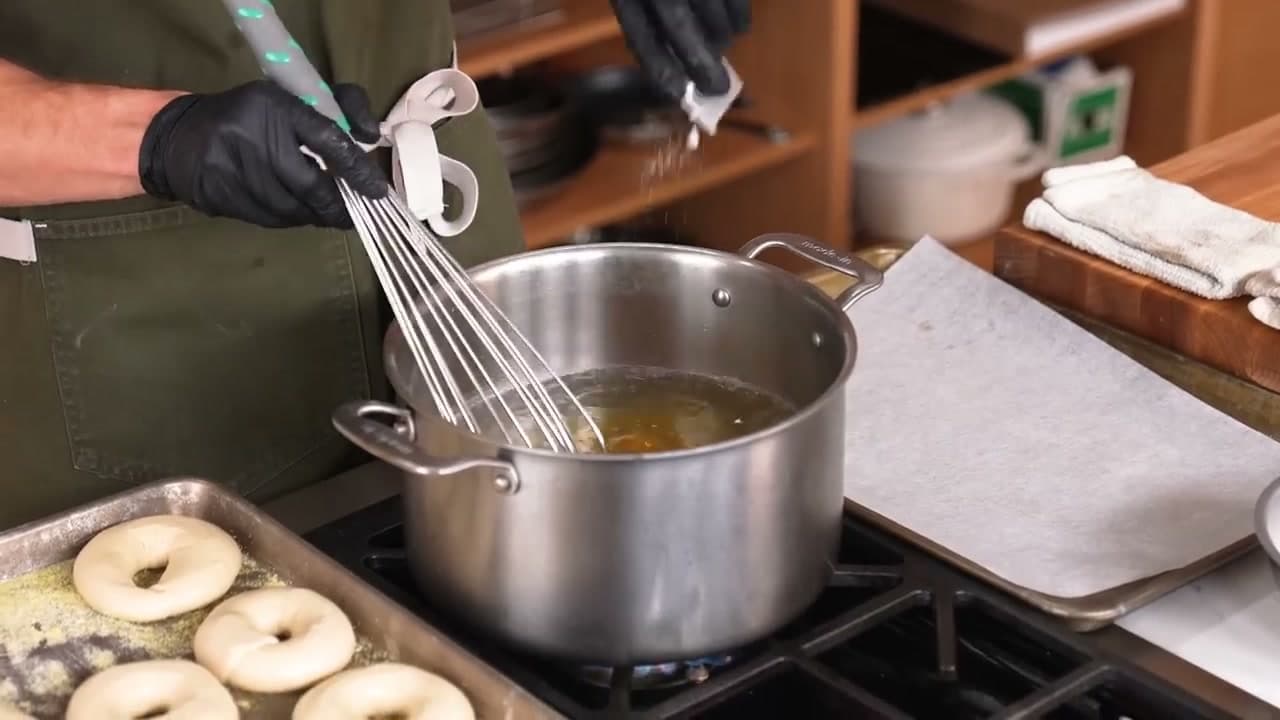
Plain water works. Water with something in it works better, because the boil sets flavor and color:

  • Barley malt syrup - the real bagel note, toasty and close to burnt sugar, and its sugars push the crust amber instead of pale. Honey is the stand-in if you cannot find it.
  • Baking soda - a tablespoon raises the pH, so it browns faster with a faint pretzel snap.
  • Food-grade lye - half a teaspoon for the glassy crackle on a deli bagel. Caustic in the pot, inert after baking. Gloves on, no bare skin.

Thirty seconds a side is the New York number. Run a full minute and you drift toward a Montreal bagel: denser, tighter crumb, more jaw work. Under fifteen seconds and the boil barely registers.

Shaping: Poke and Stretch, or Rope and Join

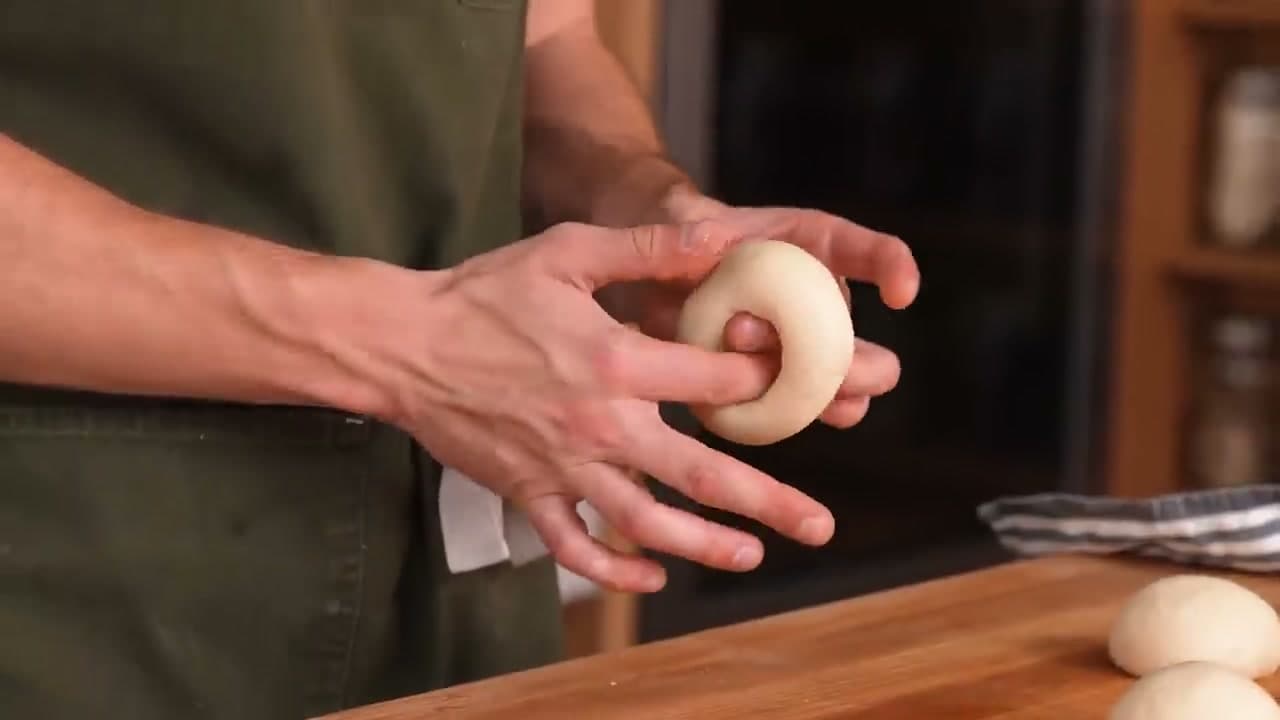
Poke-and-stretch means driving a thumb through a rounded ball and opening the hole with your fingers. It is fast, it keeps the tight gluten skin you built rounding the ball, and the ring holds through the boil.

Rope-and-join is the deli move: roll a snake, wrap it around your palm, seal the overlap against the counter. It looks the part, but a join that is not sealed hard comes apart in the water and you get a C instead of an O. Either way, open the hole wider than looks right. It closes twice - once in the fridge, again in the boil.

The Overnight Cold Proof, and Toppings That Stick

The fridge is not storage. Cold slows the yeast without shutting the enzymes off, so the dough keeps building flavor for twelve to eighteen hours while holding its shape. Skip the night and the bagels taste flat and bready no matter how well you boiled them. A sourdough loaf gets its character the same way, on a longer clock.

Seeds stick to wet dough and to nothing else. Dip the boiled top into the seasoning bowl within seconds of lifting it out, press lightly, move on. Once it dries, the seeds ride on top and end up in your toaster.

Why a Batch Wrinkles, Deflates, or Seals Shut

Shriveled, wrinkled tops mean the bagels over-proofed before they hit the water. The dough ran out of gas and the skin puckered. Shorten the room-temperature rest, not the fridge time. Flat, spread-out bagels are slack dough: too much water, too little flour, or all-purpose doing what all-purpose does. Holes that seal shut are an under-opened ring, a shaping fix, not a proofing one.

Eat them the day they bake. After that, slice, bag, and freeze - toasted from frozen beats a two-day-old one off the counter. Pile the good ones with cream cheese, smoked salmon, and pickled red onions. If the overnight rhythm suits you, focaccia runs the same schedule for less work.

What you'll need

Step-by-Step Guide

8 steps · about 12 minutes.Check off each step as you go and your progress saves automatically.

1

Mix the Bagel Dough by Hand with Bread Flour and Barley Malt

1:00
Step 1: Mix the Bagel Dough by Hand with Bread Flour and Barley Malt - How to Make Homemade Bagels

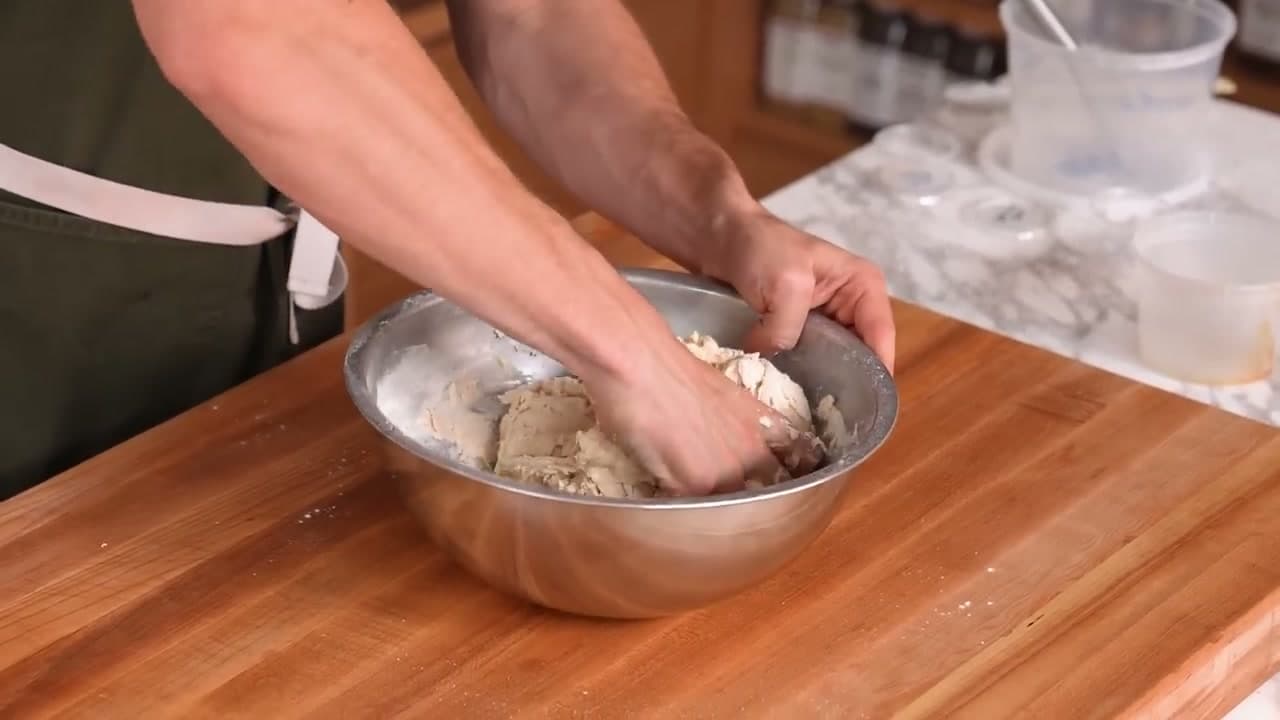
Whisk 360 g of warm water (85-90F) with 3 g of instant yeast until the yeast dissolves completely. Add 2.5 tsp of barley malt syrup and whisk again. The malt is what gives a real bagel its toasty, almost burnt-sugar bottom note - if you can't find it, swap in honey for now and order malt syrup before the next batch.

In a big bowl, whisk 600 g of bread flour with 16 g of kosher salt. Pour the liquid in all at once. The malt loves to lag behind in the bottom of the cup - scrape every bit of it into the bowl. Mix by hand, knuckles down, until it pulls together into a stiff cohesive ball with no dry flour pockets. A stand mixer is easier but absolutely not required.

Tip

Bread flour matters here. All-purpose has less protein and won't hold all the water - the dough will be slack and the bagels will bake up bready instead of chewy.

2

Knead the Stiff Bagel Dough Until It Passes the Window Pane Test

2:55
Step 2: Knead the Stiff Bagel Dough Until It Passes the Window Pane Test - How to Make Homemade Bagels

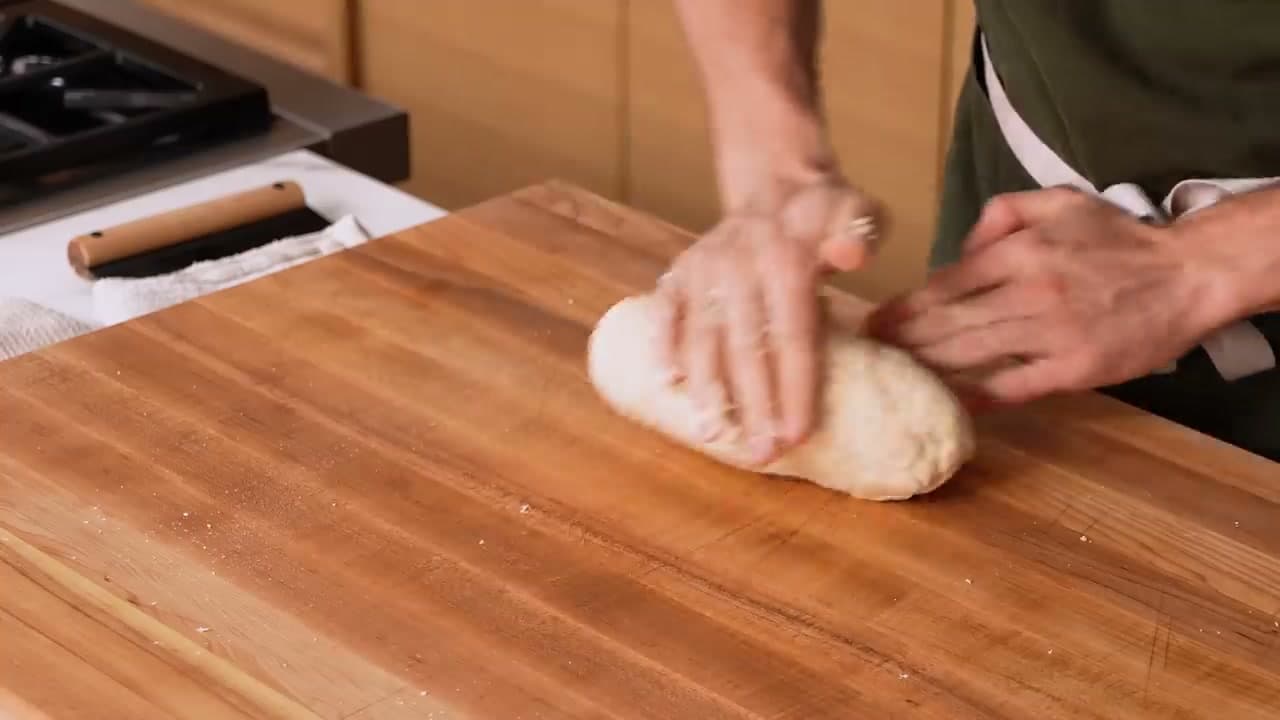
Turn the dough onto a clean work surface and knead for 3 to 5 minutes. This is a stiff dough - it fights back a little. Use the heel of your hand, lean into it, fold and turn.

You're looking for a smooth, tensile, slightly tacky ball that holds its shape. Test it with the window pane: pinch off a small piece and stretch it between your fingers. If it goes thin enough to see light through without tearing, the gluten is developed and you're done. If it tears, knead another minute and try again.

Tip

Do not flour the board heavily. Extra flour throws the hydration off and gives you a tougher final bagel. A tiny dusting if the dough sticks is fine.

3

Round the Dough into a Ball and Rest It at Room Temperature

3:18
Step 3: Round the Dough into a Ball and Rest It at Room Temperature - How to Make Homemade Bagels

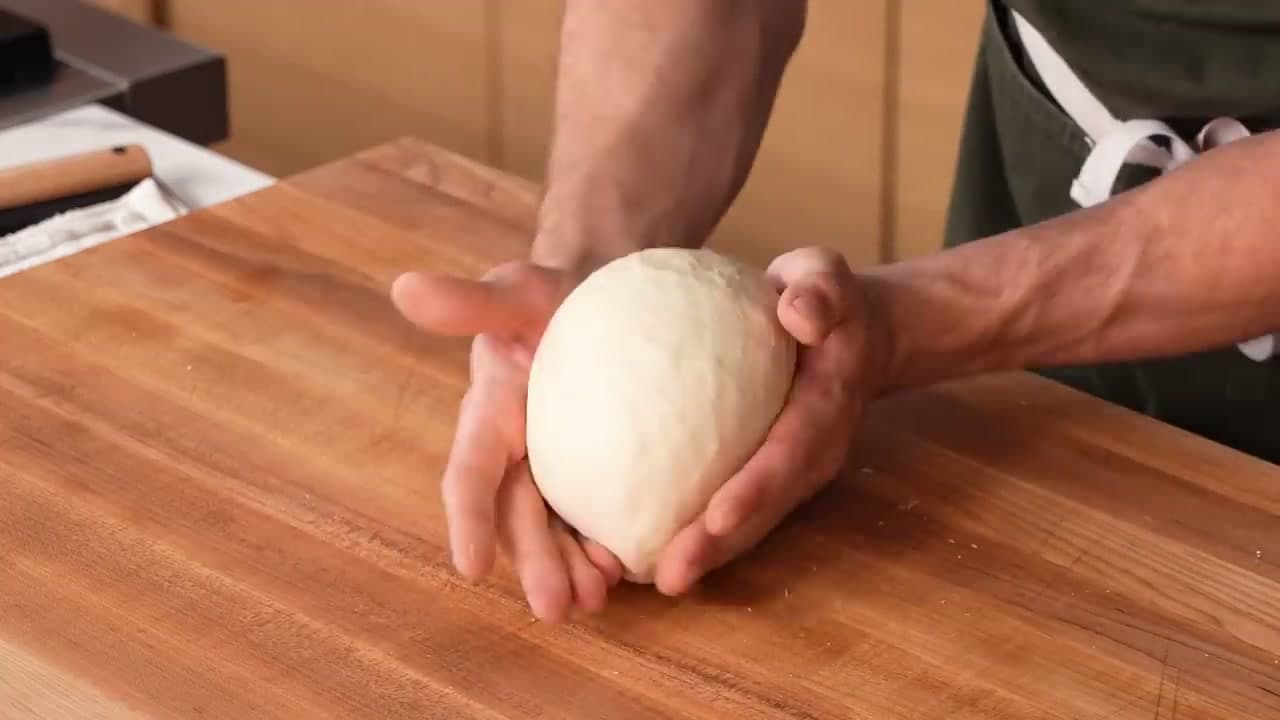
Form the kneaded dough into a light, tight ball. Drop it into a lightly oiled bowl and flatten the top slightly with your palm. Cover the bowl tightly with plastic wrap.

Rest the dough at room temperature for 30 to 45 minutes. You are not trying to double its size - that's a bread proof, not a bagel proof. You just want a little fermentation to wake the dough up so it shapes cleanly and develops flavor overnight in the fridge.

Tip

If your kitchen runs cold, lean the bowl close to a warm stovetop or the top of the fridge. Anywhere around 70-75F is the sweet spot.

Used in this stepplastic wrapcooking spray
4

Mix the Everything Bagel Seasoning with Sesame and Poppy Seeds

3:50
Step 4: Mix the Everything Bagel Seasoning with Sesame and Poppy Seeds - How to Make Homemade Bagels

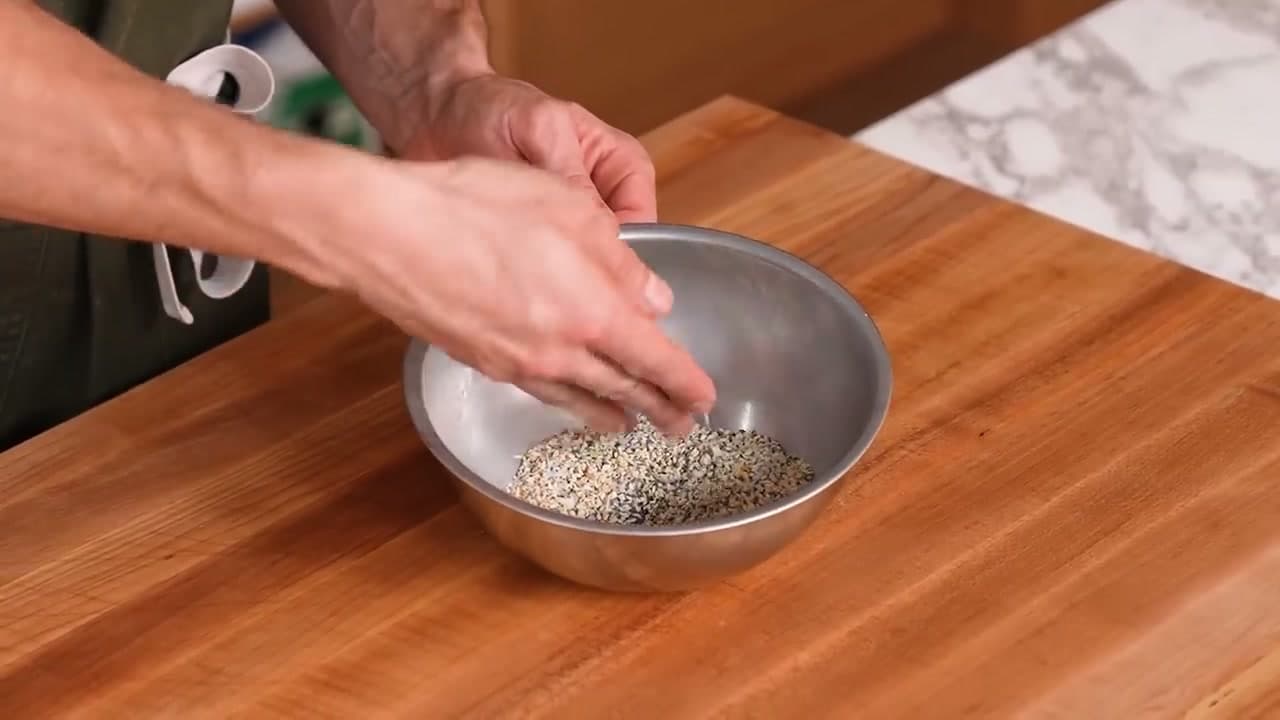
While the dough rests, build the topping. Combine 3 tbsp sesame seeds, 2 tbsp poppy seeds, 1 tbsp dried onion flakes, 0.5 tbsp dried garlic flakes, and 1 tbsp flaky sea salt in a small bowl.

Stir with a fork or use your hands to toss the seeds together. That's it - that's the entire formula. Store any leftovers in a small jar for avocado toast, roasted vegetables, or scrambled eggs. If everything isn't your thing, sub in plain sesame, poppy, or skip toppings entirely.

Tip

Flaky sea salt is the move - regular table salt makes the topping taste sharp and one-note. Maldon or any kosher flake brand works.

5

Shape Eight Bagel Rings by Poking and Stretching the Hole

6:10
Step 5: Shape Eight Bagel Rings by Poking and Stretching the Hole - How to Make Homemade Bagels

Turn the rested dough out and shape it into a rough rectangle. Cut into eight even pieces, each weighing about 128 g. A kitchen scale earns its counter space here - bagels that bake evenly start with pieces that match.

Roll each piece into a tight ball, line them up on the work surface, cover with a damp towel, and rest 10 minutes. Now the Josh method: cup a ball in one hand, plant your thumb and index finger in the center, and push all the way through to make a hole. Work your fingers around to widen the ring and even out the thickness. Park each finished bagel on a cornmeal-dusted sheet pan.

Tip

Make the hole bigger than you think it needs to be. The dough springs back during the fridge proof and the boil - a small hole closes up entirely.

6

Cold Proof Overnight, Then Whisk Barley Malt into the Boiling Water

7:25
Step 6: Cold Proof Overnight, Then Whisk Barley Malt into the Boiling Water - How to Make Homemade Bagels

Wrap the tray tightly so the bagels don't dry out. Let them sit at room temp 5 to 10 minutes for one more burst of fermentation, then move them to the fridge for an overnight cold proof. This slow night in the cold is where the chew and the flavor really come from.

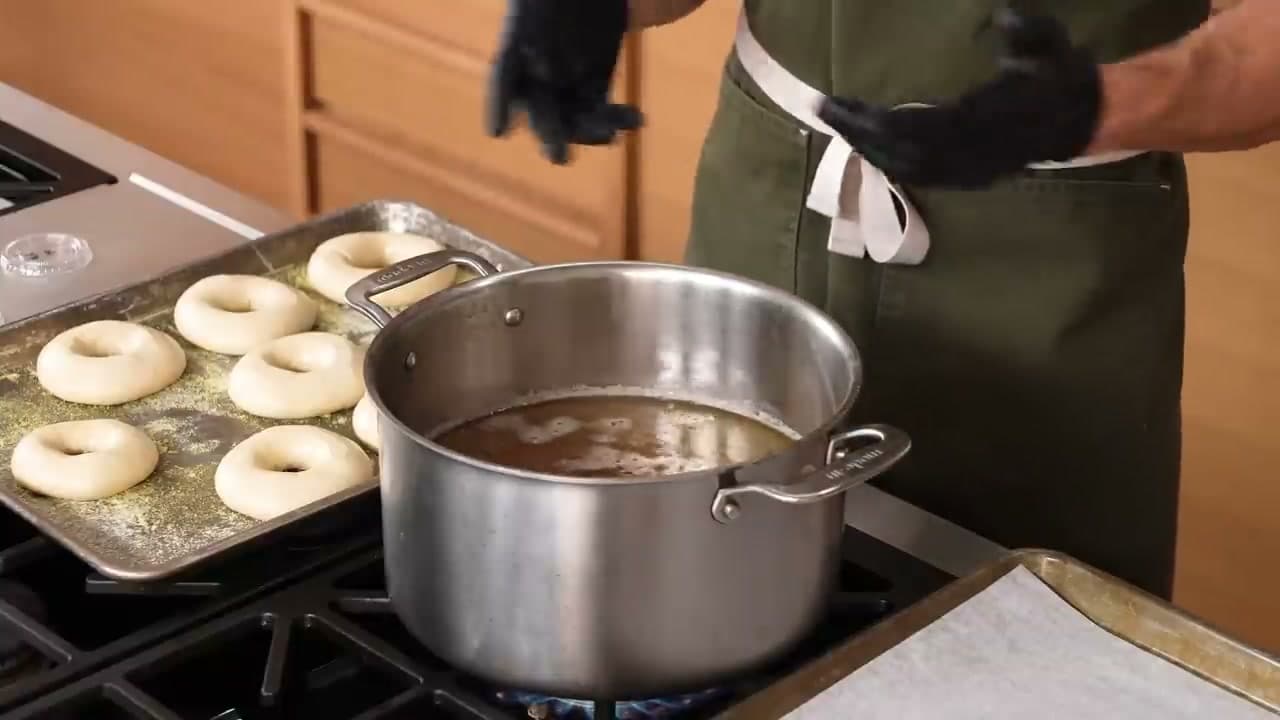
The next morning, bring 3 quarts of water to a boil in a wide pot. Whisk in a pinch of kosher salt, 1.5 tbsp barley malt syrup, and (if you have it) 0.5 tsp food-grade lye. The malt builds flavor and color, the lye builds a glassy crackle on the outside. Lye is safe once the bagels are baked but is caustic in the pot - wear nitrile gloves and never let bare skin touch the water.

Tip

No lye on hand? Substitute 1 tbsp of baking soda. The crust won't be quite as crackly but it's a fine swap for a first batch.

7

Boil the Bagels 30 Seconds a Side, Then Dip in Everything Seasoning

8:30
Step 7: Boil the Bagels 30 Seconds a Side, Then Dip in Everything Seasoning - How to Make Homemade Bagels

Drop bagels into the boiling water top-side down, two or three at a time depending on pot size. Boil for 30 seconds, flip with a spider, and boil 30 more seconds on the other side. Lift each one out, drain well over the pot, and set on a parchment-lined sheet pan, four to a sheet.

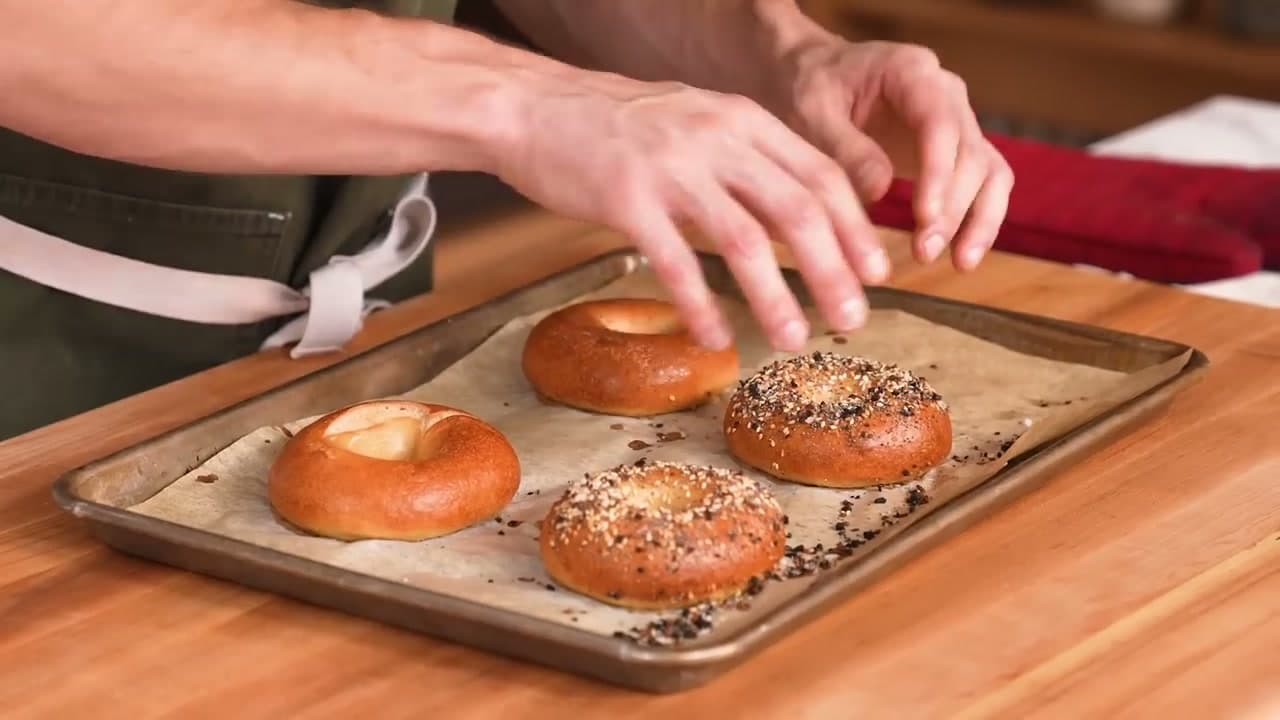
The window for topping is right now while they're still wet. Dip the boiled top straight into your everything seasoning bowl and press lightly so the seeds stick. Leave the rest plain if you want the simple ones. Once they dry, nothing will hold the topping on.

Tip

Boil longer for more chew, shorter for more rise. 30 seconds a side is the sweet spot for a New York-style chew. A full minute per side gives you a denser, almost Montreal-style bagel.

8

Bake at 450F on a Parchment-Lined Baking Sheet, Then Cool and Slice

9:15
Step 8: Bake at 450F on a Parchment-Lined Baking Sheet, Then Cool and Slice - How to Make Homemade Bagels

Bake at 450F for 15 to 18 minutes. The tops go from pale tan to deep amber and the everything seeds toast and smell incredible around the 12-minute mark. Pull them when the bottoms are firm and the tops have that classic crackly sheen.

Cool on the pan a few minutes, then move to a wire rack so the bottoms don't go soft. Slice once they're cool enough to handle - hot bagels gum up under the knife. Eat plain, with butter, or build the full board: cream cheese, thinly sliced tomato with flaky salt, cured salmon, paper-thin red onion, capers, and a few sprigs of dill.

Tip

Freeze cooled bagels whole in a zip bag for up to two months. Slice frozen and toast straight from the freezer - they taste fresh-baked.

Keep going

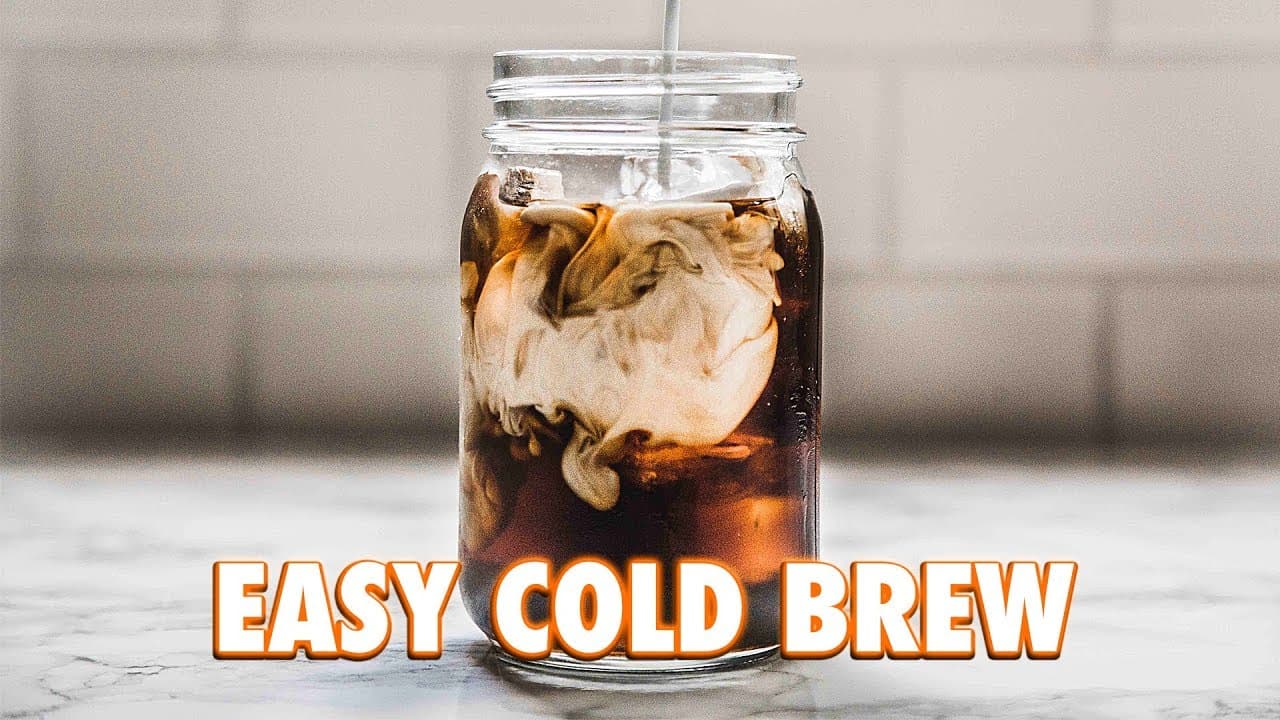
How to Make Cold Brew Coffee

Products Used

The Recipe

How to Make Homemade Bagels

American
Serves
Makes 8 bagels
Prep
30 min
Cook
25 min
Total
55 min

Ingredients

12 items
  • 360 g (1.5 cups)warm water85-90F, body temperature
  • 3 g (1 tsp)instant yeast
  • 2.5 tsp (18 g) for dough, 1.5 tbsp for boilbarley malt syrupor substitute honey if you can't find malt
  • 600 g (4 cups)bread flourhigh-protein bread flour - all-purpose is too weak
  • 16 g (1 tbsp) for dough, plus a pinch for boilkosher salt
  • for dusting the trayfine cornmeal
  • 0.5 tsp (optional)food-grade lyefor the classic crackly crust - wear gloves; baking soda is a safer swap
  • 3 tbspsesame seedsfor everything seasoning
  • 2 tbsppoppy seedsfor everything seasoning
  • 1 tbspdried onion flakesfor everything seasoning
  • 0.5 tbspdried garlic flakesfor everything seasoning
  • 1 tbspflaky sea saltfor everything seasoning

Nutrition

estimated · per servingEstimated from the ingredient list, not measured. Actual values vary by brand, preparation, and serving size. Not a substitute for measured nutrition data.
Calories
320kcal
Protein
10g
Fat
5g
Carbs
62g
Fiber
3g
Sugar
2g
Sodium
800mg

Method

  1. 1
    Step 1: Mix the Bagel Dough by Hand with Bread Flour and Barley Malt. Whisk 360 g of warm water (85-90F) with 3 g of instant yeast until the yeast dissolves completely.
  2. 2
    Step 2: Knead the Stiff Bagel Dough Until It Passes the Window Pane Test. Turn the dough onto a clean work surface and knead for 3 to 5 minutes.
  3. 3
    Step 3: Round the Dough into a Ball and Rest It at Room Temperature. Form the kneaded dough into a light, tight ball.
  4. 4
    Step 4: Mix the Everything Bagel Seasoning with Sesame and Poppy Seeds. While the dough rests, build the topping.
  5. 5
    Step 5: Shape Eight Bagel Rings by Poking and Stretching the Hole. Turn the rested dough out and shape it into a rough rectangle.
  6. 6
    Step 6: Cold Proof Overnight, Then Whisk Barley Malt into the Boiling Water. Wrap the tray tightly so the bagels don't dry out.
  7. 7
    Step 7: Boil the Bagels 30 Seconds a Side, Then Dip in Everything Seasoning. Drop bagels into the boiling water top-side down, two or three at a time depending on pot size.
  8. 8
    Step 8: Bake at 450F on a Parchment-Lined Baking Sheet, Then Cool and Slice. Bake at 450F for 15 to 18 minutes.

The Checklist

How to Make Homemade Bagels

Tools
29
Materials
7
Steps
8
Video
12 min

Your Guide

Joshua Weissman Recipes

As an Amazon Associate we earn from qualifying purchases. Links on this page may be affiliate links - clicking them and buying doesn't change your price, but helps support ShowMeStepByStep.

Tags

Sunday How-To

New cooking tutorials, every Sunday

One short email with the week's best step-by-step guides. Free, no spam, unsubscribe anytime.

Test your knowledge

Did the lesson stick? Start with this one.

5 questions covering what you just read. No signup, no score saved, and you can stop after this one.

Question 1 of 5

Why does the recipe insist on bread flour over all-purpose?

Quick reference

Key takeaways from How to Make Homemade Bagels

5 questions, answers, and one-line explanations. Tap to expand.

  1. 1.Why does the recipe insist on bread flour over all-purpose?

    Answer: More protein keeps the dough stiff

    Bread flour's higher protein holds all the water in this stiff hydration. All-purpose leaves you with slack dough that bakes up bready instead of chewy.

  2. 2.What's the cold-proof step?

    Answer: Overnight in the fridge

    The overnight cold proof is where the chew and the flavor develop. Slow ferment is what separates a real bagel from a bread roll.

  3. 3.How long do bagels boil per side?

    Answer: 30 seconds per side

    30 seconds a side is the New York chew sweet spot. Longer gives more chew, shorter gives more rise.

  4. 4.What does barley malt syrup actually do in the dough?

    Answer: Adds toasty bottom-note flavor

    Malt gives a real bagel its toasty, almost burnt-sugar bottom note. Honey substitutes in a pinch but malt is the genuine flavor.

  5. 5.Bake at what temperature and for how long?

    Answer: 450F for 15 to 18 minutes

    450F for 15 to 18 minutes gets that classic crackly sheen on top and bottoms firm enough to pick up clean.

Did this work for you?

What's next

Related collections

Curated theme pages that include this tutorial.

Weekly Digest

Liked this cooking tutorial?

Pick the categories you want to hear about. Weekly digest of new step-by-step tutorials. No spam, easy unsubscribe.

Send me tutorials about

We only email about new tutorials. Easy unsubscribe anytime.