Tomato sauce is the stain people give up on. It is not one stain but three at once: lycopene pigment that dyes whatever it lands on, acid that helps it set faster, and oil and tannins riding along from the rest of the sauce.
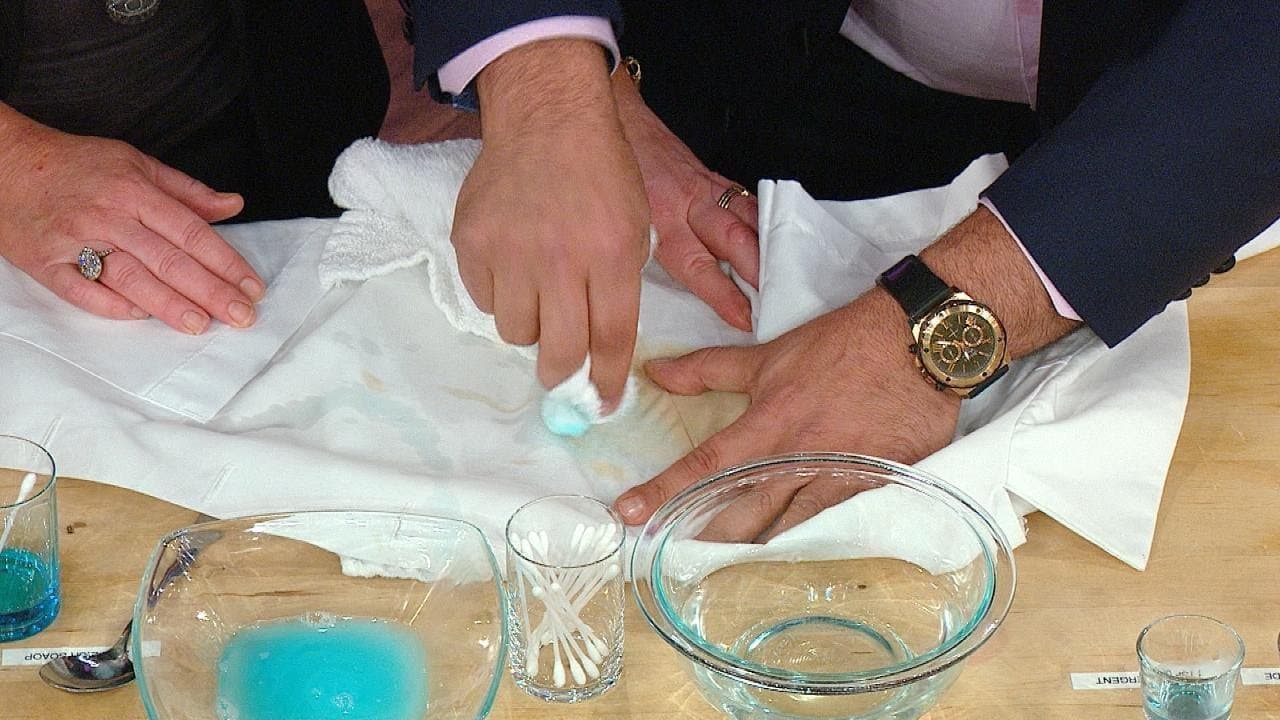
Preston Schlueter and the team at Gentleman's Gazette walk through the sequence that actually works, from the thirty seconds right after it happens to the last resort on a white shirt. Most of it you can do with what is already under your sink.
Why Tomato Stains Are So Stubborn
The red comes from lycopene, a carotenoid pigment that stains anything it touches. The natural acidity of tomatoes makes that pigment set faster than it otherwise would. Then whatever else is in the sauce, the olive oil, the tannins, the protein from a bolognese, adds a second and third stain type on top.
That is why a single approach often fails. You are treating a hybrid.
What Counts as a Tomato Stain
Everything here applies to any sauce or condiment with tomato in it. Marinara, bolognese and puttanesca. Salsa. Ketchup and barbecue sauce. Tomato-based curries. If it is red and it came off a plate, this is the method.
The One Rule That Matters Most
Keep heat away from the stain until it is completely gone. Cool water only, and no dryer. Heat is what turns a treatable stain into a permanent one, and it is the mistake that undoes all the careful work in the steps below.
Once you have this down, the same logic carries over to grass stains and oil stains, which share some of the same chemistry.