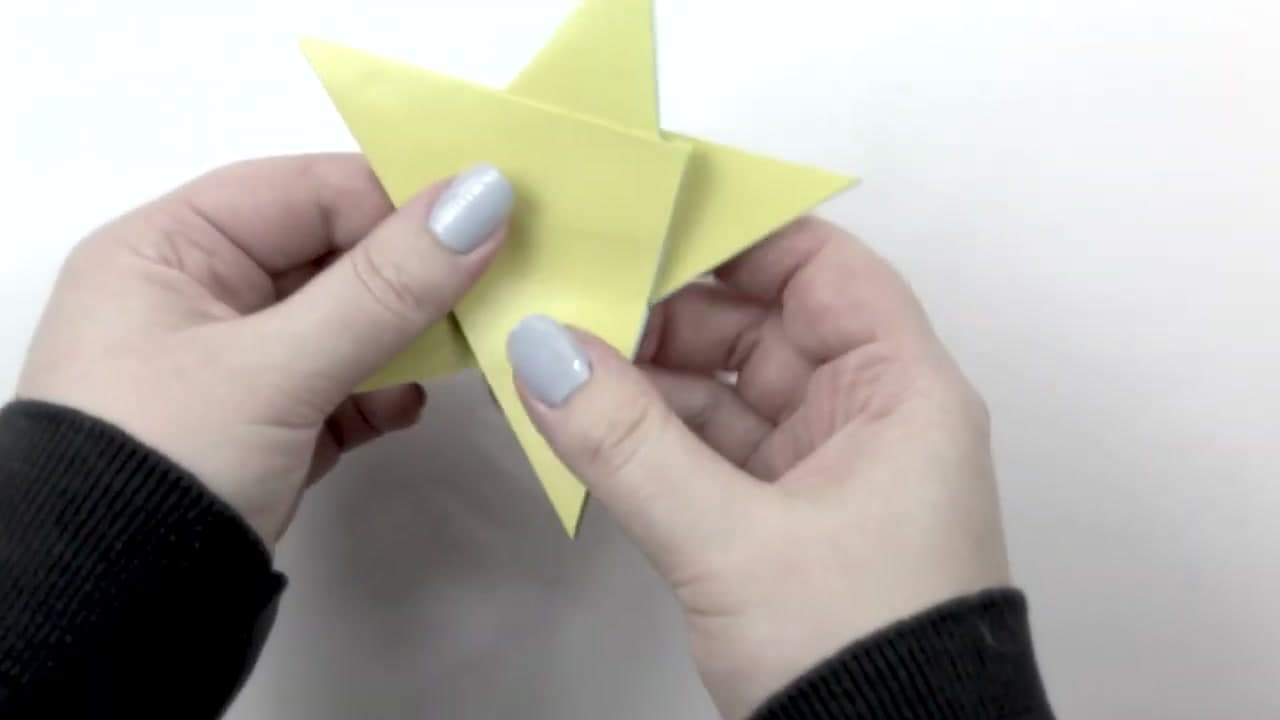
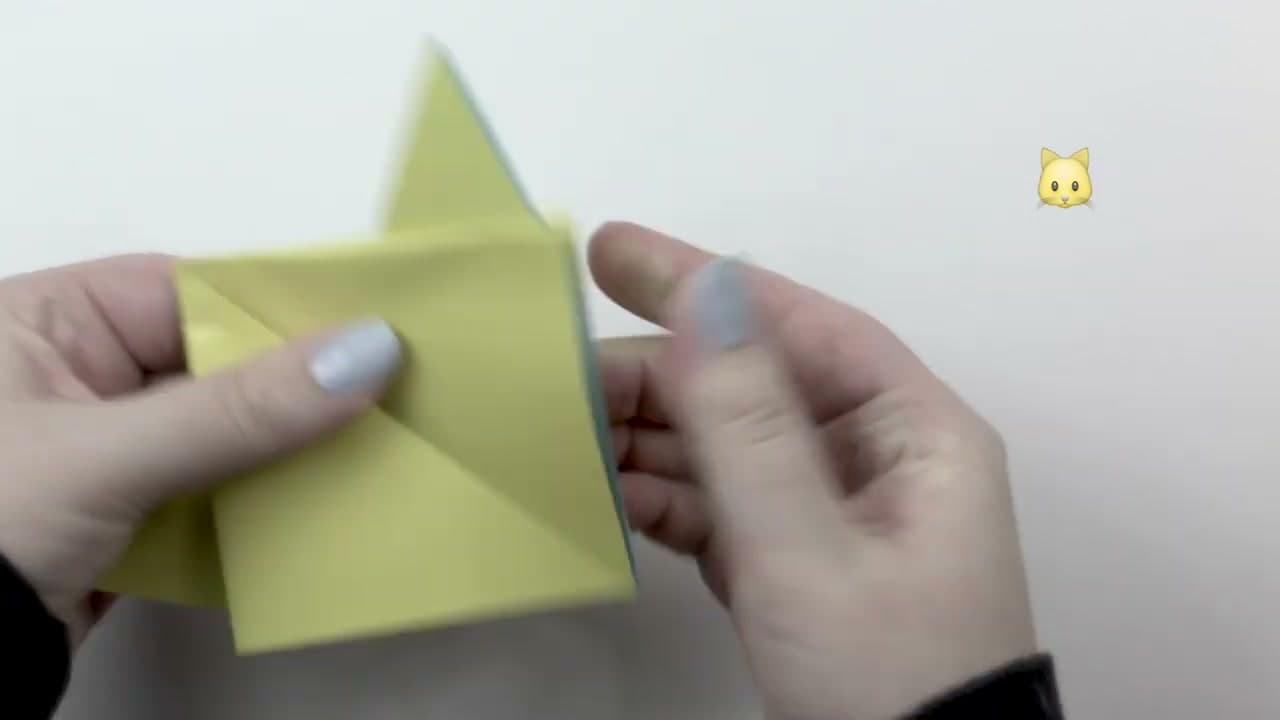
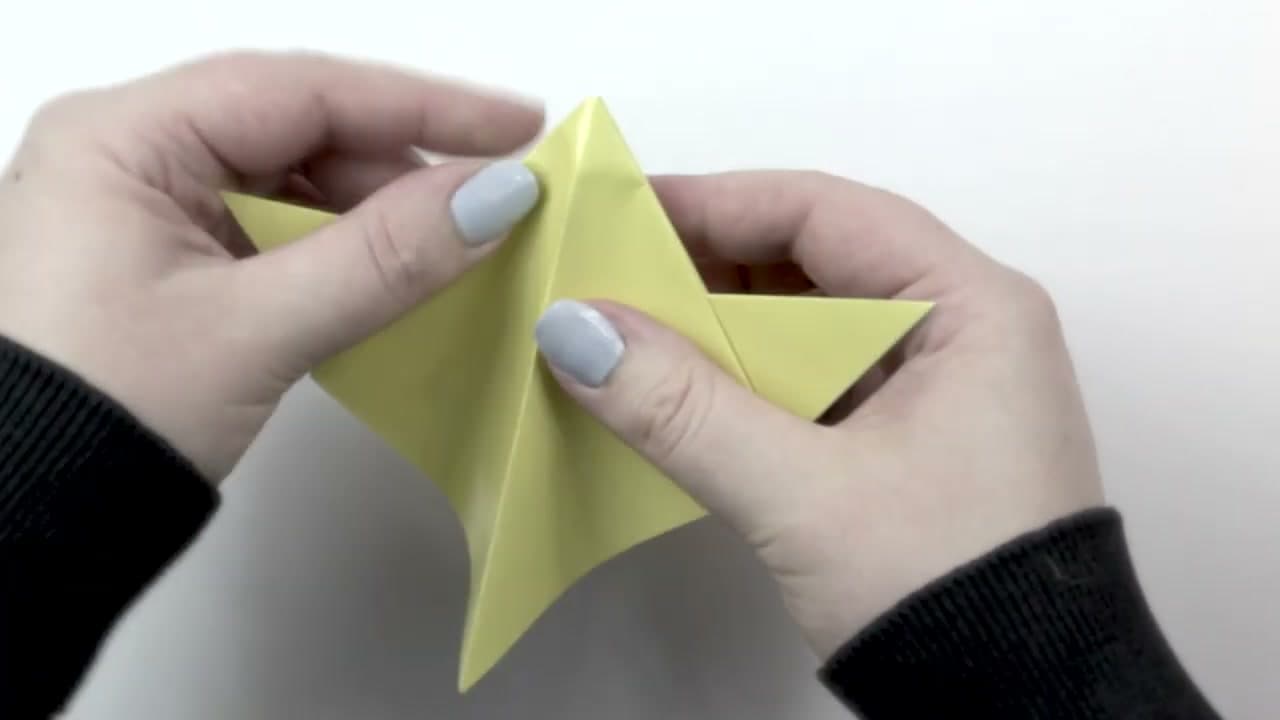
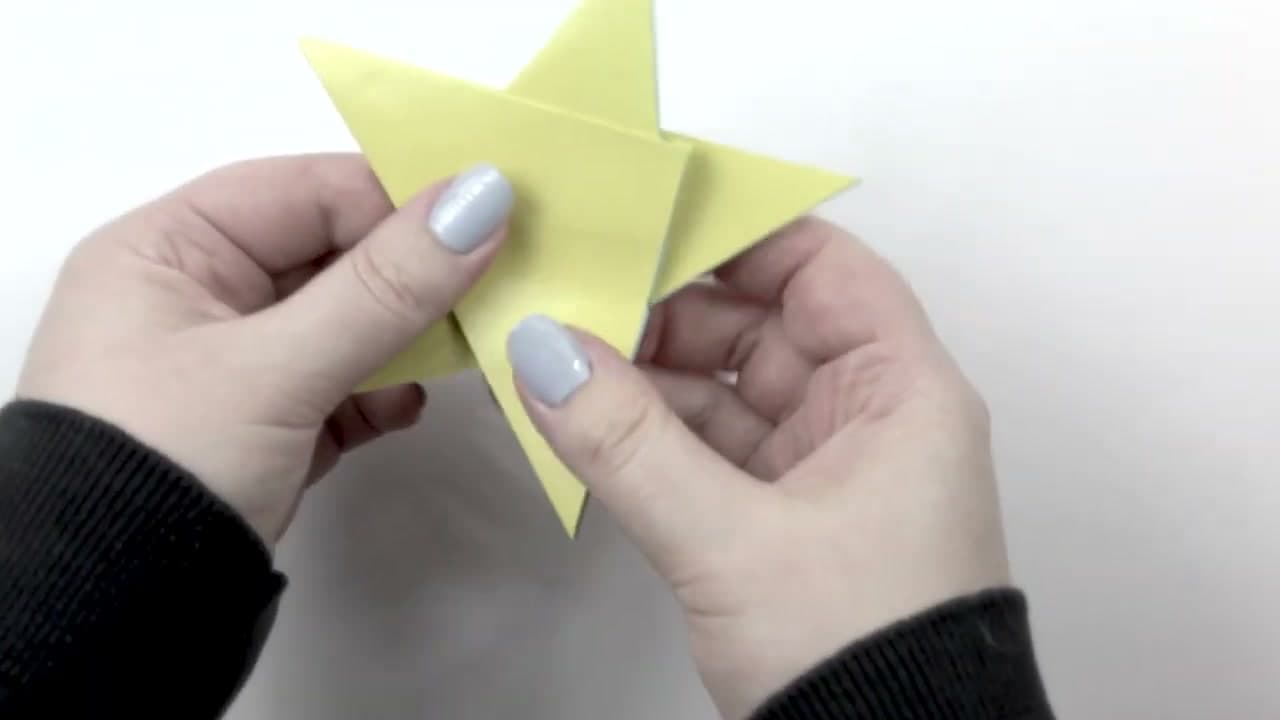
This paper star comes together from a single square sheet using one of the classic origami starting shapes, the waterbomb base. Once that base is folded, the five points appear with just a few more moves. The finished star sits flat, looks clean from both sides, and works strung on thread, taped to a window, or glued to a card front.
You don't need scissors or glue. A 15 cm square of origami paper gives a star roughly 10 cm across, which is the size shown in the photos. Thinner paper holds the creases better than printer paper, but any thin square sheet will fold. Color side down at the start, please, or your points end up backward.
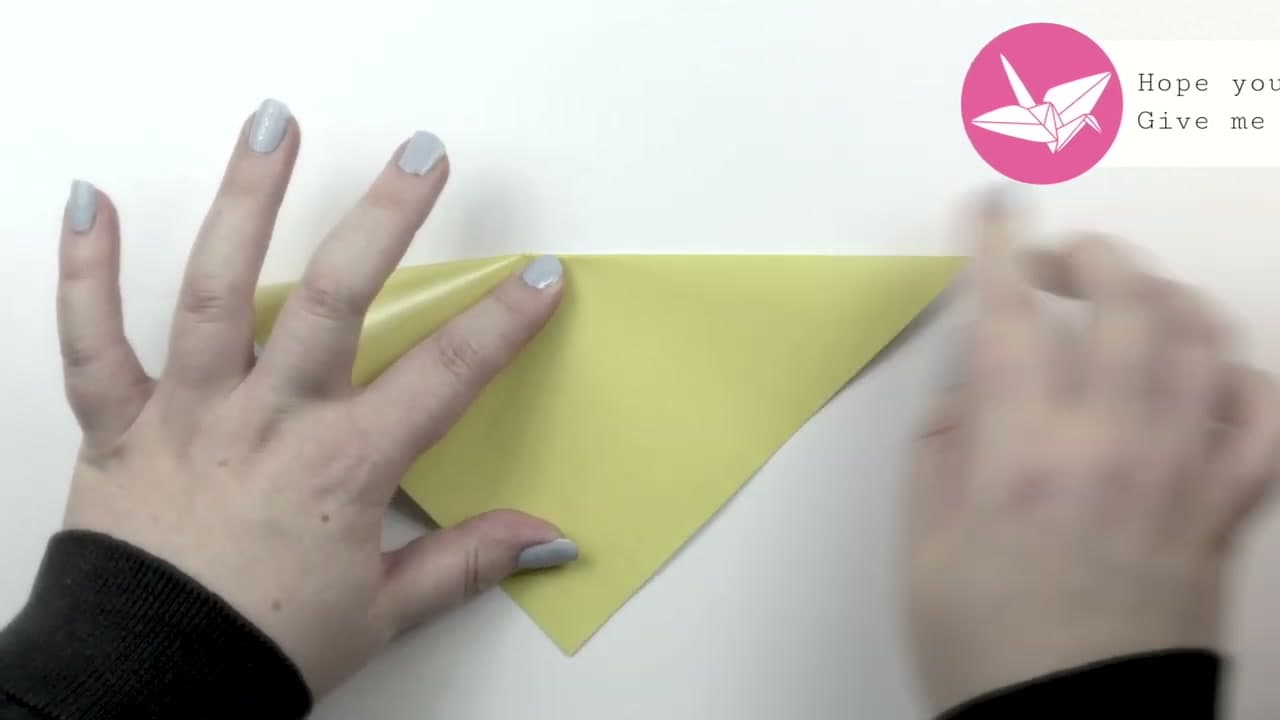
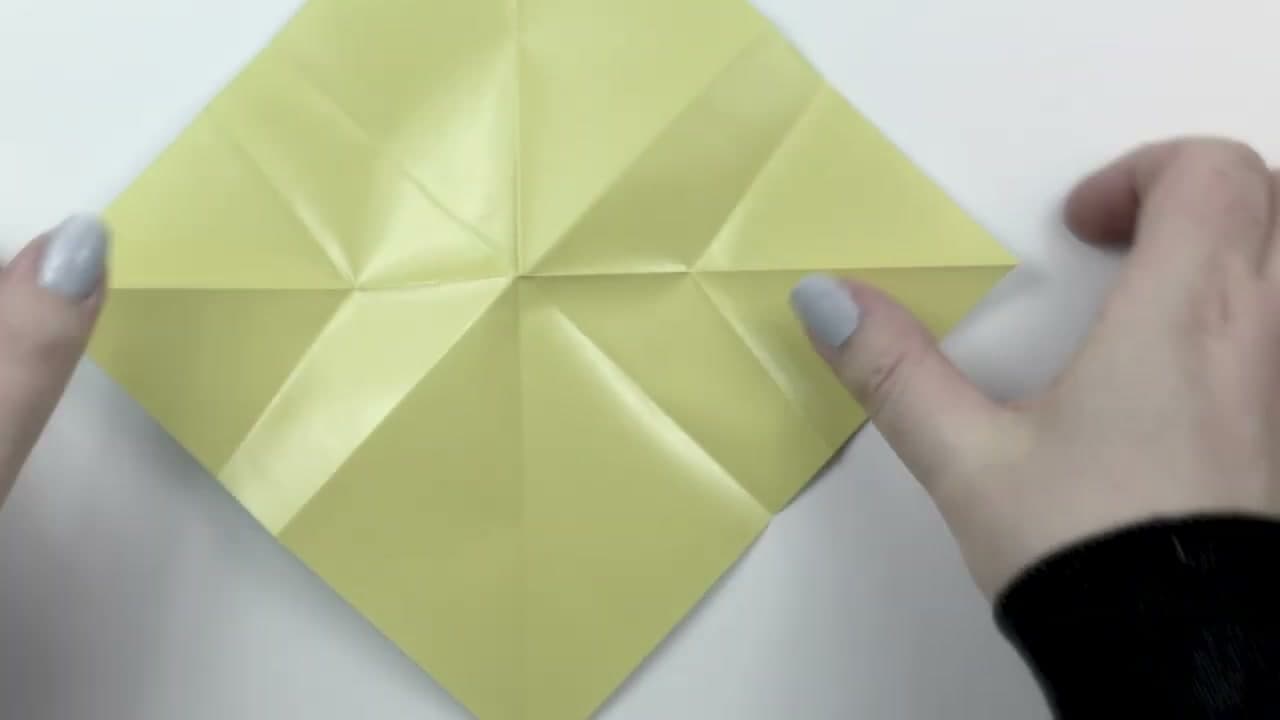
The trickiest moment is collapsing the waterbomb base in step two. If your paper resists, run a fingernail along every crease one more time and try again. Sharp creases do most of the work in origami, and rushing the first fold is the most common reason a model fights you later.
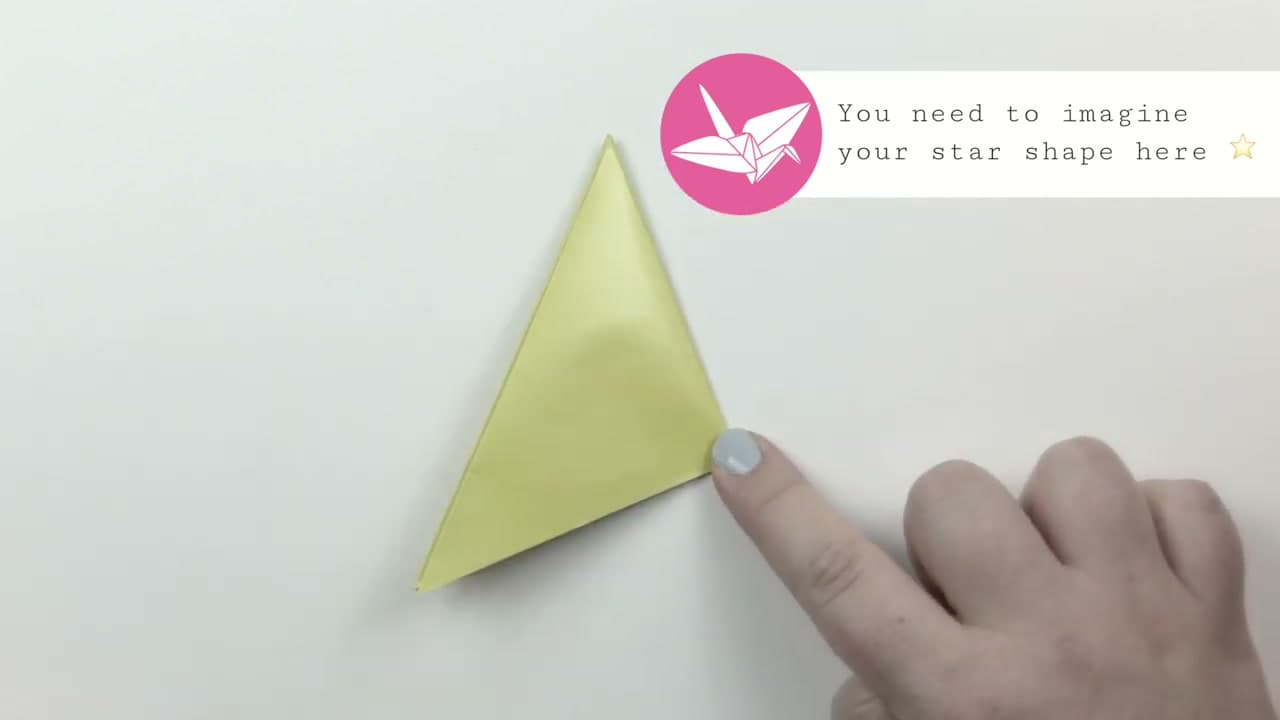
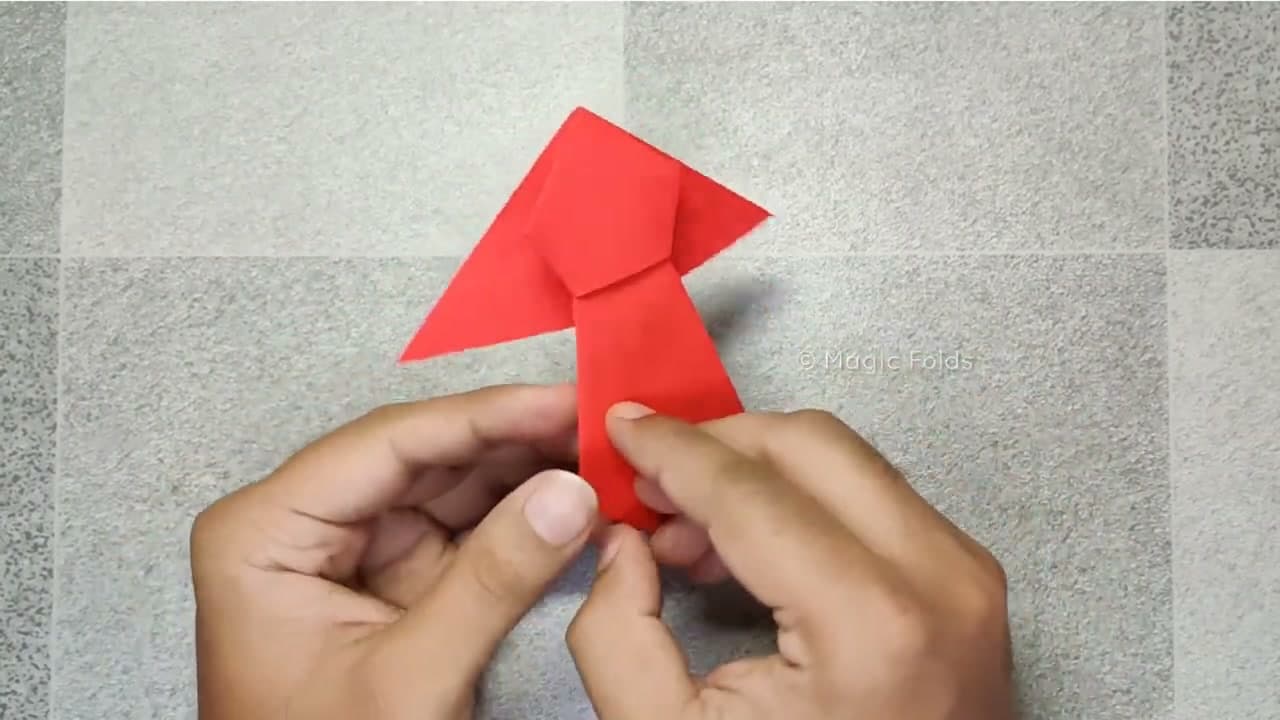
The video is silent and moves quickly, so use the still frames below to check your shape at each step before moving on. Original design and footage by Paper Kawaii.
If you like folded paper decorations, paper snowflakes use the same fold-then-cut logic and go up on windows rather than a tree.
What size paper to start with
The finished star measures about two thirds the width of your starting square. A 15 cm sheet gives roughly a 10 cm star, which is the size in the photos and the right scale for a tree or a card front. Go up to a 20 cm sheet for a window star and down to 7.5 cm if you are making a garland of small ones.
Weight matters more than size. Proper origami paper sits around 60 to 70 gsm and holds a crease without cracking. Printer paper at 80 gsm folds but fights you at the waterbomb collapse, and card stock will not collapse at all. Foil-backed paper is the exception worth trying: it is heavy but it holds every crease permanently, which makes the points stay sharp on a star that hangs all December.
Five point star or six point star
This is the five point star, folded from one square with no cutting. If you are after the six point star, that is a different model entirely and usually starts from a hexagon or from two interlocking triangles. Searching for an origami star will turn up both, along with the puffy three dimensional lucky star folded from a paper strip, which shares the name and nothing else.
The flat five point is the one that works as decor, because it sits against a surface. The lucky star is a bead, good in a jar and useless on a window.
Where the fold goes wrong
Almost every failed star fails at step two. The waterbomb base collapses along creases you made in step one, and if those creases are soft the paper picks its own path. Run a fingernail down each crease, then fold the paper the opposite way along the same line and back again. Pre-creasing in both directions is what lets the base drop into shape on its own.
The other common slip is starting colour side up. The star reads inside out and the points show the white back of the sheet. Colour down at the start, every time.
Turning the stars into decorations
Thread a needle through one point and string a dozen on cotton for a garland. Tape them flat to a window and they read as stained glass when the light is behind them. Glue one to the front of a plain kraft card and the card is done. A larger one in foil paper makes a tree topper if you fold two and glue them back to back so it looks right from both sides.
For a table setting, fold a small star in the same paper as your napkin rings and tuck one into each. It costs nothing and it is the sort of detail people notice.