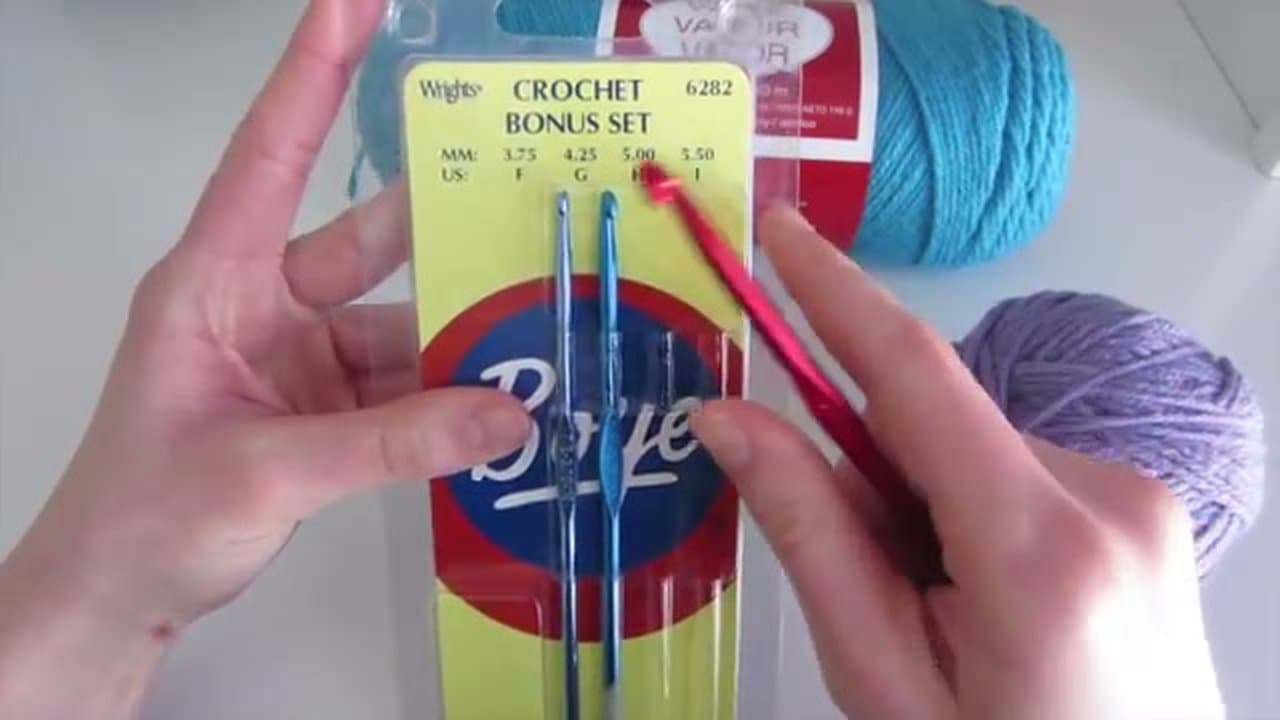
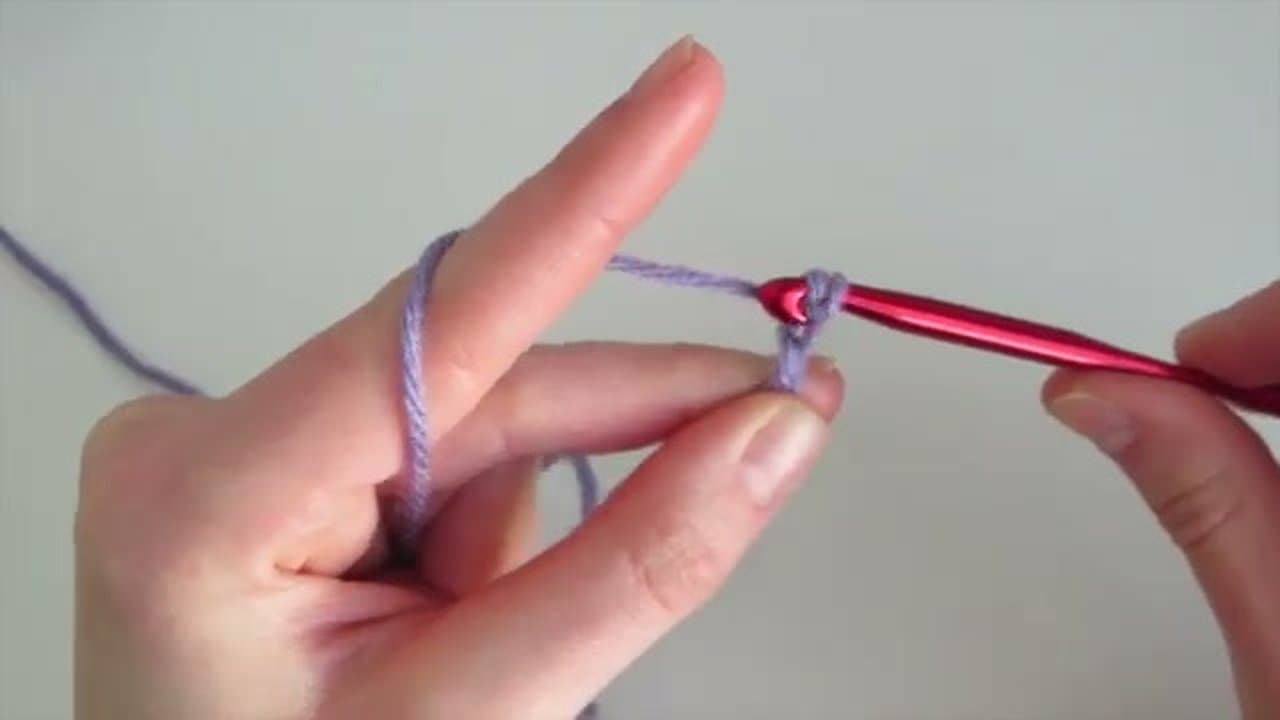
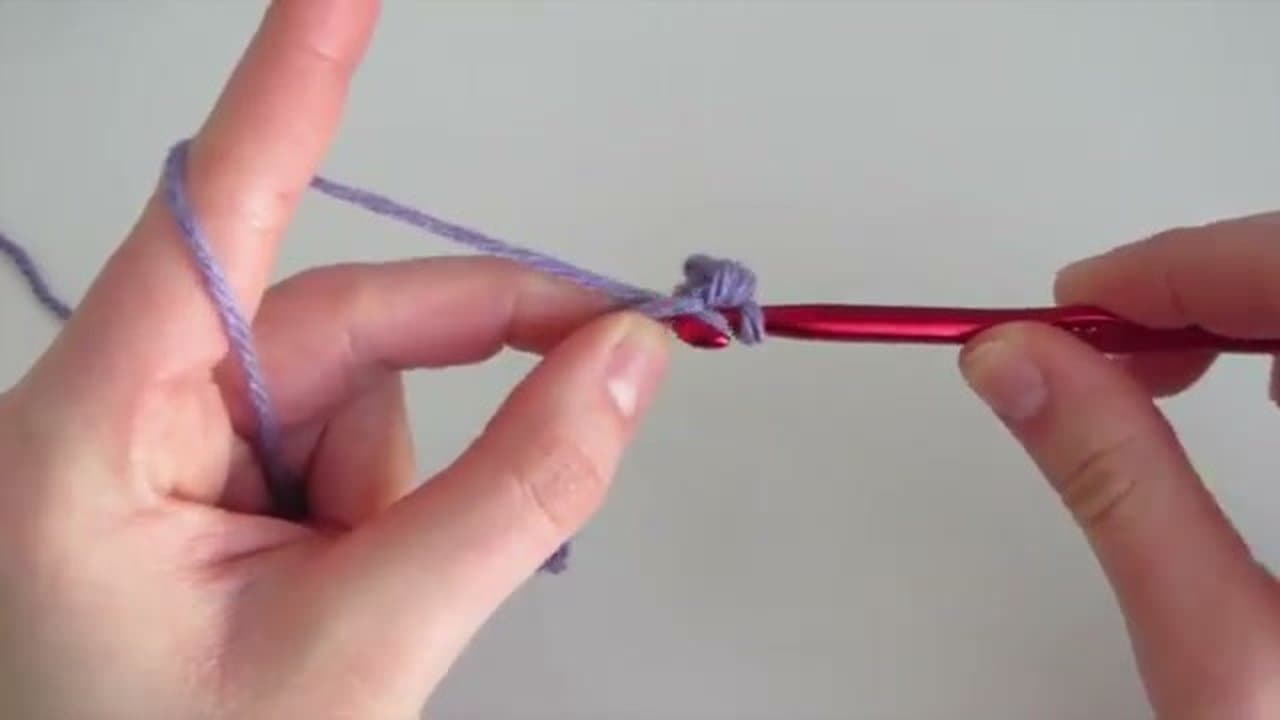
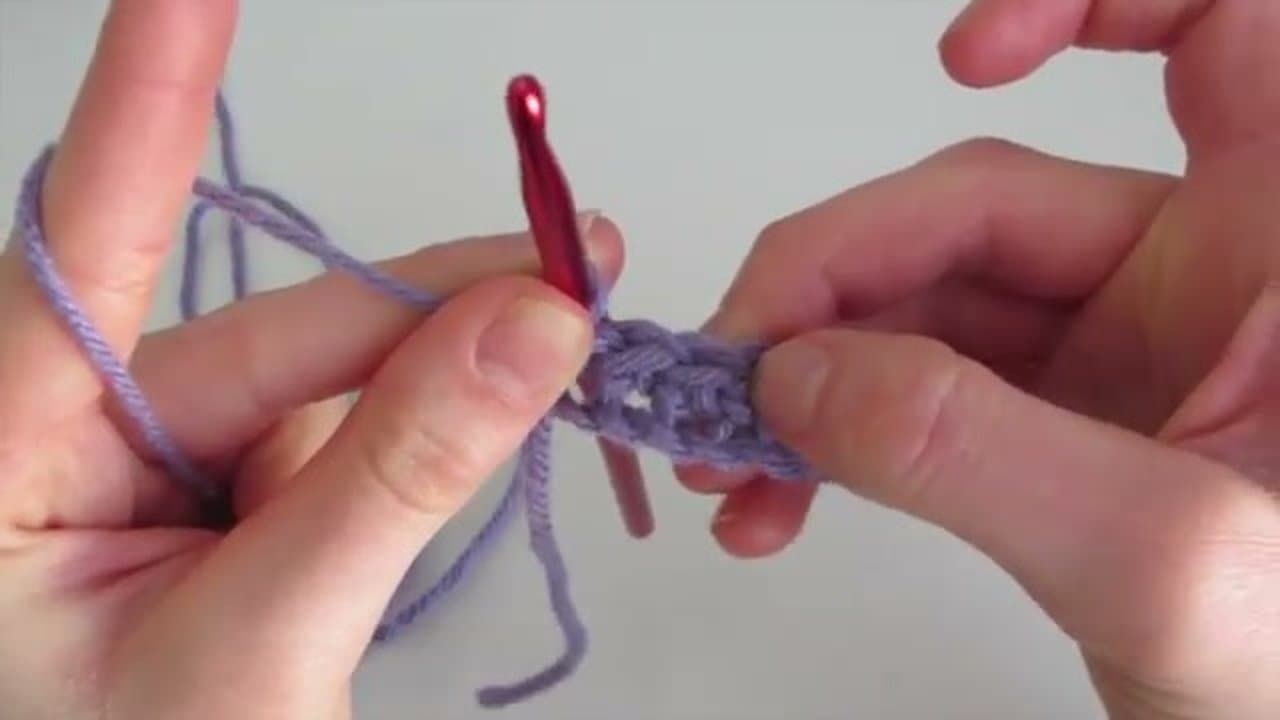
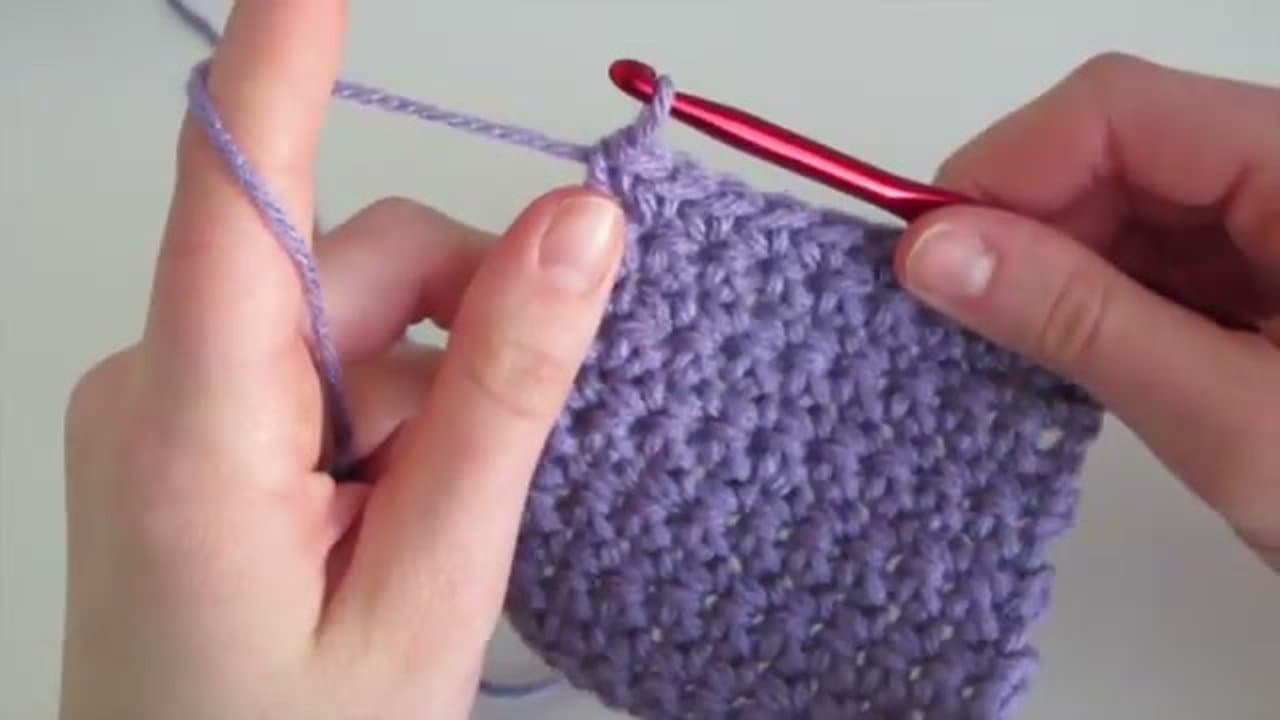
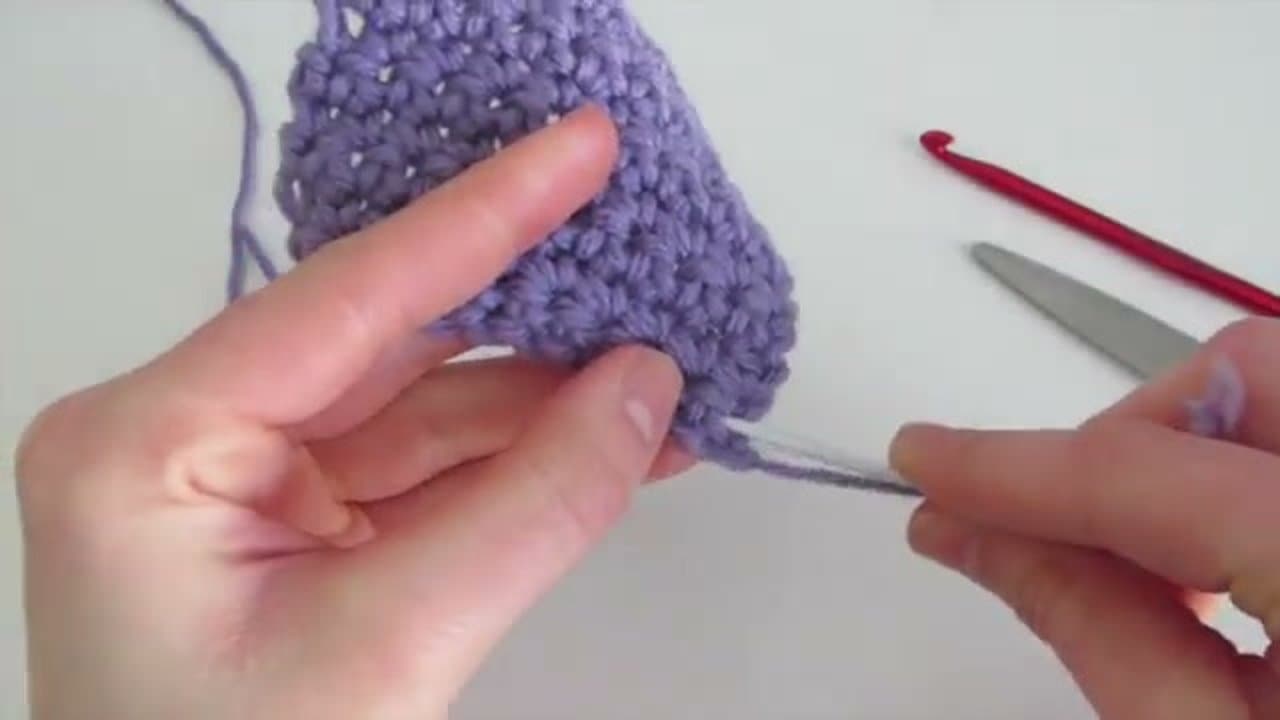
To crochet you need three things: a 5.5mm (US I/9) hook, a ball of worsted-weight yarn, and about twenty minutes of patience. You tie a slip knot onto the hook, wrap the yarn around it, and pull loops through other loops. That is the whole craft. Every stitch you will ever learn is a variation on pulling a loop through a loop.
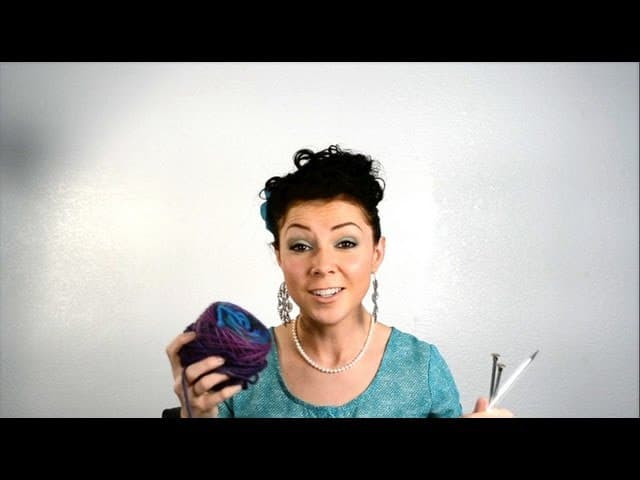
This walkthrough follows simplydaisy on YouTube. She works slowly and shows the yarn-over from the angle you actually see it from when it is your own hands on the hook.
What you need to start
Buy a 5.5mm hook and one skein of smooth, light-coloured worsted yarn. Skip the fuzzy stuff and skip black. You need to see your own stitches while you are learning, and dark or hairy yarn hides them completely.
You do not need a kit. A hook, a skein and a pair of scissors gets you through the first several projects. Add a blunt yarn needle when you are ready to weave in ends properly.
The five motions, in order
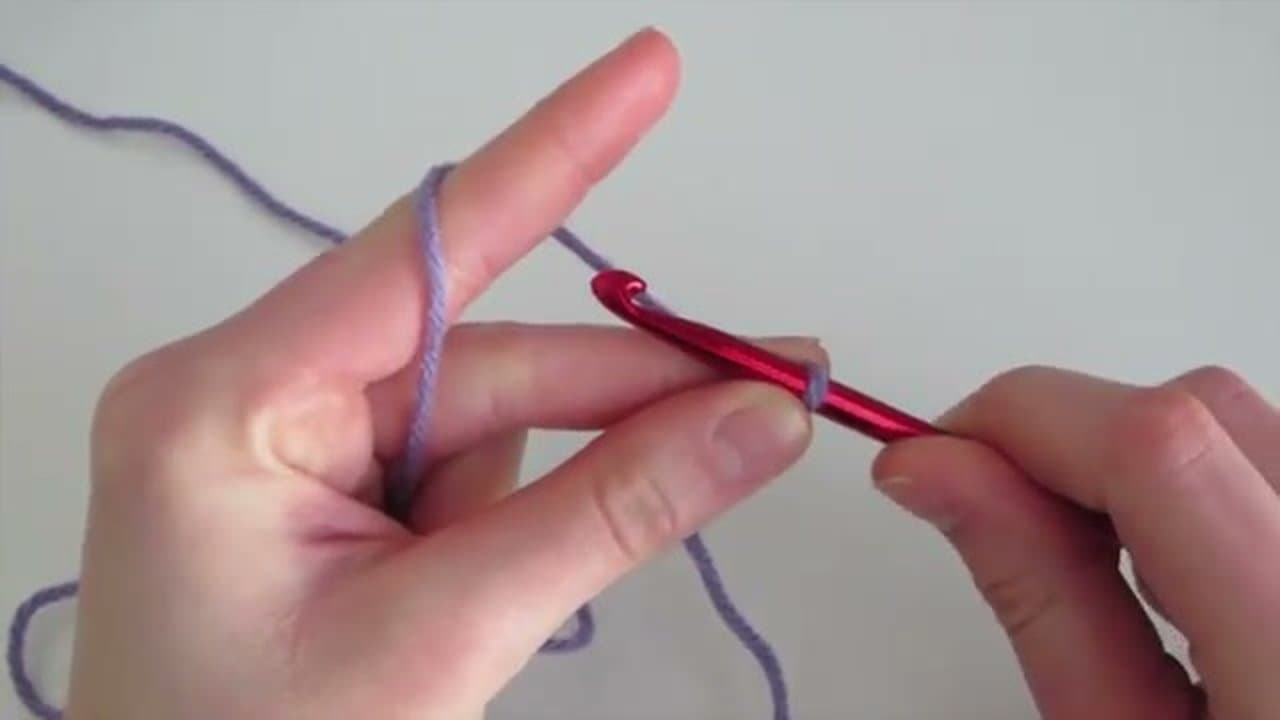
Slip knot. A loop that tightens when you pull the tail. It goes on the hook and becomes your first stitch.
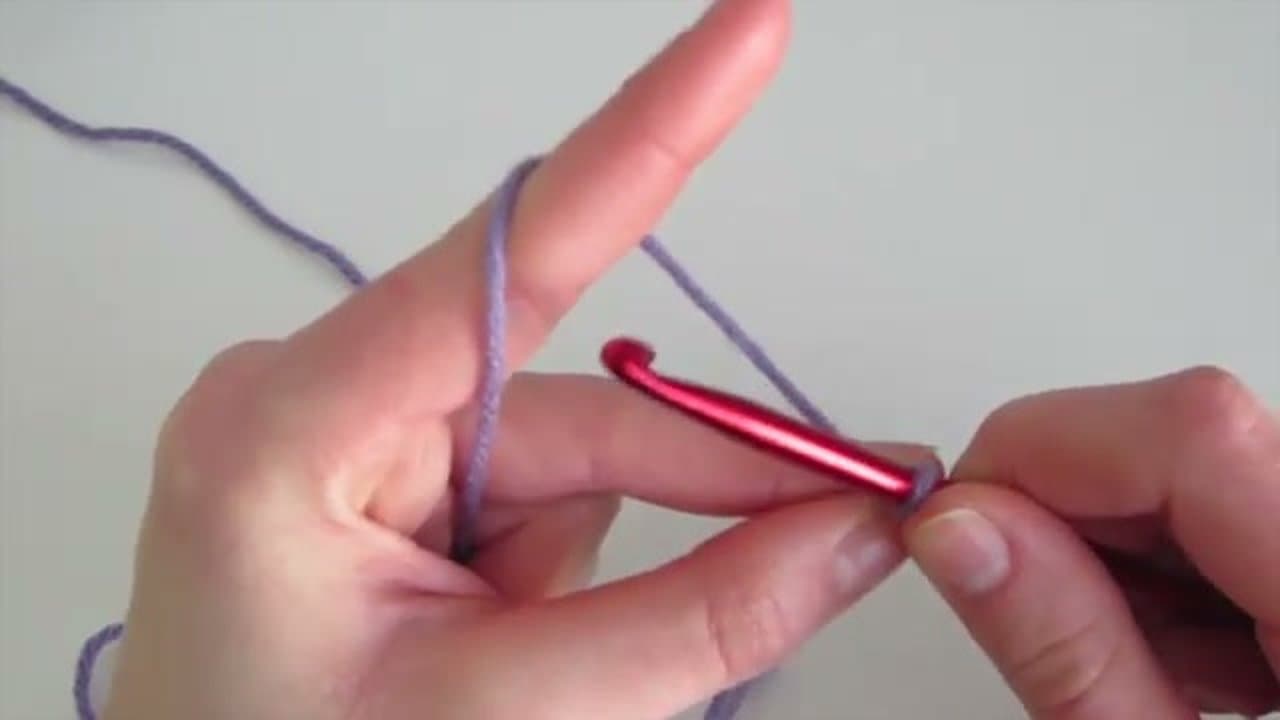
Yarn over. Wrap the working yarn around the hook from back to front. This sits underneath every stitch in crochet, so get it into your hands early.
Chain. Yarn over, pull through the loop on your hook, repeat. A row of chains is the foundation you build the first real row on. Make fifteen to twenty for practice.
Single crochet. Insert the hook into a chain, yarn over, pull up a loop, yarn over again, pull through both loops. Two loops on the hook is your checkpoint. If you have three, you missed the last pull-through.
Fasten off. Cut the yarn, pull the tail all the way through the final loop, weave it back into the fabric. Done properly it never works loose.
Tension is the part nobody warns you about
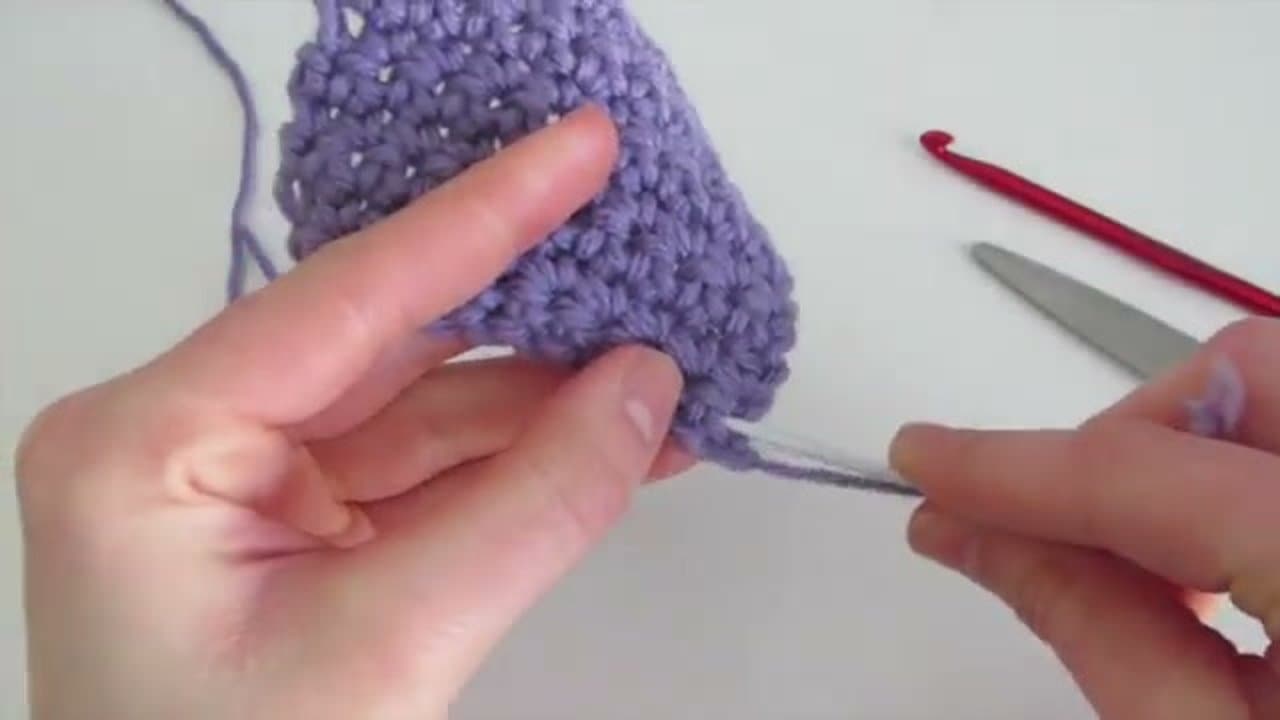
Your first swatch will have loose stitches, tight stitches, and edges that wander. That is a tension problem, not a technique problem. Tension comes from how the yarn runs over your non-hook hand and it evens out with practice rather than with effort. Do not rip out your first swatch trying to fix it.
The other early frustration is a row that gets narrower or wider as it goes. That is almost always a miscount at the end of a row, where the turning chain either gets worked into or skipped. Count your stitches for the first few rows until your eye learns what a straight edge looks like.
Where to go after your first swatch
Once single crochet feels automatic, work through the rest of the basic stitches. Double crochet is taller and builds fabric faster, half double crochet sits between the two, and treble crochet is taller again. Slip stitch joins and travels without adding any height at all.
To shape anything you need increases and decreases. To work in circles instead of rows, learn the magic ring and crocheting in the round. Those two together unlock amigurumi, which is where most beginners end up within a month.
For a first real project, a granny square teaches chains, double crochets, corners and rounds in one sitting. A coaster or a scarf works too if you would rather stay flat a while longer.
When a pattern stops making sense, it is usually the abbreviations rather than the stitches. Reading a crochet pattern covers sc, dc, ch, rep and the bracket notation that trips up everyone the first time.