A new carbon steel wok is shipped with a protective oil that needs to come off before you can cook in it. After that, the wok needs a layer of black oxide built up - the actual seasoning - so food doesn't stick.
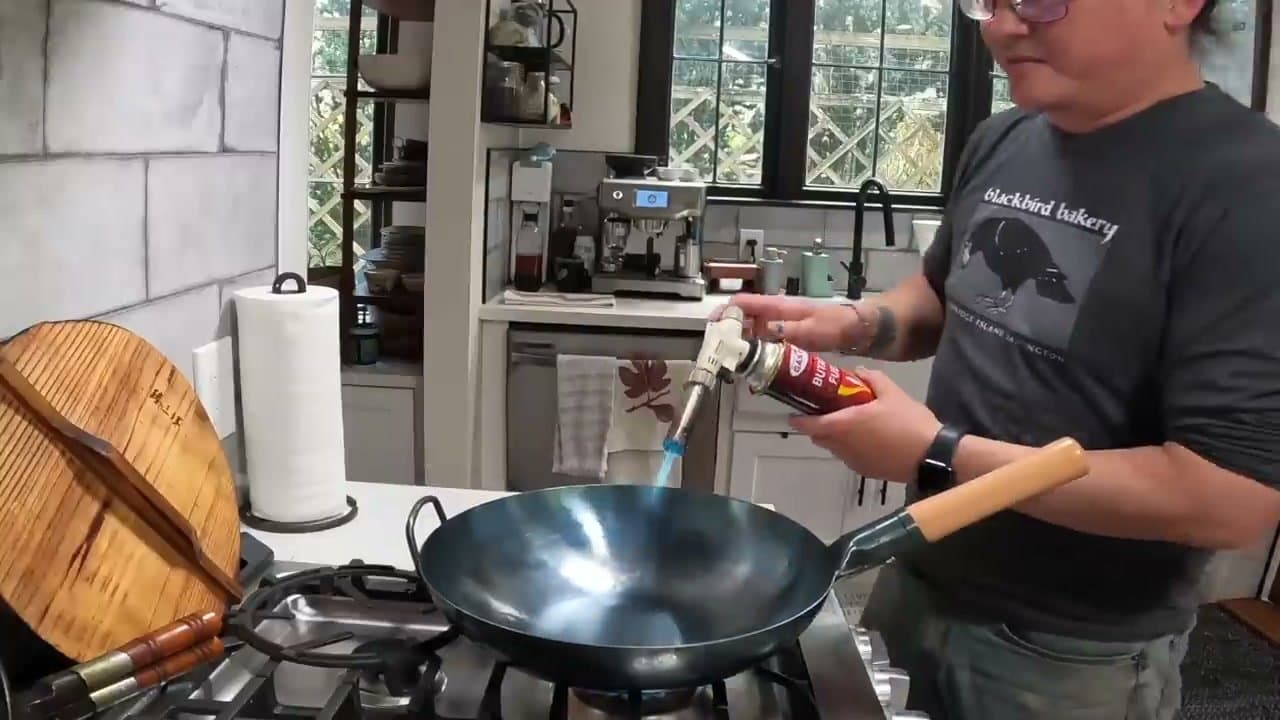
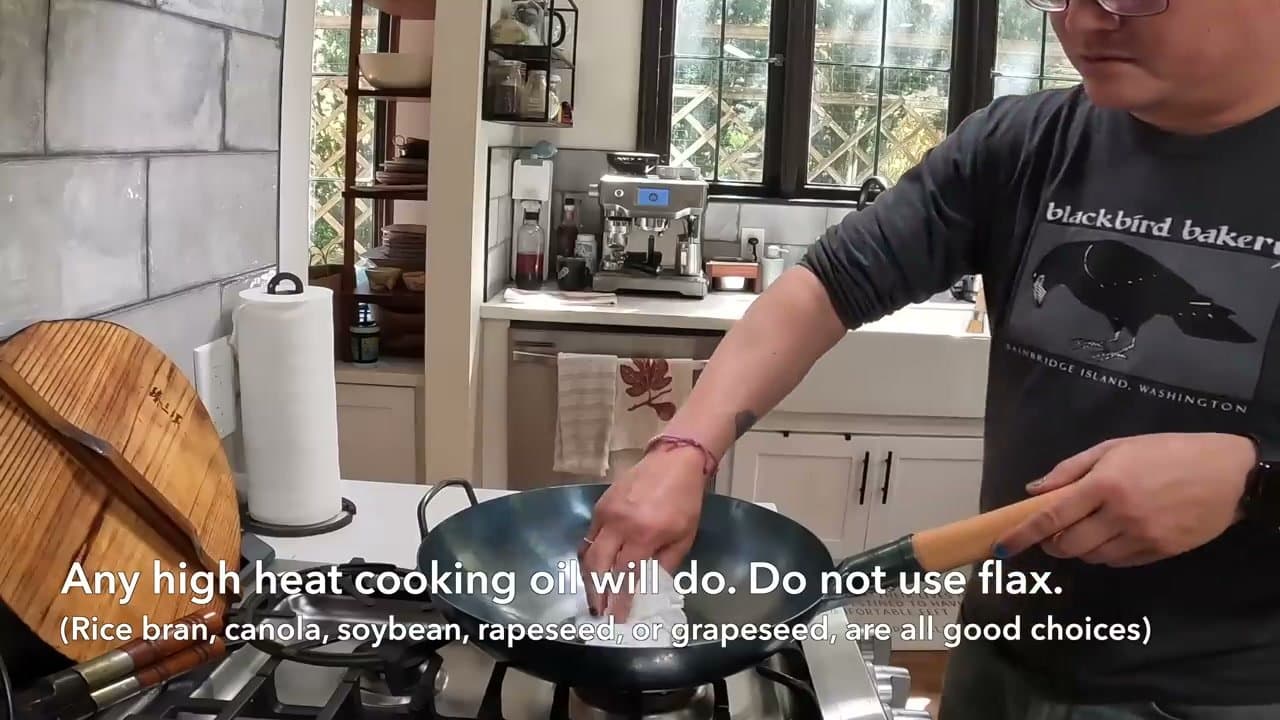
Kenji López-Alt's method is the simplest version of this: heat the wok bone dry until it turns dark gray-black, then rub on a thin layer of oil and wipe most of it back off. Unlike a cast iron skillet, you don't want thick polymer layers on a wok - they'll just flake off when you deglaze with soy sauce.
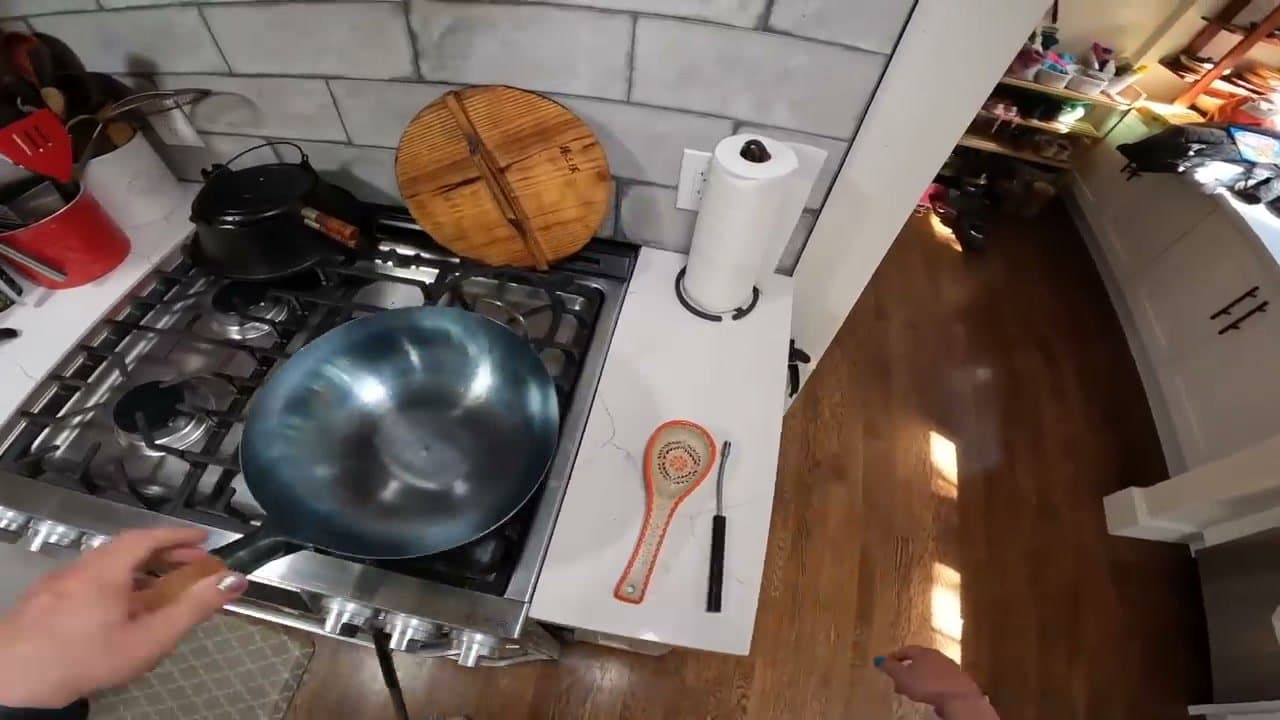
You'll need a new carbon steel wok, a high heat source (gas burner ideally), a paper towel, and 1-2 tablespoons of high-smoke-point oil (canola, peanut, vegetable - never flax). Takes about 15 minutes.
Common questions
How do I know when my wok is hot enough to season?
Watch the color change. The metal goes from shiny to dull to bluish to dark gray and finally black. That blackening is the iron reacting with oxygen, and it's the sign the surface is ready for oil.
How much oil do I leave on after seasoning a wok?
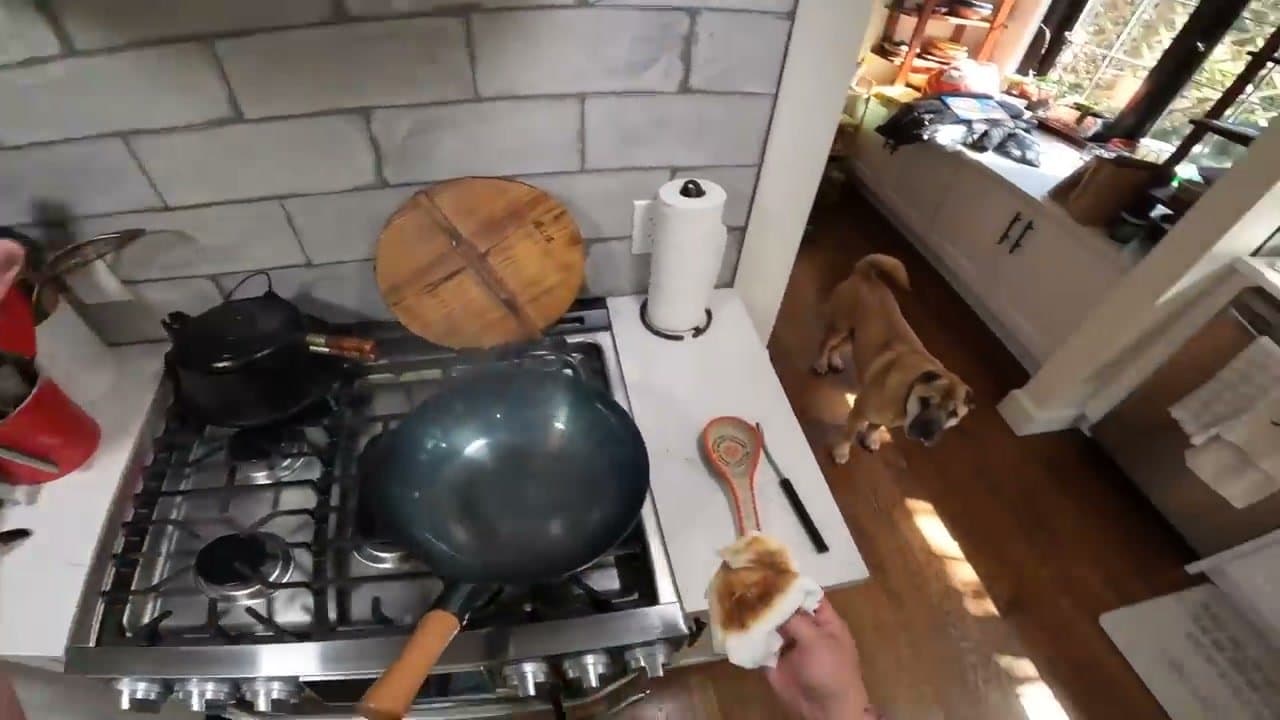
The thinnest possible film. Rub oil all over while it's hot, then wipe almost all of it back off like you're cleaning up a spill. A thick layer turns sticky and gummy instead of slick.
Can I use soap on a seasoned wok later?
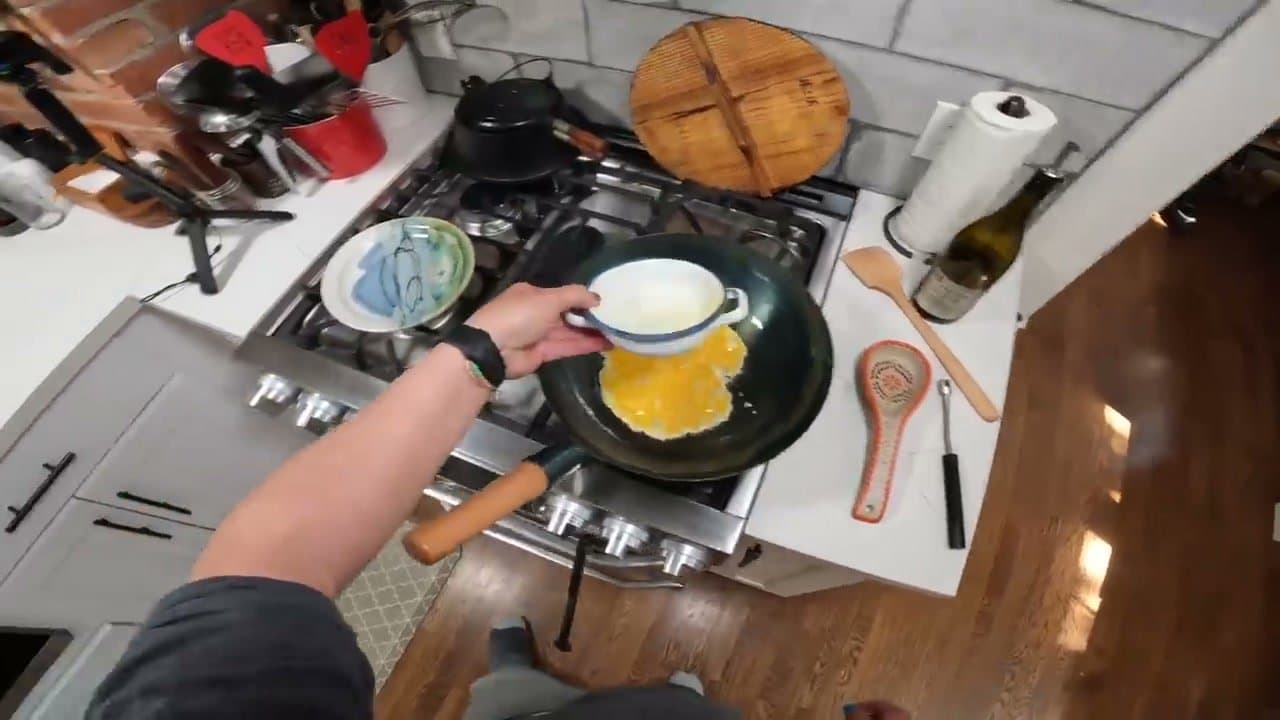
Go easy. Once it's seasoned, a quick rinse with hot water and a soft sponge is usually all it needs. Cooking forgiving foods like eggs and fried rice early on builds the non-stick layer up further.