How to Remove Rust from Cast Iron

CookingMedium6:469 steps

By ShowMeStepByStepPublished Updated

Based on a video by Cook Avec Dan.

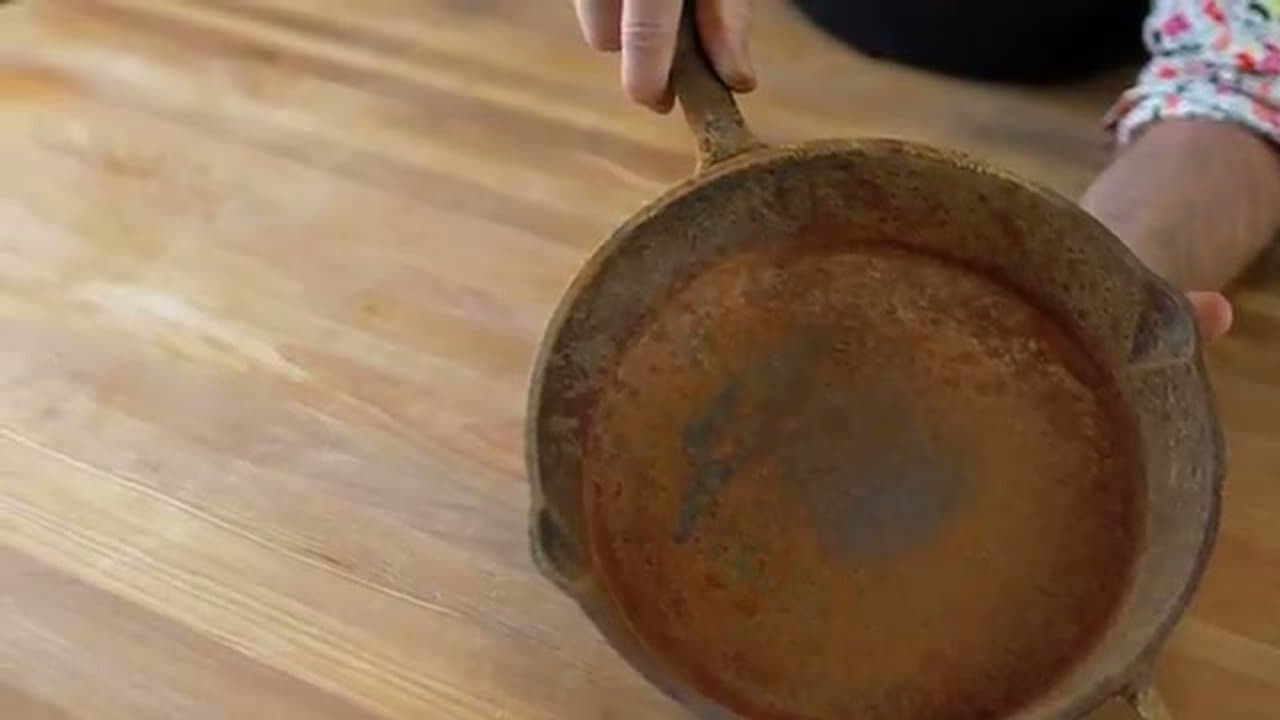
A rusty cast iron pan looks ruined, but it almost never is. Cast iron is solid metal all the way through, and rust sits only on the surface. With baking soda paste and an oven, you can take a pan that looks like it came out of a barn and rebuild it into the smoothest cooking surface in your kitchen.

The whole restoration runs about three hours, most of which is the oven doing the work. Active scrubbing is maybe 15 minutes. The technique from Cook Avec Dan uses common pantry supplies: baking soda for abrasion, white vinegar to neutralize, and a high-smoke-point oil like avocado or grapeseed for the seasoning. No special chemicals or expensive products.

The seasoning step is where most people stop too early. One oil-and-bake cycle is not enough. Two gets you cooking-ready. Five cycles gives you a near-nonstick black surface that rivals a brand new pan. After every meal you cook in the restored pan, the seasoning gets darker and more durable. A pan that's been treated this way will outlast you.

Step-by-Step Guide

1

Step 1: Gather your supplies

0:18
Step 1: Step 1: Gather your supplies

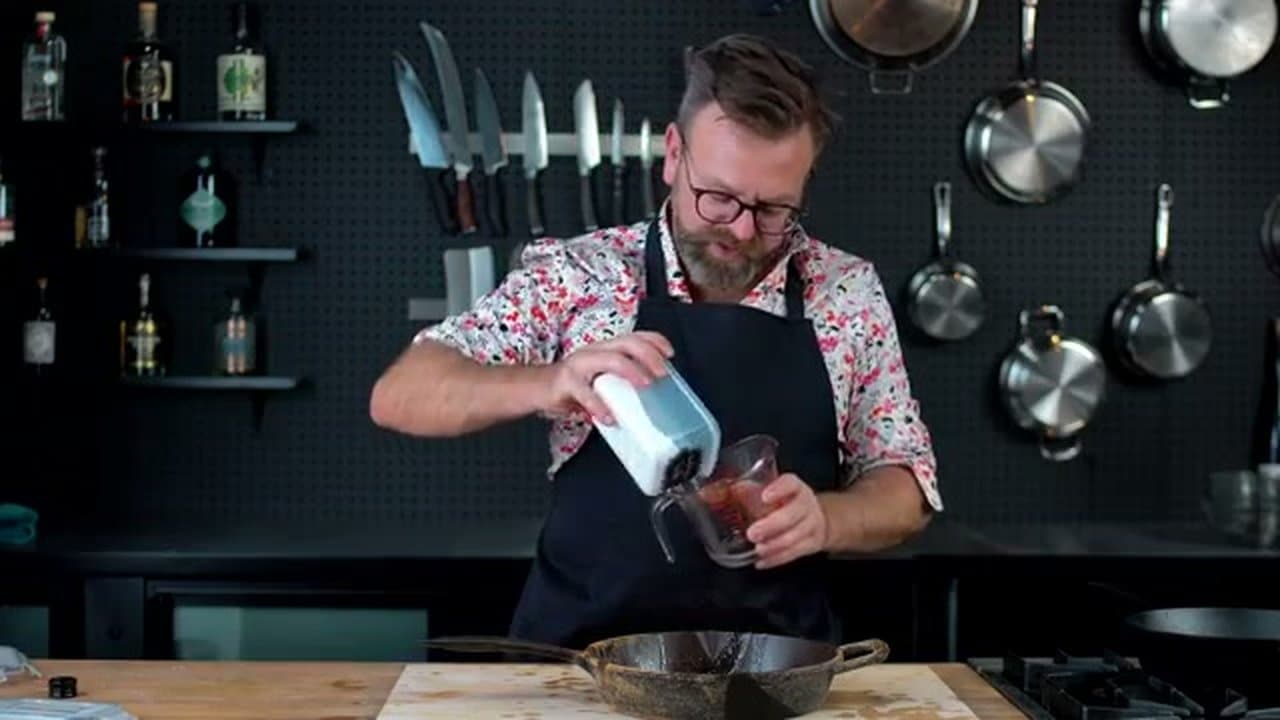
Pull together the rusty cast iron pan, baking soda, water, white vinegar, a high-smoke-point oil like avocado or grapeseed, kosher salt, a stainless steel chainmail scrubber, and paper towels.

The whole process takes about 3 hours including oven time. Active scrubbing and prep is around 15 minutes; the rest is the oven cycles.
2

Step 2: Make a baking soda paste

0:45
Step 2: Step 2: Make a baking soda paste

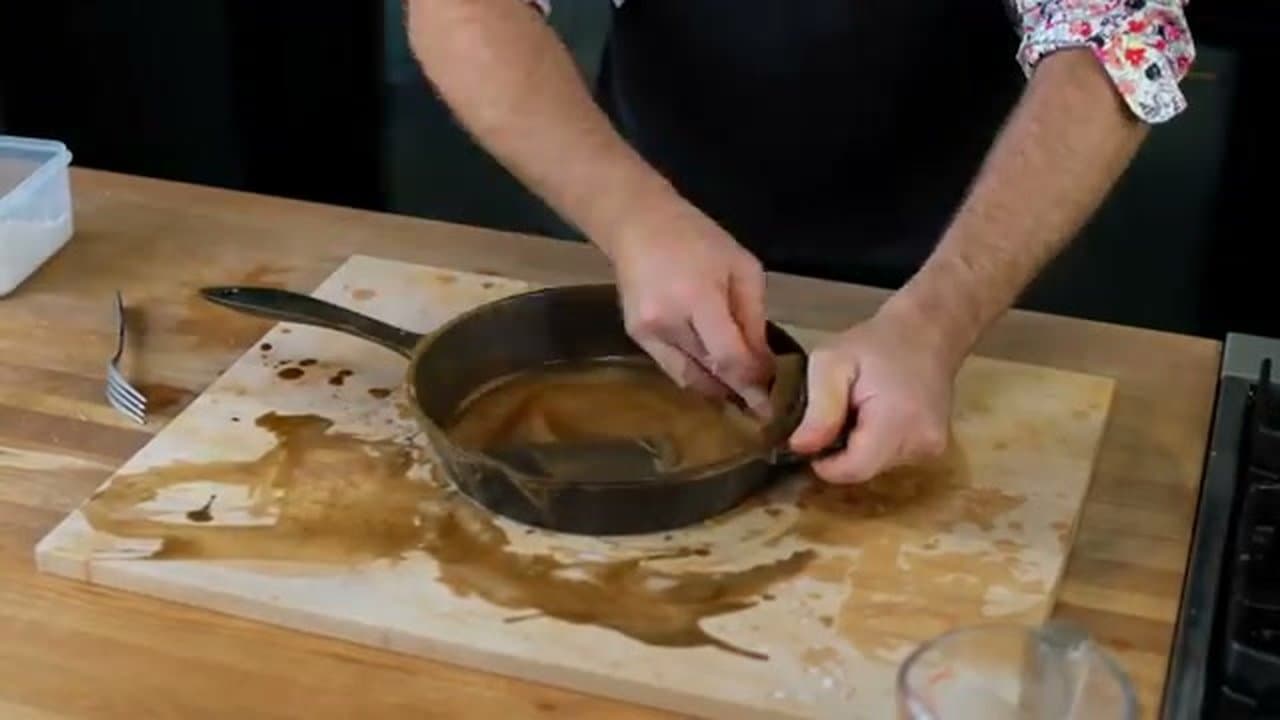
Spoon a few tablespoons of baking soda directly into the pan, then add just enough water to form a thick paste. Use less water for heavier rust (you want it more like wet sand), more water for light rust.

The paste is what physically lifts the rust off the iron. Baking soda is mildly abrasive without being harsh enough to gouge the surface.

3

Step 3: Scrub every surface

1:30
Step 3: Step 3: Scrub every surface

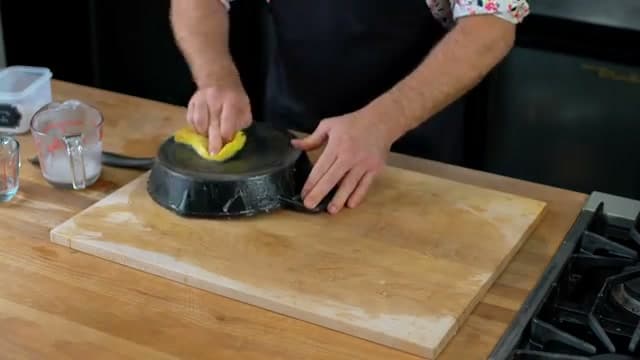
Scrub every part of the pan with the chainmail scrubber and the baking soda paste. Don't skip the handle, the underside, or the inside corners - rust hides everywhere and any leftover spot will spread.

Apply firm pressure and work in circles. Rinse with water when one section is clean and move on. The water that runs off will be orange-brown - that's the rust coming off.

4

Step 4: Repeat scrub if rust remains

1:50
Step 4: Step 4: Repeat scrub if rust remains

Make a fresh paste and scrub again if rust remains. For heavily rusted pans this can take two to three rounds.

The pan should look mostly silver-grey with no visible orange or red patches before you move on. Cast iron's natural color is dark grey - any reddish tint means there's still rust hiding.

5

Step 5: Neutralize with white vinegar

2:25
Step 5: Step 5: Neutralize with white vinegar

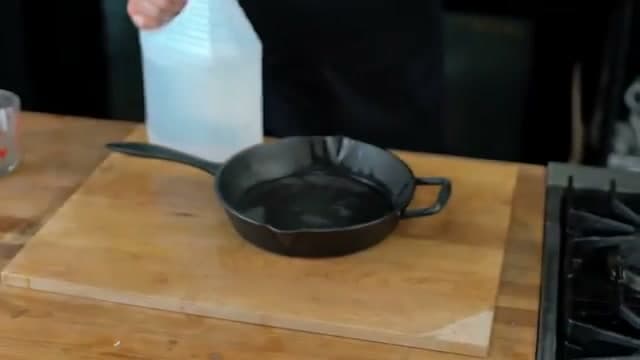
Pour white vinegar over the pan and rinse. The vinegar neutralizes any leftover baking soda residue, which would otherwise interfere with seasoning.

A quick splash and rinse is all you need - don't soak the pan in vinegar. Long vinegar exposure can pit the iron, which gives you a worse cooking surface than the rust did.

Products used in this step

6

Step 6: Dry in oven for 10 minutes

2:55
Step 6: Step 6: Dry in oven for 10 minutes

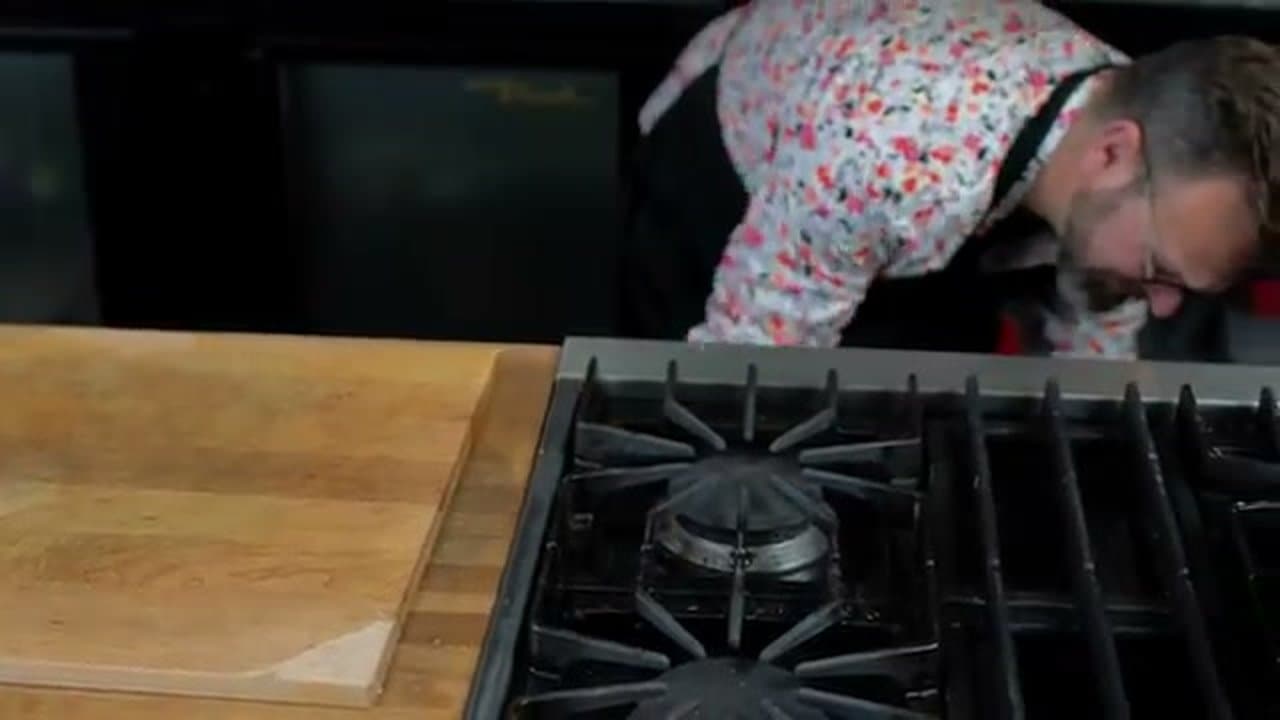
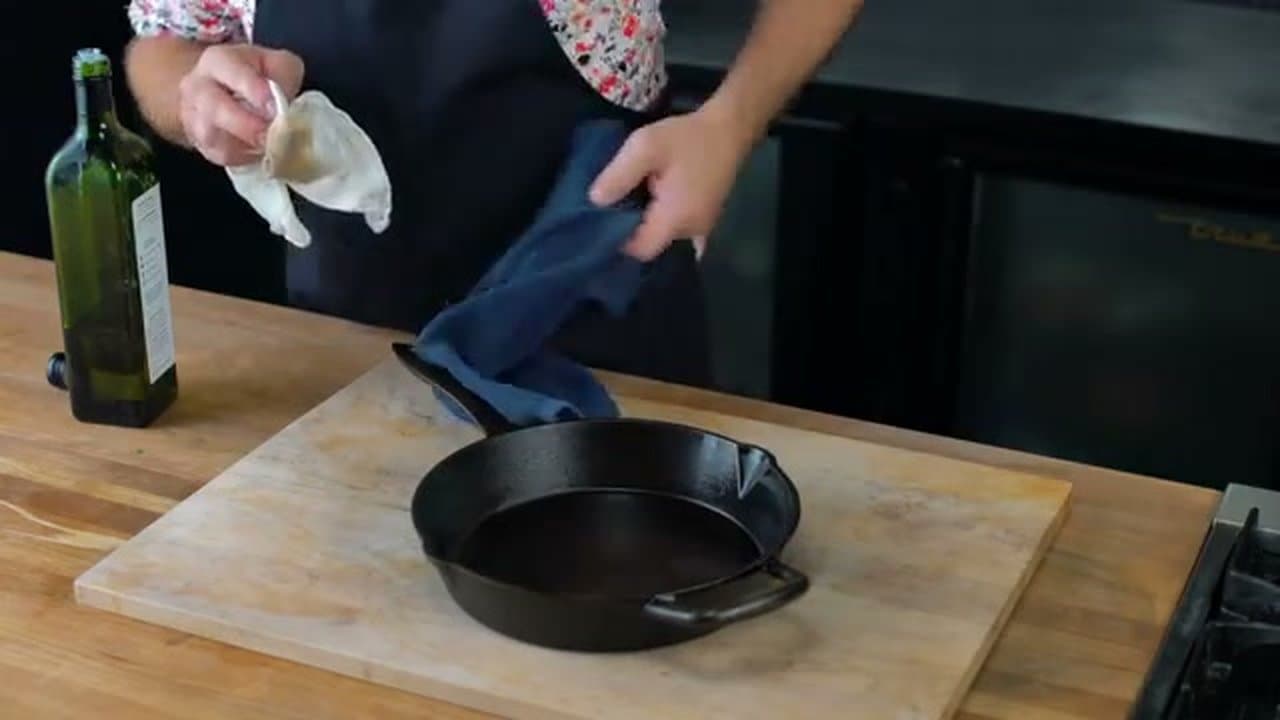
Dry the pan in a 350°F oven for 10 minutes. Cast iron has microscopic pores that hold water, and any water left behind will cause new rust within hours.

Oven-drying gets rid of all the moisture more reliably than a towel ever will. Skipping this step is the most common reason a freshly cleaned cast iron pan rusts again immediately.

7

Step 7: Apply a thin coat of oil

3:30
Step 7: Step 7: Apply a thin coat of oil

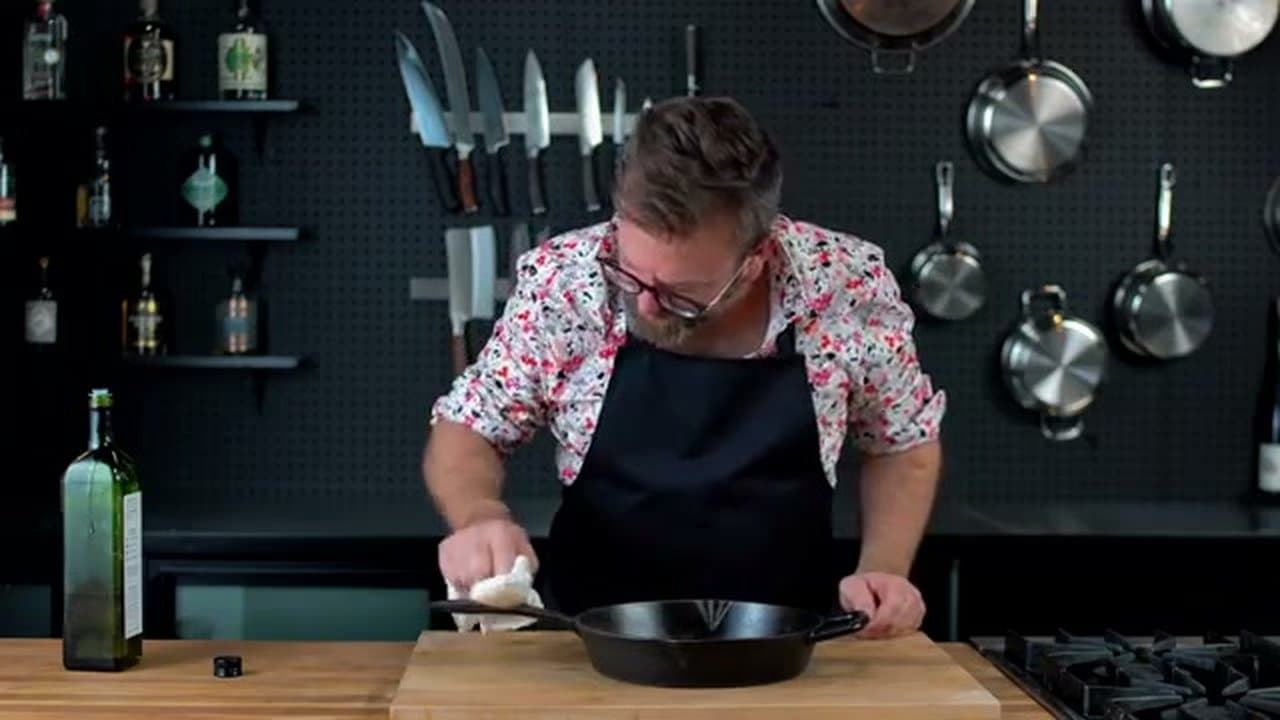
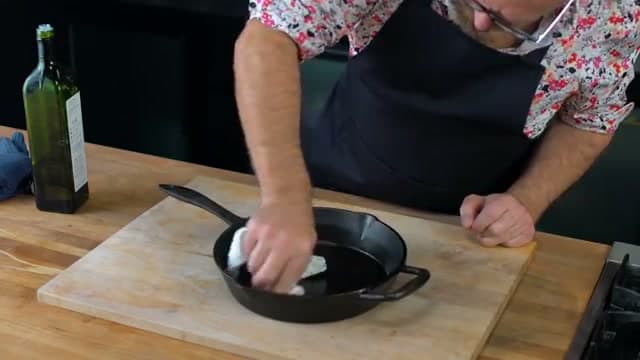
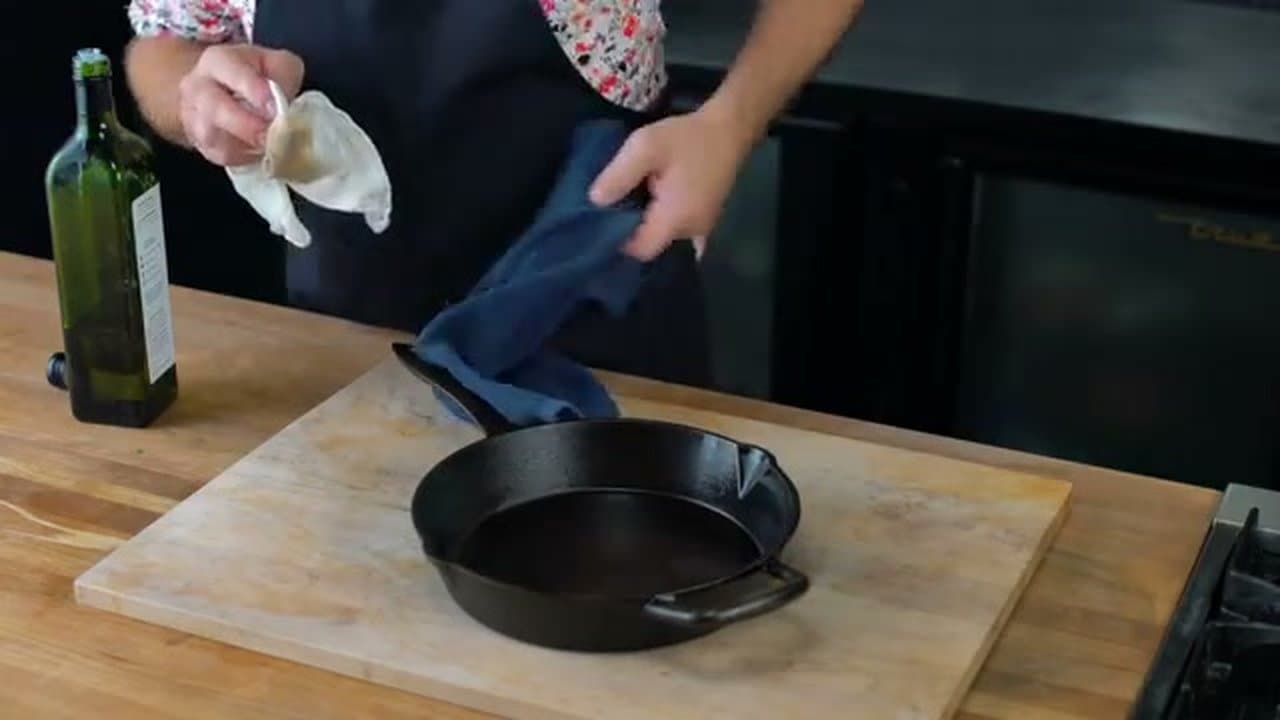
Apply a thin coat of high-smoke-point oil to every surface. Avocado, grapeseed, and flaxseed oil all work well. Pour a small amount onto a paper towel and rub it across every surface - inside, outside, handle.

Then take a fresh paper towel and wipe off as much as possible. The coat needs to be very thin, almost invisible. Too much oil pools and turns sticky during baking; not enough is fine, you just need a few cycles.

Tip

Skip vegetable oil and olive oil for seasoning - they have lower smoke points and produce a tackier, less durable coating. Avocado oil is the modern favorite because it's stable up to about 520°F.

8

Step 8: Bake oiled pan at 350°F for 1 hour

4:15
Step 8: Step 8: Bake oiled pan at 350°F for 1 hour

Bake the oiled pan upside down at 350°F for 1 hour. Place a sheet pan or aluminum foil on the rack below to catch any drips.

The heat polymerizes the oil into a smooth black coating. Let the pan cool in the oven before handling - the iron retains heat for hours and burns are guaranteed if you grab a hot handle.

9

Step 9: Repeat seasoning 2-5 times

4:25
Step 9: Step 9: Repeat seasoning 2-5 times

Repeat the oil-and-bake cycle two to five more times for a deeper seasoning layer. Each cycle adds a thin layer that builds up like coats of paint.

Two cycles gets you cooking-ready. Five cycles gets you a near-nonstick black surface that rivals a brand new pan. After every meal you cook in the restored pan, the seasoning gets darker and more durable - eggs cooked in butter is a great first meal because it adds a nice fat layer.

Tip

Maintenance after cooking: skip soap. Wipe the warm pan with a paper towel, then if needed scrub with kosher salt as the abrasive. Rinse, dry on the stovetop or in the oven, and rub a tiny bit of oil into the surface before putting it away.

Products Used

❖ The Recipe

How to Remove Rust from Cast Iron

Serves
Restores 1 cast iron pan
Prep
15 min
Cook
2 hr 45 min
Total
3 hr

Ingredients

5 items
  • 1rusty cast iron pan
  • 1/2 cupbaking soda
  • as neededwaterfor the paste
  • 1/4 cupwhite vinegar
  • 1-2 tsphigh-smoke-point oilavocado, grapeseed, or flaxseed

Method

  1. 1
    Step 1: Gather your supplies. Pull together the rusty cast iron pan, baking soda, water, white vinegar, a high-smoke-point oil like avocado or grapeseed, kosher salt, a stainless steel chainmail scrubber, and paper towels.
  2. 2
    Step 2: Make a baking soda paste. Spoon a few tablespoons of baking soda directly into the pan, then add just enough water to form a thick paste.
  3. 3
    Step 3: Scrub every surface. Scrub every part of the pan with the chainmail scrubber and the baking soda paste.
  4. 4
    Step 4: Repeat scrub if rust remains. Make a fresh paste and scrub again if rust remains.
  5. 5
    Step 5: Neutralize with white vinegar. Pour white vinegar over the pan and rinse.
  6. 6
    Step 6: Dry in oven for 10 minutes. Dry the pan in a 350°F oven for 10 minutes.
  7. 7
    Step 7: Apply a thin coat of oil. Apply a thin coat of high-smoke-point oil to every surface.
  8. 8
    Step 8: Bake oiled pan at 350°F for 1 hour. Bake the oiled pan upside down at 350°F for 1 hour.
  9. 9
    Step 9: Repeat seasoning 2-5 times. Repeat the oil-and-bake cycle two to five more times for a deeper seasoning layer.
☐ The Checklist

How to Remove Rust from Cast Iron

Tools
3
Materials
5
Steps
9
Video
7 min

Your Guide

Cook Avec Dan

As an Amazon Associate we earn from qualifying purchases. Links on this page may be affiliate links - clicking them and buying doesn't change your price, but helps support ShowMeStepByStep.

Tags

Related Tutorials