How to Make French Fries (Ultra Crispy at Home)

By ShowMeStepByStepPublished Updated

Based on a video by Joshua Weissman.

Restaurant french fries have a specific texture you almost never get at home. The outside crunches like glass. The inside is pillow-soft and steaming. Most home cooks toss raw potato sticks straight into hot oil and end up with sad, limp fries that go soggy in 90 seconds. The difference is not the potato. The difference is the technique.

This is Joshua Weissman's blueprint for ultra-crispy fries, and it leans on two restaurant tricks. The first is a brief sous vide bath in salted water with a pinch of baking soda. The baking soda raises the surface pH so the exterior of each fry crisps into a craggy crust the way restaurant fries do. The sous vide step also cooks the potato all the way through at a temperature low enough that it never browns, so the second fry can crank up to 375 degrees without burning the outside before the inside cooks.

The second trick is the double fry: a low-temperature first fry to dry the exterior, a rest in the freezer, and then a hot second fry just before you eat. The result snaps in half. It does not go soggy on the way to the table. If you do not own a sous vide, you can still get a great fry by skipping the bath and going straight to the double-fry steps, but the sous vide pass is what makes these taste like the fries at the steakhouse.

Step-by-Step Guide

1

Step 1: Set Up the Sous Vide Bath at 90 Degrees Celsius

0:40
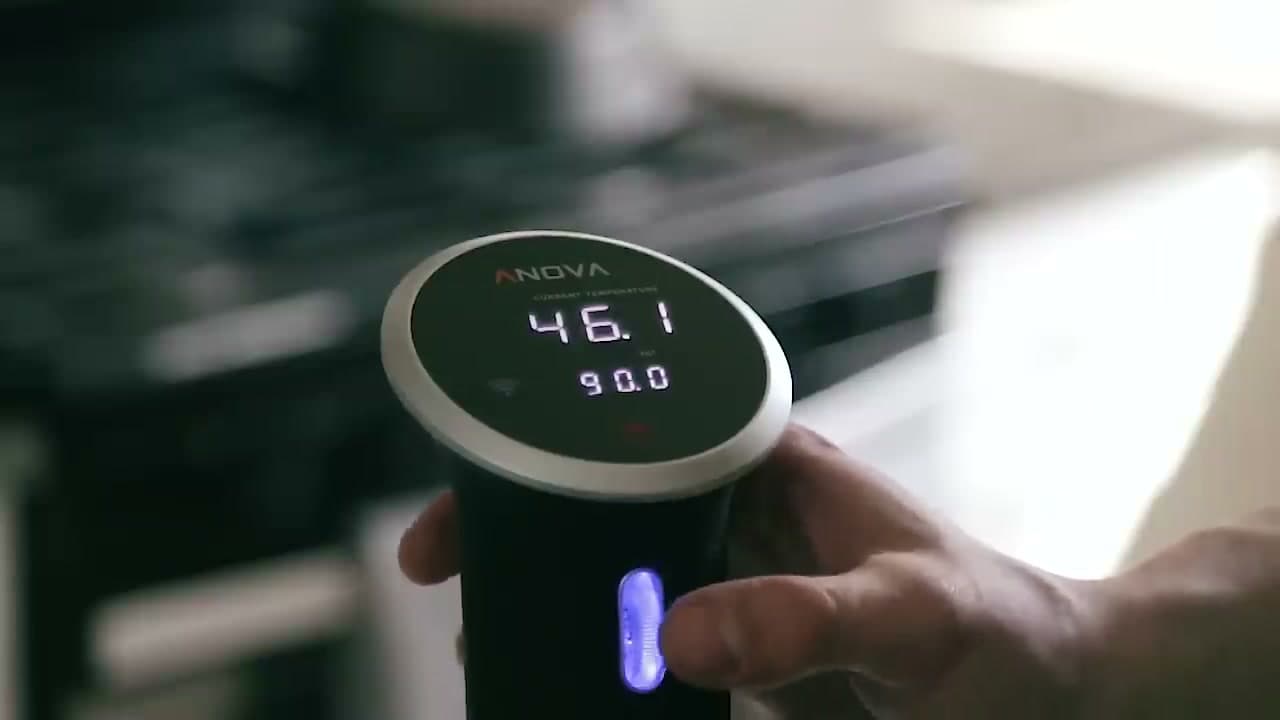
Step 1: Step 1: Set Up the Sous Vide Bath at 90 Degrees Celsius

Clip your immersion circulator to the side of a large pot or polycarbonate tub, fill it with warm tap water past the minimum line, and set the temperature to 90 degrees Celsius (194 degrees Fahrenheit). Give it ten or fifteen minutes to come up to temp while you work on the brine and the potatoes. Ninety degrees is the sweet spot - hot enough to cook the potato all the way through, but low enough that the exterior never browns, which is what lets the second fry crank up to 375 without burning the outside.

Tip

No sous vide? You can skip this step and the bath, and instead boil the cut fries in the same brine for about ten minutes until just tender. The texture is close but not identical - the sous vide version snaps a little harder.
2

Step 2: Make the Salt-and-Baking-Soda Brine

1:45
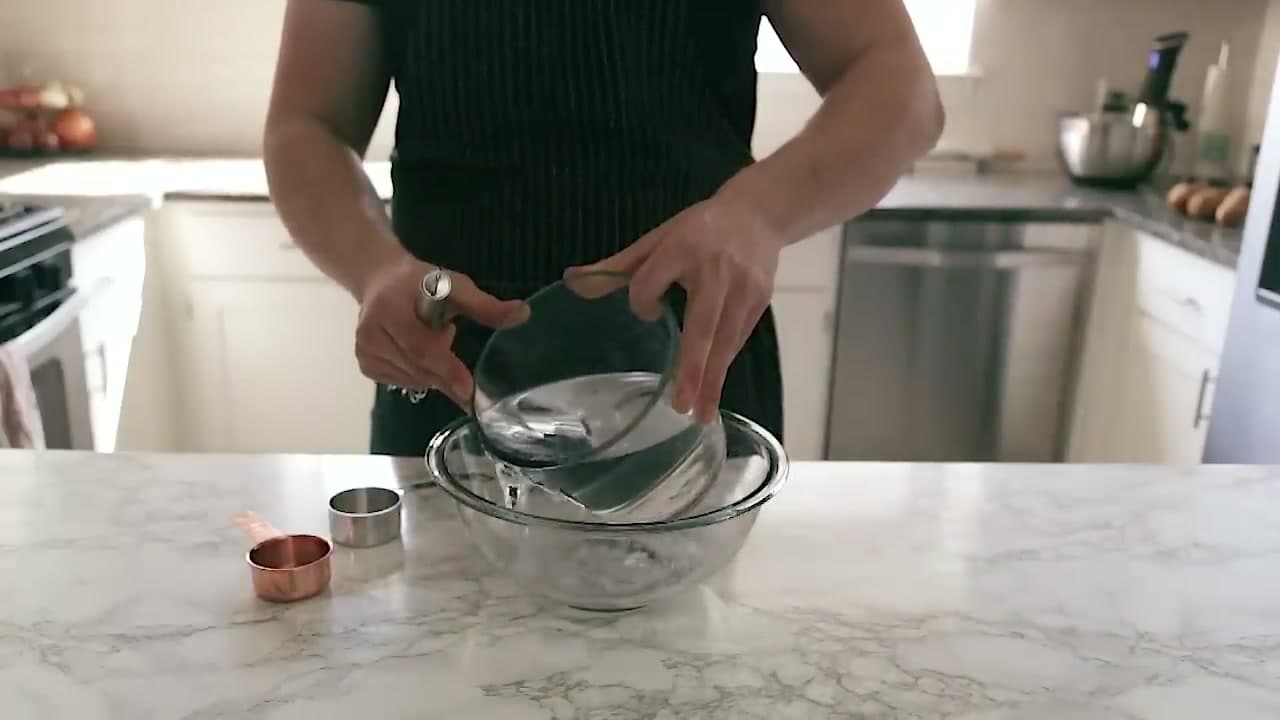
Step 2: Step 2: Make the Salt-and-Baking-Soda Brine

Pour four cups of cold water into a large mixing bowl. Whisk in one tablespoon of kosher salt and a half teaspoon of baking soda until everything dissolves. The salt seasons the potato all the way through during the sous vide pass. The baking soda is the part most home recipes skip - it gently raises the surface pH of the potato, which roughens the exterior during cooking. That rougher surface is what catches oil during the second fry and turns into the craggy outer crust you bite through on a great french fry.

Tip

The baking soda dose is small for a reason. More is not better - over half a teaspoon per four cups and the potato turns mushy.

3

Step 3: Peel Four Large Russet Potatoes Over Parchment

2:25
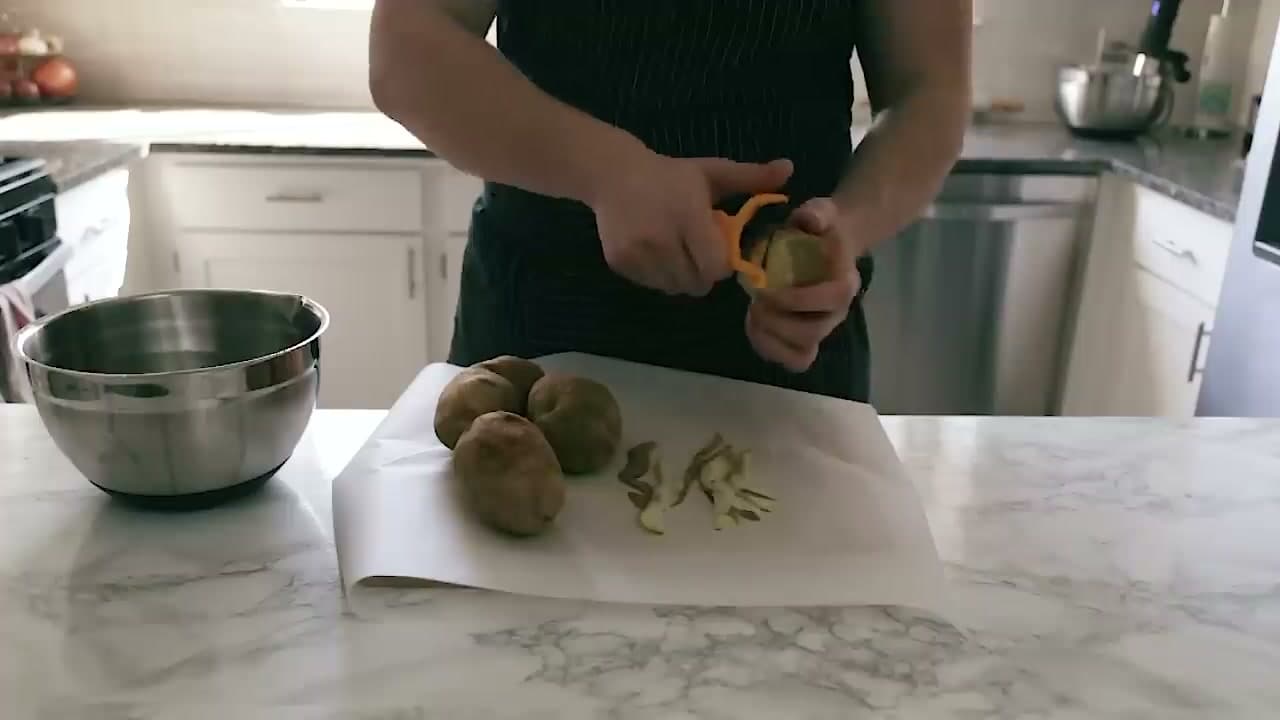
Step 3: Step 3: Peel Four Large Russet Potatoes Over Parchment

Tear off a big sheet of parchment paper and lay it flat on the counter. Stand over the parchment and peel your four large russets so all of the peels land on the paper. When you are done, grab the corners of the parchment, lift, and tip everything straight into the trash. No more sticky peels glued to a wet counter, jammed in the disposal, or stuck to the bottom of the sink. Russets are the right potato for this because their high starch content turns into the fluffy interior you want, and their low water content lets the exterior actually crisp.

Tip

A Y-peeler is faster than a swivel peeler on big russets. Hold the potato in one hand and pull the peeler toward you in long strokes.

4

Step 4: Cut the Potatoes Into Even Half-Inch Batons

2:55
Step 4: Step 4: Cut the Potatoes Into Even Half-Inch Batons

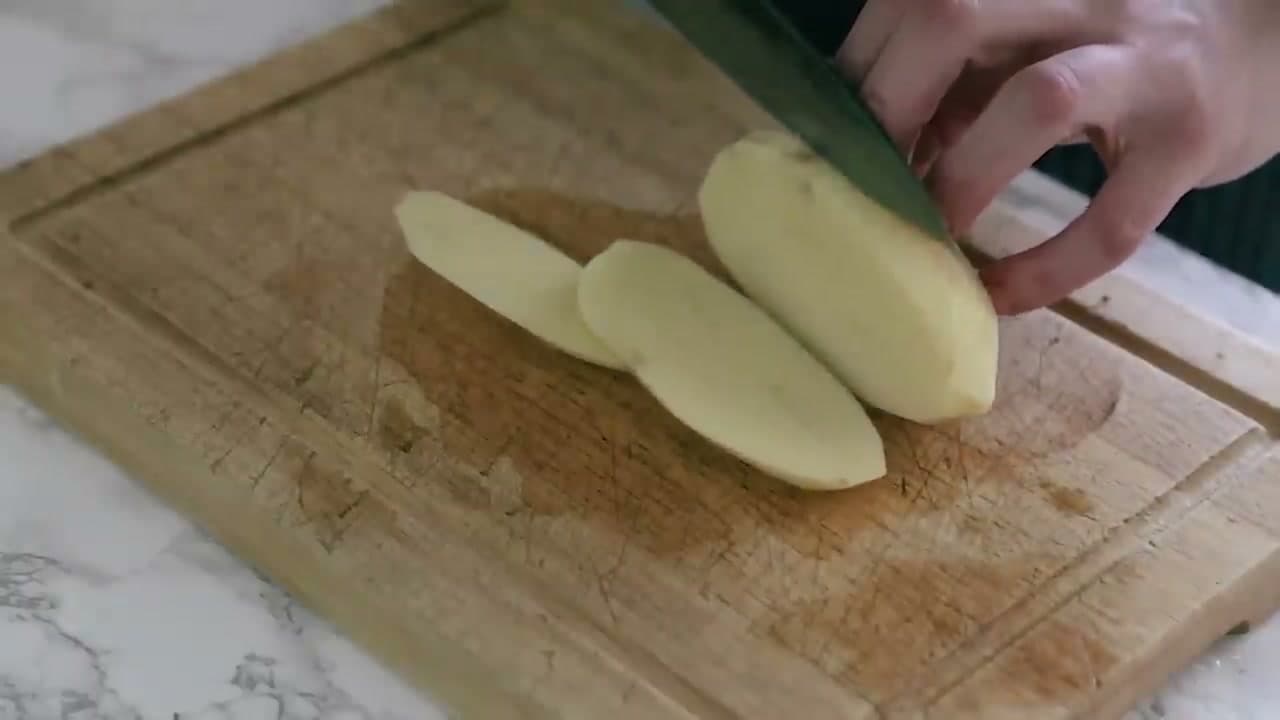
Lay a peeled potato on the cutting board and slice off a thin strip from one long side so it lies flat. Cut the potato lengthwise into half-inch-thick planks. Stack two or three planks at a time and cut them lengthwise again into half-inch-wide batons. You want even rectangles that measure half an inch by half an inch on every side. Even cuts cook evenly - if some fries are fat and some are skinny, the thin ones burn while the thick ones are still raw inside.

Tip

If you want shoestring fries instead, cut them at a quarter-inch and reduce the second fry to about one minute. Steak fries: three-quarter-inch batons and add two minutes to the first fry.

5

Step 5: Vacuum-Seal the Fries With the Brine

3:35
Step 5: Step 5: Vacuum-Seal the Fries With the Brine

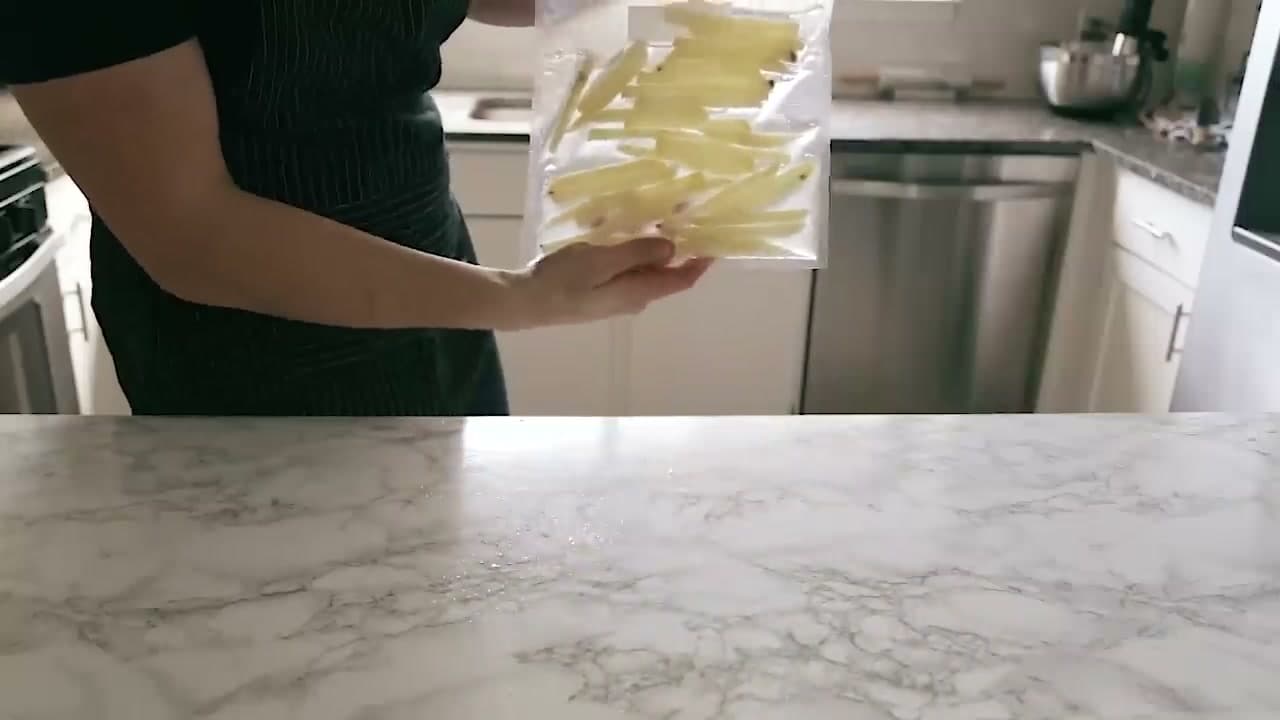
Split the cut fries into three roughly equal piles. Drop one pile into a vacuum-seal bag and pour in just enough brine to cover the potatoes. Seal the bag using a vacuum sealer or a hand-pump zip bag - the goal is to get the air out so the fries sit at the bottom of the bag and do not float to the top when you put them in the water. Repeat with the other two piles. Working in thirds keeps each bag thin so heat moves through the water and into the potato evenly during the sous vide pass.

Tip

No vacuum sealer? Use a freezer-grade zip bag and the water-displacement trick: dip the open bag slowly into the water bath. The water pressure forces the air out, then seal the bag just before the zipper goes under.

6

Step 6: Sous Vide for 15 Minutes, Then Dry on a Wire Rack

4:00
Step 6: Step 6: Sous Vide for 15 Minutes, Then Dry on a Wire Rack

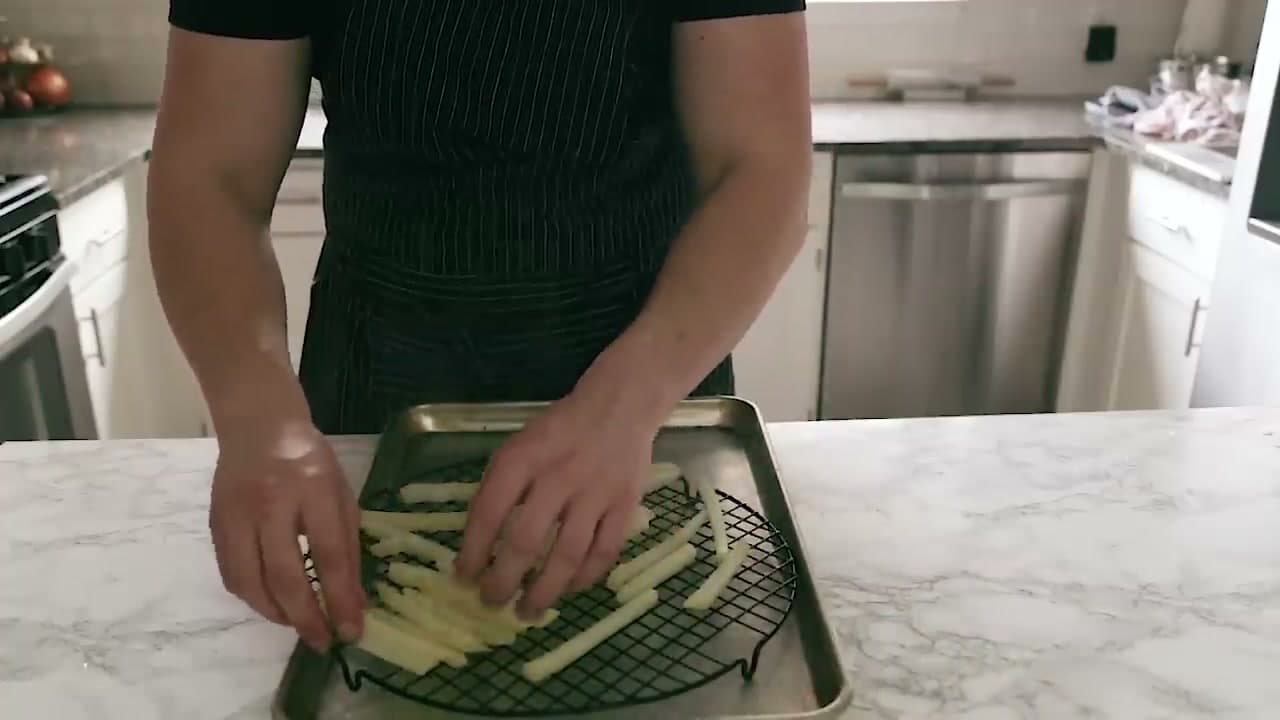
Drop the three sealed bags into the 90-degree-Celsius water bath and set a timer for 15 minutes. When the timer goes off, pull the bags out, cut them open over a wire rack set in a sheet pan, and spread the cooked fries out in a single layer. The fries should be fully cooked - tender if you bite one, but not falling apart. Let them sit on the rack until the exterior is dry to the touch. Dry exterior equals crispy crust. Wet fries spatter, drop the oil temperature, and steam instead of fry.

Tip

If you are in a humid kitchen and the fries stay clammy, pat them gently with paper towels. Do not press hard or you will smash the outside layer flat.

7

Step 7: First Fry at 270 Degrees - Build the Crust

4:30
Step 7: Step 7: First Fry at 270 Degrees - Build the Crust

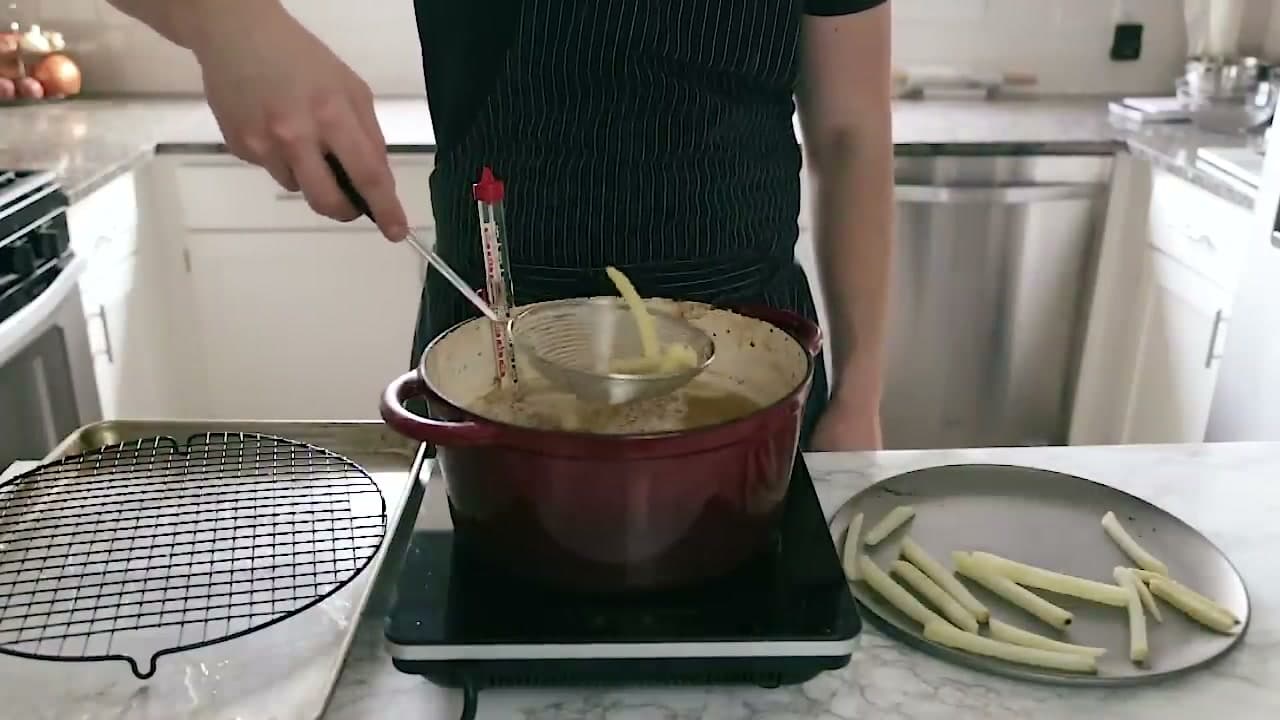
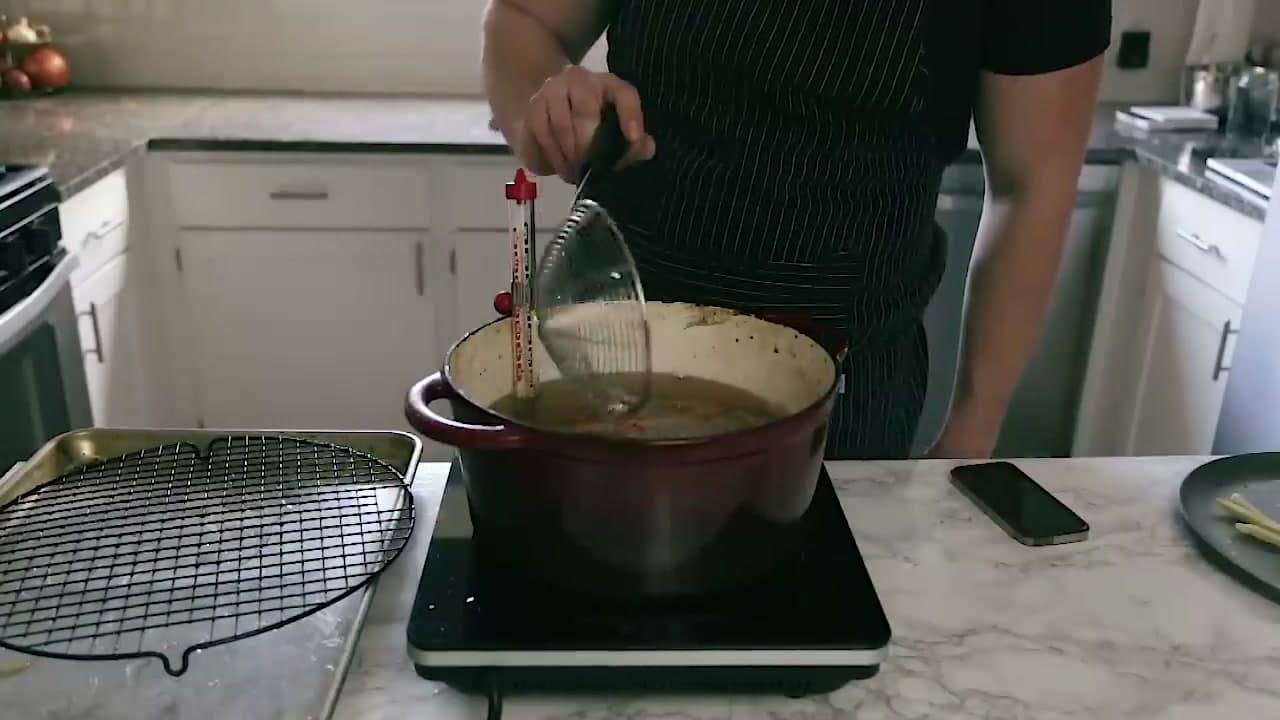
Pour two quarts of neutral oil into a heavy Dutch oven and clip a deep-fry thermometer to the side. Heat the oil to 270 degrees Fahrenheit over medium heat. When it is up to temperature, lower in a single layer of fries using a spider strainer - work in small batches so the oil temperature does not crash below 250. Fry for five to seven minutes, gently jostling them, until the exterior looks dry and crusty but still has not picked up any color. Lift them out, drain on a wire rack, and spread them on a sheet pan in the freezer for at least 30 minutes (or up to a week).

Tip

Never fill the pot more than halfway with oil. Fries displace water that the oil cannot, and an overfilled pot is how grease fires start. Keep a metal lid within reach the entire time you are frying.

8

Step 8: Second Fry at 375 Degrees - Salt While Hot

5:10
Step 8: Step 8: Second Fry at 375 Degrees - Salt While Hot

Crank the same oil up to 375 degrees Fahrenheit. The fries can go straight from the freezer into the hot oil - the cold makes the second fry shorter and the crust crispier. Lower in a batch and fry for about a minute and thirty seconds, just until they turn a deep golden brown. Pull them onto a paper-towel-lined tray and immediately sprinkle on a heavy pinch of kosher salt while the surface is still glossy with oil. That is when the salt sticks. Salting cold fries means the salt just falls off and pools on the tray.

Tip

Watch the color, not the clock. Different potato batches and frying setups give different times. Pull them the second they hit deep golden - one more minute and they go past crispy into hard.

9

Step 9: Optional Parmesan-Parsley Topping

6:00
Step 9: Step 9: Optional Parmesan-Parsley Topping

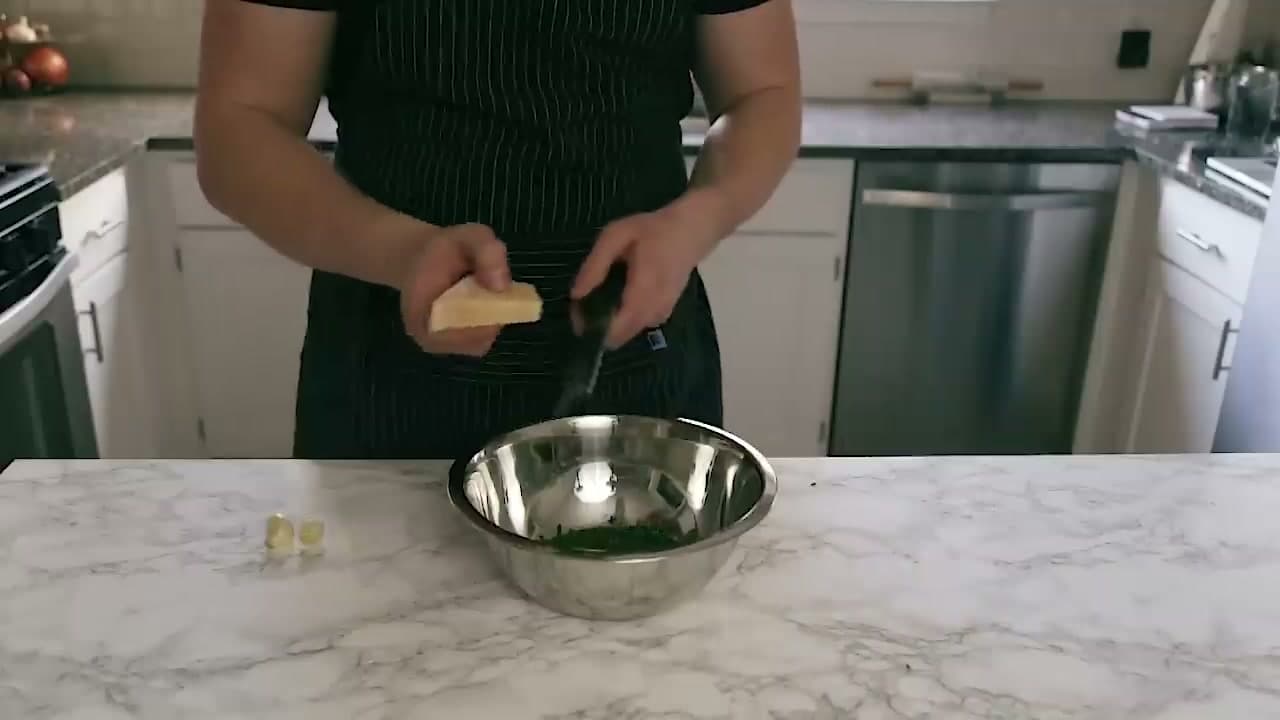
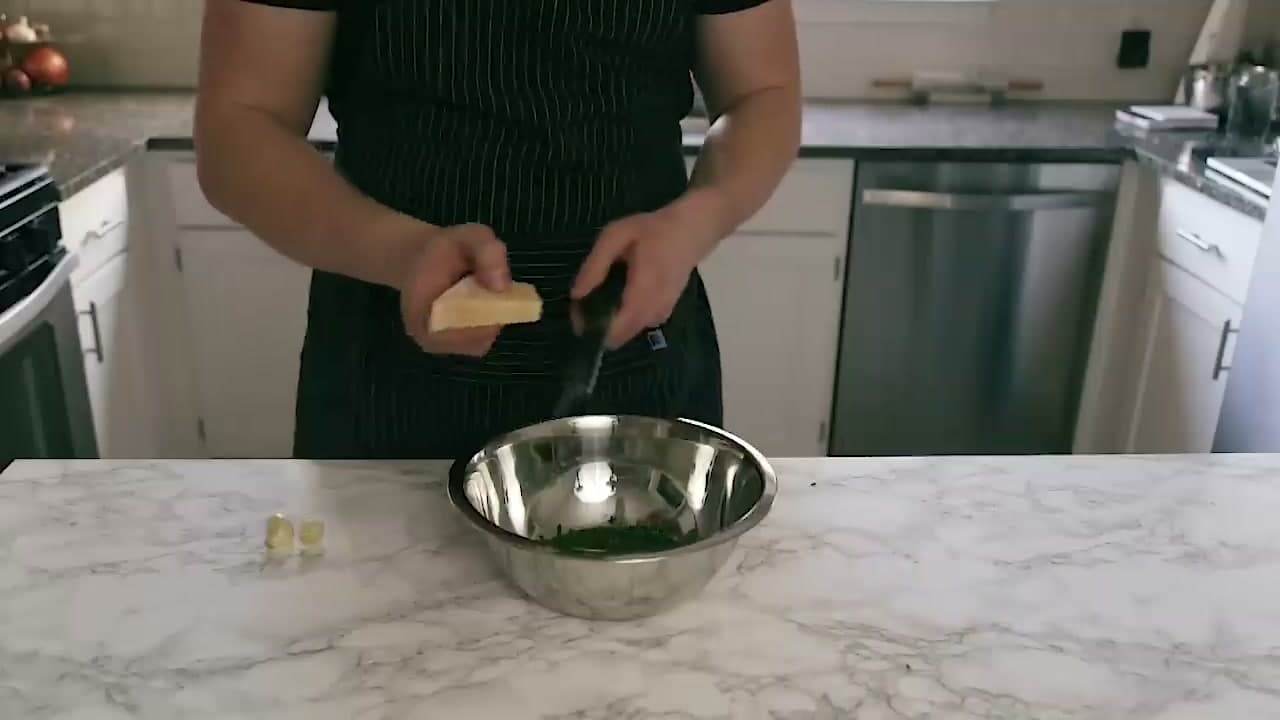
If you want to dress these up the way Joshua does, mix the topping while the second fry is happening. Stir together a half cup of finely chopped fresh parsley, a half cup of freshly grated Parmigiano-Reggiano or Grana Padano, and one freshly grated garlic clove. Add a small pinch of salt and stir to combine. The second the last batch comes out of the oil, toss the hot fries with the topping in a wide bowl so the cheese melts a little and clings to every fry. Pile them on a plate and serve. The combination of crispy salty fries and sharp grassy topping is the move.

Tip

Grate the garlic on a Microplane, not a regular grater. The fine pulp distributes evenly so you do not bite into a raw garlic chunk. If you are not eating immediately, hold the topping separate and toss right before serving.

Products Used

❖ The Recipe

How to Make French Fries (Ultra Crispy at Home)

Serves
Serves 4 as a side
Prep
25 min
Cook
35 min
Total
1 hr

Ingredients

8 items
  • 4 largerusset potatoesstarchy bakers - waxy potatoes will not crisp the same way
  • 4 cupswaterfor the brine - filtered or tap is fine
  • 1 tbspkosher saltfor the brine, plus more to season the finished fries
  • 0.5 tspbaking sodaraises the surface pH - this is the secret to the craggy crust
  • 2 quartsneutral oilpeanut, canola, or vegetable for deep frying
  • 0.5 cup choppedfresh parsleyoptional - for the parmesan topping
  • 0.5 cup freshly gratedParmigiano-ReggianoGrana Padano works too
  • 1 clovegarlicfreshly grated on a Microplane for the topping

Nutrition

estimated · per servingEstimated from the ingredient list, not measured. Actual values vary by brand, preparation, and serving size. Not a substitute for measured nutrition data.
Calories
340kcal
Protein
8g
Fat
18g
Carbs
38g
Fiber
3g
Sodium
480mg

Method

  1. 1
    Step 1: Set Up the Sous Vide Bath at 90 Degrees Celsius. Clip your immersion circulator to the side of a large pot or polycarbonate tub, fill it with warm tap water past the minimum line, and set the temperature to 90 degrees Celsius (194 degrees Fahrenheit).
  2. 2
    Step 2: Make the Salt-and-Baking-Soda Brine. Pour four cups of cold water into a large mixing bowl.
  3. 3
    Step 3: Peel Four Large Russet Potatoes Over Parchment. Tear off a big sheet of parchment paper and lay it flat on the counter.
  4. 4
    Step 4: Cut the Potatoes Into Even Half-Inch Batons. Lay a peeled potato on the cutting board and slice off a thin strip from one long side so it lies flat.
  5. 5
    Step 5: Vacuum-Seal the Fries With the Brine. Split the cut fries into three roughly equal piles.
  6. 6
    Step 6: Sous Vide for 15 Minutes, Then Dry on a Wire Rack. Drop the three sealed bags into the 90-degree-Celsius water bath and set a timer for 15 minutes.
  7. 7
    Step 7: First Fry at 270 Degrees - Build the Crust. Pour two quarts of neutral oil into a heavy Dutch oven and clip a deep-fry thermometer to the side.
  8. 8
    Step 8: Second Fry at 375 Degrees - Salt While Hot. Crank the same oil up to 375 degrees Fahrenheit.
  9. 9
    Step 9: Optional Parmesan-Parsley Topping. If you want to dress these up the way Joshua does, mix the topping while the second fry is happening.
☐ The Checklist

How to Make French Fries (Ultra Crispy at Home)

Tools
13
Materials
9
Steps
9
Video
7 min

Your Guide

Joshua Weissman

As an Amazon Associate we earn from qualifying purchases. Links on this page may be affiliate links - clicking them and buying doesn't change your price, but helps support ShowMeStepByStep.

Tags

Test your knowledge

Did the lesson stick? Find out in 2 minutes.

5 quick questions covering what you just read. No signup, no score saved — just a gut check.

Quick reference

Key takeaways from How to Make French Fries (Ultra Crispy at Home)

5 questions, answers, and one-line explanations. Tap to expand.

  1. 1.Which potato gives the crispiest fries?

    Answer: Russet potatoes

    Russet's high starch + low moisture is what creates a crisp shell while the interior fluffs. Waxy potatoes turn gummy.

  2. 2.Why brine with salt AND baking soda?

    Answer: Raises surface pH

    Salt seasons through; baking soda raises pH which roughens the surface, and rougher surfaces fry up crispier.

  3. 3.How does double frying work?

    Answer: Low first, high second

    First fry ~270°F builds structure; second fry ~375°F finishes color and crunch. One-pass fries burn or stay limp.

  4. 4.When should you salt fries?

    Answer: Hot from the oil

    Hot + oily surface = salt adheres. Salt cooled fries and most of it falls off into the bowl.

  5. 5.What does the sous vide pre-cook at 90°C do?

    Answer: Fully cooks the interior

    Sous vide separates 'cook the interior' from 'build a crust'. The fryer only has to focus on the outside texture.

What's next

Related collections

Curated theme pages that include this tutorial.

Weekly Digest

Liked this cooking tutorial?

Pick the categories you want to hear about. Weekly digest of new step-by-step tutorials. No spam, easy unsubscribe.

Send me tutorials about

We only email about new tutorials. Easy unsubscribe anytime.