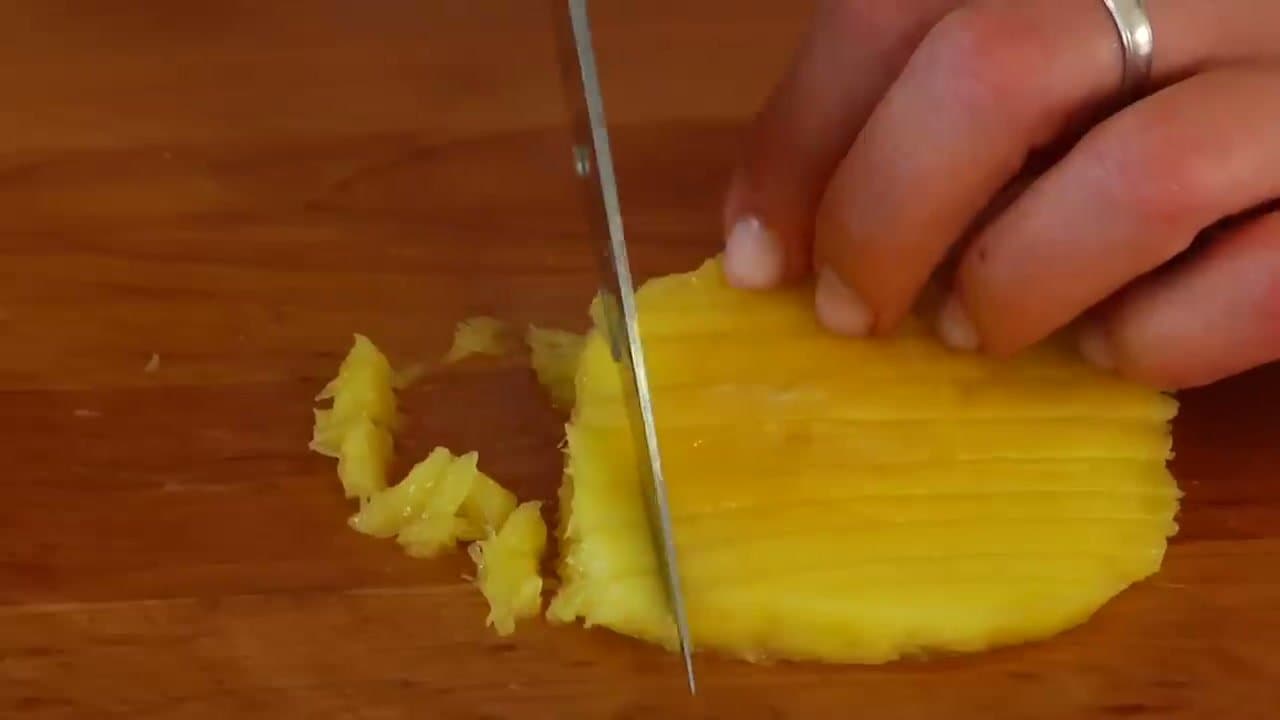
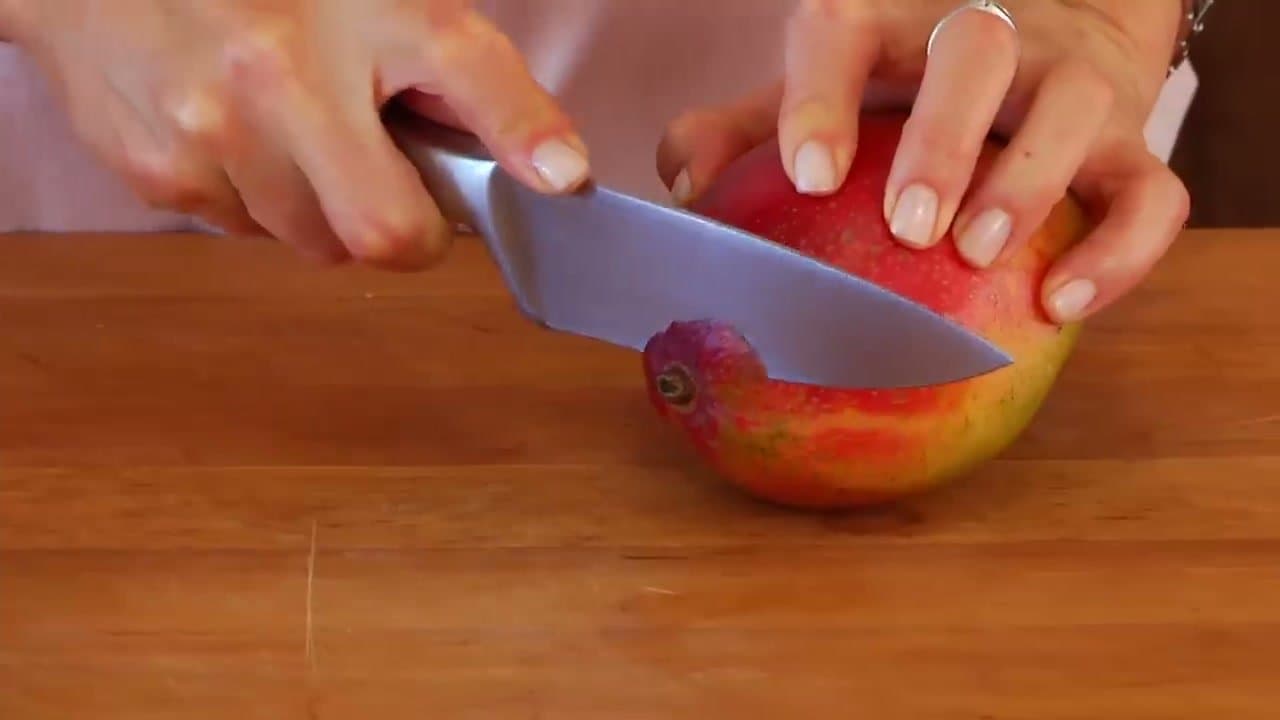
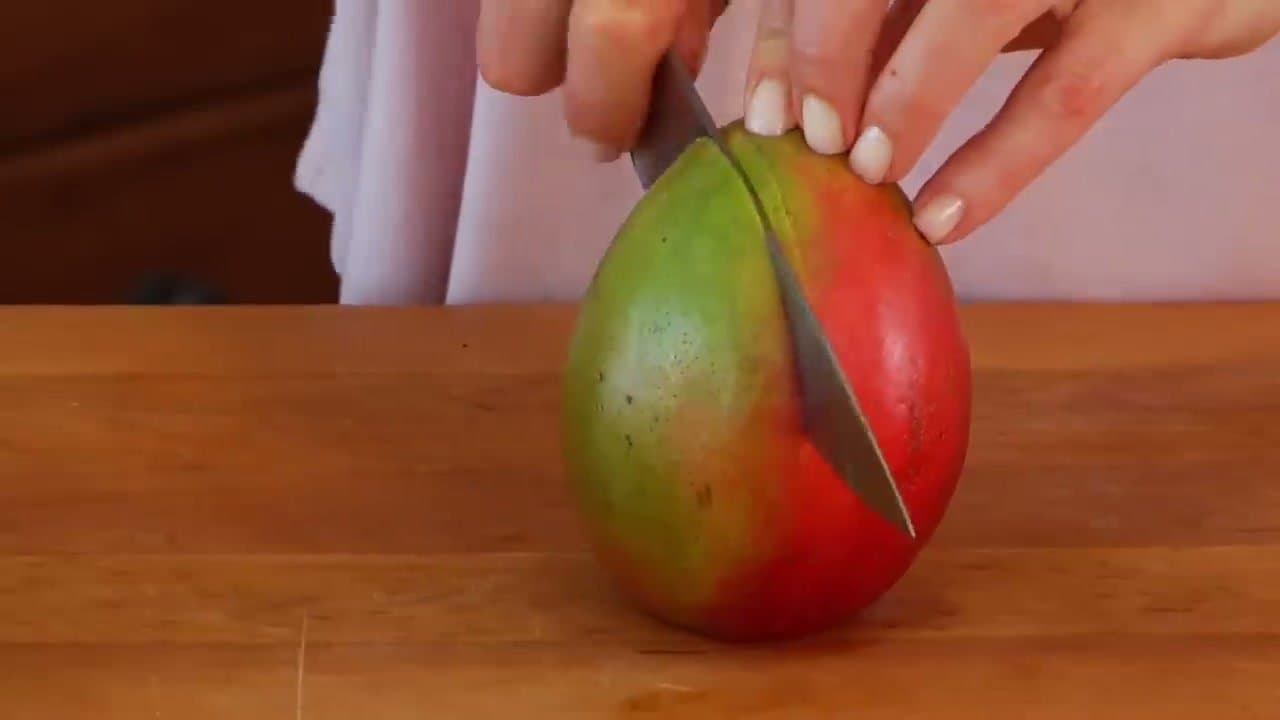
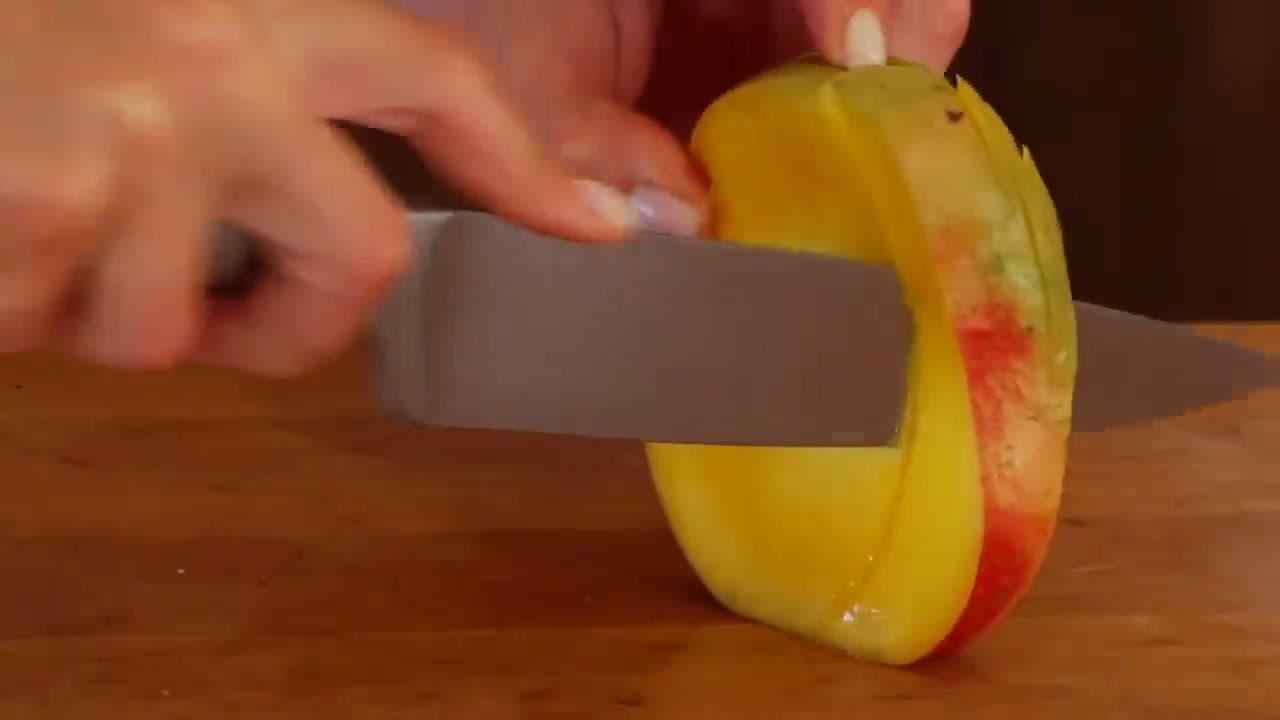
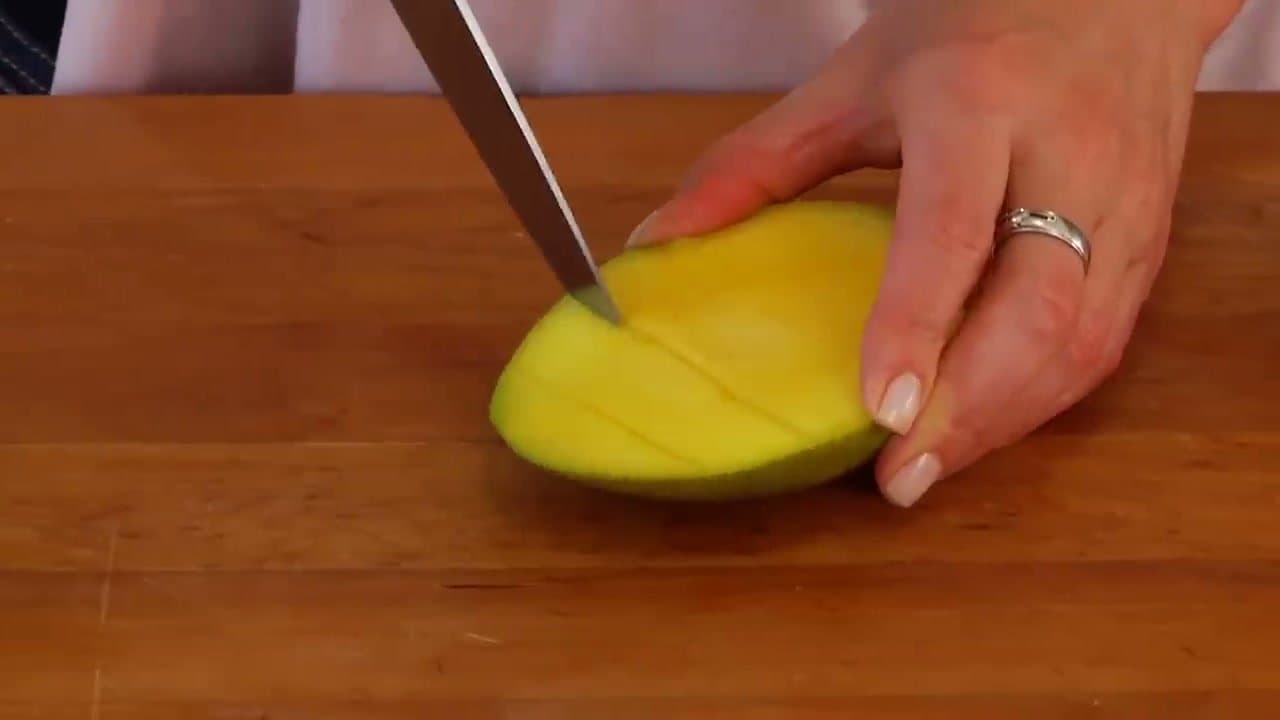
A mango hides a big flat pit right through the middle, and it does not sit where most people guess. Cut down the center and you hit it. Cut too far out and you leave a thick slab of fruit stuck to the stone.
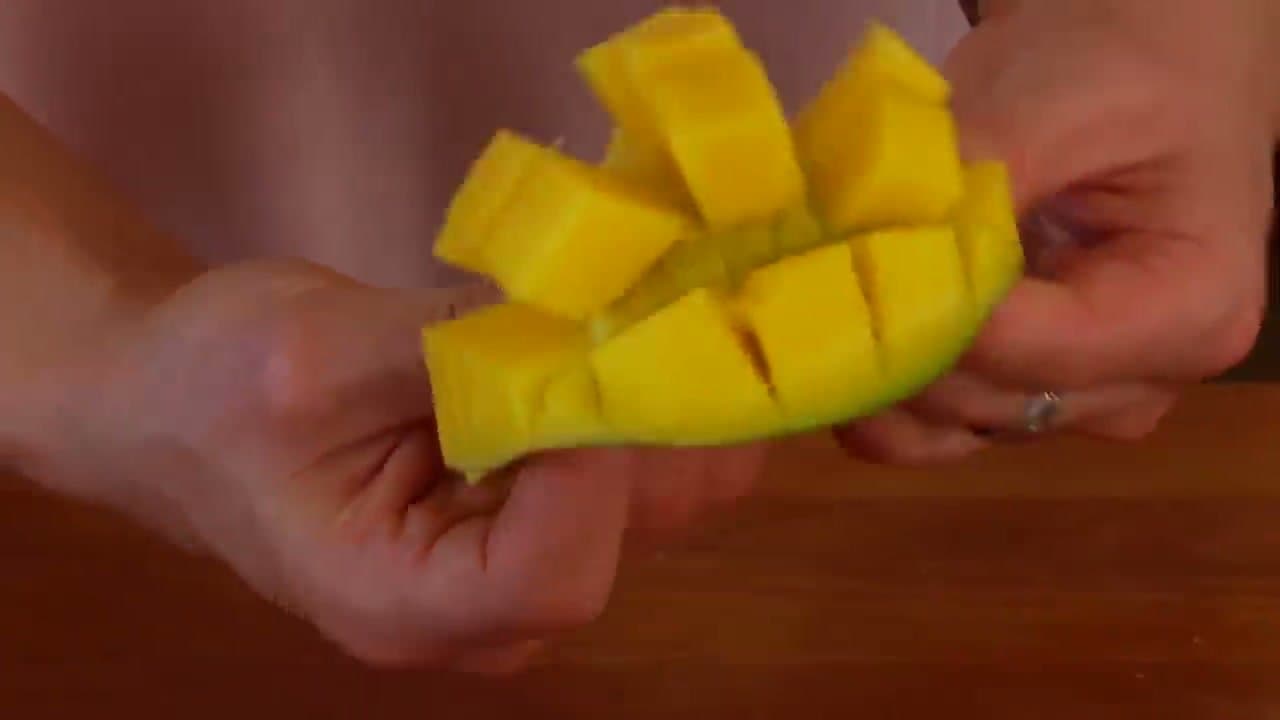
Dani Spies of Clean & Delicious works around the pit instead of through it. Two cuts take off the cheeks, a grid of shallow scores turns each cheek into cubes, and a push from underneath pops them out. The whole thing takes about three minutes once you know where the pit sits.
How to Tell When a Mango Is Ripe
Color lies. A Tommy Atkins mango, the big red-blushed one in most supermarkets, stays red and green even when it is soft and sweet inside. An Ataulfo, sold as a honey or champagne mango, turns deep gold and wrinkles a little at the shoulders when it is ready.
Use your hands instead. Cup the fruit and press with your whole palm, not a fingertip. It should give the way a ripe avocado does. Then smell the stem end. A ripe mango smells like mango from an inch away, and no smell means no flavor yet.
Rock hard at the store? Leave it on the counter for two or three days, or put it in a paper bag with a banana to speed it along. Once it softens, the fridge buys you another few days.
Where the Pit Sits, and Why the Cheek Method Exists
The pit is a flat oblong, wider than you expect, running stem to tip. Stand the mango on the board and look down at it. One axis is wide, the other is narrow. The pit lies flat along the wide axis, which means your knife has to come down on the two narrow faces. Those are the cheeks, and they hold most of the fruit.
Start about a quarter inch off center and cut straight down, parallel to the flat of the pit. If the blade stops on something hard, back it out, shift over a fraction, and go again. Sawing through a pit dulls a knife fast, and a stuck blade that suddenly frees itself is how hands get cut.
Hedgehog Cubes or Peel and Dice
Scoring a cheek in a grid and turning it inside out gives you the hedgehog, the mango photo everyone knows. The cubes come out even, the skin works as a handle, and nothing touches the fruit but your knife tip. That is the one for fruit bowls, yogurt, smoothies, or eating over the sink.
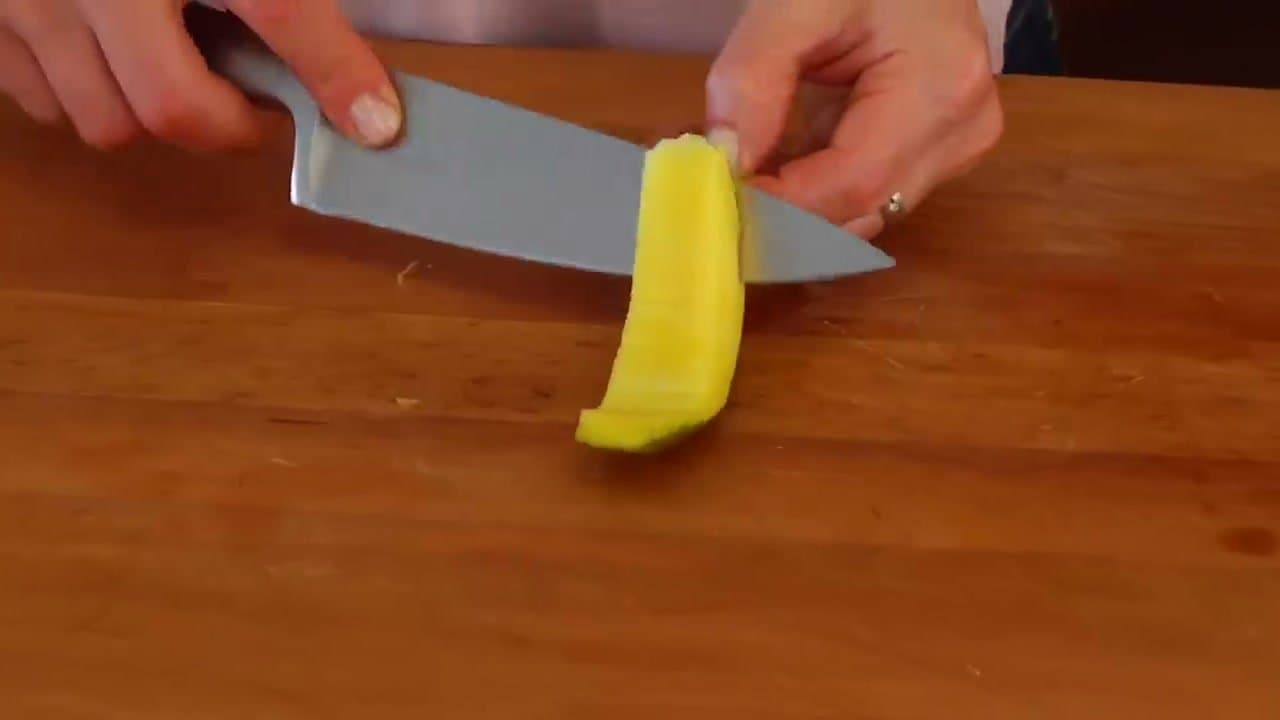
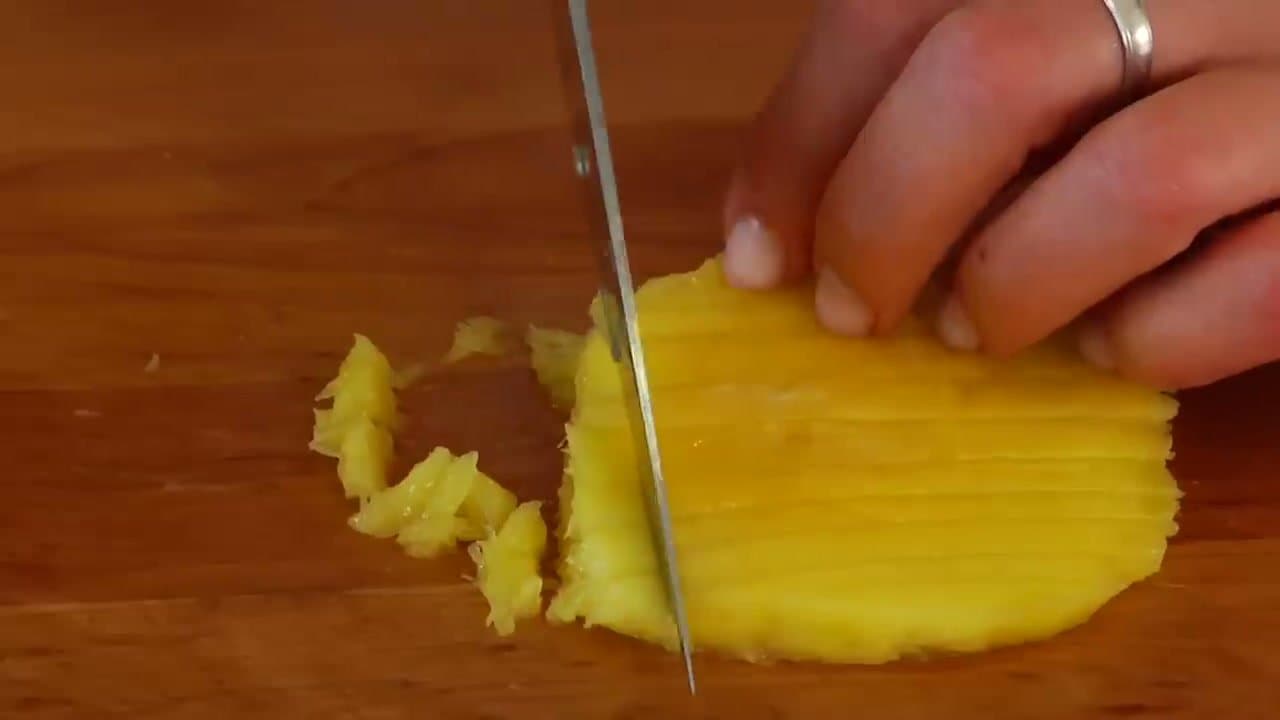
Salsa wants smaller, tidier pieces, and the grid cannot go much finer without slicing through the skin. Peel the whole mango with a vegetable peeler, take the cheeks off the same way, then cut planks, stack them, and cross-cut. You control the size, so a quarter-inch dice for salsa verde or a mango salsa is easy to hit.
- Hedgehog cubes: snacking, breakfast bowls, a fruit platter
- Peel and dice: salsa, grain salads, anything folded into guacamole
Do Not Bin the Pit Yet
Two strips of good fruit cling to the thin edges of the stone after the cheeks come off. Trim them with the side of the pit as your guide, lay each strip skin-side down, and slide the knife between flesh and skin. That is another quarter cup of mango most people throw away.
The stone itself is the cook's snack. Gnaw it standing over the sink. There is no dignified way to do it.
Storing Cut Mango
Cut mango holds three days in an airtight container in the fridge, and a squeeze of lime slows the browning at the edges. For longer, spread the cubes on a sheet pan, freeze them solid, then bag them. Frozen cubes blend into smoothies without watering the drink down.
If round, slippery fruit is the part that trips you up, cutting a pineapple runs on the same logic: build a flat base first, then let the shape of the core tell you where the knife goes.