How to Make a Junk Journal: Step-by-Step Beginner Guide

ScrapbookingEasy12:149 steps

Based on a video by joie de fi.

Junk journaling is the craft of making personal, layered journals from old book pages, scrap paper, ephemera, and anything else you can rescue from the recycling bin. The result is something that feels handmade and personal in a way no store-bought notebook can match.

This walkthrough from joie de fi shows the complete process for a single-signature junk journal in nine clear steps. Use whatever paper stash you have on hand. The whole project takes an hour or two and costs almost nothing if you're upcycling.

Step-by-Step Guide

1

Step 1: Gather Pages and Papers

1:15
Step 1: Step 1: Gather Pages and Papers

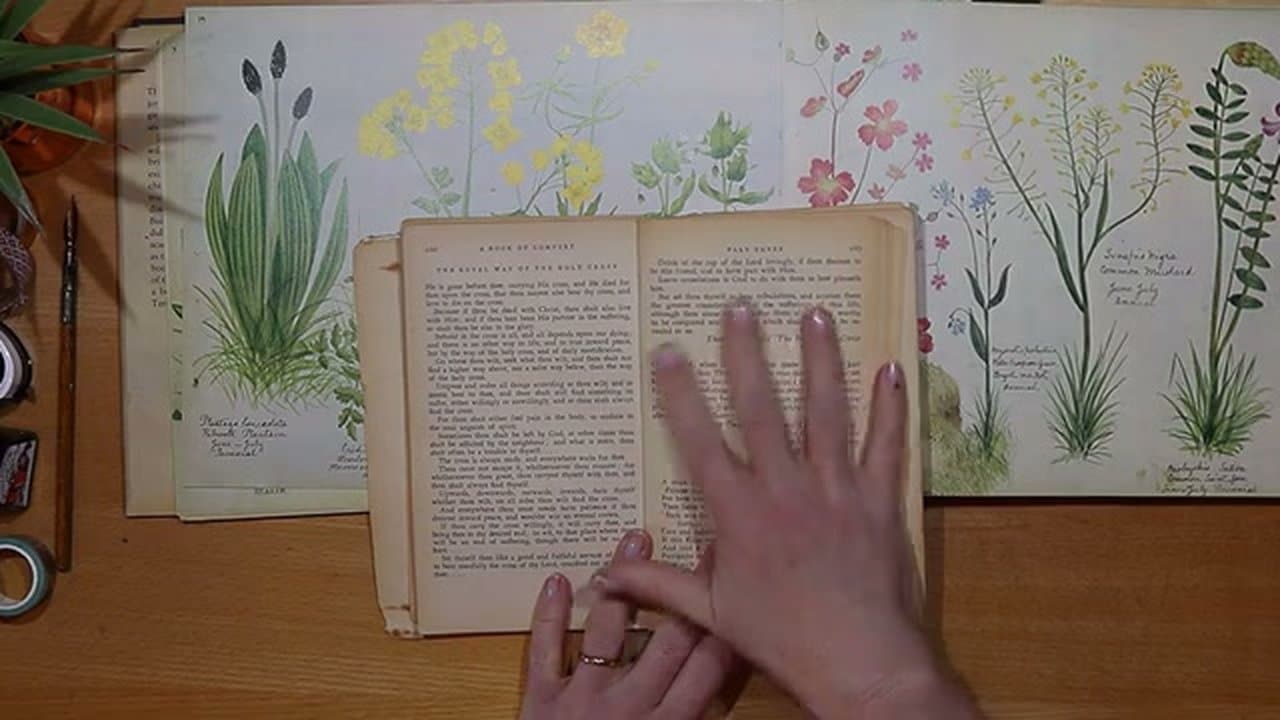
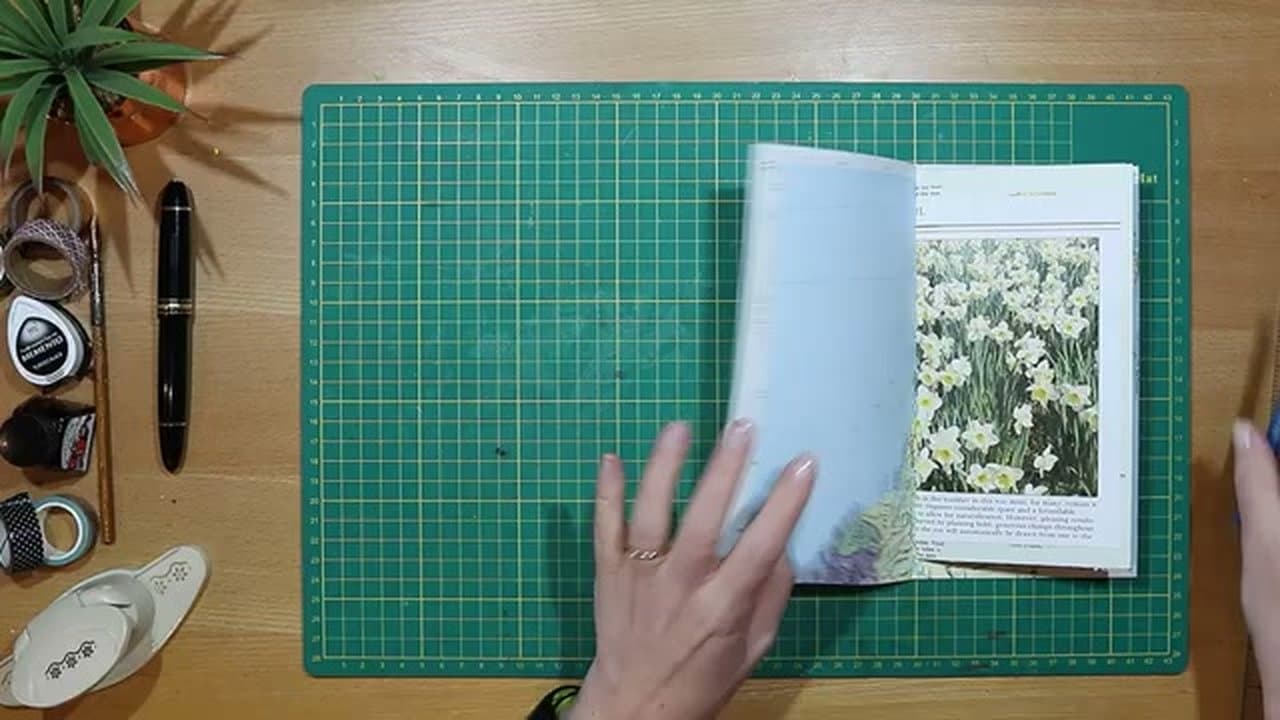
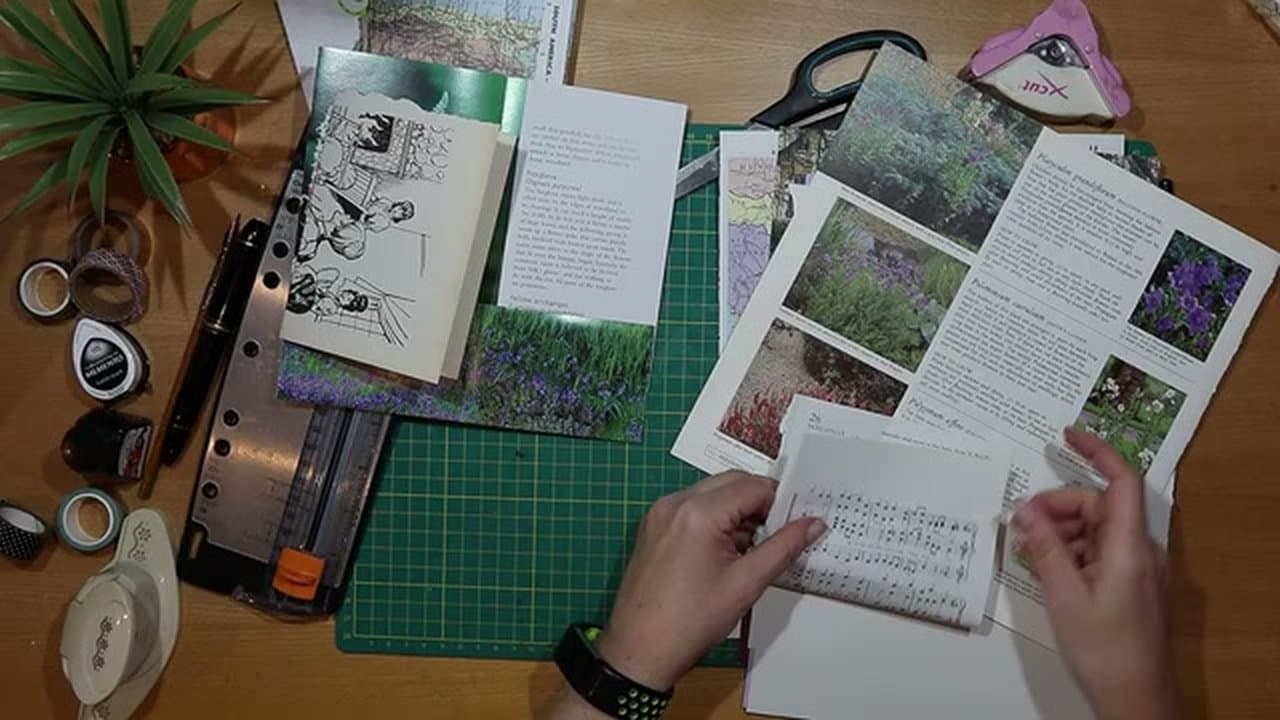
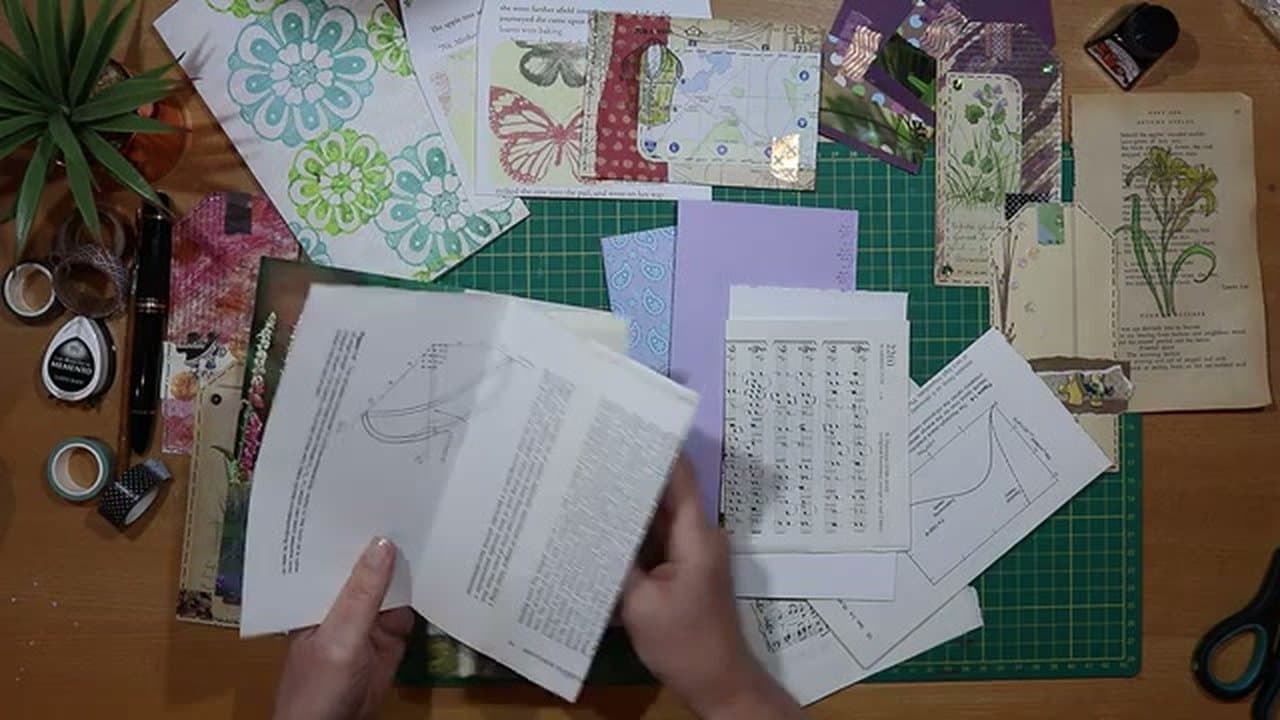
Pull pages from old books, vintage ephemera, scrapbook paper, anything in your stash with character. Mix smooth pages with textured ones, plain with patterned, classic with whimsical.

Look for variety in weight, color, and feel. Botanical illustrations, sheet music, atlas pages, letterpress text, and graph paper all work. The mismatch is the whole point. About 10-12 sheets is plenty for one signature.

Tip

Charity shops, library book sales, and car boot sales are great cheap sources for older books that won't break your heart to cut up.

2

Step 2: Pick a Cover That Folds Into a Pocket

4:30
Step 2: Step 2: Pick a Cover That Folds Into a Pocket

For the cover, use a piece of 12 by 12 cardstock or any sturdy decorative paper. Double-sided paper looks great because the pattern shows on both faces.

If your cover sheet is a little too long, fold the excess inward instead of cutting it off. That extra fold becomes a built-in inside pocket where you can tuck cards, tags, or letters later.

3

Step 3: Trim Pages to Size

5:40
Step 3: Step 3: Trim Pages to Size

Decide on a finished size first. A traveler's notebook size of 11.5 by 21 cm (about 4.5 by 8 inches) is a classic choice; the inside pages then trim to roughly 10 by 19 cm so they fit inside the cover when folded.

Run each sheet through a paper trimmer (or use scissors and a ruler) until the whole stack matches. A cutting mat helps you check sizes as you go.

4

Step 4: Add Decorative Details

7:20
Step 4: Step 4: Add Decorative Details

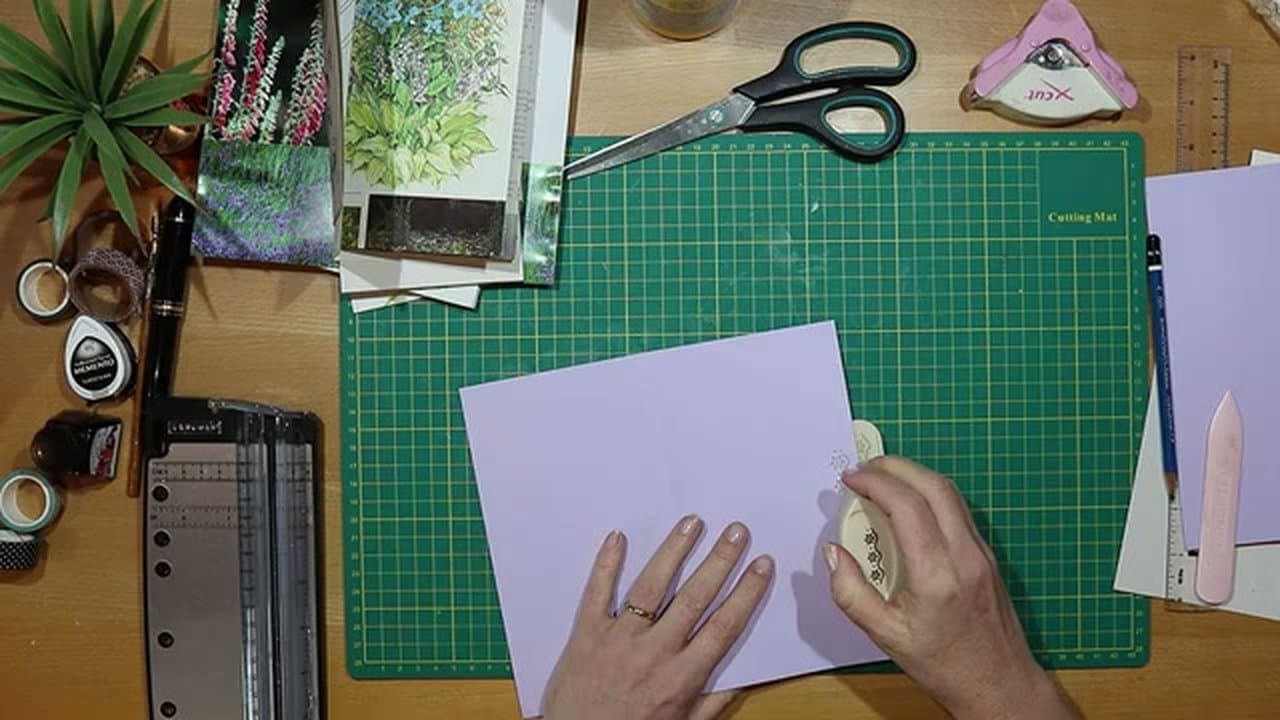
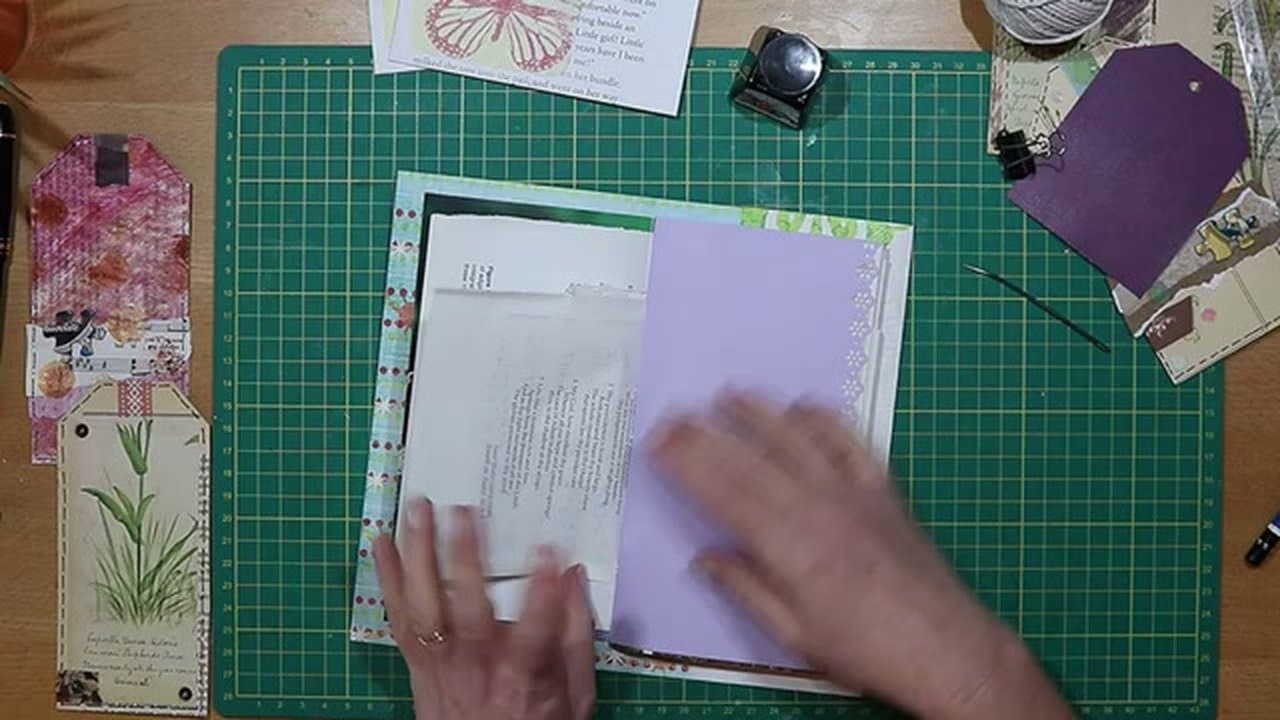
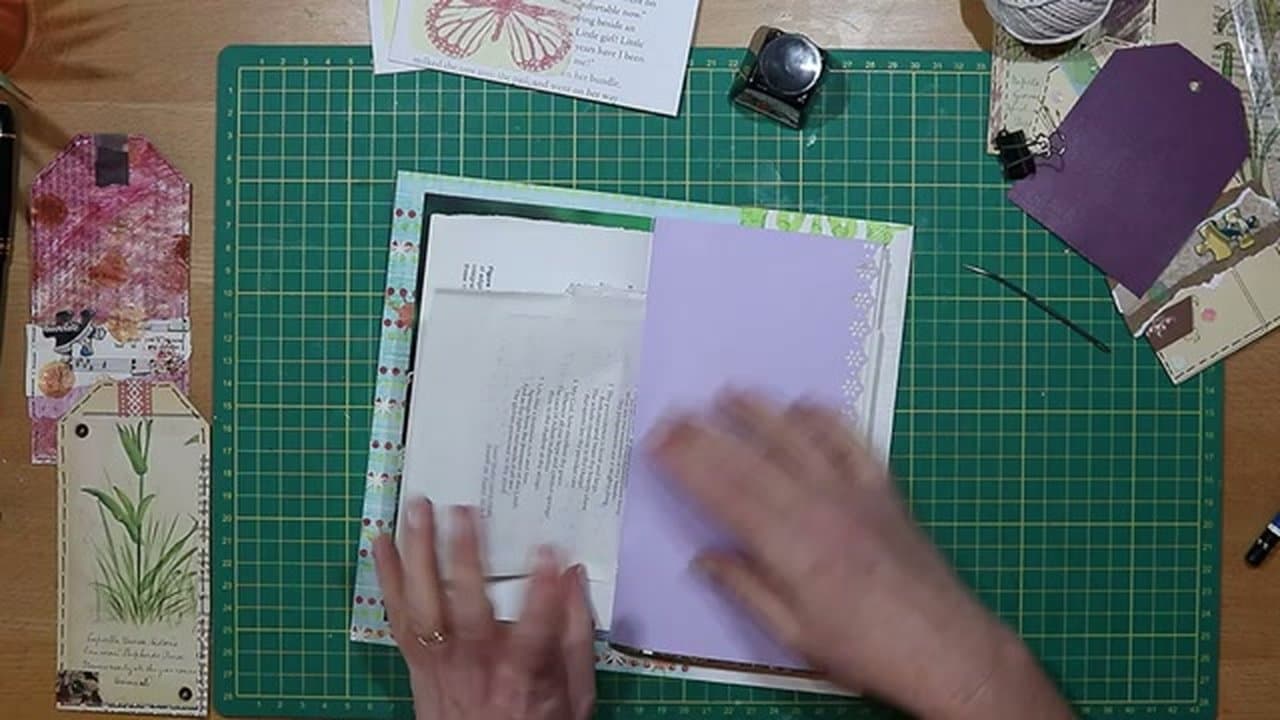
If a page feels plain or slightly oversized, dress it up. Run a decorative hole punch along one edge for a lacy border, fold an overlong sheet inward to form an interior pocket, or tear an edge for a deckled vintage look.

Small touches like this give the finished journal personality without much effort, and they let you handle awkward sizes without trimming away the paper you wanted to keep.

Products used in this step

5

Step 5: Order the Pages for Contrast

8:45
Step 5: Step 5: Order the Pages for Contrast

Spread the trimmed pages out and decide on the running order. The goal is contrast: light next to busy, smooth next to textured, image-heavy next to mostly text.

Putting two patterned pages back to back tends to look muddy, so alternate. The middle two pages of the signature read as a feature spread when the journal is open, so save your most striking page for that center.

6

Step 6: Mark Three Binding Holes

9:35
Step 6: Step 6: Mark Three Binding Holes

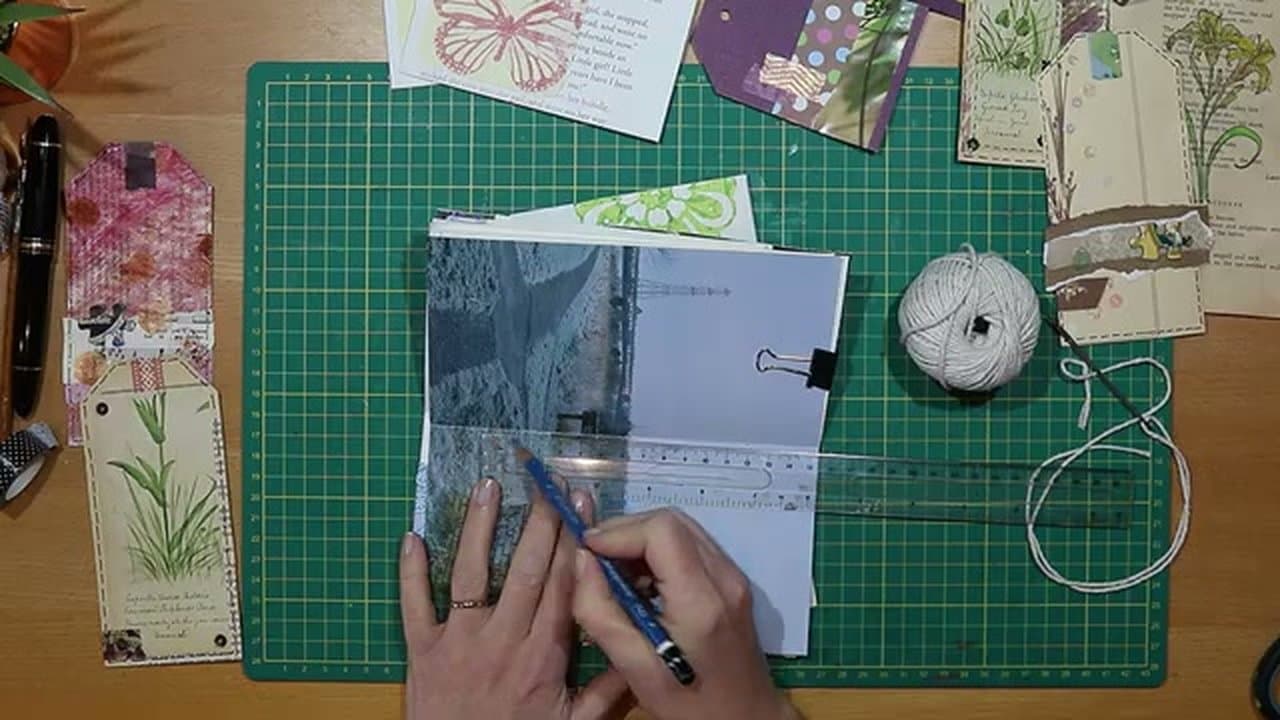
Fold the page stack in half along the spine and clip it with a bulldog clip so nothing shifts. With a ruler and pencil, mark three points on the fold: one in the exact center, plus one 6 cm above and one 6 cm below it.

Mark the same three points on the cover's spine line so the holes line up when you stitch. Three points is plenty for a single-signature journal.

7

Step 7: Pierce the Holes

10:20
Step 7: Step 7: Pierce the Holes

Push a sewing needle through each marked point. The signature pages are easy; the cover is a little stiffer but still gives way with steady pressure.

Keep the bulldog clip on while you pierce so the layers don't drift. With three clean holes through both signature and cover, you're ready to bind.

Products used in this step

8

Step 8: Sew the Figure-Eight Stitch

11:00
Step 8: Step 8: Sew the Figure-Eight Stitch

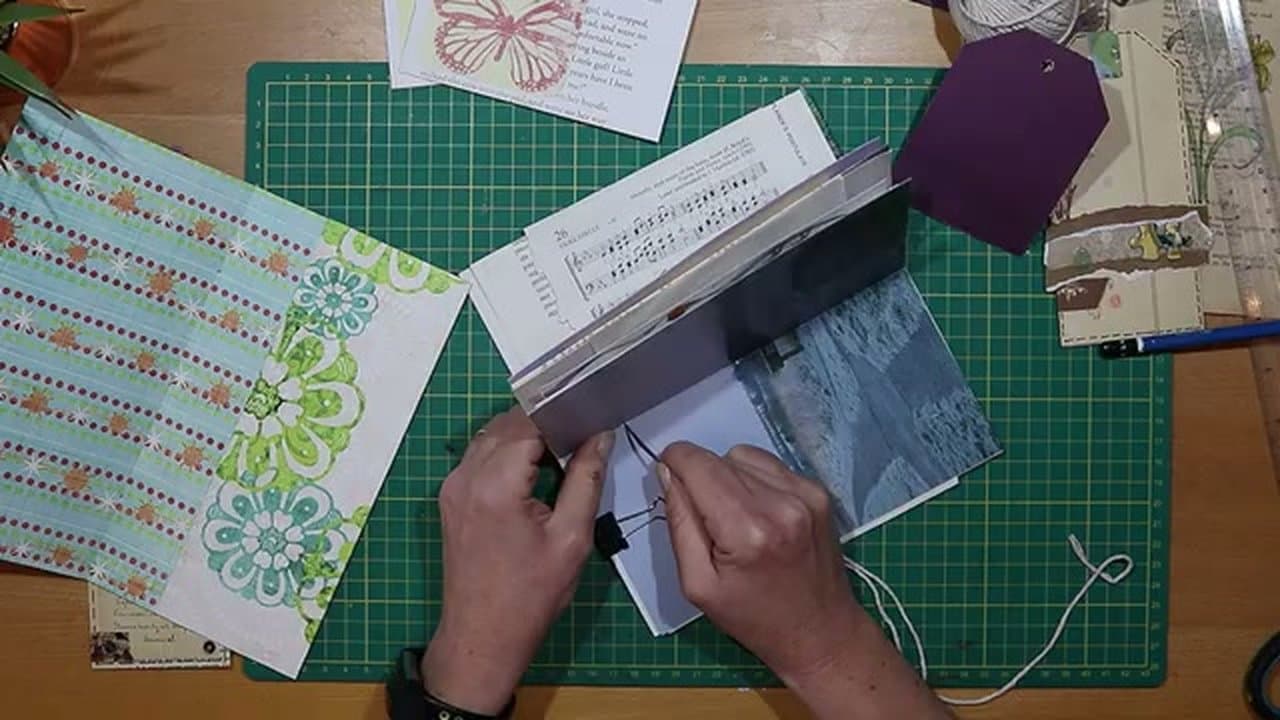
Cut a length of cotton string about three times the depth of the spine. Thread your needle. Start from the outside of the cover, push through the top hole into the inside of the signature, then back out through the center hole.

From the outside, push through the bottom hole. Finally come back out through the center hole. The string traces a figure-eight pattern that holds everything together. Keep it loose for now.

Products used in this step

9

Step 9: Tighten and Tie Off

11:40
Step 9: Step 9: Tighten and Tie Off

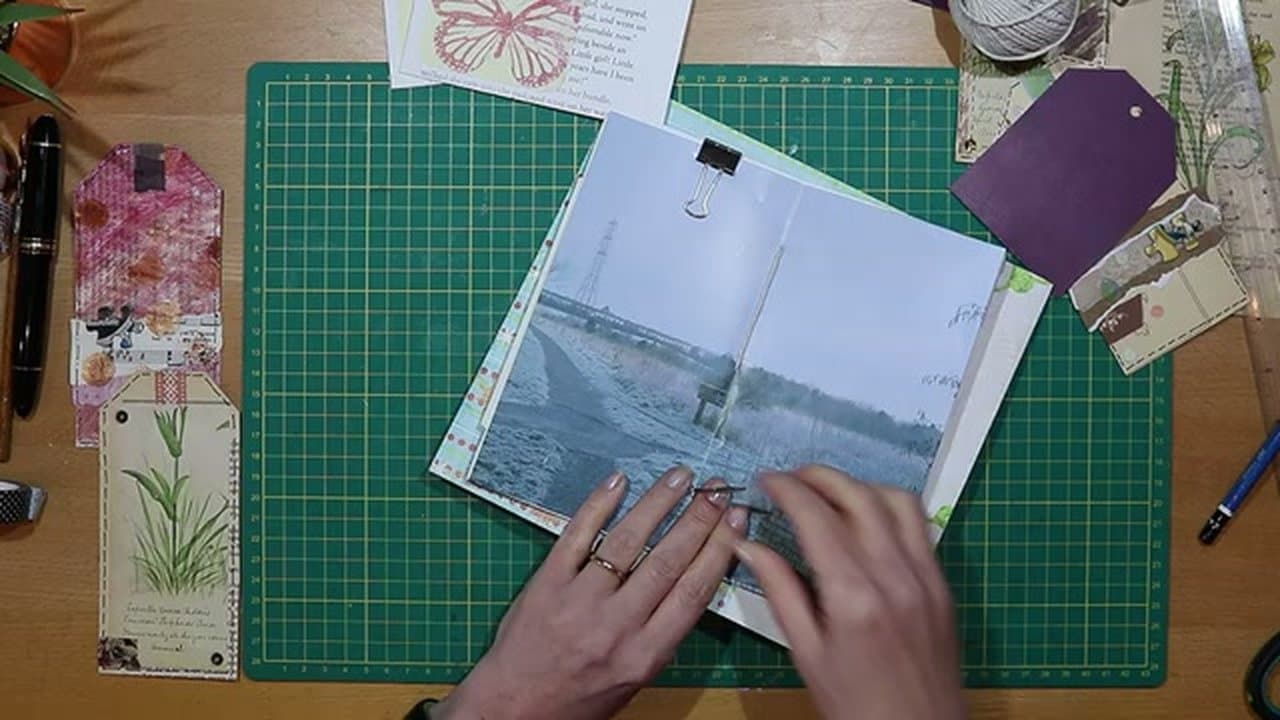
Now pull the string tight. Make sure the long center stitch sits flat on the spine and the figure-eight has snugged up evenly.

Tie the two ends together with a knot or finish with a bow on the spine. Trim the tails or leave them long for character. That's it - one finished single-signature junk journal, ready to fill with collage, photos, and ephemera.

Products Used

☐ The Checklist

How to Make a Junk Journal: Step-by-Step Beginner Guide

Tools
8
Materials
5
Steps
9
Video
12 min

Your Guide

joie de fi

As an Amazon Associate we earn from qualifying purchases. Links on this page may be affiliate links - clicking them and buying doesn't change your price, but helps support ShowMeStepByStep.

Tags

Related Tutorials