How to Make Pipe Cleaner Flowers (5 Easy Designs)

Also in:Paper Crafts

By ShowMeStepByStepPublished

Based on a video by BendyTwist.

Step-by-Step Guide

1

Step 1: Cut and Twist the Pink Petals

1:00
Step 1: Step 1: Cut and Twist the Pink Petals

Lay out a stack of pink pipe cleaners. For a single lily you need twelve - that gives you six petals, two strands per petal for body. Lay the metal ruler across a pipe cleaner and snip at the 10 cm mark. Repeat until you have twelve 10 cm pink strands.

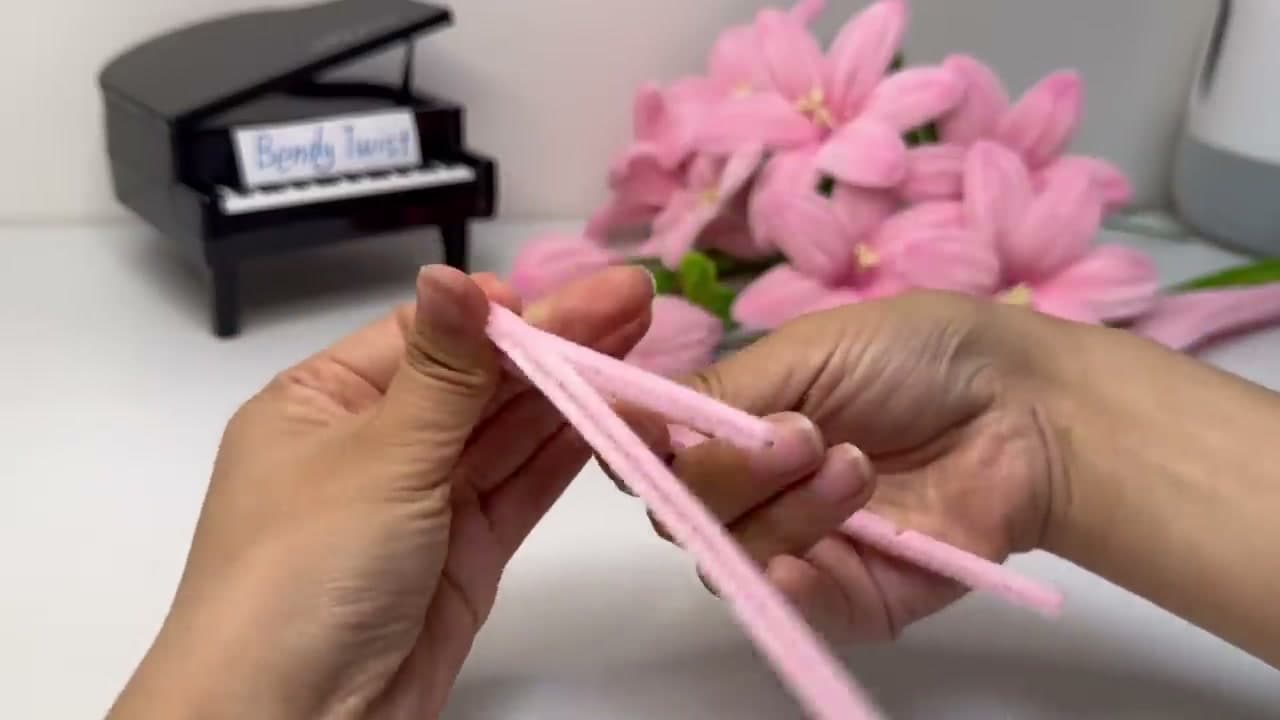
Pair the strands up. Hold two together, fold the doubled pair in half, and twist the loose ends a couple of turns so they bind. That doubled-up twist is what gives the petal its ribbed, full-bodied look once it gets shaped - a single strand looks thin and floppy.

If you can find them, longer or extra-fluffy chenille stems (often labelled jumbo or premium) make a softer petal than the standard craft-store pack. Both work, but the premium ones photograph better.

Tip

Cut a few extra strands the first time you try this. The first two or three petals are practice, and you'll want spares.

2

Step 2: Make the Green Filler Leaves

2:55
Step 2: Step 2: Make the Green Filler Leaves

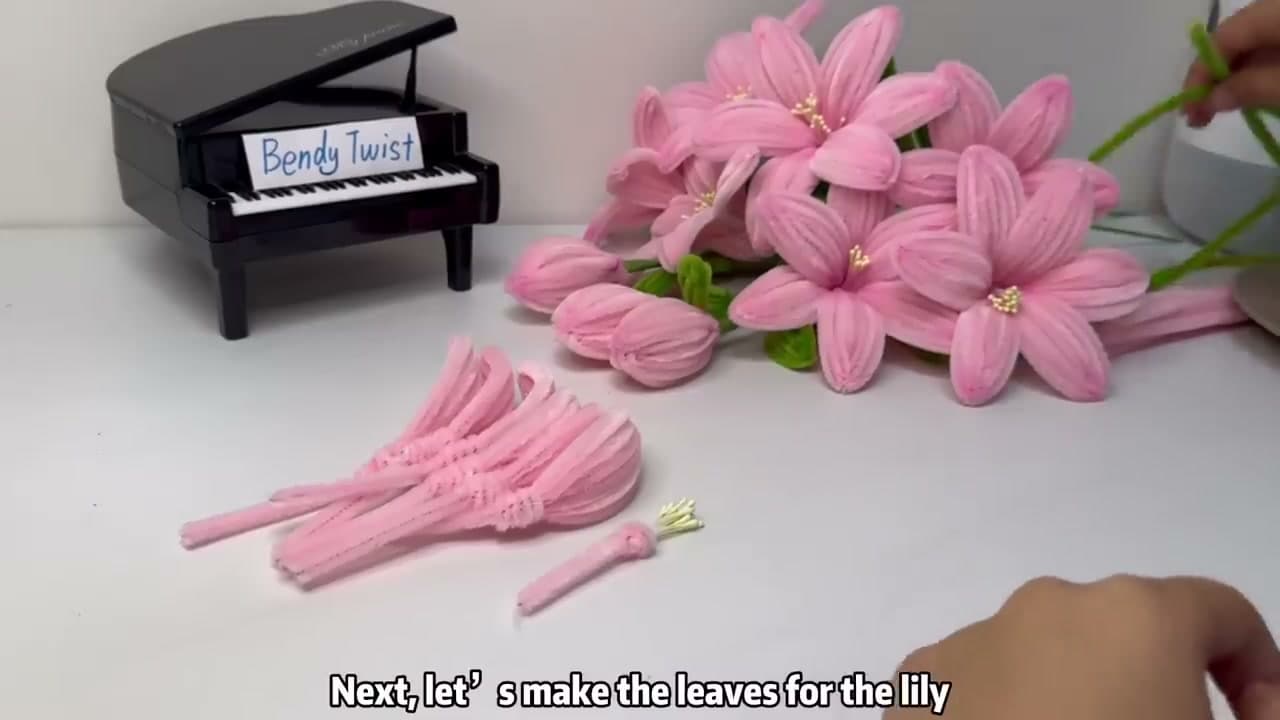
The lily leaves are long, pointed, and grass-like. Take two green pipe cleaners, fold one in half, then fold it in half again so you end up with four parallel strands bound at one end. Pinch the bound end and twist a third green strand around it to anchor the bundle.

Pull the four free ends apart and bend each one into a gentle curve so they fan out. That's your leaf shape - a flat fan that narrows to a point. Make four to six of these for one bouquet.

Set them aside in a small pile. You'll attach them to the bouquet right at the end, so they don't need to be glued to anything yet.

Tip

If the leaves look flat or floppy, run your thumb and forefinger down each strand to give it a slight curl. Real lily leaves are never perfectly straight.

3

Step 3: Glue Six Petals Around the Wire Stem

4:45
Step 3: Step 3: Glue Six Petals Around the Wire Stem

Plug in the hot glue gun and let it warm up for a couple of minutes. While it heats, cut an 18-gauge floral wire to about 30 cm - that's the stem length for one stalk.

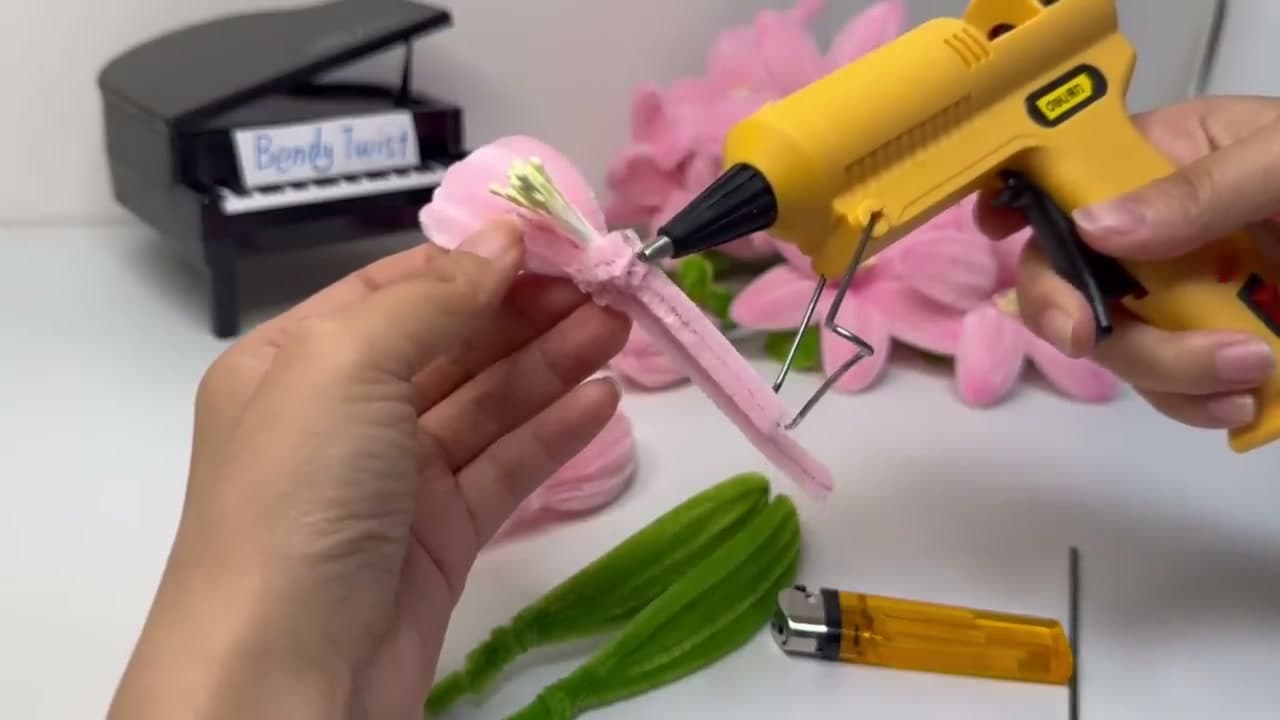
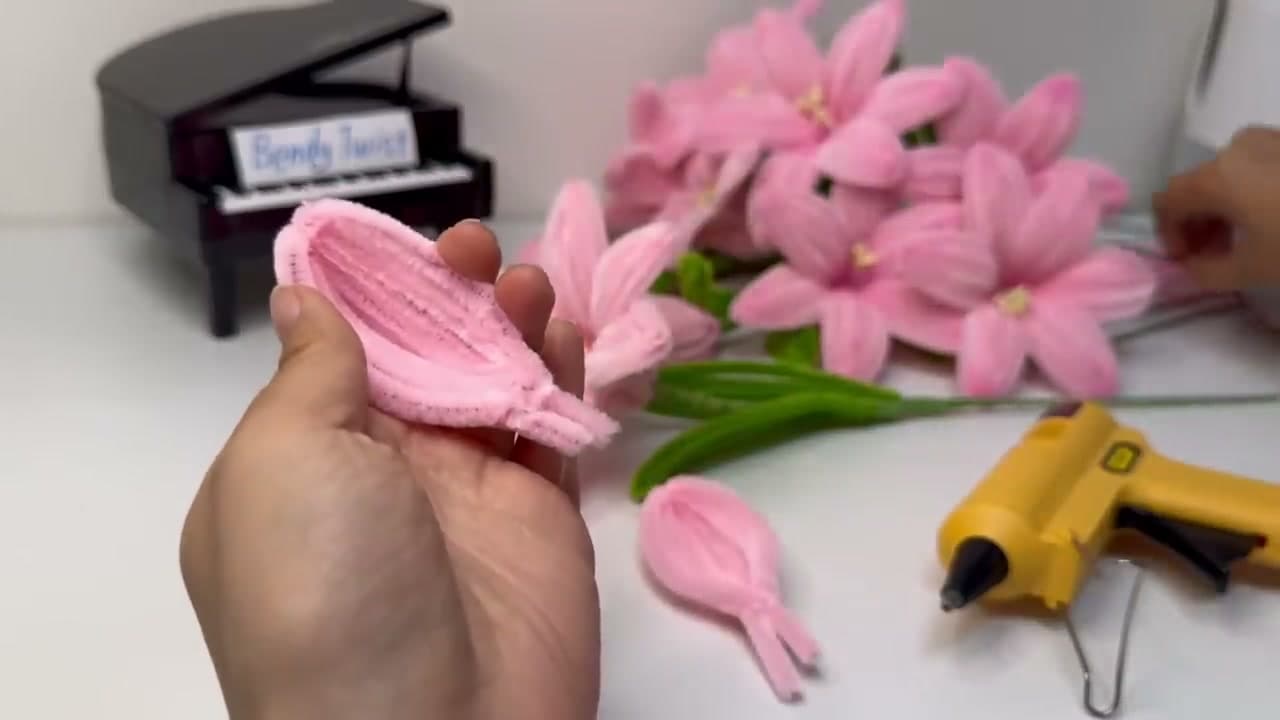
Take the first petal pair, fold it into a teardrop shape with the twisted end as the base, and pinch the base around the top of the floral wire. Squeeze a small dot of hot glue at the join and hold for five seconds while it sets.

Add the next petal the same way, rotating about 60 degrees around the wire so the petals spread evenly. Keep going until all six petals sit around the stem in a tight circle. The flower will look like a closed bud at this point - that's fine, it opens in the next step.

Tip

No hot glue gun? A lighter works. Briefly pass the flame under the petal base to soften the chenille fibers, then press them onto the wire. It's slower but the bond is strong.

4

Step 4: Trim and Shape the Open Petals

6:05
Step 4: Step 4: Trim and Shape the Open Petals

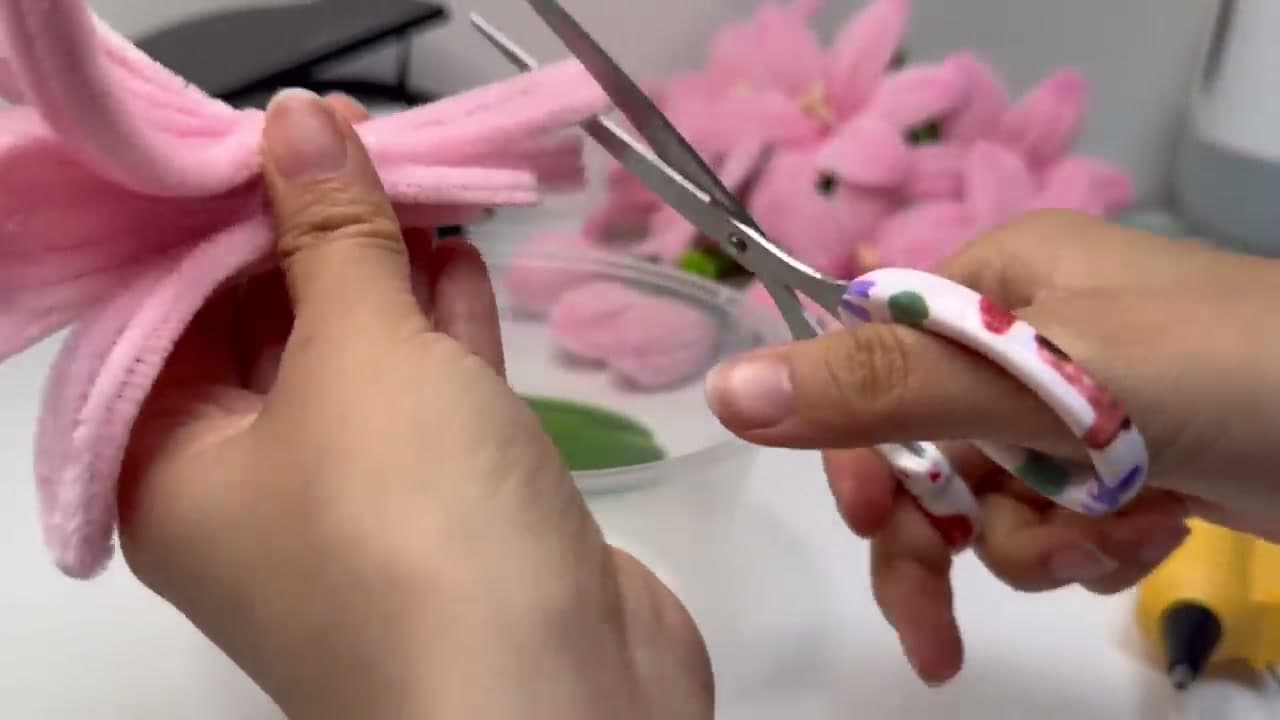
Take a small pair of scissors and trim a clean point at the tip of each petal. The cut should taper from the outside edge to a pointed center - that's what gives the lily its star shape.

Once all six petals are trimmed, bend each one gently outward at the base so the flower opens up. Separate any petals stuck together and fluff the chenille fibers with your fingertips so the flower looks soft, not wired.

Step back and look at it from a few feet away. If one petal sits noticeably higher or lower than the others, ease it into line. You're looking for a balanced star.

Tip

Sharper trim equals more dramatic flower. Round-tip petals read as daisies. Pointed petals read as lilies.

5

Step 5: Wrap a Closed Bud Variation

10:05
Step 5: Step 5: Wrap a Closed Bud Variation

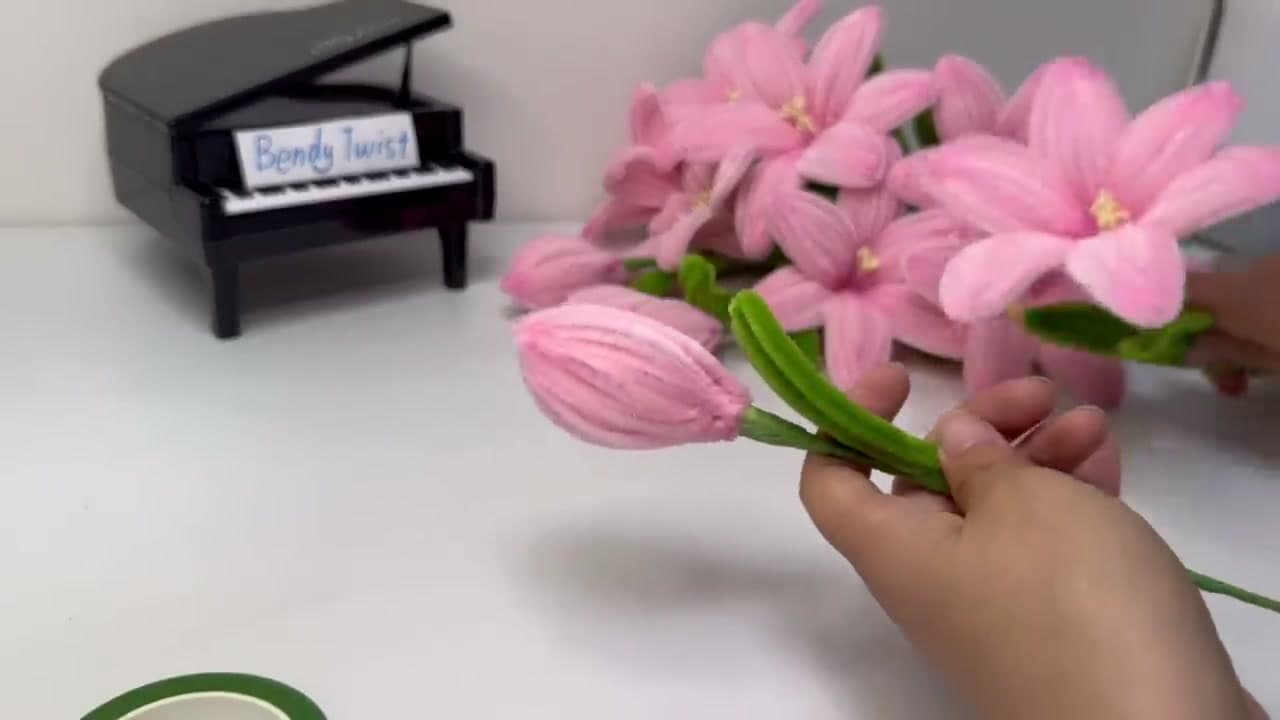
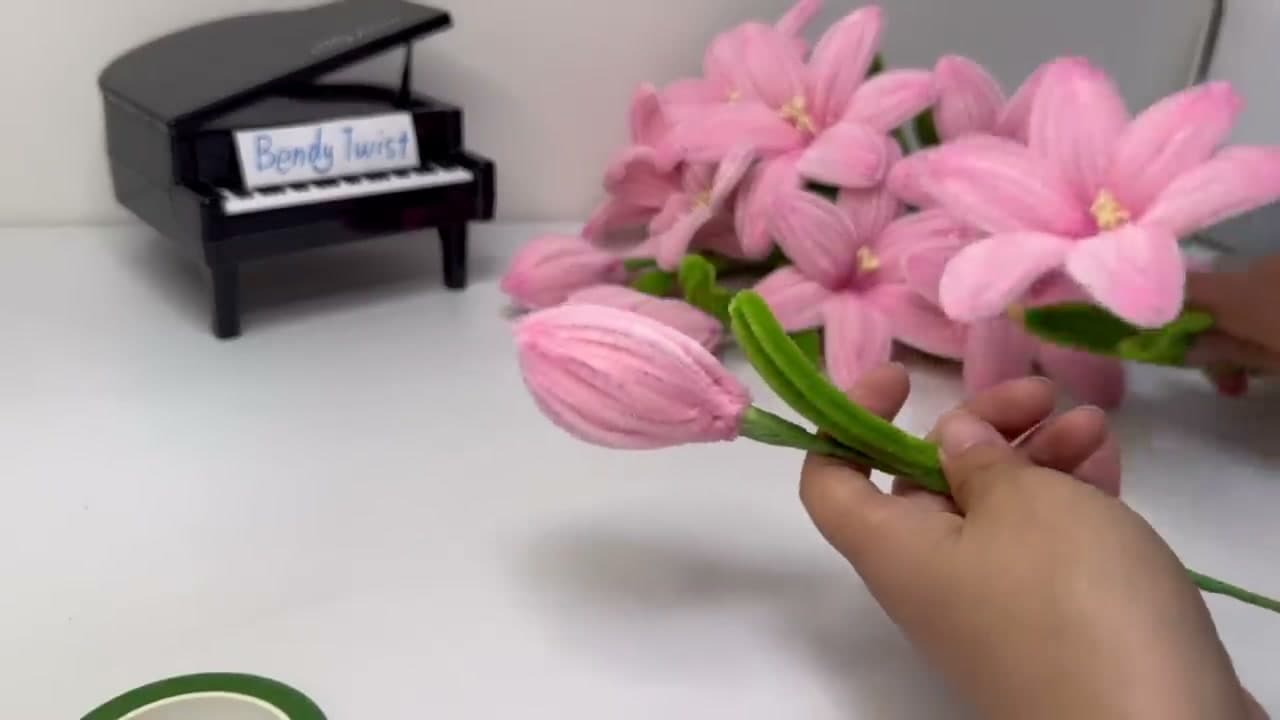
Buds add depth to a bouquet so it doesn't look like a row of identical open flowers. To make one, take three 10 cm pink strands and stack them flat. Fold the stack in half lengthwise so it forms a long teardrop, then pinch the base and twist it tight around a short length of floral wire.

The teardrop is the closed bud. Run your fingertips down the rounded side to smooth the chenille fibers in one direction, and pinch the tip gently to a soft point. Done - it should look like a lily on the day before it opens.

Make two or three buds. A bouquet of six open flowers plus three buds reads as much more natural than nine open flowers.

Tip

If the bud bulges in the middle, you've used too many strands. Two-strand buds are slimmer and more realistic than three.

6

Step 6: Dust the Petals With Pink Eyeshadow

12:40
Step 6: Step 6: Dust the Petals With Pink Eyeshadow

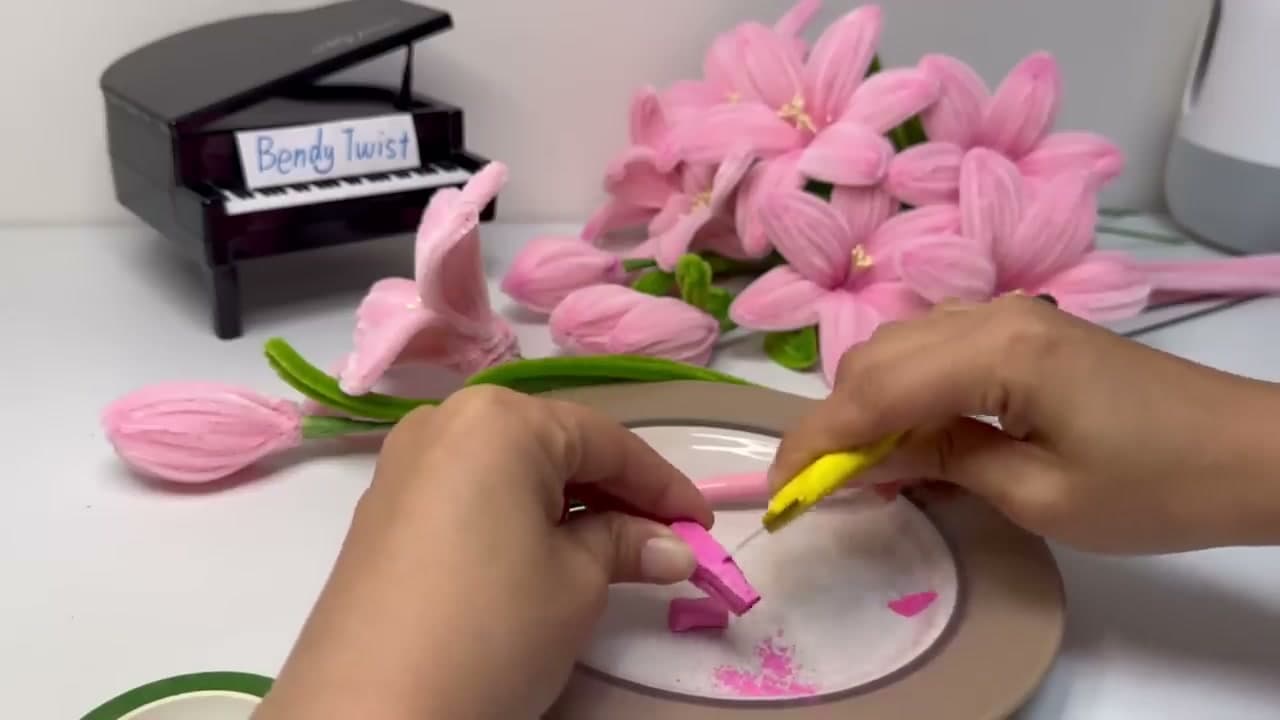
This is the secret-weapon step that lifts pipe cleaner flowers from craft project to gift-worthy. Squeeze a small mound of bright pink eyeshadow onto a saucer (a free single-shade pan from any drugstore works fine) and use a yellow chalk pastel or makeup brush to grind it to a fine powder.

Press the petal face-down into the powder, lift, and tap off the excess. The chenille catches just enough pigment to deepen the color in the center of each petal and fade out to the original soft pink at the tips. That two-tone gradient is what real lily petals do.

Repeat on every flower. Skip the buds - they look more realistic in a single flat pink.

Tip

Don't use blush or bronzer - they have shimmer that reads as plastic on chenille. Matte eyeshadow is the right finish.

7

Step 7: Wrap Each Stem With Green Floral Tape

6:50
Step 7: Step 7: Wrap Each Stem With Green Floral Tape

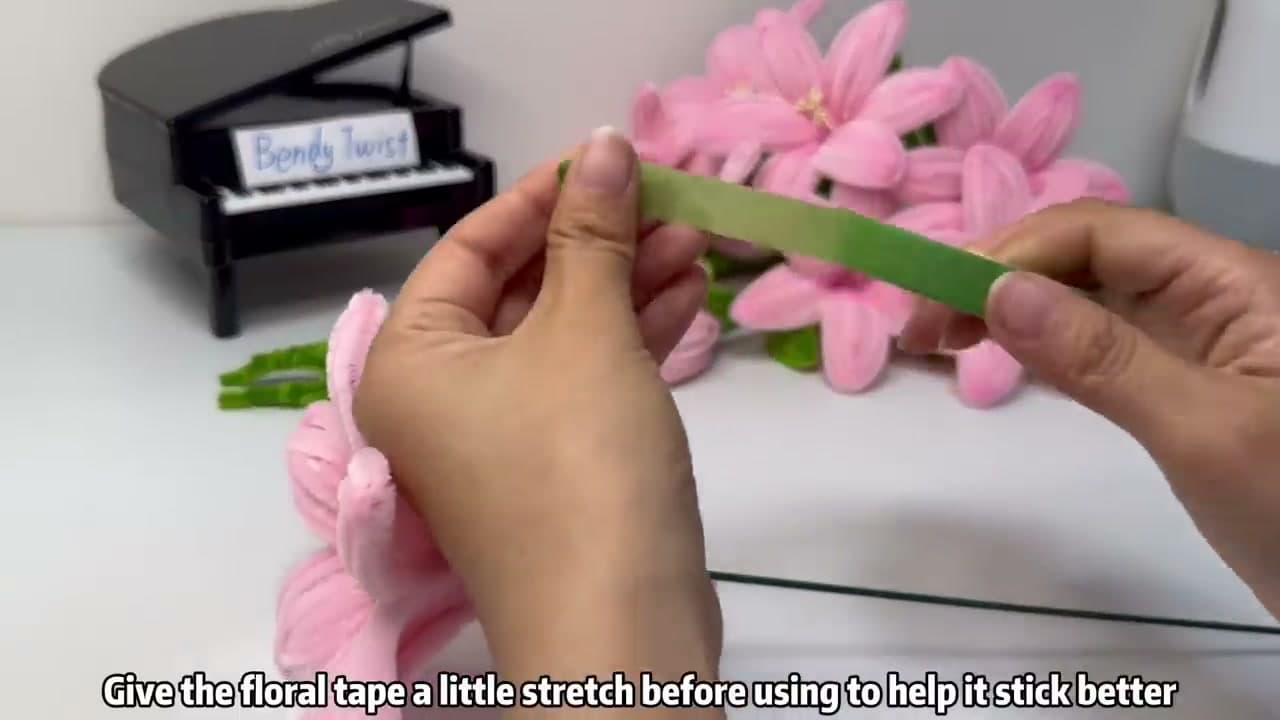
Floral tape only sticks when stretched. Tear off a 60 cm length, pinch one end, and pull gently until the tape thins and becomes tacky. That activates the wax adhesive.

Starting just below the flower head, wrap the tape down the wire at a slight angle, overlapping each pass by about half the tape width. The tape covers the bare wire and the petal base in one motion. Pause halfway down and press a green leaf flat against the stem, then keep wrapping over the leaf base to anchor it.

Finish at the bottom of the wire and press the tape end firmly to seal. The stem should feel smooth and look like a single green stalk.

Tip

If the tape keeps tearing, you're stretching too hard. Stretch just enough to make it tacky - not enough to thin it to nothing.

8

Step 8: Gather Into the Finished Bouquet

14:10
Step 8: Step 8: Gather Into the Finished Bouquet

Lay your finished pieces on the table: six open lilies, two or three buds, four to six green leaves. Now arrange them by feel rather than by rule.

Hold one open lily in your dominant hand and add the next one slightly lower, then a bud slightly higher and to the side. Add the next open lily across from the first. Keep building, tucking each new piece in at a slightly different height so the bouquet has natural depth.

Once everything is in your hand, slide the leaves around the outside so they cradle the flowers like a collar. Tape the whole bunch together at the base with a short wrap of floral tape and trim the stems flat. Set it in a clear vase and you're done - a craft project that doesn't look like a craft project.

Tip

Odd numbers always look better than even. Six flowers, three buds, five leaves is more pleasing to the eye than five flowers, two buds, four leaves.

Products Used

☐ The Checklist

How to Make Pipe Cleaner Flowers (5 Easy Designs)

Tools
4
Materials
7
Steps
8
Video
15 min

Your Guide

BendyTwist

As an Amazon Associate we earn from qualifying purchases. Links on this page may be affiliate links - clicking them and buying doesn't change your price, but helps support ShowMeStepByStep.

Tags

What's next

Weekly Digest

Liked this other crafts tutorial?

Pick the categories you want to hear about. Weekly digest of new step-by-step tutorials. No spam, easy unsubscribe.

Send me tutorials about

We only email about new tutorials. Easy unsubscribe anytime.