A carved pumpkin takes about forty minutes and the difference between a good one and a sad one is almost entirely in two steps: how thin you scrape the carving wall, and how you cut the lid.
Everything else is drawing.
Picking the Pumpkin
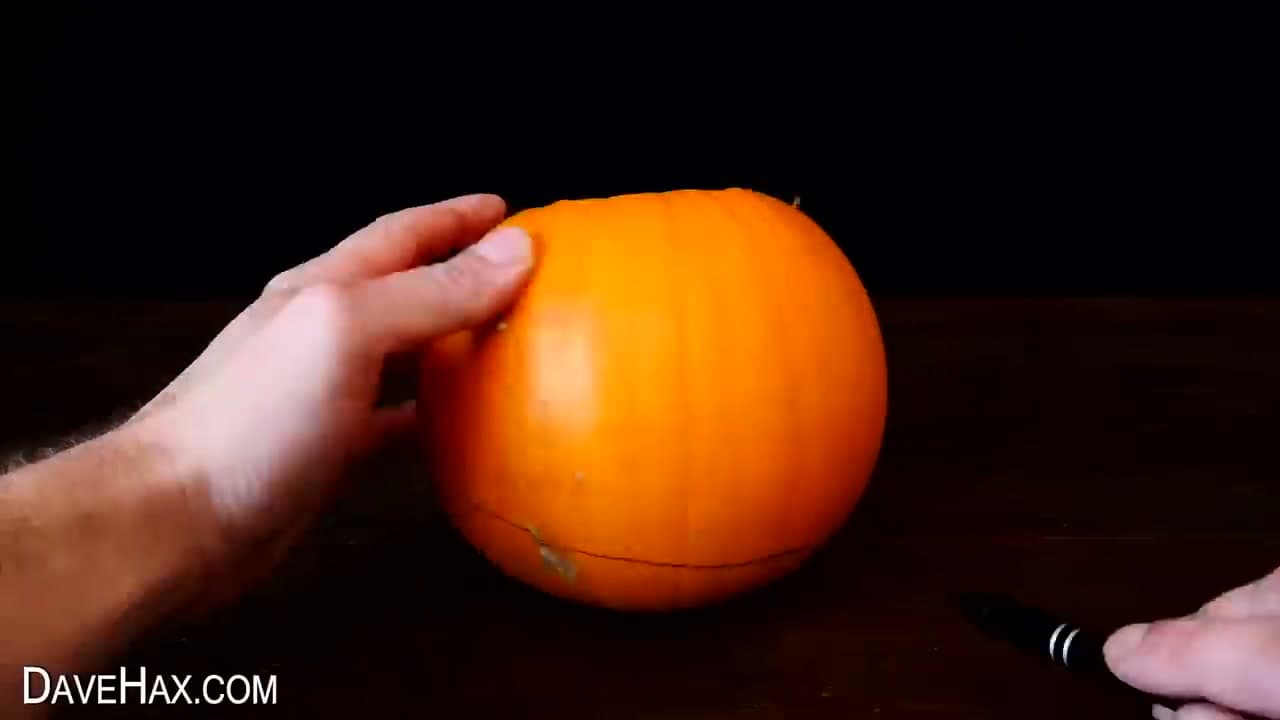
Look for a flat bottom so it does not roll, and a stem still firmly attached. A pumpkin with a broken stem is already losing moisture and will go soft days sooner.
Press a thumbnail into the skin. If it dents easily, it is past its best. Then press the bottom. Soft spots there are the first sign of rot, and they are hidden on a shelf.
Flatter, rounder pumpkins are easier to carve than tall ones because the face sits on a single plane. Save the tall lopsided ones for painting.
Tools
A proper carving kit is worth the few dollars, mostly for the little serrated saw. It cuts on both the push and the pull, which is what lets you turn tight corners without snapping the blade.
You also want a large metal spoon or an ice cream scoop for the guts, and a hobby knife or awl for transferring a design. A kitchen knife works for the lid but is genuinely dangerous for the face, because it has to be forced and it goes where it wants when it slips.
Cut the Lid at an Angle
This is the step that separates a lid that sits nicely from one that drops into the pumpkin a week later.
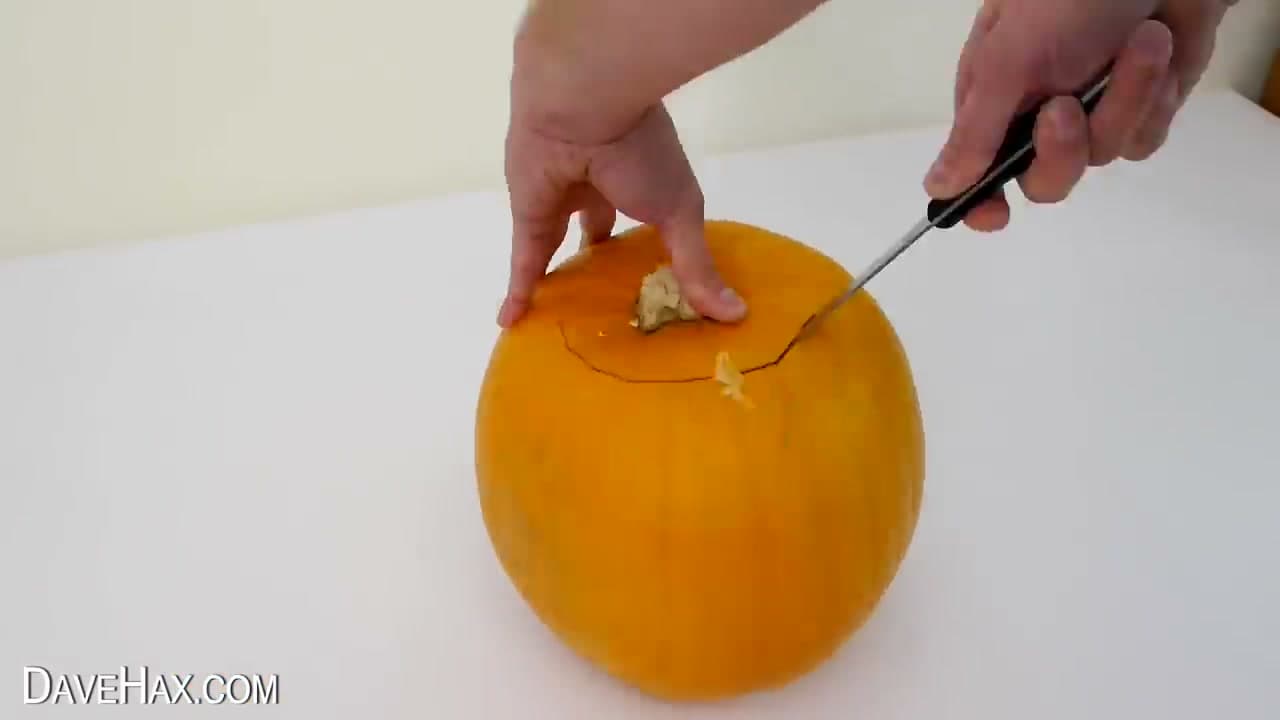
Hold the saw at roughly 45 degrees, pointing in toward the center, and cut a circle around the stem. The angled cut leaves a cone-shaped shelf, so the lid rests on the pumpkin instead of falling through as the flesh shrinks.
Cut a notch at the back while you are going around, a small V shape. That is your alignment mark, so you are not rotating the lid for a minute every time you put it back.
Make the opening wide enough to get your whole hand and a scoop through. Small openings make the scraping miserable.
Scrape the Wall Thin
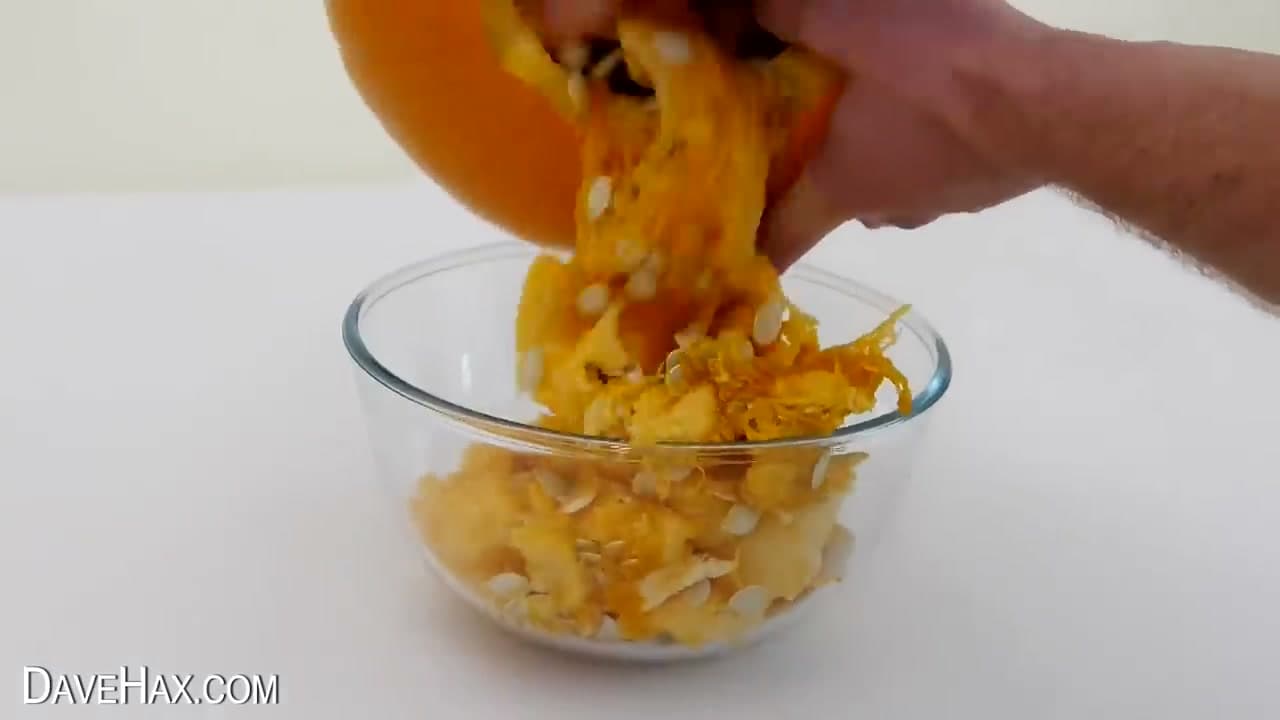
Most people scoop out the seeds, see a clean cavity, and stop. Keep going.
Scrape the wall on the side you are carving down to about one inch thick. A thick wall means your saw has to travel through three inches of dense flesh on every cut, the pieces do not want to pop out, and light barely comes through.
At one inch the saw glides, the cutouts release cleanly, and a single candle lights the whole face. Use the edge of a metal spoon or an ice cream scoop and work until the wall gives slightly under thumb pressure.
Save the seeds. Rinse, dry, toss with oil and salt, and roast at 300 degrees for about 45 minutes.
Getting the Design On
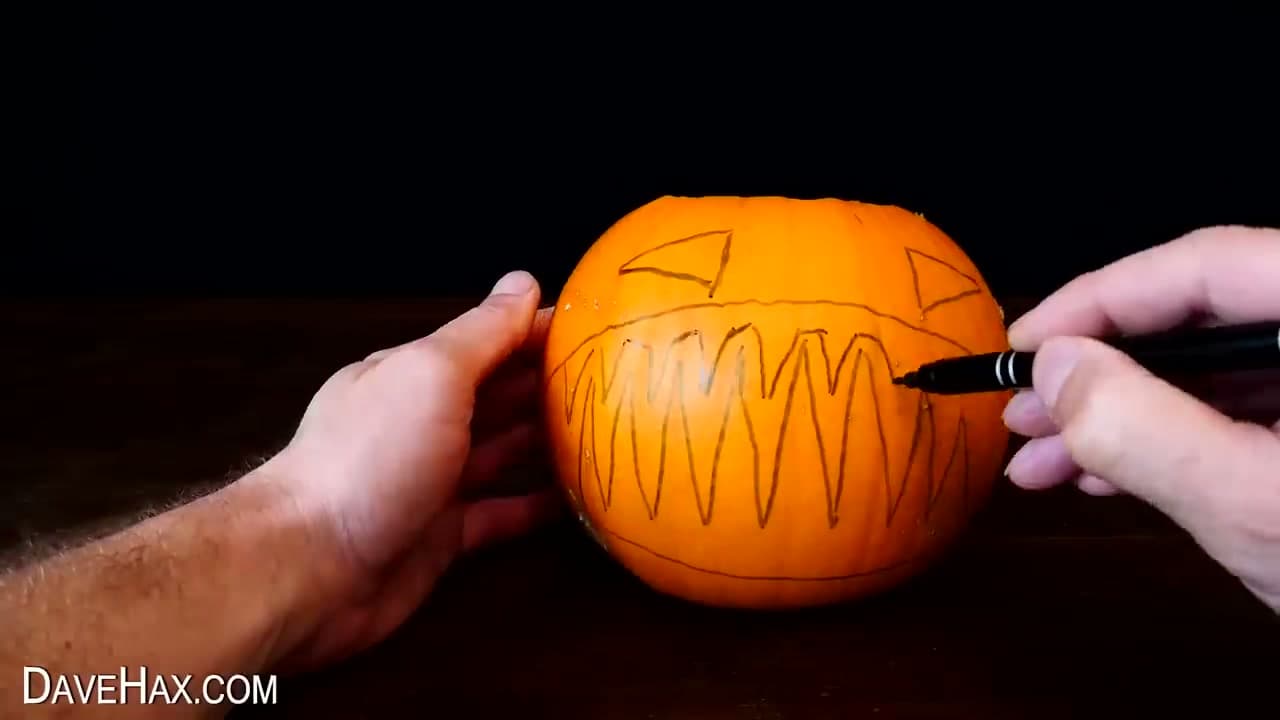
Freehand with a dry-erase marker if you are drawing your own. It wipes off with a paper towel when you change your mind, which you will. A permanent marker leaves lines you have to cut away.
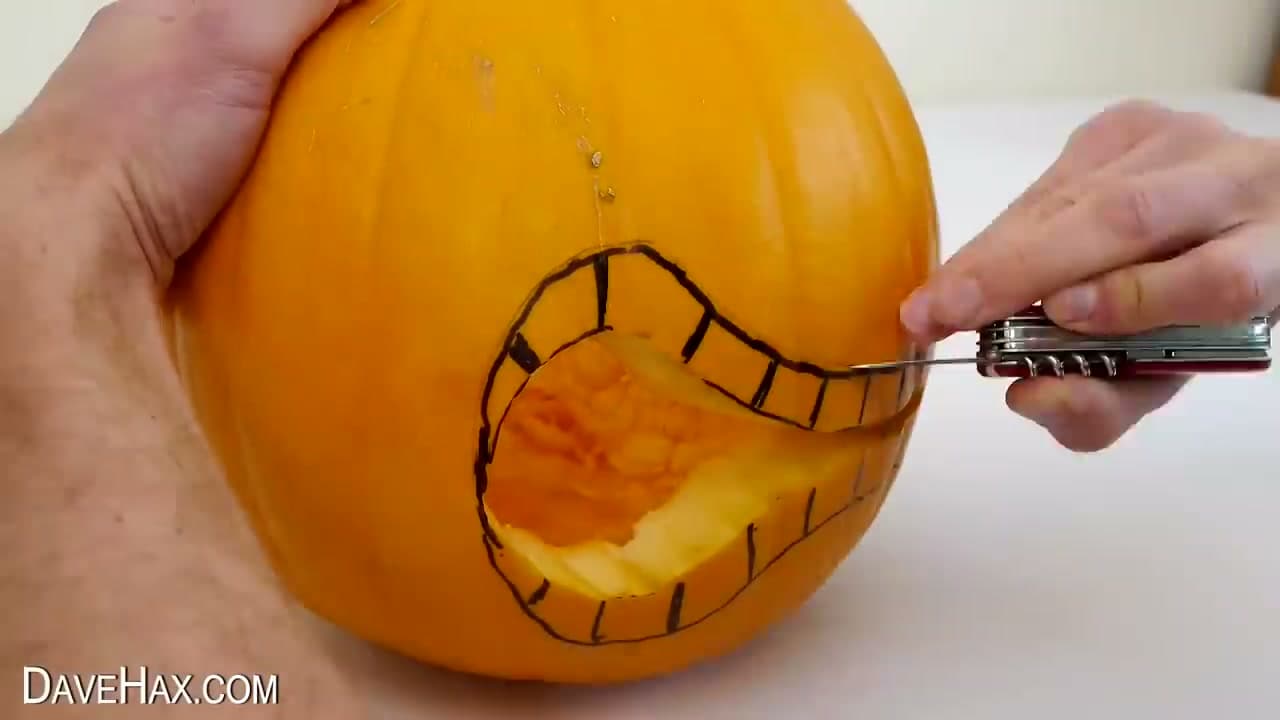
For a printed stencil, tape it flat to the pumpkin, cutting small darts in the paper so it lies against the curve. Then poke closely spaced holes along every line with an awl or a pushpin. Take the paper off and you have a dotted map to saw between.
Whatever the design, keep a bridge of pumpkin between adjacent cutouts. Two eyes that meet in the middle leave nothing holding the forehead up.
Cutting the Face
Start with the smallest shapes and work outward to the biggest. Cutting the mouth first removes most of the structural support, and the face can sag while you are still working on the eyes.
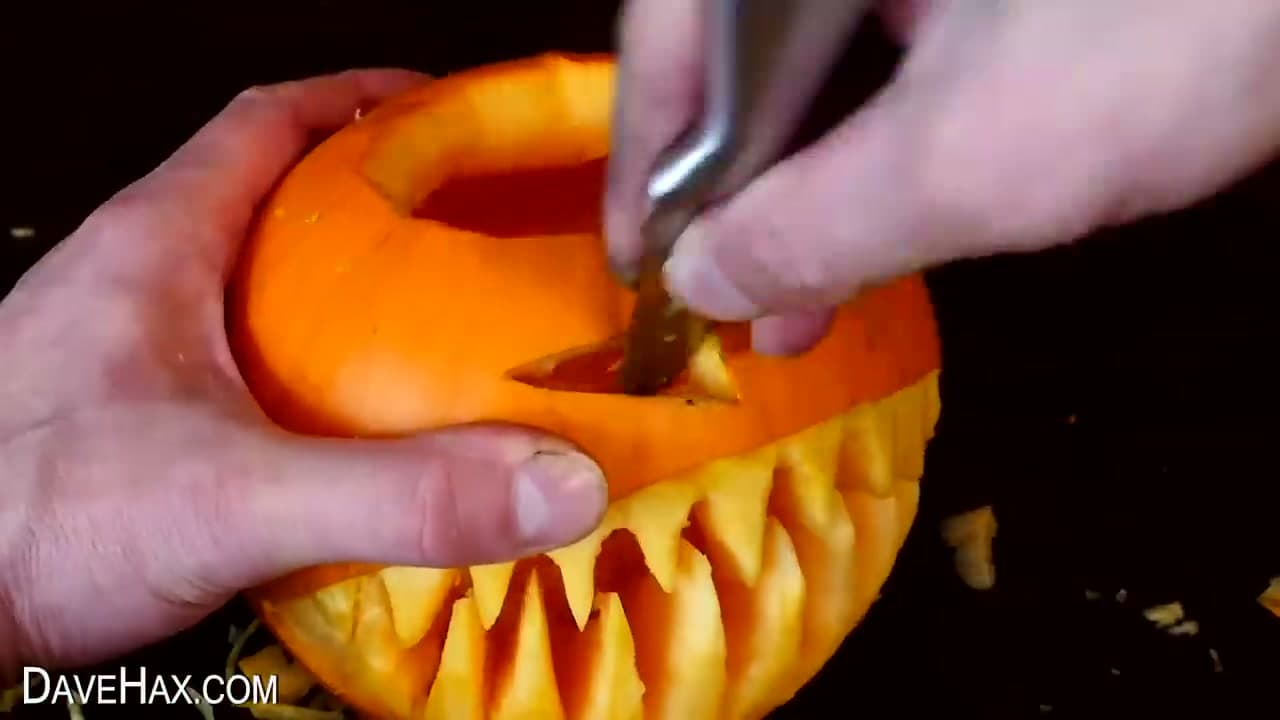
Keep the saw perpendicular to the surface and let it do the work with short strokes. Forcing it is how blades snap and how cuts wander.
Push each piece out from the inside, not in from the front. Pieces pushed inward tear the front edge of the cut and leave a ragged outline.
How to Keep a Carved Pumpkin From Rotting
A carved pumpkin usually lasts three to five days. Two things extend that, and one popular tip does not.
Soak it. Fill a tub or a bucket with cold water and a splash of bleach, about a teaspoon per gallon, and submerge the carved pumpkin for an hour or two. This rehydrates the cut edges and kills the surface mold that starts the collapse. Dry it upside down.
Seal the cuts. Rub petroleum jelly over every cut edge, inside and out. Water leaves through the cuts, and this slows it down considerably. Reapply every couple of days.
Skip the hairspray. It is a common suggestion and it does very little except make the pumpkin flammable near a candle.
Keep it out of the sun and bring it inside on warm days. Heat does more damage than anything else.
Lighting It
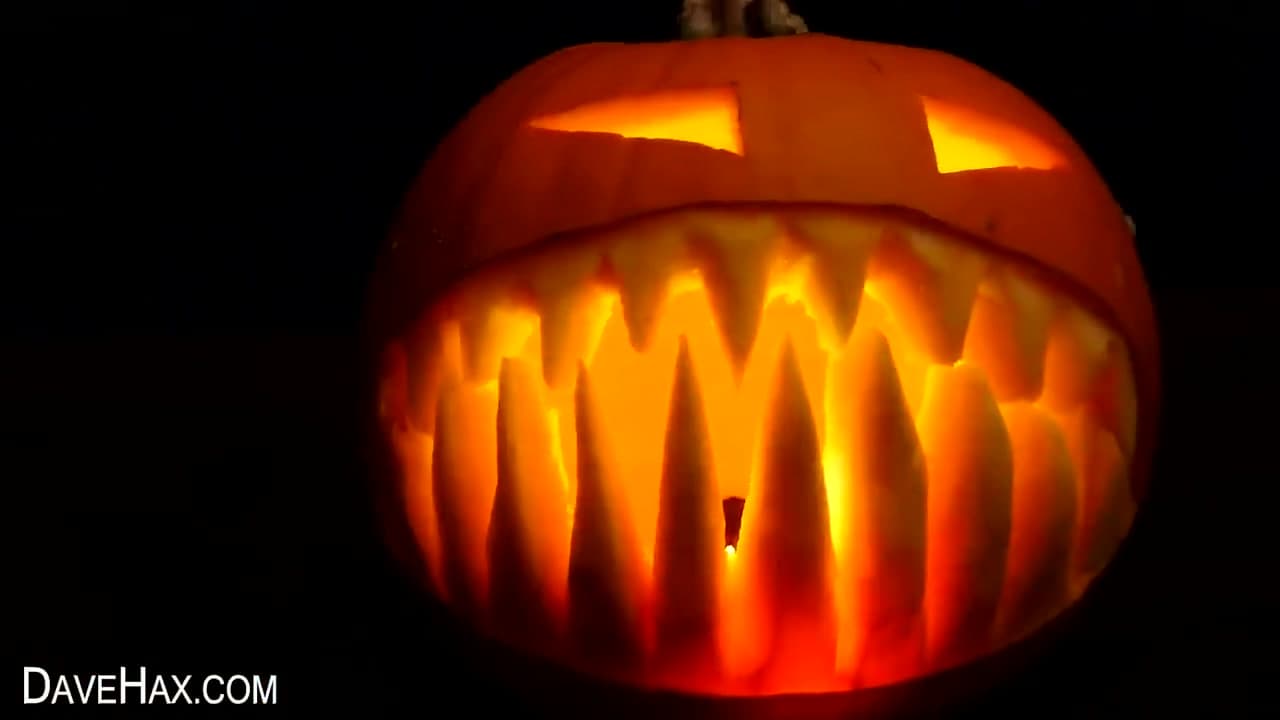
Battery tea lights are brighter than they used to be, they do not blow out, and they will not cook the inside of your pumpkin. Two or three of them light a face better than one real candle.
If you want a real flame, cut a small chimney hole in the back of the lid first. Without one the heat has nowhere to go, the underside of the lid chars, and the candle smothers itself.
Set the candle on a jar lid or a small saucer inside so the wax does not pool into the flesh.
Pumpkin carving ideas beyond the classic face
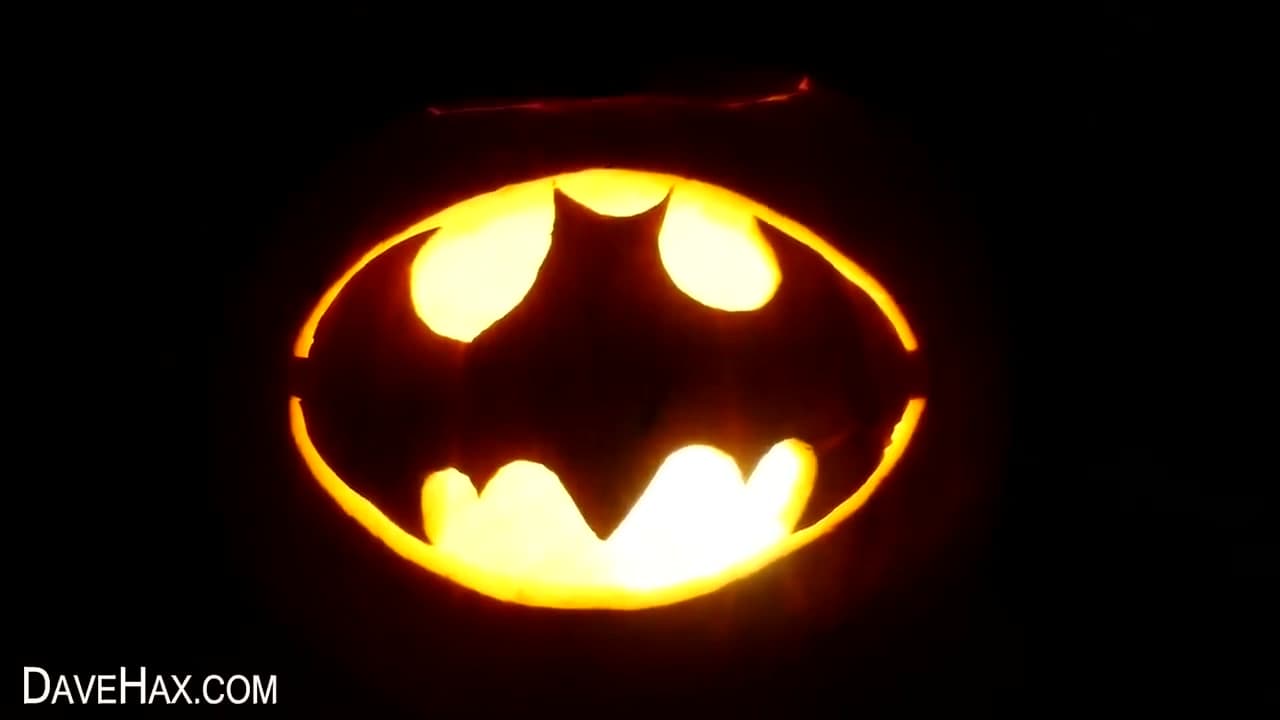
Once the triangle-eyes jack-o'-lantern is in hand, the same lid, scrape and cut sequence handles most pumpkin carving ideas you will see online. Stencilled silhouettes such as a cat, a bat or a haunted house are traced on with the transfer method above and cut exactly like a face. A shaved design, where you peel only the orange skin and leave the pale flesh to glow, uses a linoleum cutter or a vegetable peeler and no through-cuts at all. Stacked pumpkins, a large one carved and a small one set in the lid opening, read well from the street.
Whatever the design, the rules that keep it standing do not change: buy a pumpkin with a flat base, cut the lid at an angle, scrape the wall to about an inch, and keep it out of the sun once it is carved.
A Few Variations
- Carve the back instead. A silhouette cut into the back of the pumpkin throws a shadow onto the wall behind it, which reads well on a porch.
- Skin-scraping. Instead of cutting all the way through, peel just the orange skin away with a lino cutter. The flesh underneath glows amber rather than showing an open hole.
- Drill patterns. A drill bit and a plan makes a field of dots faster than any knife, and it looks striking with a bright light inside.