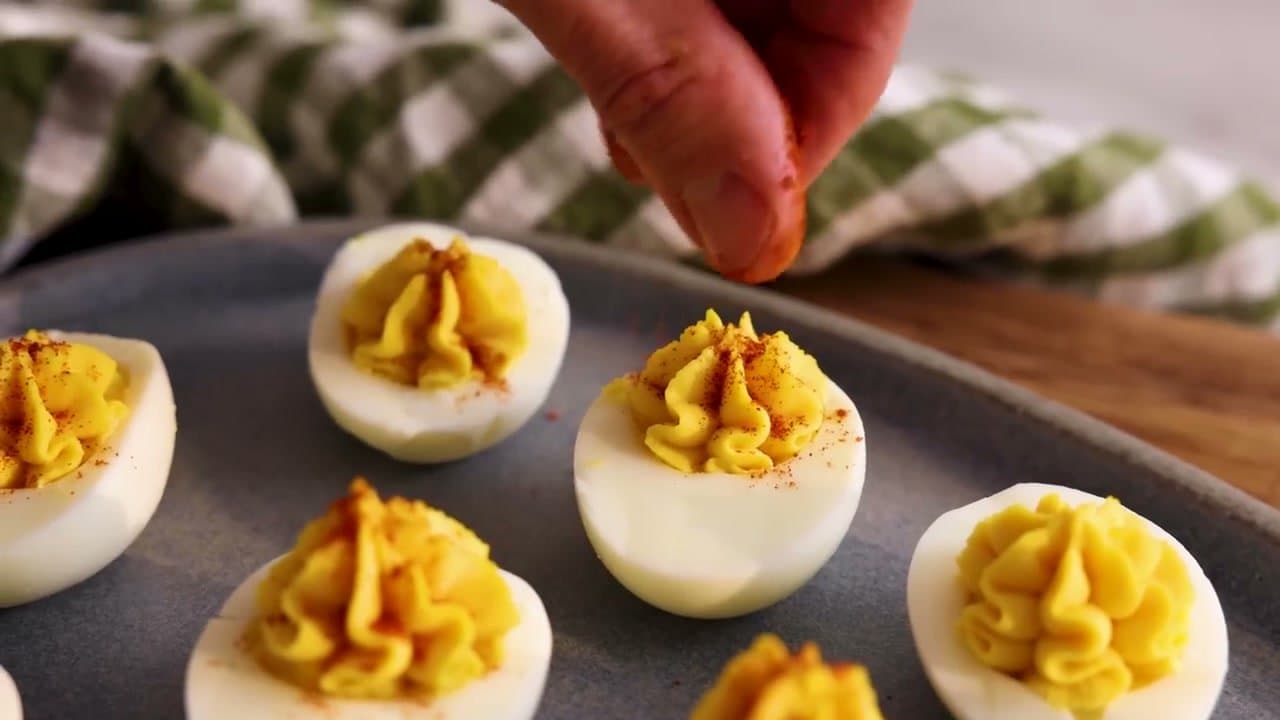
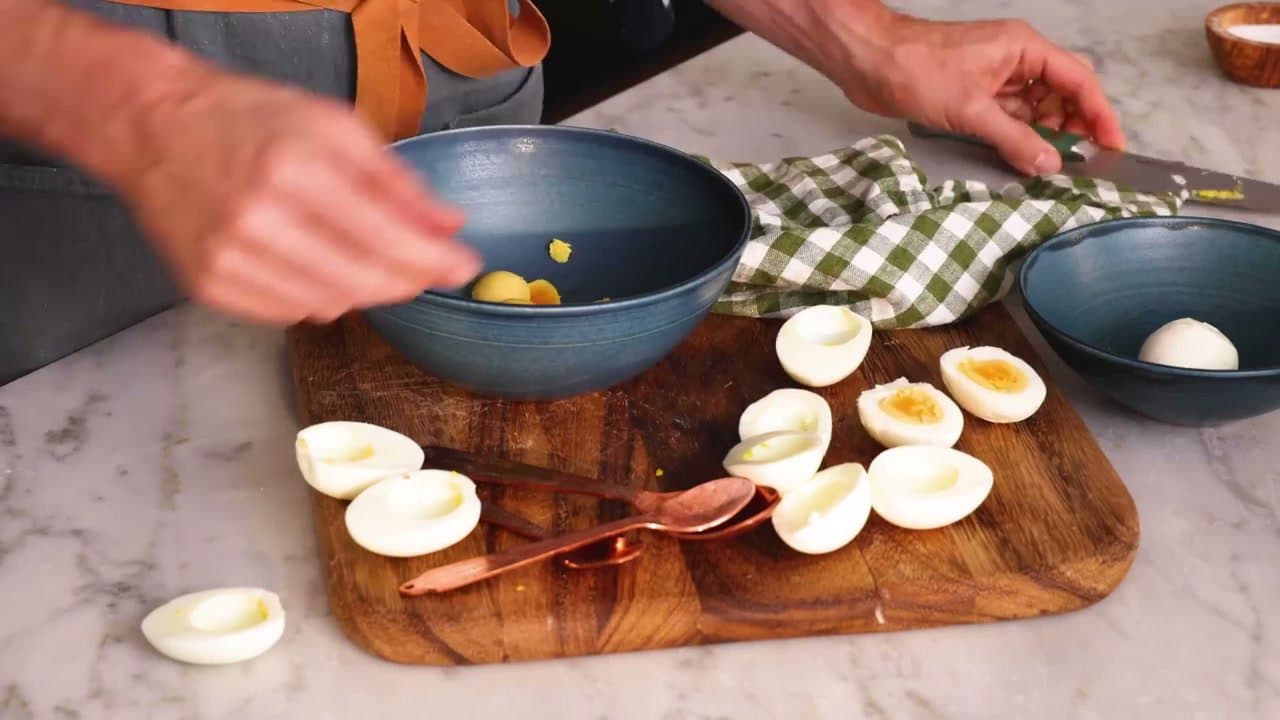
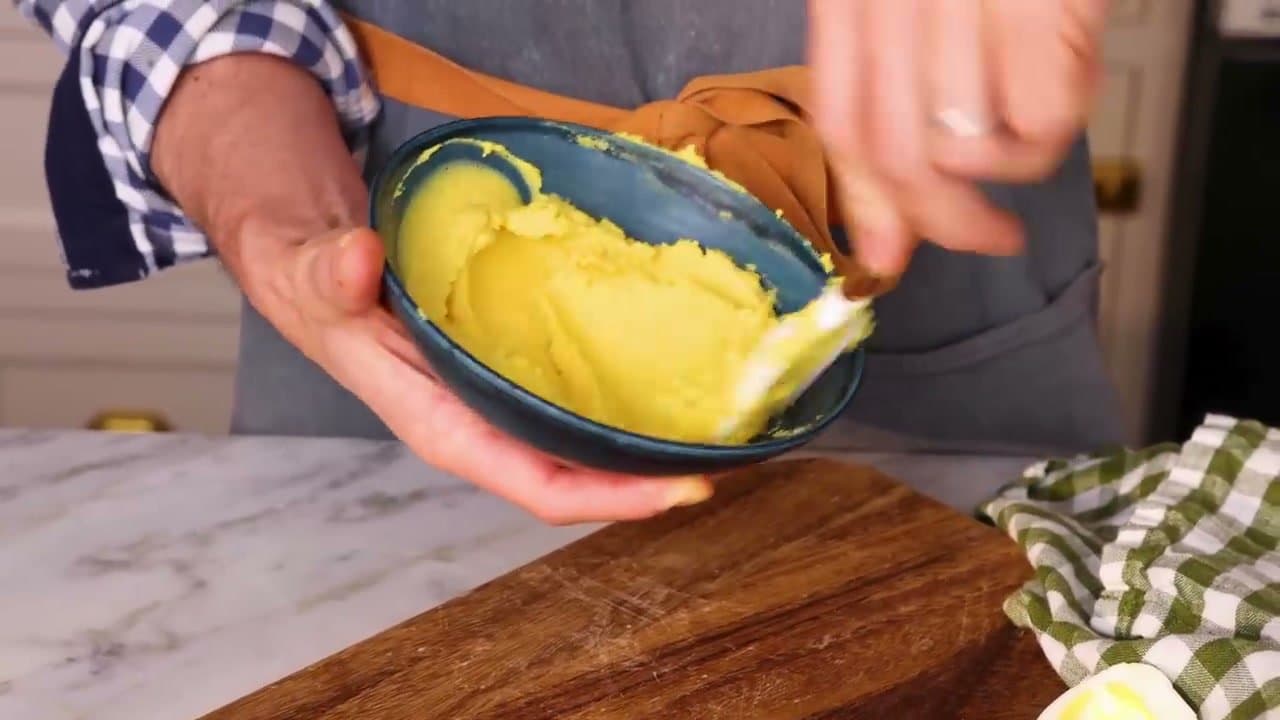
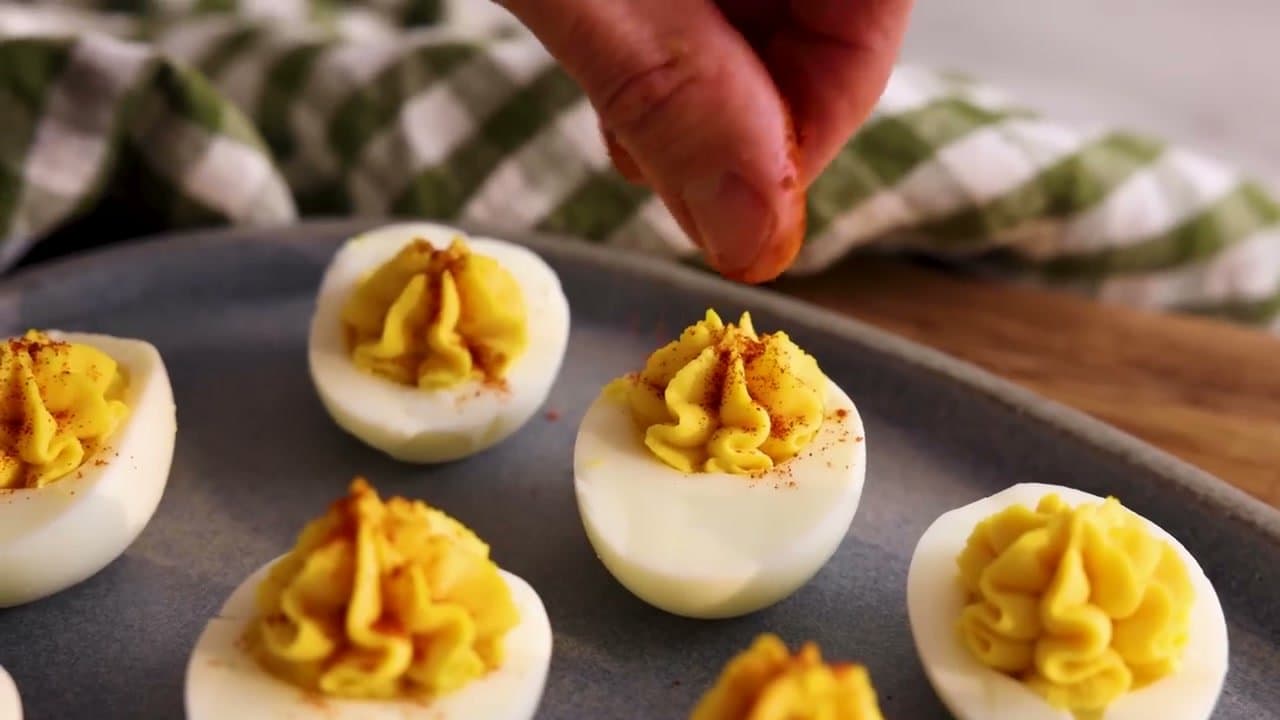
Deviled eggs are the rare retro recipe that never went out of style. They show up at every Easter table, every Thanksgiving, every potluck, and they always disappear first. The base is so simple - boiled eggs, mayo, dijon, vinegar, paprika - that the difference between a great deviled egg and a forgettable one comes down to two details: how you boil the eggs, and whether you take the extra minute to make the filling silky.
This is John Kanell's classic technique from Preppy Kitchen. The key tricks: use the OLDEST eggs in your fridge (fresh eggs are a nightmare to peel), boil exactly 7 minutes (one minute over and you get rubbery gray yolks), and ice-bath them right after. From boiled to plated takes about 30 minutes, most of which is waiting.
You'll need 6 eggs, 3 tablespoons of mayo, 1.5 teaspoons of dijon mustard, 1 teaspoon of white vinegar, salt, pepper, and paprika for garnish.
How to Boil Eggs for Deviled Eggs
More people search for how to boil the eggs than for the filling, and it is the right thing to worry about. A deviled egg is mostly a boiled egg, and the two ways this recipe goes wrong are both here: eggs that will not peel, and yolks with a grey ring.
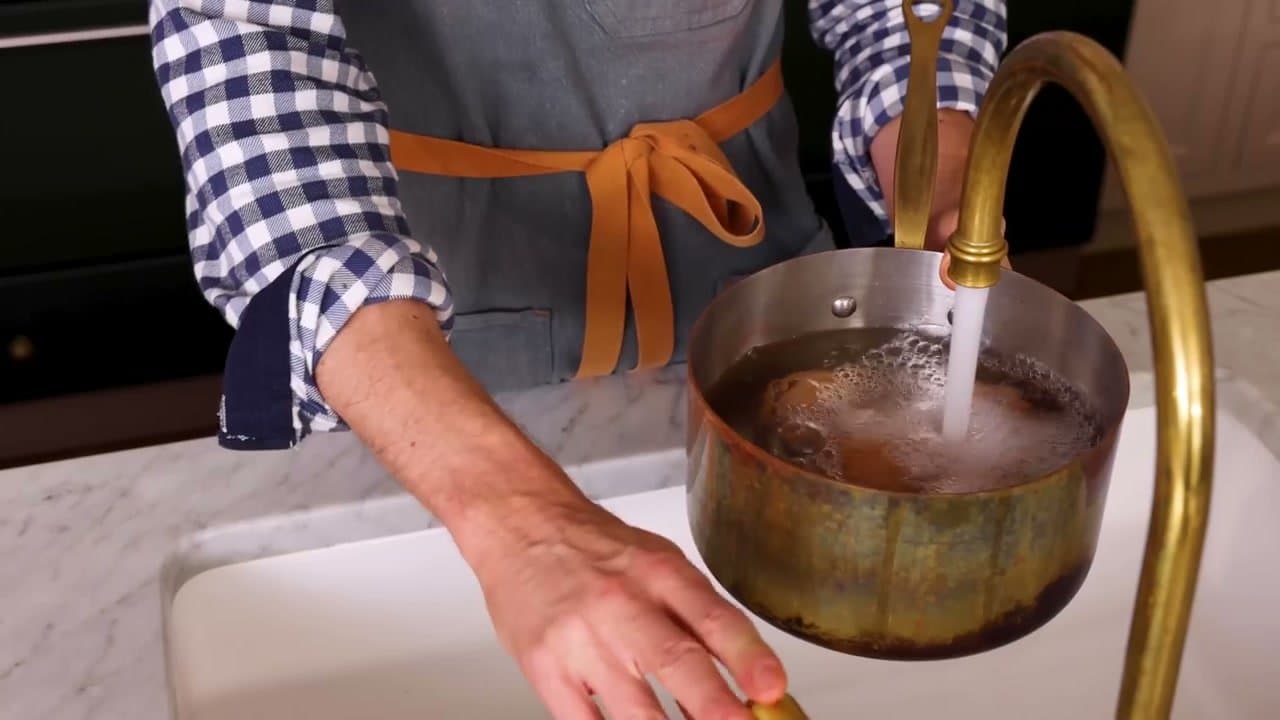
Seven minutes at a gentle boil, then straight into ice water. That is the whole method for a large egg going in from the fridge.
- 6 minutes leaves the centre of the yolk soft. Fine for eating, too loose to mash into a filling that holds its shape.
- 7 minutes gives a firm, bright yellow yolk. This is the one.
- 8 minutes is still good.
- 10 minutes or more is where the yolk turns chalky and picks up the green-grey ring, which is iron and sulphur reacting because the egg stayed hot too long.
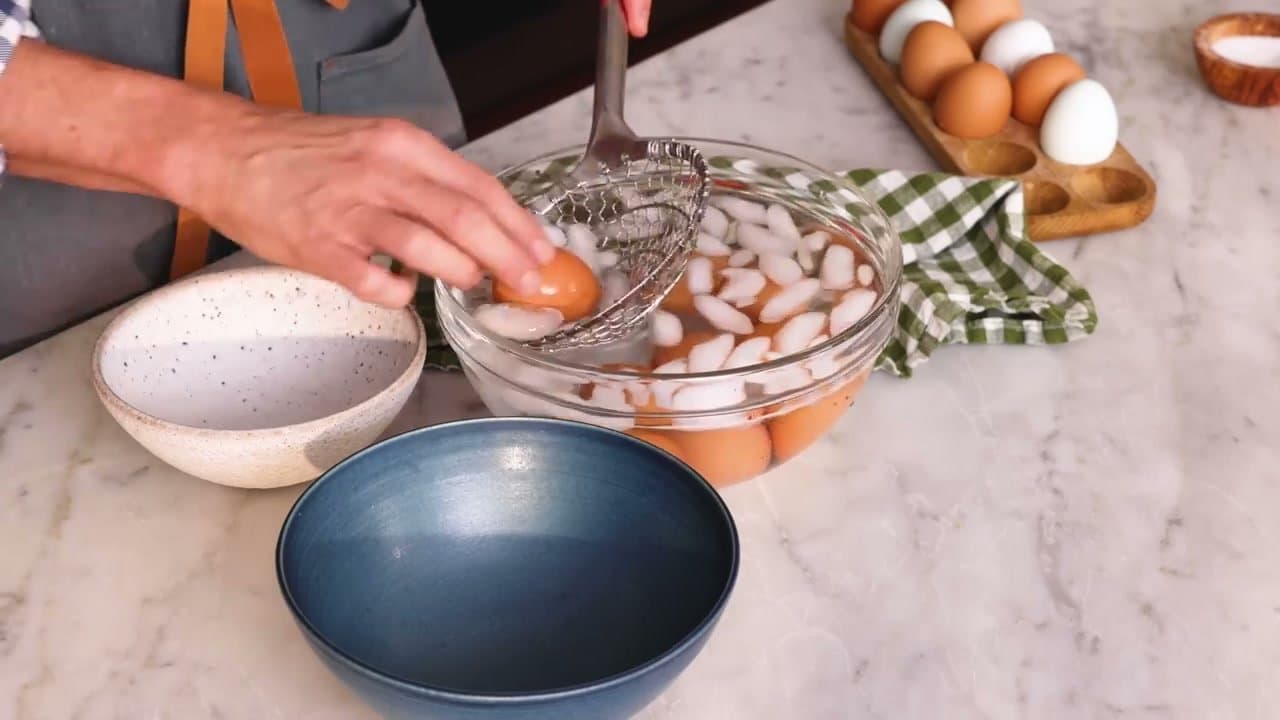
The ice bath is not a nicety. It stops the cooking at the moment you want it stopped, and it makes the egg contract away from the shell membrane. Five minutes in the ice, minimum.
Why Your Eggs Will Not Peel
Freshness, almost always. A very fresh egg has a low-pH white that clings to the inner membrane, and no technique beats that. Eggs that have sat in the fridge for a week or two peel far more easily, so buy them ahead rather than the morning of.
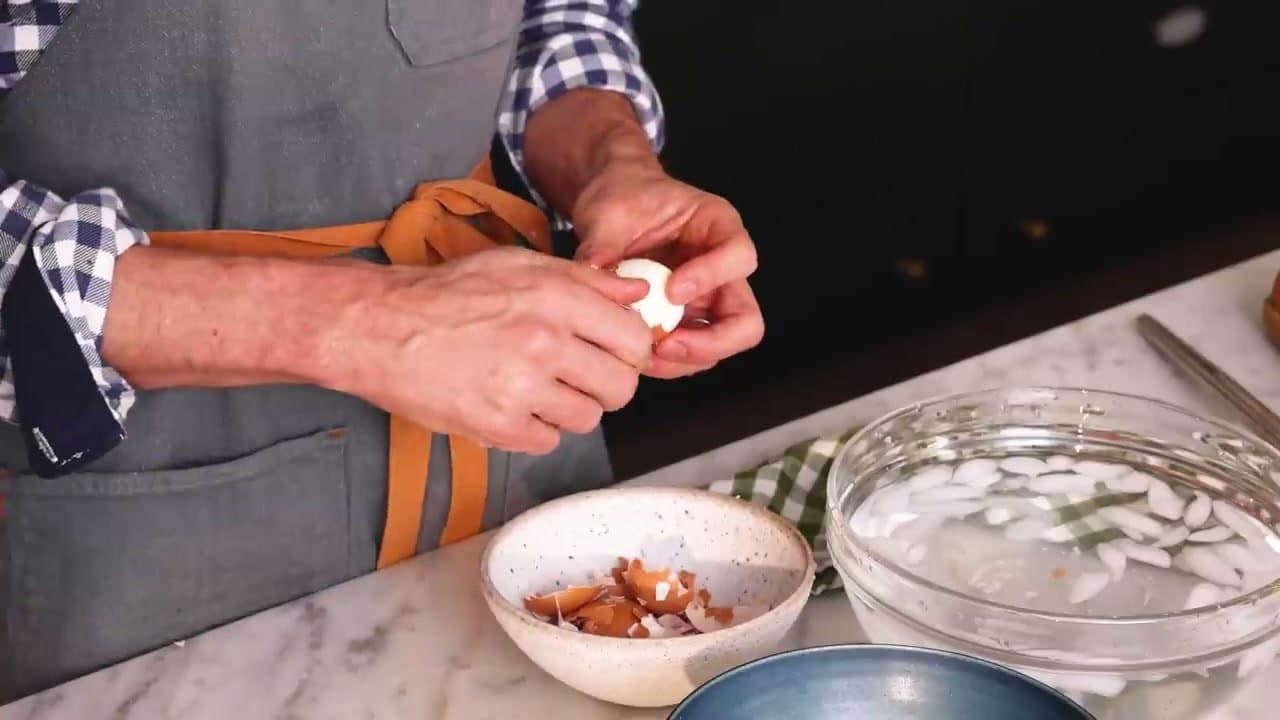
Beyond using older eggs, three things help. Add a spoon of salt and a splash of vinegar to the cooking water. Start peeling at the fat end, where the air pocket sits. And peel them under running water, which floats the membrane away from the white.
If a batch fights you anyway, crack the shell all over and roll the egg gently under your palm on the counter before peeling. Torn whites still taste right, and the filling covers a lot.
What Goes in Deviled Eggs
The classic filling is six ingredients: yolks, mayonnaise, dijon mustard, vinegar, salt and pepper, with paprika on top.
Mayonnaise is the one people ask about. Three tablespoons to six yolks is the ratio here, and full-fat mayonnaise is what makes the filling silky rather than pasty. Greek yogurt or sour cream swapped in for half the mayo lightens it and adds a tang that works well with the dijon. Miracle Whip is sweeter and changes the character of the whole thing, which some families prefer and others would notice immediately.
Vinegar earns its place. A teaspoon of plain white vinegar cuts through the richness and is the difference between a filling that tastes flat and one that tastes finished. Pickle juice does the same job with more flavour.
Push the yolks through a fine sieve before mixing if you want a filling with no lumps at all. It takes two minutes and it is the single thing that most separates a homemade deviled egg from a catered one.
Making Them Ahead
Boil and peel the eggs up to three days ahead and keep them whole in the fridge in a covered container. Mix the filling a day ahead and keep it in a piped bag.
Assemble within a few hours of serving. Filled eggs left overnight weep a little liquid and the surface of the filling dries and dulls.
Carrying them somewhere is the real problem. A dedicated deviled egg tray with moulded wells is worth the small money if you make these more than once a year. Failing that, sit them in a bed of shredded lettuce or rock salt in a baking dish, which stops them sliding.
Halloween, Easter and Thanksgiving Variations
The same six ingredients carry three different holidays with almost no extra work.
- Halloween: pipe the filling and lay a thin sliced-olive round in the centre for an eyeball, with a dot of red gel for the veins. Steeping the peeled whites in beet juice for an hour turns them deep red. A pair of chive spears pushed into the filling makes a spider.
- Easter: dye the peeled whites the way you would dye a shell, sitting them in water with a few drops of food colouring and a teaspoon of vinegar for ten minutes. Pastel whites with yellow filling is the whole look.
- Thanksgiving: fold a spoonful of the filling into crumbled crisp bacon and top with fried sage. Heavier, and it holds its own next to the rest of the table.
Paprika is traditional but smoked paprika is better, and a dusting of cayenne on a couple of them lets you warn people or not.
Fixing a Filling That Went Wrong
Too loose to pipe: more yolk, or a spoonful of cream cheese. Chilling it for twenty minutes firms it up enough to work with.
Too stiff: a teaspoon of the vinegar or a little mayonnaise at a time.
Tastes flat: it needs acid and salt, in that order, not more mayonnaise.
No piping bag: a zip-top freezer bag with a corner snipped off does the same job. A teaspoon works too and looks rustic rather than wrong.