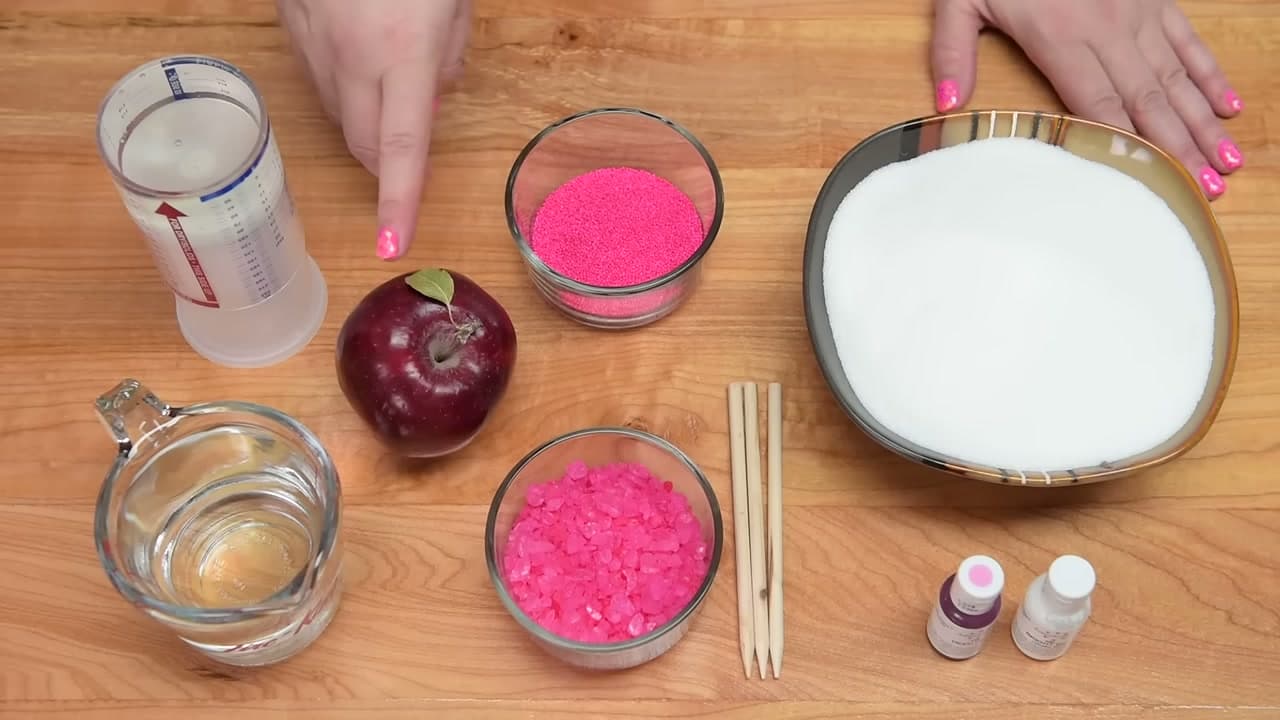
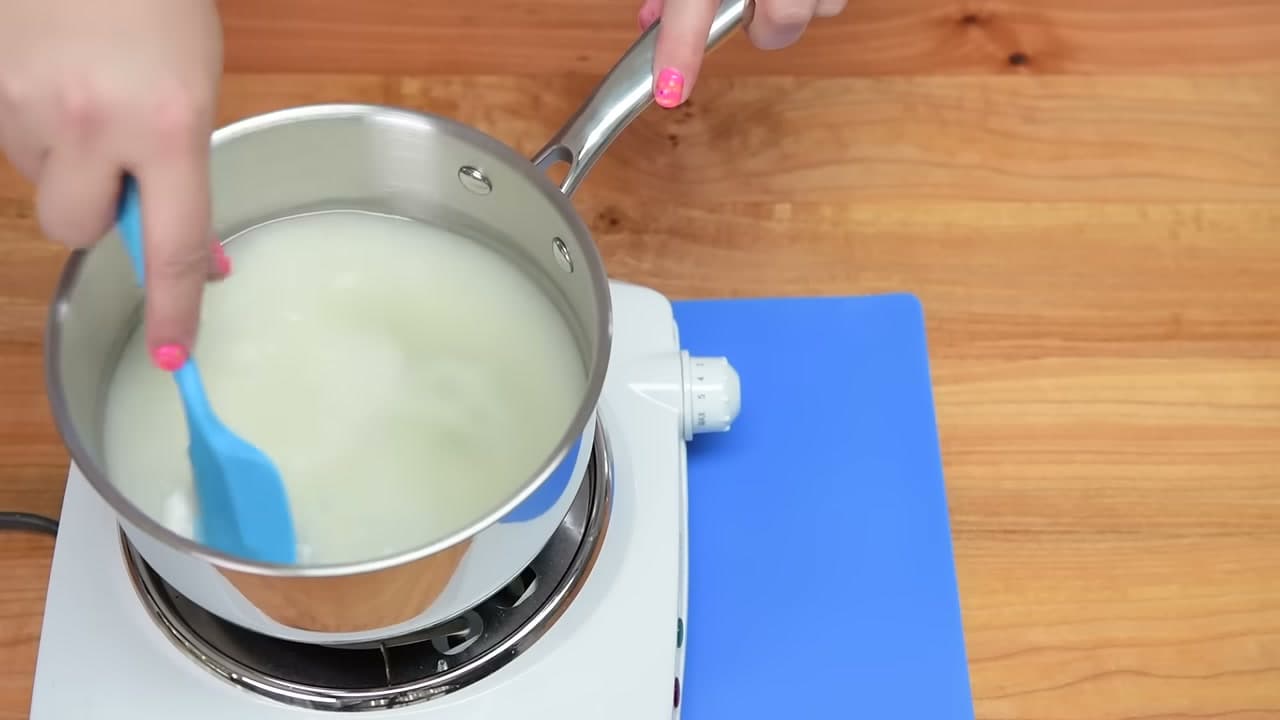
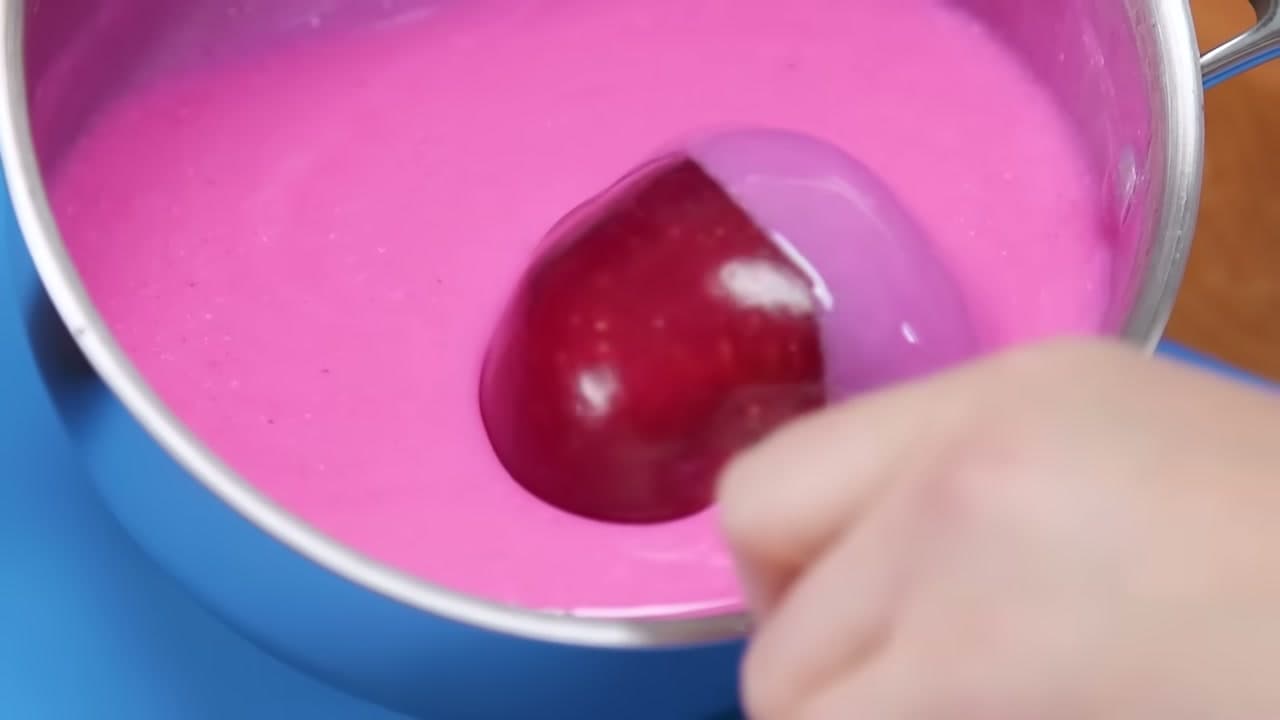
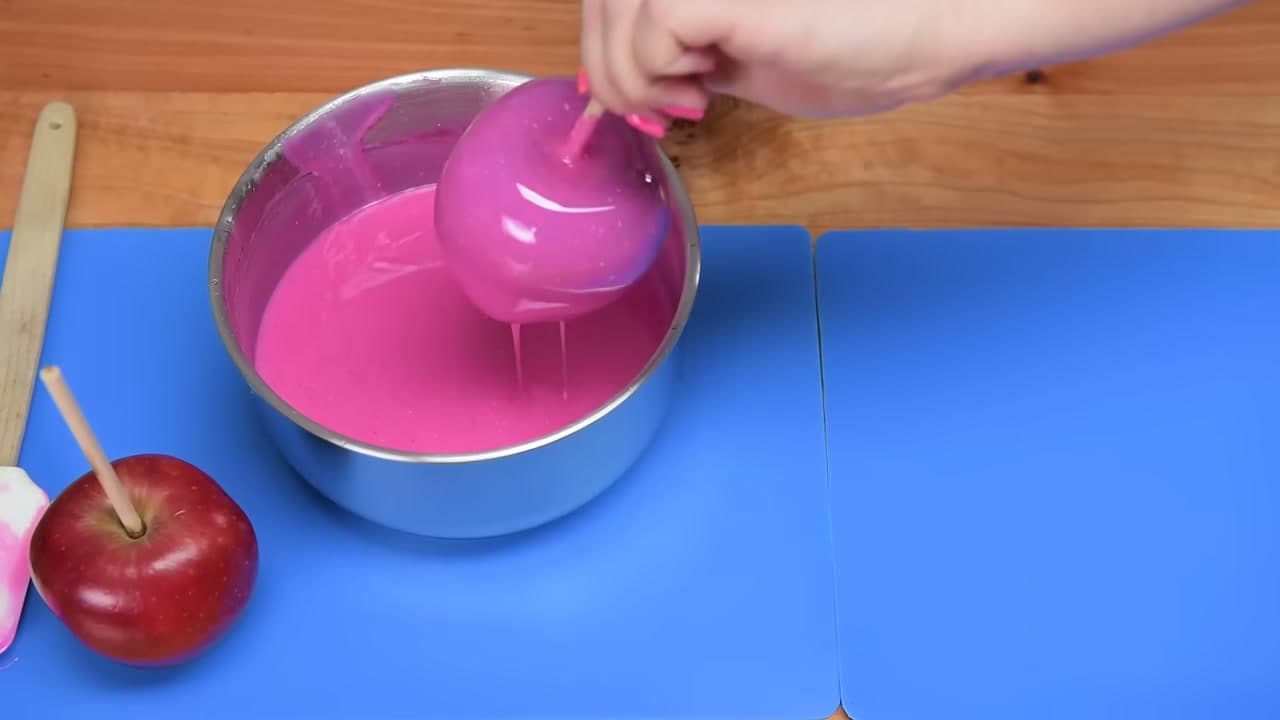
A candy apple is a firm apple under a thin shell of cooked sugar. That is the whole thing. The ingredient list runs to four items you probably already have. What trips people up is the sugar, which goes from clear syrup to scorched in under a minute and gives no warning.
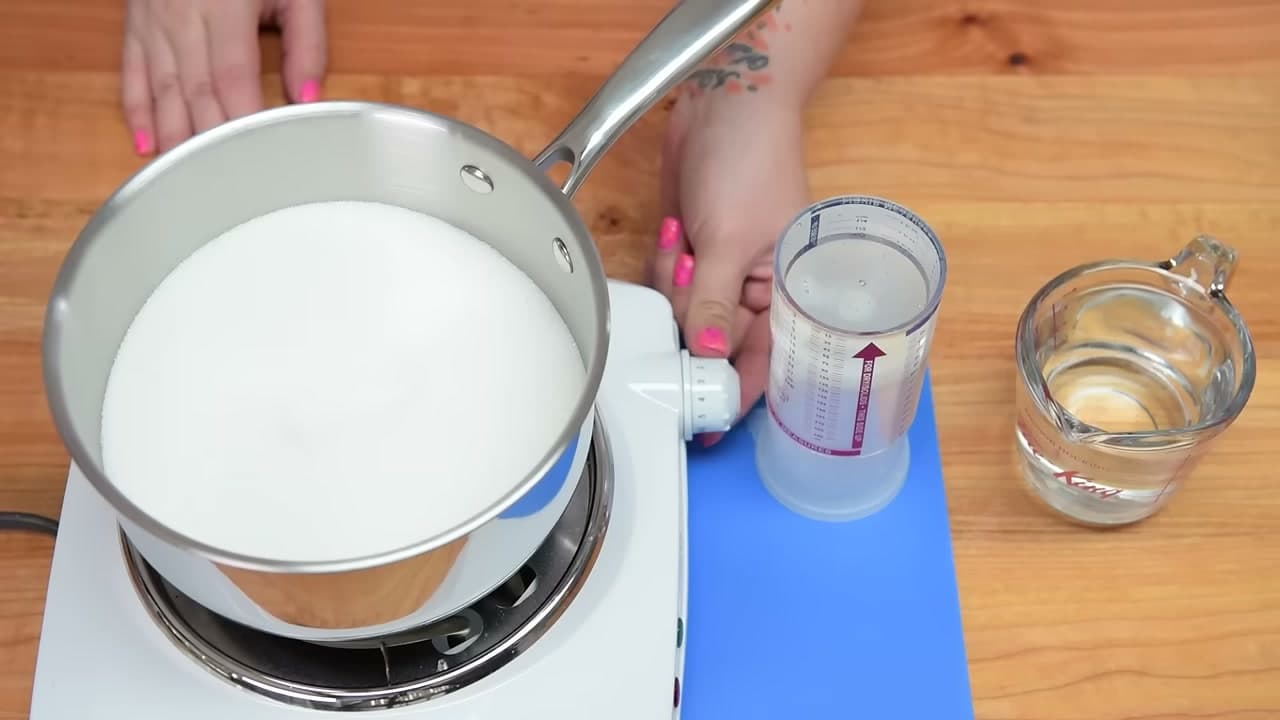
Jenn Johns of Cookies Cupcakes and Cardio makes them two ways. The classic is cooked sugar: sugar, water and corn syrup boiled together, then tinted with gel color. The second never touches the stove, only a pan of Jolly Ranchers melted in the oven. Read both before you start and pick the one that matches how you feel about hot sugar.
The thermometer decides whether this works
Cooked sugar has stages, and the stage you stop at is the texture you get. Pull the pot at 300F and the shell shatters when you bite it. Jenn stops at 250F for a shell that gives a little and is kinder to fillings. Both are right. Guessing is not.
Syrup at 250F and syrup at 300F look identical, both like boiling water. That is why a clip-on candy thermometer earns its place here. With no thermometer, spoon a few drops into cold water: at hard crack they set into threads that snap, at the softer end into a firm ball. If the sugar-stage side of candy making appeals to you, fudge runs on the same rules, stopping at soft ball instead.
Candy apples are not caramel apples
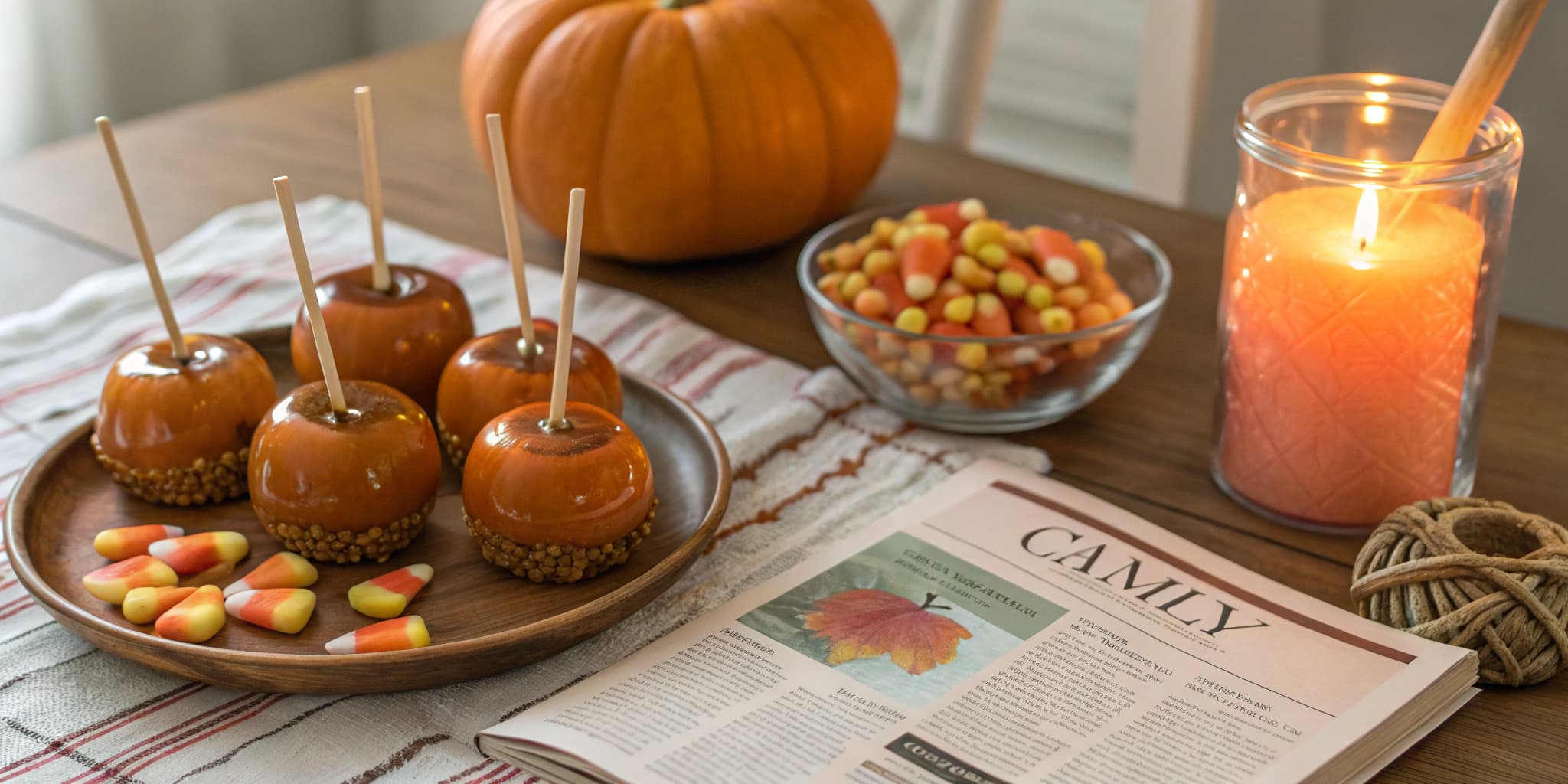
The names get swapped around but these are two different sweets. A candy apple wears a sugar syrup shell: glassy, bright, loud when you bite it. A caramel apple wears caramel: soft, chewy, tan, usually rolled in chopped nuts.
The candy version is harder to get right and easier to make look striking. The caramel version forgives almost any mistake but slumps at room temperature. Feeding small kids or anyone with dental work? Caramel is the safer call.
Wax on the apple will ruin the shell
Supermarket apples are polished with a food-grade wax so they shine on the shelf. Hot sugar will not grip it. You dip, the coating looks fine, and an hour later the shell slides off in one piece like an eggshell.
Dunk each apple in hot water for a few seconds, then rub it hard with a clean towel. The haze comes off on the cloth. Dry them fully and let them come back to room temperature. Cold fruit sweats under hot candy, and that moisture does the same damage.
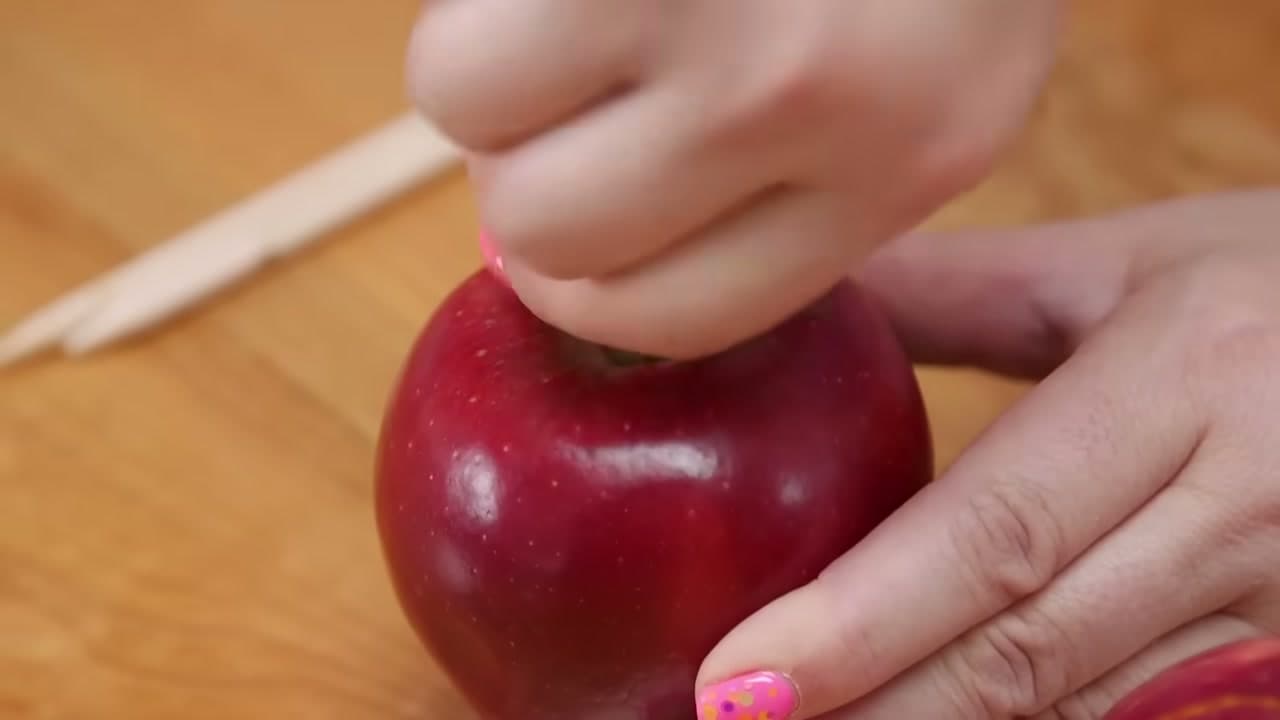
Buy firm fruit. Soft mealy apples collapse around the stick.
- Granny Smith, tart enough to cut the sugar
- Honeycrisp, the best crunch
- Gala or Fuji if you want it sweet
Color, flavor and the Jolly Rancher shortcut
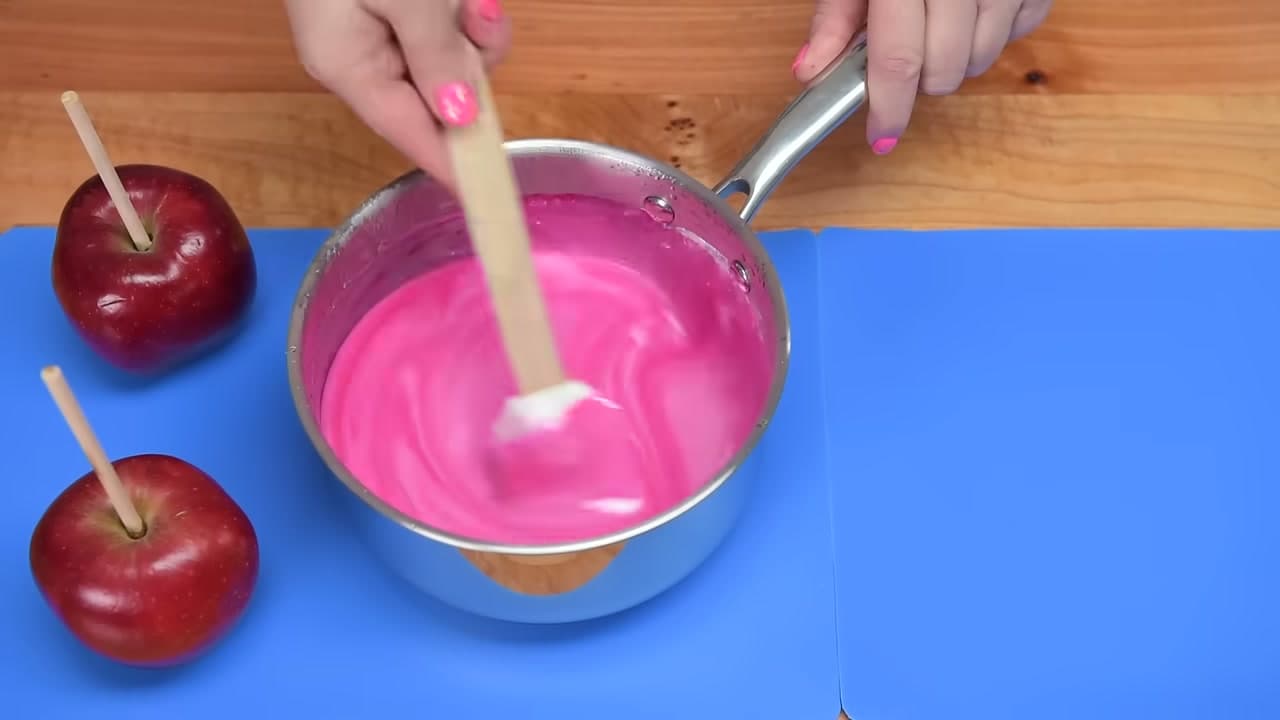
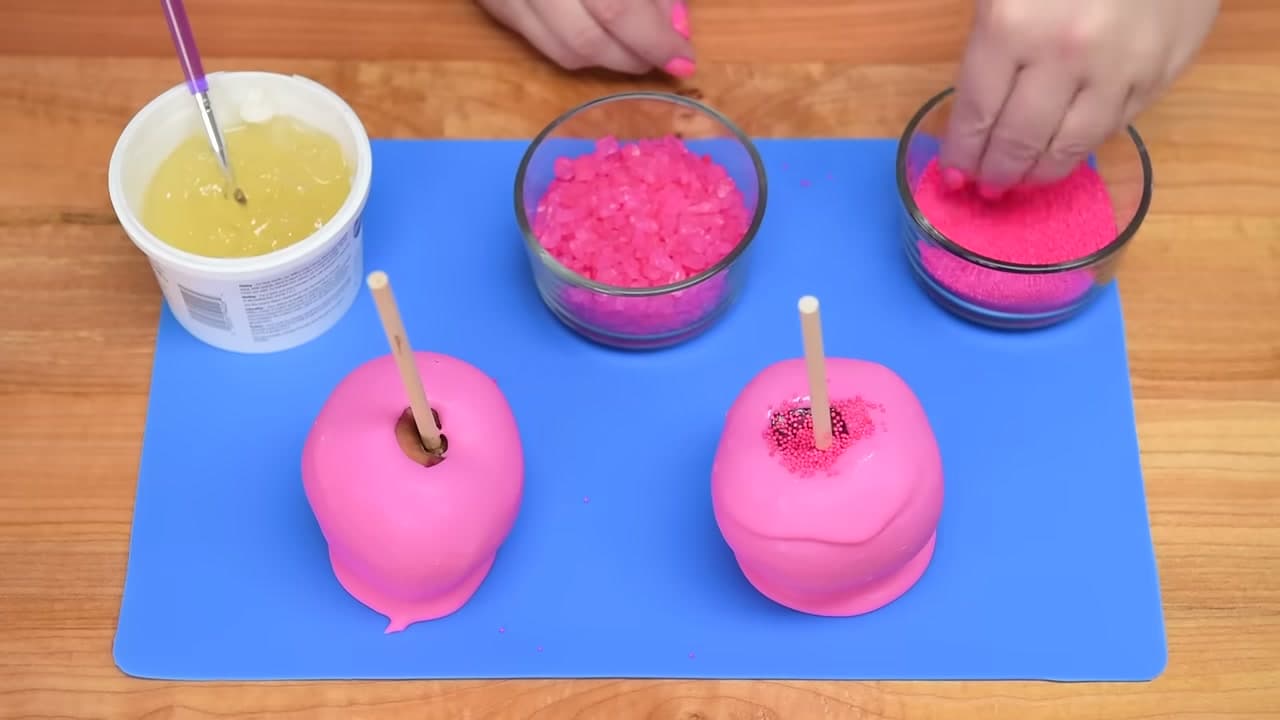
Red is traditional. It is not your only option. Stir a little white gel coloring in first and the syrup turns opaque, so pink, purple or blue read as solid colors rather than a tint over dark apple skin. Skip the white base and your purple candy apples come out looking like odd red ones.
Flavoring oil goes in at that same moment, off the heat. Cinnamon is the fairground standard, and watermelon, green apple and root beer all work.
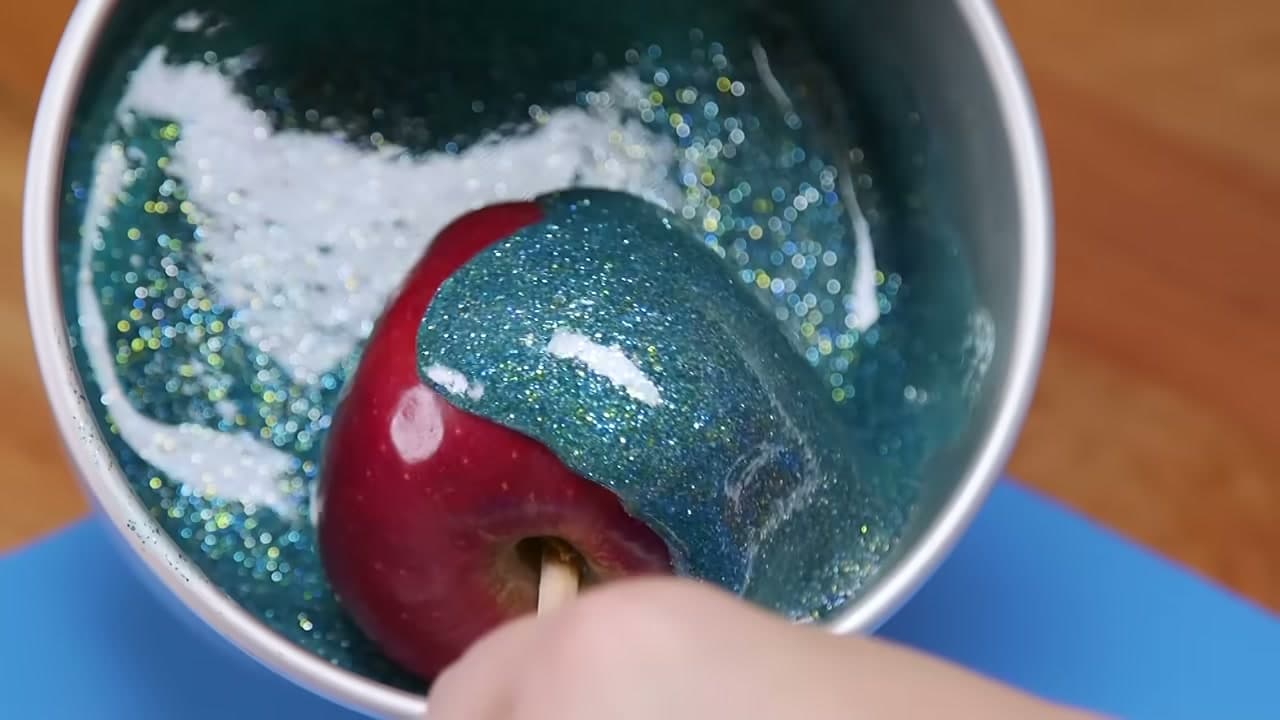
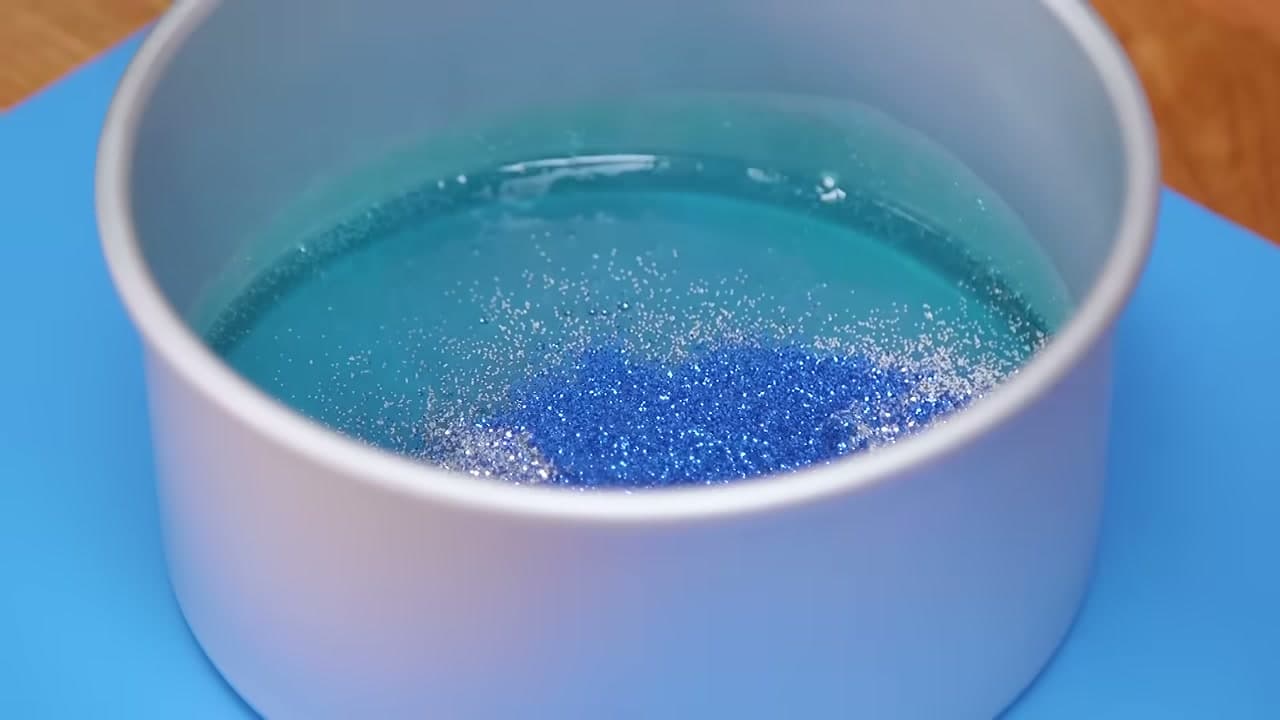
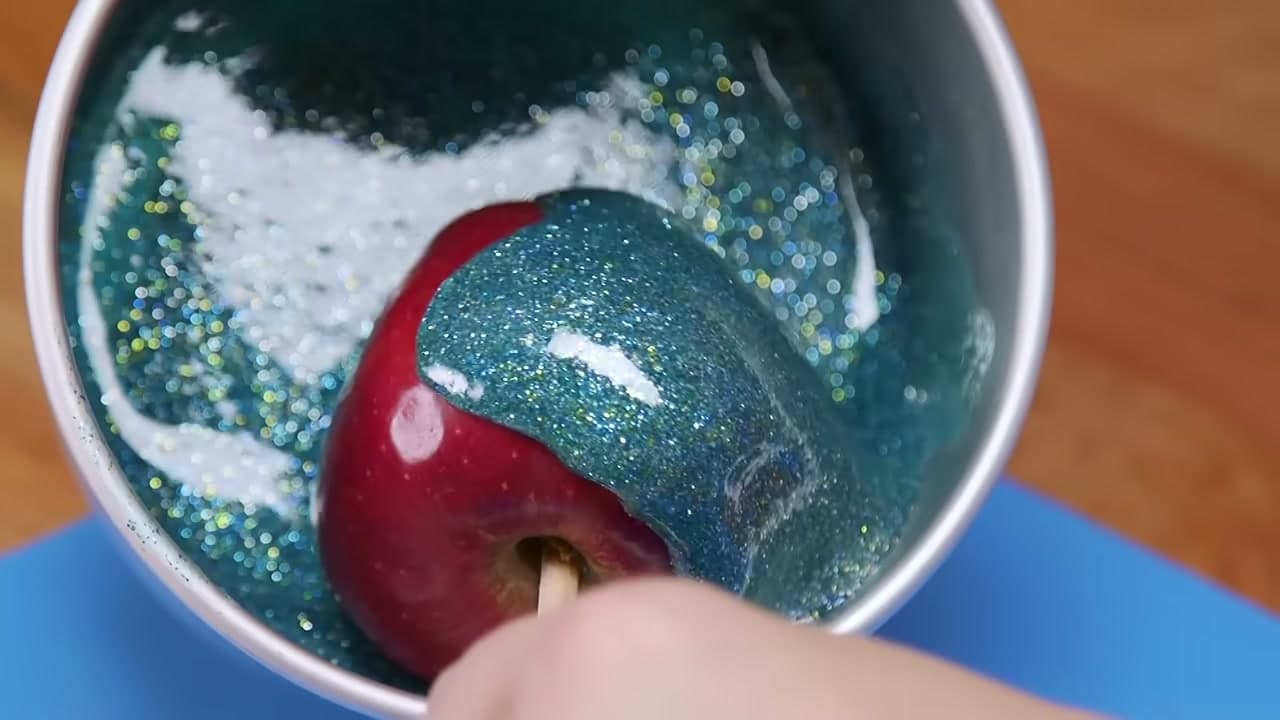
The Jolly Rancher method is the one to know if you have no thermometer. Fifty unwrapped candies of a single color, melted at 350F for about 15 minutes, coat roughly three apples. Stir edible glitter through the melt and you get the glitter candy apples that turn up on every Halloween table. Keep the colors separate: mixed Jolly Ranchers melt into a muddy brown.
Why they go sticky overnight
Sugar pulls water out of the air. A shell that was glass-hard at eight in the evening is tacky by breakfast, and a humid day is the worst day to make a batch. There is no fix once it happens.
Bag each apple in cellophane as soon as the shell sets and keep them cool and dry. Not the fridge, the dampest spot in your kitchen. They eat best within six hours, so make them the afternoon of the party, not the night before.
Building a Halloween spread? Roasted pumpkin seeds use up the insides of the jack-o-lantern and give the table something salty.